Why Jahra’s Wastewater Treatment Costs Are Rising in 2025
Jahra's wastewater treatment plant costs range from $5.4M for small-scale industrial upgrades to $1.8B for large municipal DBO projects, with per-m³/h CAPEX of $1,200–$3,500 depending on technology. Local compliance (Kuwait EPA Law 210/2001) mandates <30 mg/L BOD and <10 mg/L TSS for discharge, while agricultural reuse requires <2 NTU turbidity. This guide provides 2025 cost benchmarks, engineering specs, and an ROI calculator for Jahra projects.
Jahra's industrial and agricultural sector is undergoing a structural shift that directly impacts wastewater engineering budgets. Currently, Jahra's agricultural sector consumes 82% of its water via desalination, which costs between $1.20 and $2.50/m³. In contrast, treated effluent from the Sulaibiya plant costs significantly less, ranging from $0.30 to $0.60/m³ (per KITA 2024 data). This massive price delta is driving a surge in localized treatment infrastructure as facilities seek to decouple from expensive desalinated water lines.
Kuwait's Food Security Strategy 2030 has designated Jahra as the primary hub for domestic agriculture. This strategic pivot is projected to increase the demand for treated wastewater by 40% by 2027, according to the Kuwait Authority for Partnership Projects. For procurement managers, simple "treat-to-discharge" systems are no longer sufficient; the economic imperative is now "treat-to-reuse."
Compliance costs are a major factor in 2025 budget escalations. Jahra's discharge limits, governed by Kuwait EPA Law 210/2001, are stringent: <30 mg/L BOD, <10 mg/L TSS, and <2 NTU turbidity for agricultural reuse. Achieving these levels, particularly the turbidity and fecal coliform requirements, necessitates advanced tertiary treatment. The 2024 tender for Jahra's wastewater network upgrade, awarded to Kharafi National for $5.4M, underscores the region's commitment to modernizing infrastructure, which in turn sets a higher technological baseline for industrial users who wish to connect to or utilize these networks.
Wastewater Treatment Plant Costs in Jahra: 2025 Benchmarks by Project Scale
Estimating the wastewater treatment plant cost in Jahra requires a granular understanding of scale-specific CAPEX and OPEX. For small-scale industrial plants (10–50 m³/h), such as those serving food processing or light manufacturing in Jahra's industrial zones, CAPEX typically ranges from $5.4M to $15M. These projects often utilize a compact underground wastewater treatment system for Jahra's industrial zones to minimize footprint and land costs. OPEX for these units fluctuates between $0.80 and $1.50/m³, largely driven by energy and chemical consumption in decentralized settings.
Medium-scale municipal or large industrial cluster plants (50–500 m³/h) see a CAPEX range of $20M to $100M. These facilities generally employ conventional activated sludge combined with Dissolved Air Flotation (DAF) to handle higher organic loads. At this scale, the CAPEX per m³/h drops to $800–$1,500 due to economies of scale, and OPEX stabilizes around $0.50–$1.00/m³. These benchmarks are comparable to wastewater treatment plant costs in Muscat, though Jahra's specific soil conditions and salinity levels can add a 5-10% premium on civil works.
Large-scale municipal projects (500–5,000 m³/h) represent the high end of the market, exemplified by WTE's $1.8B contract for Kuwaiti wastewater infrastructure. These plants utilize Membrane Bioreactor (MBR) technology or complex Design-Build-Operate (DBO) models. While the total CAPEX is high, the per-m³/h CAPEX is often optimized at $500–$1,200, with OPEX as low as $0.30–$0.70/m³.
| Scale | CAPEX Range | OPEX/m³ | CAPEX/m³/h | Technology Examples | Compliance Level |
|---|---|---|---|---|---|
| Small Industrial (10–50 m³/h) | $5.4M – $15M | $0.80 – $1.50 | $1,200 – $2,000 | WSZ Package Plants | Industrial Discharge |
| Medium Municipal (50–500 m³/h) | $20M – $100M | $0.50 – $1.00 | $800 – $1,500 | CAS + DAF | Municipal Discharge |
| Large Municipal (500–5,000+ m³/h) | $100M – $1.8B | $0.30 – $0.70 | $500 – $1,200 | MBR / DBO Projects | Agricultural Reuse |
These CAPEX figures exclude land acquisition. However, the Kuwait Public Authority for Industry currently offers subsidized rates for water-related infrastructure projects within Jahra's industrial zones, which can significantly offset the total project budget if the facility qualifies under national water security initiatives.
Treatment Technology Comparison: Costs, Efficiency, and Compliance for Jahra Projects
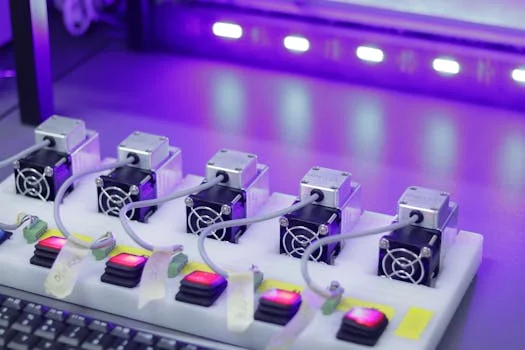
Selecting the appropriate technology is critical for engineers evaluating Jahra sewage treatment plant cost per m³. Each technology offers a different trade-off between initial investment, operational complexity, and effluent quality. For instance, conventional activated sludge (CAS) remains the option with the lowest CAPEX ($500–$800/m³/h). However, it requires a massive footprint (2–3 m²/m³/d) and results in higher OPEX ($0.60–$1.00/m³) due to extensive sludge handling and the inability to meet agricultural reuse standards without significant tertiary additions.
For industrial applications with high oils, fats, or suspended solids, a high-efficiency DAF system for Jahra's food processing and textile industries is often the mid-range solution. DAF systems offer 92–97% TSS removal (per EPA 2024 benchmarks) with a CAPEX of $900–$1,500/m³/h. This technology is particularly effective for pre-treatment before municipal discharge to avoid heavy surcharges. Detailed food processing wastewater treatment costs in the Gulf region show that DAF is the standard for ROI in the 100-300 m³/h range.
When the goal is agricultural reuse, an MBR system for Jahra's agricultural reuse projects is the technical gold standard. Although it carries the highest CAPEX ($1,500–$3,500/m³/h), it provides a footprint reduction of up to 60% (0.5–1 m²/m³/d) and produces near-potable effluent (<1 mg/L TSS). A comprehensive MBR vs. conventional activated sludge for Jahra projects analysis reveals that while MBR has higher membrane replacement costs, the savings in water purchase for irrigation often result in a superior long-term net present value (NPV).
| Technology | CAPEX/m³/h | OPEX/m³ | Footprint (m²/m³/d) | TSS Removal (%) | BOD Removal (%) | Compliance Level |
|---|---|---|---|---|---|---|
| Conventional Activated Sludge | $500 – $800 | $0.60 – $1.00 | 2.0 – 3.0 | 85 – 90% | 85 – 92% | Industrial |
| DAF Systems | $900 – $1,500 | $0.70 – $1.20 | 1.0 – 1.5 | 92 – 97% | 70 – 80% | Industrial/Pre-treat |
| MBR Systems | $1,500 – $3,500 | $0.80 – $1.50 | 0.5 – 1.0 | >99% | >98% | Agricultural Reuse |
| Integrated Package (WSZ) | $1,200 – $2,000 | $0.80 – $1.30 | 0.8 – 1.2 | 95 – 98% | 90 – 95% | Municipal/Industrial |
Jahra Compliance Checklist: Discharge Limits and Permitting Costs
Kuwait EPA Law 210/2001 governs wastewater discharge in Jahra. For projects in Jahra, the focus is increasingly on the "Zero Liquid Discharge" (ZLD) philosophy or high-quality reuse. The law mandates <30 mg/L BOD and <10 mg/L TSS for standard discharge. However, if the water is destined for Jahra's farms, it must meet <2 NTU turbidity and <1,000 MPN/100mL fecal coliform. This necessitates a on-site chlorine dioxide generator for Jahra's agricultural reuse disinfection or a high-intensity UV system to ensure pathogen inactivation.
Permitting costs for industrial wastewater treatment cost Kuwait are often underestimated. Budgeting KD5,000 to KD20,000 ($16,500–$66,000) for initial environmental permits is standard. This includes the Environmental Impact Assessment (EIA), which is mandatory for any plant exceeding 50 m³/h. Quarterly compliance testing by third-party labs approved by the Kuwait EPA costs approximately KD1,000 to KD3,000 per test cycle.
The 2024 penalty structure has become significantly more aggressive to deter illegal dumping into the desert or municipal lines. Fines for non-compliance now range from KD10,000 to KD50,000 ($33,000–$165,000). For repeat violations, the Kuwait EPA has the authority to shut down industrial operations entirely. To remain compliant, developers must secure three primary permits: the Environmental Permit from the Kuwait EPA, a Water Discharge Permit from the Ministry of Electricity and Water, and, if applicable, an Agricultural Reuse Certification from the Public Authority for Agriculture Affairs and Fish Resources.
ROI Calculator: Justifying Wastewater Treatment Investment in Jahra
Justifying the wastewater treatment ROI calculator variables requires a shift from viewing treatment as a sunk cost to viewing it as a resource recovery operation. In Jahra, the primary driver for ROI is the replacement of desalinated water with treated effluent. A typical industrial facility using 100 m³/h of water for cooling or irrigation faces an annual desalination bill of over $1M at $1.20/m³. By treating their own wastewater for $0.50/m³, the savings are immediate.
To calculate your payback period, follow this 5-step framework:
- Step 1: Calculate desalination cost savings. (Volume x [Desal Rate - Treatment OPEX]).