How State-Specific Industrial Effluent Limits Australia Are Set
State-specific industrial effluent limits in Australia sit in each site licence, not in one national code. ANZECC-style defaults such as BOD 20 mg/L and TSS 30 mg/L apply only when a licence schedule is silent. State EPAs can and do write far tighter numbers.
Australian effluent standards for industrial wastewaters are enforceable only when a state EPA writes them into a licence. National default values (BOD 20 mg/L, TSS 30 mg/L, Cr VI 0.05 mg/L) apply unless local licence conditions are stricter. NSW now caps TN at 10 mg/L, while QLD allows 0.5 mg/L Cr VI, and Victoria may set Cr VI at 0.05 mg/L. NSW sensitive sites often require TN 10 mg/L where the receiving water is easily eutrophied.
Meeting the lowest of these thresholds typically requires dissolved air flotation, MBR treatment and ion-exchange polishing. Tighter 2023 nickel limits, driven by updated aquatic ecosystem guidelines, often trigger plant upgrades when a draft Environment Protection Licence (EPL) arrives. These changes are not always broadcast, and they appear as site-specific conditions during licence renewals. Most plants we size for a first licence review are still holding a PDF that is one renewal behind the live schedule.
The baseline cited for many discussions remains the ANZECC 1997 guidelines, which suggest 20 mg/L for BOD and 30 mg/L for TSS. Those figures are defaults, not a statute that a court can enforce on its own. Under the NSW Protection of the Environment Operations Act 1997, the EPA can set environmental values tighter than the default. The Victorian Environment Protection Act 2017 gives EPA Victoria the same kind of authority over a named outfall.
You can compare Chinese GB 8978-1996 limits with Australian standards to see how global benchmarks influence local EPA decisions. That comparison does not replace the Australian schedule for the outfall you actually discharge to.
Where do you read the live licence number?
Current numeric limits are read from the live state portal, not from an archived design PDF. The NSW EPA EPL portal, the VIC EPA works-approval and licence registers, and the QLD EA public register list the schedules that inspectors use. In 2023, NSW tightened nickel limits to align with updated toxicant guidelines for freshwater species, and many metal finishers saw the change only at renewal. Relying on standard trade-waste acceptance criteria alone is no longer sufficient for direct discharge or sensitive catchment sites.
For broader industrial wastewater discharge pathways across Australia, state licence text remains the controlling document. Climate stress and prolonged drought have pushed EPAs to reconsider mixing zones that once diluted the outfall. As river flows fall in the Murray–Darling Basin or the Hawkesbury–Nepean catchment, those zones are reduced or removed. End-of-pipe concentrations must then approach ambient water-quality objectives, with little spare margin in the treatment train.
ANZECC vs State EPA Industrial Wastewater Comparison
An ANZECC vs state EPA industrial wastewater comparison puts guidance defaults beside the enforceable numbers a state can write into a licence. Australian 2024-2025 industrial licence values in the wastewater limit values chart below come from recent state EPA determinations and site schedules. Default ANZECC figures are increasingly superseded by site-specific risk assessments, especially in coastal or high-value agricultural zones. Highlighted cells mark state limits at 10% or less of the national ANZECC default, which usually means tertiary treatment is required.
State-to-state gaps force tailored process trains rather than a single national flowsheet. Most plants we size for coastal discharge end up designing to the red cells, not the ANZECC column. Treat every cell as a screening value until the current licence PDF confirms it.
| Parameter | Unit | ANZECC Default | NSW (Sensitive) | VIC (Current) | QLD (Standard) | WA (Goldfields/NW) | SA (Arid/Gulf) |
|---|---|---|---|---|---|---|---|
| BOD5 | mg/L | 20 | 10-15 | 20 | 20 | 20-30 | 20 |
| TSS | mg/L | 30 | 10-20 | 30 | 30 | 30-50 | 30 |
| Total Nitrogen (TN) | mg/L | 50 | 10 | 15-20 | 30 | 50 | 25 |
| Total Phosphorus (TP) | mg/L | 10 | 1-2 | 2-5 | 5 | 10 | 5 |
| Cr VI (Hexavalent) | mg/L | 0.5 | 0.1 | 0.05 | 0.5 | 0.5 | 0.1 |
| Nickel (Ni) | mg/L | 1.0 | 0.1 | 0.5 | 1.0 | 1.0 | 0.5 |
| Zinc (Zn) | mg/L | 5.0 | 1.0 | 2.0 | 5.0 | 5.0 | 2.0 |
| Phenols | mg/L | 1.0 | 0.1 | 0.5 | 1.0 | 0.05 | 0.5 |
| Oil & Grease | mg/L | 10 | 5-10 | 10 | 10 | 15 | 10 |
Sources: NSW EPA EPL Template 2024, VIC EPA Publication 1898.4 (2024), QLD Environmental Authority Schedule (DES), WA DWER Licence Database.
In many jurisdictions, the gap between trade waste to sewer and an EPA discharge to the environment is widening. Sydney Water might accept 5.0 mg/L of Zinc, while an EPA licence for discharge into the Hawkesbury-Nepean catchment may cap this at 1.0 mg/L. That gap is why designers target MBR effluent Australia quality even when a sewer agreement looks comfortable. To understand how these limits compare with other water-stressed regions, you can see how UAE limits differ from Australia for similar arid-zone reuse.
Where the project also needs the wider industrial waste water discharge requirements, read that guide beside the site schedule rather than instead of it. The narrative default cited above for Cr VI is 0.05 mg/L, while the ANZECC default column in the chart prints 0.5. Use the licence, not either column alone, as the number you design to.
NSW Sensitive Catchment Wastewater Discharge Limits
NSW sensitive catchment wastewater discharge limits are the concentration and load caps on the site EPL for that receiving water, not the ANZECC default of 50 mg/L for total nitrogen. Sensitive freshwater schedules commonly set TN at 10 mg/L to cut eutrophication risk. A plant that meets the milligram cap can still fail if the annual mass load is exceeded. Most plants we size for the Hawkesbury–Nepean run denitrification harder in winter than the annual average suggests.
What nitrogen cap applies in a sensitive NSW catchment?
A sensitive NSW catchment licence often sets total nitrogen at 10 mg/L, and some sewage EPLs set a lower percentile cap. Sydney Water, the NSW government-owned corporation that operates the Greater Sydney wastewater network, publishes the concentration limit tables for its licensed plants. Sydney Water's Quakers Hill Wastewater Treatment Plant EPL 1724 (updated 01-07-2025) lists total nitrogen at 6 mg/L and total suspended solids percentile limits in the 5–10 mg/L range at the licensed monitoring point. Earlier industrial design guidance often treated NSW sensitive TN as 10 mg/L; this municipal EPL shows catchment-driven licences can sit lower still.
Always read the current EPL schedule for the exact discharge point before freezing process design. Do not paste a sewage-plant table onto a metal-finishing EPL: the monitored analytes differ, and an industrial licence can still carry a nickel cap from the 2023 toxicant update even when a municipal schedule lists none.
Beyond simple concentration limits, many Australian facilities are now subject to Load-Based Licensing (LBL). Under LBL, the EPA sets a mass limit in kilograms per year for specific pollutants. A plant can meet the concentration limit in mg/L and still be in breach if total flow increases. Expanding food and beverage plants hit this dual constraint first.
In NSW the LBL scheme also uses a polluter-pays fee, so cutting load can lower the annual licence fee as well as the discharge risk.
What chemical limits apply for river effluent disposal?
River effluent disposal chemical limits are the numeric concentration and load conditions written into the site EPL or environmental authority for the named discharge point. Concentration caps in mg/L and annual mass loads in kilograms per year can both apply, so a plant that meets mg/L targets can still breach if flow rises. Sensitive freshwater licences commonly tighten metals, nutrients and phenols far below sewer trade-waste acceptance values.
Compliance monitoring has also moved on from a single monthly grab. Licences dated around 2025 increasingly require 24-hour flow-weighted composite sampling, which shows slug loads that one grab can miss. Continuous online monitoring for pH, turbidity and conductivity is now a standard expectation on most direct-discharge licences. Some schedules require that stream to be telemetered to the regulator.
The definition of a sensitive catchment is widening toward groundwater-dependent ecosystems. If the site sits over an aquifer that supports wetlands or stygofauna, nitrogen and phosphorus may be set near background rather than near a sewer acceptance value.
Victoria Cr VI Discharge Limit EPA Licence
The Victoria Cr VI discharge limit EPA licence value used for screening in the chart is 0.05 mg/L of hexavalent chromium. EPA Victoria does not print that figure as one statewide cap on the A04 activity page. A 2025 VIC EPA dairy-processor licence might mandate Cr VI at 0.05 mg/L to protect local groundwater, while a different catchment can name another number. Most metal finishers we size for in Victoria miss Cr VI on the first composite when redox is checked only on the day shift.
Victoria's Environment Protection Act 2017 embeds a General Environmental Duty (GED) in section 25. According to EPA Victoria, duty holders must eliminate or otherwise reduce risks of harm from pollution and waste so far as reasonably practicable. Numeric licence limits therefore sit beside a broader duty. Even where a contaminant is not listed, available treatment that would remove it can still be expected.
EPA Victoria's A04 industrial wastewater treatment permission applies when industrial wastewater from another site is discharged or deposited above 5,000 litres per day. Surface-water discharge must follow the licence appendix schedule. According to EPA Victoria (A04 page, updated 14 May 2025), the permission is needed for industrial wastewater generated at another site at a design or actual flow rate exceeding 5,000 litres per day or on any day.
Condition OL_DW02 on that page states that discharge of waste to surface waters must be in accordance with Appendix 6. Condition OL_G04b requires the records behind any report to be retained for five years and made available to the Authority on request. A licence issued after 1 July 2021 can be valid for up to 20 years, depending on the case. Condition OL_WM13 adds that, notwithstanding the discharge limits, the risk management and monitoring program must still address opportunities to reduce long term and event-driven emissions.
Where does a Victoria licence state the Cr VI limit?
The Cr VI number, when the licence sets one, is printed in the EPA licence appendix, and the screening chart uses 0.05 mg/L. Hexavalent chromium at that level is not a clarifier problem. Reduction to trivalent chromium, hydroxide precipitation and a solids barrier are the usual train, with ion exchange if the residual stays high. Confirm the appendix analyte is hexavalent chromium, not total chromium, before you lock the chemical dose.
Queensland Environmental Authority Wastewater Limits
Queensland environmental authority wastewater limits are the release conditions inside the site environmental authority, not a single public table of statewide caps. According to Business Queensland (environmental licences and permits page, updated 27 Aug 2025 and reviewed 11 Jun 2025), an environmental authority is required to perform an environmentally relevant activity, and holders must pay annual fees and submit annual returns. The same page does not publish BOD, metal or nutrient numbers.
A QLD Environmental Authority (EA) for a facility similar to a Victorian dairy might still permit 0.5 mg/L under Department of Environment and Science (DES) guidelines. The screening chart shows that 0.5 mg/L Cr VI figure against Victoria's 0.05 mg/L cell, which is a tenfold design gap if both sites are real. Cr VI at 0.5 mg/L can be reachable with precipitation alone, while 0.05 mg/L usually is not. Most Queensland plants we size for find the controlling number in the EA schedule, not on the public application webpage.
Changing, combining or surrendering an EA is a separate application, so a production increase is the moment to re-read the release table. Do not carry a New South Wales sensitive-catchment nitrogen cap into Queensland unless that EA actually names it. Design the train to the EA you hold, then keep the annual return aligned with the same sample point.
Western Australia Mining Wastewater Salinity Limits
Western Australia mining wastewater salinity limits are written into each DWER licence for hypersaline Goldfields and North West groundwater, and this chart does not publish one statewide salinity cap. Western Australia mining and mineral processing licences often emphasise salinity and selected metals in those settings. The wastewater limit values chart shows WA phenols at 0.05 mg/L, nickel at 1.0 mg/L and zinc at 5.0 mg/L, with BOD5 at 20-30 mg/L and TSS at 30-50 mg/L. Most plants we size for inland WA mining camps find that salinity, not BOD, decides whether evaporation or a membrane step belongs in the train.
South Australia, as the driest state, places heavier weight on effluent reusability and Class A recycled-water objectives for irrigation or cooling, reducing demand on the River Murray. On parts of the Swan Coastal Plain in WA, phosphorus limits are as low as 0.1 mg/L to protect wetlands from eutrophication. That 0.1 mg/L phosphorus figure is a catchment condition, not a Goldfields salinity number, and the two should not be designed as one limit. Ask the licence for the salinity parameter, the units and the percentile before you size a brine pond or a concentrator.
Which Technology Removes Each Parameter to the Licence Limit
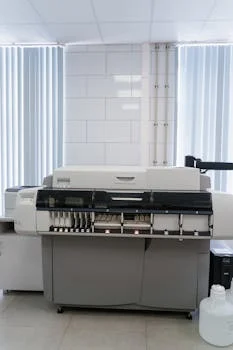
Australian industrial plants facing 2025 Cr VI limits of 0.05 mg/L or TN limits of 10 mg/L need integrated biological and chemical processes, not clarifiers alone. Traditional media filters fail these thresholds reliably under peak load. A multi-stage train is required, beginning with robust primary treatment and ending with selective polishing matched to the licence schedule.
BOD and TSS removal: For ultra-low organic limits, the membrane bioreactor is the usual biological step. MBR membrane modules proven to <5 mg/L BOD and TN <10 mg/L eliminate the need for secondary clarifiers and provide a physical barrier to solids. HydropureWater field data (2025) confirms that MBR systems consistently produce effluent with TSS below 2 mg/L, which is critical for downstream UV disinfection or ion-exchange processes. The high biomass concentration (MLSS) achievable in an MBR (typically 8,000 to 12,000 mg/L) allows the system to handle organic shocks that would wash out a traditional activated sludge plant.
How low can nitrogen go after an MBR?
Meeting the NSW 10 mg/L TN limit requires an MBR configured for intermittent denitrification, usually a Modified Ludzack-Ettinger or MLE process. If the influent carbon-to-nitrogen ratio is less than 4, an external carbon source such as methanol or acetic acid must be dosed into the anoxic zone. A sludge age (SRT) of 20-30 days supports complete nitrification and significant denitrification. Where TN must be <5 mg/L, a secondary post-denitrification filter or a dedicated BAF (biological aerated filter) may follow the MBR to polish remaining nitrate.
Most plants we size for TN at 10 mg/L run the anoxic zone at the lower end of that 20-30 day sludge age when winter influent is cold.
Total phosphorus (TP): Removing phosphorus to levels below 1.0 mg/L generally requires biological uptake plus chemical precipitation. Enhanced biological phosphorus removal (EBPR) uses anaerobic selectors to favour polyphosphate-accumulating organisms, then aerobic zones for luxury uptake. Ferric chloride or aluminium sulphate dosed at 1.5–3.0 mol metal per mol P (as P) precipitates residual orthophosphate before membrane separation. For TP targets of 0.1–0.5 mg/L at 15–25 degC, a dual chemical point (pre-anoxic and post-MBR) is the usual design rule.
Cr VI and nickel polishing: Hexavalent chromium at 0.05 mg/L needs chemical reduction to Cr III at pH 2.5–3.0 with sodium bisulphite or ferrous sulphate, then hydroxide precipitation at pH 8–9. Nickel at 0.1 mg/L often needs ion exchange or selective chelating resin after solids removal, because hydroxide precipitation alone stalls near 0.5–1.0 mg/L without co-precipitation aids. Hospitals and laboratories with mixed metal and disinfectant loads may also evaluate a packaged Medical & Hospital Wastewater Treatment System when pathogen control and metal polishing share one skid.
Oil and grease, phenols and organics: Free oil above 10 mg/L is removed by gravity separators and dissolved air flotation before biology. Emulsified oils need chemical demulsification or DAF with coagulant. Phenols at 0.05–0.1 mg/L usually need activated carbon or advanced oxidation after biological roughing, because standard activated sludge leaves residual aromatics.
How should effluent plant SCADA be designed?
Effluent plant SCADA design should trend every licence parameter that can drift between grab samples, and alarm before a composite sample fails. At minimum, log continuous pH, turbidity, conductivity and flow at the final discharge point, with 24-hour composite autosamplers for BOD, nutrients and metals on the licence frequency. Interlock high turbidity or out-of-range pH to a dump tank or recycle loop so off-spec water cannot leave the site. Store at least five years of raw data where Victorian PIPS-style reporting may be requested, and keep calibration certificates with the trend files.
Selection Checklist and Design Cost Drivers
Plant engineers sizing upgrades against Australian state licences should walk this checklist before freezing piping and instrument diagrams. Before any tank is ordered, read the state-specific industrial effluent limits Australia assigns to each outfall on the draft schedule.
- Extract the exact EPL/EA schedule for each discharge point, including percentile and load limits.
- Map sewer trade-waste versus environmental discharge paths; design to the stricter path.
- Confirm C/N ratio, temperature range (degC) and peak-to-average flow before choosing MLE-MBR.
- Identify metals that need reduction, precipitation or ion exchange beyond biological treatment.
- Budget for composite sampling, online sensors and SCADA retention, not only process tanks.
- Check mixing-zone status in the receiving water; assume end-of-pipe equals ambient if dilution is withdrawn.
- Price sludge and spent-resin disposal, which often dominate opex once concentration limits fall.
Most plants we size for a renewal spend more on sampling, sludge and spent resin than on the extra tank volume. Who this is for: EPC teams and plant managers renewing NSW, VIC, QLD, WA or SA discharge licences who must pick unit processes against numeric schedules. Who should look elsewhere: projects that only discharge to sewer under a water-authority trade-waste agreement with no environmental licence risk.
Readers who want the national pathway discussion can use the page on industrial effluent discharge guidelines and then return here for the state numeric differences. Next step: send the draft licence schedule and the influent analysis with a process review request so engineers can match DAF, MBR and polishing stages to the controlling parameters.
Frequently Asked Questions
Do Australia-wide effluent standards exist as one enforceable table?
No single national numeric table sets enforceable industrial discharge limits across Australia. ANZECC-style defaults such as BOD 20 mg/L and TSS 30 mg/L are guidance only. Enforceable numbers sit in each state EPA licence or environmental authority schedule. Victoria's general environmental duty can still require further risk reduction when a parameter is not listed on that schedule.
Why is NSW total nitrogen often 10 mg/L when the default column shows 50 mg/L?
NSW sensitive-catchment EPLs commonly set TN near 10 mg/L to protect freshwater ecosystems and reduce eutrophication risk. Some site licences go lower still. Quakers Hill EPL 1724, updated 01-07-2025, lists total nitrogen at 6 mg/L at the licensed monitoring point. Designers should size MLE-MBR denitrification for the number on the licence page, not for the national default in a screening chart.
What treatment reliably meets Cr VI at 0.05 mg/L?
Cr VI at 0.05 mg/L is normally met by chemical reduction to Cr III, hydroxide precipitation and solids separation, often followed by ion exchange if the residual is still high. Clarifiers alone are not reliable at this concentration. Verify redox control and the pH 2.5–3.0 reduction setpoint, then the pH 8–9 precipitation setpoint, under peak chromium load before claiming compliance.
How do trade-waste and EPA river discharge limits differ?
Trade-waste agreements govern sewer acceptance and often allow higher metals and nutrients than an environmental licence for the same site. A sewer agreement might accept 5.0 mg/L of Zinc while a Hawkesbury-Nepean environmental licence caps zinc at 1.0 mg/L. River or estuary EPLs can cut nickel or nutrients the same way. Always design hardware for the stricter pathway if both discharge modes are possible.
When should an industrial plant add post-MBR polishing?
Add polishing when the licence lists metals, phenols or TP below what biology and membranes can hold on their own. Common triggers are Ni 0.1 mg/L, Cr VI 0.05 mg/L or TP near 0.1–1.0 mg/L. Ion exchange, activated carbon or tertiary chemical precipitation is selected only after the exact schedule and the influent peaks have both been reviewed. A sewage-plant table with a blank nickel cell is not evidence that your industrial nickel cap has been dropped.