Why Java’s Industrial Parks Need Package WWTPs: A 2025 Compliance Reality Check
Java’s industrial parks—from Bekasi’s MM2100 to Gresik’s JIIPE—require package wastewater treatment plants (WWTPs) that meet Indonesia’s stringent effluent standards (e.g., TSS <50 mg/L, COD <100 mg/L per Minister of Environment Regulation 5/2014) while handling high organic loads. In 2025, costs range from IDR 1.2B for a 10 m³/h compact STP to IDR 25B for a 500 m³/h MBR system, with payback periods of 3–7 years for industrial reuse. This guide provides Java-specific technical specs, compliance checklists, and supplier selection criteria to avoid costly permit delays or odor violations.
Industrial parks in Java face a dual pressure: the strict enforcement of Minister of Environment Regulation 5/2014 and increasingly localized environmental bylaws, such as Bekasi’s 2023 odor control regulations. According to 2023 data from the Ministry of Environment and Forestry (KLHK), the top three environmental violations in Java’s industrial zones are TSS exceedances (42%), odor complaints (28%), and COD non-compliance (20%). These issues are most prevalent in the textile, food processing, and chemical sectors, where traditional lagoon systems often fail to meet modern standards. For instance, an upgrade at the MM2100 industrial park involving a specialized biological facility (valued at IDR 8.5B) successfully reduced odor complaints by 90% and shortened permit approval timelines from 12 months to just 4 months by effectively pre-treating influent with BOD levels of 800 mg/L down to an effluent of 30 mg/L.
Java operates under a "permit paradox" where local governments in provinces like East Java often impose stricter discharge limits than national standards, yet provide limited technical guidance on how to achieve them. This creates significant risk for EPC contractors and compliance officers who must navigate varying requirements between regions like Banten and West Java. Selecting the right modular vs. conventional WWTP systems is critical to ensuring long-term compliance without over-engineering the solution.
| Violation Type | Frequency (Java 2023) | Primary Industry Source | Common Root Cause |
|---|---|---|---|
| TSS Exceedance | 42% | Textile, Construction | Inadequate primary clarification or DAF sizing |
| Odor Complaints | 28% | Food Processing, FMCG | Anaerobic conditions in open lagoons |
| COD Non-compliance | 20% | Chemical, Pharmaceutical | Insufficient biological retention time |
| Other (pH, Oil/Grease) | 10% | Metal Finishing, Automotive | Chemical dosing pump failures |
Java’s Effluent Standards: What Your WWTP Must Achieve in 2025
Effluent limits for industrial wastewater in Java are governed by a hierarchy of national and provincial regulations that often exceed the baseline requirements of Regulation 5/2014. In 2025, any industrial wastewater treatment Java project must account for localized parameters; for example, East Java (Gresik/Surabaya) mandates NH₃-N levels below 5 mg/L for textile effluent, which is significantly stricter than the 10 mg/L national standard. Similarly, the Special Capital Region of Jakarta requires 100% disinfection for all WWTPs discharging into surface waters, regardless of the industry type.
A "hidden standard" also exists within premium industrial estates like JIIPE or Jababeka. These parks often impose internal discharge limits that are 20–30% stricter than government requirements to maintain their environmental certifications and attract multinational tenants. This internal regulation ensures that the park's centralized system is not overwhelmed by high-strength industrial loads. Failure to meet these internal benchmarks can lead to immediate disconnection from the park's drainage network and heavy daily fines.
| Parameter (mg/L) | National (Reg 5/2014) | West Java (Bekasi) | East Java (Gresik) | Jakarta (DKI) |
|---|---|---|---|---|
| TSS | 50 | 50 | 40 | 30 |
| COD | 100 | 100 | 80 | 80 |
| BOD | 50 | 50 | 30 | 30 |
| NH₃-N (Ammonia) | 10 | 10 | 5 | 5 |
| pH | 6.0 - 9.0 | 6.0 - 9.0 | 6.0 - 9.0 | 6.0 - 9.0 |
Package WWTP Technologies for Java’s Industrial Effluent: MBR vs. DAF vs. A/O Systems
Selecting the appropriate technology for a package wastewater treatment plant in Java Indonesia depends heavily on the influent characteristics and the cost of land in the specific industrial park. For high-TSS environments typical of textile or paper manufacturing, DAF systems for Java’s high-TSS textile effluent are often the most efficient primary treatment step, achieving over 90% solids removal before biological treatment. In contrast, for food and beverage plants in Bekasi where organic loads are high but land is limited, Membrane Bioreactor (MBR) systems provide a compact alternative.
Performance benchmarks in Java show that modern A/O (Anaerobic/Oxic) systems, such as those used in MM2100, can achieve 92% COD removal even at influent concentrations of 500 mg/L. However, the "Java trade-off" remains a critical decision point for managers: MBR systems for high-land-cost areas like Gresik offer a 60% smaller footprint than conventional systems but typically involve 30–40% higher capital expenditure and require more skilled operators to manage membrane fouling. Meanwhile, compact A/O systems for Java’s industrial parks remain the standard for smaller factories (10–50 m³/h) due to their balance of cost and ease of maintenance.
| Technology | Influent Type | Footprint (m²/m³) | COD Removal (%) | Energy (kWh/m³) | Java-Specific Pro/Con |
|---|---|---|---|---|---|
| MBR | Mixed/Food | 0.2 - 0.4 | 95-98% | 0.8 - 1.5 | Pro: High land efficiency; Con: High OPEX |
| DAF | Textile/Oily | 0.5 - 0.8 | 60-80% | 0.3 - 0.6 | Pro: Excellent TSS removal; Con: Sludge volume |
| A/O System | Domestic/General | 1.0 - 1.5 | 85-92% | 0.4 - 0.7 | Pro: Simple to operate; Con: Large footprint |
| Aerated Pond | Low Strength | 5.0+ | 70-85% | 0.1 - 0.3 | Pro: Lowest cost; Con: Odor/Land intensive |
Cost Breakdown: How Much Does a Package WWTP Cost in Java in 2025?
Budgeting for a WWTP in Java requires accounting for both capital expenditure (CAPEX) and long-term operating expenses (OPEX). In 2025, the average capital cost for a high-quality system in MM2100 sits at approximately IDR 7.1M per m³ of capacity. For a 500 m³/h MBR system in a high-land-cost area like Gresik, where land prices can reach IDR 1.2M/m², the compact nature of a package plant provides an implicit saving by reducing the required property footprint. However, managers must also account for "hidden costs" unique to the Indonesian market, such as permit fees (ranging from IDR 50M to 500M) and specialized sludge disposal for hazardous waste, which costs between IDR 2,000 and 5,000 per kg.
Operating costs are primarily driven by energy consumption and chemical dosing. For textile industries, the cost of polymers and coagulants for DAF systems can represent 25% of annual OPEX. Additionally, implementing sludge dewatering and disposal equipment is essential to minimize the volume of waste transported out of the park, which significantly impacts the total cost of ownership over a 10-year period.
| Capacity (m³/h) | CAPEX (IDR) | Annual OPEX (IDR) | Payback (Years) | Typical Application |
|---|---|---|---|---|
| 10 | 1.2B - 1.8B | 150M - 250M | 5 - 7 | Small factory STP (Bekasi) |
| 50 | 3.5B - 5.5B | 450M - 700M | 4 - 6 | Medium Food Processing |
| 100 | 7.5B - 11B | 1.1B - 1.6B | 4 - 5 | Textile Pre-treatment |
| 200 | 14B - 18B | 2.2B - 3.0B | 3 - 5 | Chemical Park Tenant |
| 500 | 22B - 28B | 4.5B - 6.0B | 3 - 4 | Large Industrial Estate WWTP |
Step-by-Step: How to Select a Package WWTP Supplier in Java (Checklist)
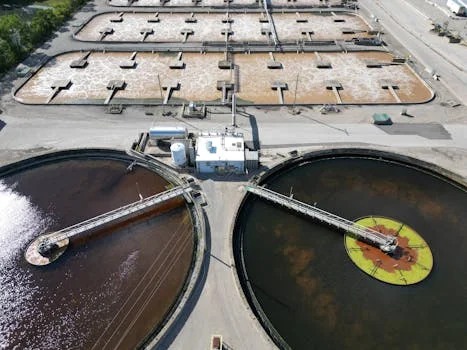
Selecting a supplier for a package wastewater treatment plant in Java Indonesia involves more than comparing quotes; it requires a deep dive into the provider's local engineering capacity and compliance history. A common "supplier paradox" in Indonesia is that international firms often provide superior membrane technology but lack the local O&M support teams required for rapid troubleshooting in parks like Cikupa or Karawang. Conversely, local suppliers may offer lower prices but provide vague compliance guarantees that do not specify provincial-level limits, leading to permit rejections during the commissioning phase.
When evaluating potential partners, ensure they have a proven track record within Java's specific industrial ecosystem. For example, a supplier's success in Sulawesi’s industrial wastewater treatment requirements may not translate directly to Java due to the different soil conditions and stricter odor regulations in the Bekasi-Karawang corridor. Always request references from at least three Java-based projects completed within the last 24 months.
- Technical Capabilities: Does the supplier have experience with Java’s specific influent types (e.g., high-ammonia textile waste)? Are the systems modular for future expansion?
- Compliance Guarantee: Will the supplier provide a written guarantee that effluent will meet both National (Reg 5/2014) and Provincial (e.g., East Java) standards?
- Cost Transparency: Is the quote itemized to include permit assistance, installation, and first-year spare parts? Are energy and chemical consumption rates guaranteed?
- After-Sales Support: Is there a 24/7 technical support team based in Java? Can they provide operators in Bahasa Indonesia for the first 6 months?
- Red Flags: Be wary of quotes under IDR 5M/m³ for MBR systems, as these often utilize low-grade membranes that will foul within 12 months.
ROI Calculation: How to Justify Your WWTP Investment in Java
Justifying the investment in a package WWTP requires quantifying both direct savings and risk mitigation. In Java, water scarcity is a growing concern, with Jakarta’s 2025 water stress index projected at 0.85. This makes wastewater reuse a primary driver for ROI. By integrating RO systems for wastewater reuse in Java, a factory can recycle up to 70% of its effluent for cooling towers or process water, drastically reducing the cost of purchasing raw water from local utilities (PAM).
Consider a 100 m³/h MBR system in Gresik with a capital cost of IDR 12B. While the annual O&M is IDR 1.8B, the system can generate IDR 3.5B per year in water reuse savings and avoid an estimated IDR 2B per year in potential environmental fines and permit delay costs. This results in a payback period of approximately 4.2 years. This financial model is similar to how Mexico’s industrial parks handle WWTP procurement, where high water costs drive the adoption of advanced treatment technologies.
Java WWTP ROI Formula:
ROI Period = [Capital Cost] / ([Annual Water Reuse Savings] + [Avoided Fines] - [Annual OPEX])
Frequently Asked Questions
What is the difference between a package WWTP and a centralized WWTP in Java?
Package WWTPs are pre-fabricated, modular systems designed for 10–500 m³/h, making them ideal for individual factories or specific zones within industrial parks like MM2100. Centralized WWTPs, such as the major ODA loan projects in Jakarta, serve entire municipalities or massive estates (1,000+ m³/h) and require years to construct. Package systems offer faster deployment (3–6 months) and lower initial CAPEX for private industrial tenants.
How much does a 50 m³/h package WWTP cost in Bekasi?
In 2025, a 50 m³/h A/O system in Bekasi typically costs between IDR 3.5B and 5B, including installation and permit assistance. If land is constrained and an MBR system is required, the cost increases by 30–40% (IDR 4.5B–7B), though it provides a 60% smaller footprint and higher effluent quality suitable for reuse.
What are the most common WWTP permit violations in East Java?
According to 2023 KLHK data, East Java’s top violations include NH₃-N exceedances (specifically in the textile sector), odor complaints from food processing plants, and pH fluctuations in chemical zones. To avoid fines which can range from IDR 500M to 2B, systems must be equipped with robust nitrification/denitrification stages and automated pH neutralization.
Can I reuse treated wastewater from a package WWTP in my factory?
Yes, but the required treatment level depends on the application. West Java standards allow reuse for cooling towers if TSS is <10 mg/L. However, for process water in Jakarta, advanced treatment like MBR followed by RO is required. A 100 m³/h MBR system can produce high-quality reuse water (TSS <1 mg/L), potentially saving a facility over IDR 3B annually in water procurement costs.
What is the best WWTP technology for textile effluent in Gresik?
For Gresik’s textile industry, which often produces high-TSS effluent (300–1,000 mg/L), DAF systems are the most cost-effective solution for primary treatment. They achieve over 90% TSS removal and cost significantly less than MBR for high-solids loads. For factories aiming for zero liquid discharge (ZLD), combining DAF with RO is the most reliable way to meet East Java’s strict NH₃-N limits of <5 mg/L.