In North Carolina, package wastewater treatment plants are compact, pre-engineered systems that treat 10,000–500,000 gallons per day (GPD) of municipal or industrial wastewater, achieving 90–98% BOD₅ removal and 85–95% TSS reduction. NC DEQ requires NPDES permits for all plants above 1,000 GPD, with effluent limits of 30 mg/L BOD₅ and 30 mg/L TSS for most discharges (NCAC 15A.0211). Costs range from $120,000 for a 10,000 GPD system to $2.8 million for a 500,000 GPD MBR plant, with OPEX of $0.40–$1.20 per 1,000 gallons treated.
Why North Carolina Needs Package Wastewater Treatment Plants
North Carolina's existing wastewater infrastructure comprises 738 wastewater treatment plants per the NC DEQ 2019 list. About 62% of facilities exceed 30 years of age and struggle to meet modern nutrient limits under NCAC 15A.0211. Aging assets, population growth, and tighter basin rules create steady demand for scalable, compliant package plants statewide.
Rural counties such as Bertie and Alexander often lack centralized sewer service, so decentralized treatment is the practical path. Package plants sized for 10,000–50,000 GPD fit these communities and support growth without degrading local water quality. Food processing, textile, and pharmaceutical plants in Charlotte, Asheville, and Raleigh also need robust industrial wastewater pretreatment to meet NC DEQ industrial discharge permits and avoid overloading municipal systems.
A representative scenario: the Town of Taylorsville faced a consent order penalty of $500,000 per year because its aging lagoon system consistently missed BOD₅ and TSS limits. The municipality had 24 months to upgrade to a modern package plant. Such upgrades are now common across the state and make package wastewater treatment plants a core tool for municipal wastewater solutions in North Carolina.
How Package Wastewater Treatment Plants Work: 3 Core Technologies for NC Applications
Package wastewater treatment plants combine biological and physical processes to hit the removal efficiencies NC DEQ demands. Three core technologies dominate North Carolina installs. Each matches specific influent loads and effluent targets.
Anoxic/Oxic (A/O) Systems
A/O systems achieve 92–97% BOD₅ removal and 85–90% TSS reduction at 10,000 to 200,000 GPD, the dominant range for rural North Carolina municipalities. Influent moves through an anoxic zone for denitrification, then an aerobic zone for nitrification and BOD removal. Typical influent of 200–400 mg/L BOD₅ leaves at 10–30 mg/L. The Burlington WWTP at 225 Stone Quarry Rd in Alamance County uses A/O technology to meet its discharge limits. For a comparable NC-compliant A/O package plant for rural municipalities, the Underground Package Sewage Treatment Plant (WSZ Series) is a direct match.
Membrane Bioreactor (MBR) Systems
MBR systems pair biological treatment with membrane filtration and deliver 98% BOD₅ removal with effluent TSS consistently below 1 mg/L. That quality supports reuse for irrigation or cooling towers in industrial parks near Charlotte where water budgets are tight. MBR trains typically cut influent BOD₅ of 300–500 mg/L to under 5 mg/L, and the footprint runs up to 60% smaller than conventional activated sludge. For high-efficiency MBR service for NC industrial reuse applications, the MBR Integrated Wastewater Treatment System covers this duty.
Dissolved Air Flotation (DAF) Systems
DAF is a physical-chemical pretreatment step for industrial sites, removing 90–95% of FOG and TSS before the biological stage. Pressurized air dissolves into the wastewater and releases at atmospheric pressure; fine bubbles attach to solids and float them for skimming. This is standard practice at North Carolina poultry plants in Wayne County and at textile facilities, where FOG of 500–2,000 mg/L must drop below 50 mg/L to protect the downstream biological train. The Dissolved Air Flotation (DAF) System is sized for this duty.
| Technology | Primary Application (NC) | BOD₅ Removal Efficiency | TSS Removal Efficiency | Typical Flow Range (GPD) | Footprint Comparison | Key Benefit |
|---|---|---|---|---|---|---|
| Anoxic/Oxic (A/O) | Rural Municipalities, Small Developments | 92–97% | 85–90% | 10,000–200,000 | Standard | Cost-effective, reliable for general municipal wastewater |
| Membrane Bioreactor (MBR) | Industrial Reuse, High-Density Municipal, Sensitive Watersheds | 98%+ | >99% (<1 mg/L) | 50,000–500,000 | 60% smaller than A/O | Superior effluent quality for reuse, compact design |
| Dissolved Air Flotation (DAF) | Industrial Pretreatment (Food, Textile) | 90–95% (FOG/TSS) | 90–95% (FOG/TSS) | Varies by industrial load | Compact for pretreatment | Effective FOG/TSS removal before biological treatment |
NC DEQ Compliance: Permitting, Effluent Limits, and Nutrient Management Strategies
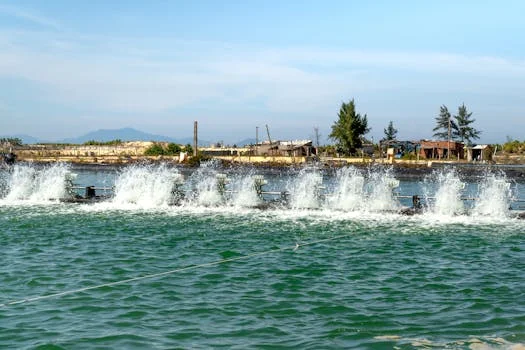
Compliance with the North Carolina Department of Environmental Quality (NC DEQ) governs every step from initial permitting through ongoing effluent monitoring for any package wastewater treatment plant in North Carolina. NC DEQ issues the permits, and EPA Region 4 provides oversight and enforcement. Direct discharges to surface waters require an NPDES permit; land-application systems use a Non-Discharge permit; facilities discharging to a municipal sewer need an Industrial Pretreatment permit.
Standard effluent limits for most municipal plants under NCAC 15A.0211 are 30 mg/L BOD₅ and 30 mg/L TSS. Ammonia-nitrogen limits run 1–2 mg/L, varying by watershed classification, with stricter values in nutrient-sensitive waters. Industrial limits are sector-specific; food processing permits can drop as low as 10 mg/L BOD₅. Disinfection is mandatory; sites typically use chlorine dioxide generators or UV systems to hit the standard E. coli limit of 200 CFU/100 mL.
Nutrient management decides project scope in several basins.Hitting those targets usually means enhanced biological nutrient removal or chemical phosphorus precipitation, supported by an automatic chemical dosing system. Sampling is strict: weekly for BOD₅/TSS, monthly for nutrients, quarterly for E. coli. NC DEQ runs unannounced inspections, averaging two per facility per year. One small NC municipality faced a $120,000 ammonia fine after poor aeration control on a conventional package plant.coli
Package Plant Costs in North Carolina: CAPEX, OPEX, and ROI Framework
Choosing a package wastewater treatment plant in North Carolina means weighing Capital Expenditure (CAPEX), Operational Expenditure (OPEX), and Return on Investment (ROI) side by side. The benchmarks below reflect bid-day ranges municipal engineers and industrial managers actually see.
CAPEX ranges (2025 data) scale with technology and flow. A 10,000–50,000 GPD Anoxic/Oxic (A/O) system lands between $120,000 and $350,000. A 50,000–200,000 GPD Membrane Bioreactor (MBR) runs $400,000 to $1.2 million. Hybrid or very large DAF/MBR trains at 200,000–500,000 GPD reach $800,000 to $2.8 million. These figures cover equipment, installation, and startup; site conditions move the final number. For context on regional cost variation, the Wastewater Treatment Plant Cost in Boston 2025 guide breaks down a different market.
OPEX benchmarks are technology-dependent. A/O systems typically run $0.40–$0.80 per 1,000 gallons treated, driven by energy, chemicals, and routine maintenance. MBR systems run $0.70–$1.20 per 1,000 gallons because membrane aeration is energy-intensive and membranes need replacement every 5–8 years. North Carolina electricity averages $0.08–$0.15/kWh under Duke Energy 2024 rates, which is the single largest OPEX line. Labor is where package plants win: most need only 0.5–1 FTE versus the 2–3 FTEs a conventional plant demands.
An effective ROI framework compares package plants against the next cheapest alternative. Extending centralized sewer runs roughly $1.5 million per mile, while an 80,000 GPD package plant costs $700,000 to $900,000 and serves a similar footprint. Payback periods of 3–7 years are common when avoided penalties, labor savings, and deferred infrastructure expansion are counted. North Carolina-specific funding compresses those numbers further: NCDEQ's Clean Water State Revolving Fund (CWSRF) offers 1–2% loans for eligible projects, and USDA Rural Development grants can cover up to 75% of project cost for communities under 10,000 population.
| Technology | Flow Rate (GPD) | Estimated CAPEX (Equipment, Installation, Startup) | Estimated OPEX (per 1,000 gallons) | Typical Payback Period (Years) |
|---|---|---|---|---|
| A/O System | 50,000 | $250,000 – $350,000 | $0.40 – $0.60 | 5 – 8 |
| A/O System | 100,000 | $350,000 – $550,000 | $0.45 – $0.65 | 6 – 9 |
| MBR System | 50,000 | $400,000 – $700,000 | $0.70 – $0.90 | 7 – 10 |
| MBR System | 100,000 | $700,000 – $1,200,000 | $0.80 – $1.10 | 8 – 12 |
| DAF Pretreatment (Industrial) | Equivalent to 50,000 GPD | $150,000 – $300,000 | $0.50 – $0.75 | 3 – 6 |
| DAF Pretreatment (Industrial) | Equivalent to 100,000 GPD | $250,000 – $500,000 | $0.60 – $0.85 | 4 – 7 |
Supplier Evaluation Checklist: 10 Questions to Ask Before Buying a Package Plant in NC
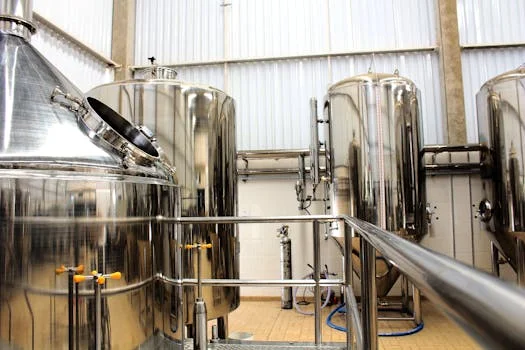
Choosing a supplier for a package wastewater treatment plant in North Carolina is as consequential as choosing the technology. Run a structured evaluation instead of chasing the lowest bid, because reliability and compliance dominate total cost of ownership.
- Technical Criteria: Does the supplier offer NC DEQ-compliant designs that address state-specific effluent limits and nutrient management strategies? Can they provide a process guarantee, such as 95% BOD₅ removal or specific ammonia-N limits? Do they have local references, such as a successful installation for an NC municipality or industrial facility, showing proven performance under state rules?
- Compliance Support: Will the supplier assist with the NPDES permit application, including technical reports and NC DEQ interaction? Do they offer operator training and certification support, especially since NC requires certified operators for plants exceeding 100,000 GPD?
- Financial Criteria: What is the standard warranty period for equipment (typically 1 year) and critical components like membranes (often 5 years for MBR systems)? Are spare parts available locally, for example from Charlotte or Raleigh distribution centers, to limit downtime? What is the realistic lead time for custom systems, including manufacturing and shipping, which can run 6–12 months?
- Service and Support: Does the supplier offer 24/7 remote monitoring to detect and diagnose operational issues early? What is their guaranteed response time for emergencies, especially given that NC DEQ often requires a 4-hour response for permit violations?
A red flag during supplier evaluation is the absence of verifiable NC references. A supplier without North Carolina experience will struggle with watershed-specific rules such as the Neuse River Basin nutrient limits and the Falls Lake Rules, which leads to permit delays and rework. Cross-state familiarity is useful context but never replaces local project history, as covered in the Industrial Wastewater Treatment in Alabama USA guide.
Case Study: Upgrading a Rural NC Municipality with a 50,000 GPD Package Plant
The Town of Taylorsville in Alexander County upgraded its wastewater infrastructure with a 50,000 GPD package plant and returned to NC DEQ compliance within six months. The 67 Main Avenue WWTP (NC DEQ 2019 list) serves about 2,300 residents. Its aging lagoon system was failing NCAC 15A.0211 limits with BOD₅ above 40 mg/L and TSS above 50 mg/L, putting a consent order on the table.
The selected solution was a 50,000 GPD Anoxic/Oxic (A/O) train using an Underground Package Sewage Treatment Plant (WSZ Series) with an integrated chemical dosing system sized for enhanced phosphorus removal in line with future nutrient rules. Total CAPEX was $320,000, offset heavily by a USDA Rural Development grant. OPEX benchmarks landed at $0.55 per 1,000 gallons treated.
Post-installation results were immediate. BOD₅ stabilized at 12 mg/L (down from 45 mg/L) and TSS at 8 mg/L (down from 50 mg/L), both inside permit limits, and NC DEQ lifted the consent order after six months of compliant operation. The automated package plant cut operator labor from 2 FTEs to 0.5 FTE, freeing long-term budget. The most valuable lesson from this site was the remote monitoring package: it flagged an aeration failure within two hours, letting operators correct it before any effluent excursion hit the record.
Who This Is For, Who Should Look Elsewhere, and Next Step
This guide is built for North Carolina municipal engineers, EPC contractors, and industrial facility managers sizing a package plant in the 10,000–500,000 GPD range who need to balance NC DEQ compliance, CAPEX, and OPEX against a real deadline. If your project sits below 1,000 GPD, a permitted septic system under NCGS §130A-335 is usually the lower-cost path. If you are designing a regional plant above 1 MGD, conventional activated sludge with full redundancy typically beats a package plant on lifecycle cost.
The fastest next step is to send your design flow, influent characterization, and target effluent limits to a supplier for a budget-priced process guarantee and a draft permit pathway. Request a tailored quote with influent and effluent data and we will return a sized process train, a CAPEX/OPEX range, and an NC DEQ permit timeline.
Frequently Asked Questions
What is a package sewage treatment plant?
A package sewage treatment plant is a compact, pre-engineered wastewater system that integrates biological treatment, sedimentation, and disinfection in one modular unit. These plants suit small communities, industrial sites, and remote North Carolina locations without centralized sewer. Typical designs target 10,000–500,000 GPD and ship as factory-built modules for faster install than stick-built plants.
How much does a package wastewater treatment plant cost in North Carolina?
CAPEX for a package wastewater treatment plant in North Carolina typically ranges from $120,000 for a 10,000 GPD A/O system to $2.8 million for a 500,000 GPD MBR system. OPEX generally runs $0.40–$1.20 per 1,000 gallons treated, with MBR systems higher due to membrane replacement and aeration energy. These figures include equipment, installation, and startup, but exclude land acquisition.
What are the NC DEQ requirements for package plants?
NC DEQ requires an NPDES permit for wastewater plants discharging to surface waters above 1,000 GPD capacity. Standard municipal effluent limits under NCAC 15A.0211 are 30 mg/L BOD₅ and 30 mg/L TSS. Plants in nutrient-sensitive watersheds, including Falls Lake under 15A NCAC 02B.0275, must meet nutrient strategies that require 40% nitrogen and 77% phosphorus reduction. Regular sampling and reporting remain mandatory.
Can package plants handle industrial wastewater in NC?
Yes, package plants can treat industrial wastewater in North Carolina when paired with the right pretreatment. Food processors typically remove high FOG and solids with Dissolved Air Flotation (DAF) before the biological stage. NC DEQ issues sector-specific industrial discharge permits with tailored limits, such as 10 mg/L BOD₅ for certain food processing facilities, so designs must match the permit from day one.
What is the difference between a package plant and a septic system?
Package plants serve higher flows (typically 10,000–500,000 GPD) and treat wastewater to NC DEQ discharge standards such as 30 mg/L BOD₅ and 30 mg/L TSS. They can serve multiple homes, commercial sites, or small municipalities. Septic systems under NCGS §130A-335 usually serve single-family homes, treat to a lower on-site standard, and discharge to a drain field rather than surface waters.