Why Sri Lanka's Municipal Sewage Treatment Needs an Upgrade
Only about 3% of Sri Lanka's population is connected to centralized municipal sewage treatment, leaving the rest reliant on onsite sanitation that frequently fails during monsoon seasons. Coverage assessments align with that order of magnitude: less than 3% of the population is linked to wastewater treatment, mainly in urban areas. In Colombo, Central Environmental Authority (CEA) reports from 2024 indicate that approximately 70% of untreated sewage reaches the Kelani River, where BOD levels exceed WHO safety limits by over 300% during low-flow periods. A municipal sewage treatment plant in Sri Lanka typically targets BOD below 30 mg/L for inland surface discharge under current CEA rules, with stricter projects aiming below 10 mg/L in sensitive basins.
Urbanization is the main pressure on existing networks. The Department of Census and Statistics recorded 22% population growth in Colombo between 2012 and 2022, pushing colonial-era gravity sewers and septic tanks past their service life. The 2022 floods in Kandy showed what happens when overwhelmed septic tanks release effluent: widespread groundwater contamination and renewed urgency for decentralized, climate-resilient sewage treatment. Engineers comparing similar tropical constraints can review a municipal sewage treatment case study in a tropical climate to see how high-density urban zones manage scale-up.
Modernization funding is moving. The government's Clean Sri Lanka initiative prioritizes urban sanitation and wastewater upgrades in cities such as Galle and Kandy, plus package plants for rural townships. For procurement officers, that shift favors compact, high-effluent trains such as Membrane Bioreactor (MBR) and Sequential Batch Reactor (SBR) systems over older stabilization ponds. For peri-urban and rural lots, an Underground Package Sewage Treatment Plant (WSZ Series) delivers an integrated preliminary-to-secondary train with a small civil footprint.
Sri Lanka's Wastewater Treatment Standards and Compliance Checklist
Discharge of treated municipal sewage in Sri Lanka is controlled under the National Environmental Act, No.2264/17 of 27 January 2022. CEA may impose tighter limits for sensitive receiving waters such as the Kelani River basin and coastal tourism zones. Compliance is both a legal duty and a gate for Asian Development Bank (ADB) or World Bank finance. Funded projects typically also reference Sri Lanka Standards (SLS) 1246:2016 and the WHO Guidelines for Drinking-water Quality (2022) where reuse or downstream drinking-water protection is in scope.
For inland surface waters, Gazette 2264/17 sets BOD at 30 mg/L max, TSS at 50 mg/L, COD at 250 mg/L, ammoniacal nitrogen at 50 mg/L, oils and greases at 10 mg/L, and faecal coliform at 150 MPN/100 ml. Earlier guidance and many comparison tables still list faecal coliform near 400 MPN/100 ml; the 2022 revision tightens that inland limit to 150 MPN/100 ml (CEA, 2022). Sensitive-basin and donor projects often push further, with BOD below 10 mg/L and very low faecal counts. The Kandy City Wastewater Management Project (KCWMP) sets a working benchmark below 5 mg/L BOD and below 10 mg/L TSS using advanced filtration. Non-compliance still carries cost: CEA enforcement data from 2023 shows fines up to LKR 1M (~$3,000) per violation and the risk of project shutdown.
| Parameter | CEA Standard (General) | WHO/EPA Limit (Strict) | SLS 1246:2016 Requirement |
|---|---|---|---|
| Biological Oxygen Demand (BOD5) | <30 mg/L | <10 mg/L | <25 mg/L |
| Chemical Oxygen Demand (COD) | <250 mg/L | <50 mg/L | <150 mg/L |
| Total Suspended Solids (TSS) | <50 mg/L | <10 mg/L | <30 mg/L |
| Fecal Coliform | <400 MPN/100ml | <1 MPN/100ml | <100 MPN/100ml |
| Ammonia (as N) | <50 mg/L | <0.1 mg/L | <10 mg/L |
| Oil & Grease | <10 mg/L | <2 mg/L | <10 mg/L |
Municipal Sewage Treatment Plant Design: Key Stages and Engineering Parameters
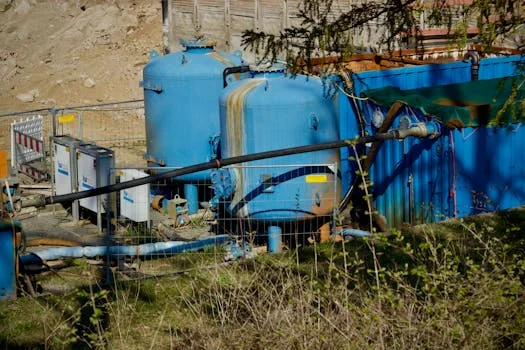
Engineering a municipal sewage treatment plant in Sri Lanka means planning for ambient temperatures of 25–35°C and the grit surge monsoons drive into the sewer network. Preliminary treatment must be robust: mechanical rotary screens with 6–25 mm apertures are standard, but grit chambers need 30–60 seconds retention to handle heavy mineral load in heavy rain. Rural and peri-urban sites benefit from compact WSZ series sewage treatment plants for urban Sri Lanka, which integrate screening, grit removal, and biological stages in one buried skid.
Primary and secondary stages must keep biology stable in the heat. Primary sedimentation tanks in tropical plants usually run at surface overflow rates of 30–50 m³/m²/day. Warm conditions accelerate biology, so sludge retention time (SRT) control is critical to avoid septicity. For the biological step, MBR systems for high-efficiency treatment in tropical climates are now favored over conventional activated sludge because they hold higher mixed liquor suspended solids (MLSS) without the sludge-bulking risk that hits heat-stressed clarifiers (HydropureWater field data, 2025).
| Design Stage | Engineering Parameter | Standard Value (Sri Lanka) | Climate Consideration |
|---|---|---|---|
| Preliminary | Screening Aperture | 6 mm (Fine) / 20 mm (Coarse) | High plastic load in urban runoff |
| Primary | Surface Overflow Rate | 35 m³/m²/day | Prevents odor in high heat |
| Secondary (AS) | Hydraulic Retention Time | 8–12 Hours | Faster kinetics due to 30°C temp |
| Tertiary | UV Transmittance (UVT) | >65% | Necessary for high-turbidity water |
| Sludge | Dewatering Efficiency | 20–25% Dry Solids | Centrifuge/Press required for humidity |
Tertiary polishing is the final safeguard for environmental compliance. Chlorine remains common because of its residual, but UV disinfection is gaining ground in projects like KCWMP for performance against chlorine-resistant pathogens and simpler operation under strong tropical sunlight. Sludge handling is a recurring OPEX line, with disposal in Sri Lanka running $50–$150/ton, so high-efficiency dewatering is essential to cut volume and hauling cost.
MBR vs Activated Sludge vs SBR: Technology Comparison for Sri Lankan Municipalities
The right biological process balances land, CAPEX, and operator skill. Conventional Activated Sludge (CAS) remains the traditional pick for large Sri Lankan plants, but its footprint is hard to fit into dense Colombo or Galle sites. By contrast, MBR systems for high-efficiency treatment in tropical climates need roughly 50% less area because they drop the secondary clarifier, and they hold up better in the dry zone's temperature swings where CAS clarifiers struggle with poor settling.
Sequential Batch Reactors (SBR) sit in the middle on cost and footprint, drawing about 20% less power than CAS by combining aeration and settling in one tank. The catch is PLC-driven automation, which raises training needs for municipal staff. MBRs carry higher CAPEX and membrane replacement at $10,000–$50,000 per module every 5–7 years, but they consistently deliver effluent below 5 mg/L BOD. For cross-regional context, see MBR technology implementation in arid climates for membrane longevity under high-salinity or high-temperature stress.
| Feature | Activated Sludge (CAS) | SBR | MBR |
|---|---|---|---|
| Footprint Requirement | 100% (Baseline) | 70% | 40–50% |
| Effluent Quality (BOD) | 15–25 mg/L | 10–15 mg/L | <5 mg/L |
| Energy Use (kWh/m³) | 0.3–0.5 | 0.25–0.4 | 0.6–1.0 |
| Operator Skill Level | Moderate | High (Automation) | High (Technical) |
| Resistance to Shock Loads | Low | Moderate | High |
Cost Breakdown for Municipal Sewage Treatment Plants in Sri Lanka: 2025 Benchmarks
Budgeting for a municipal sewage treatment plant in Sri Lanka needs a granular read on local costs. CAPEX for a 5,000 m³/day plant starts around $5M for a package system and reaches $15M for a centralized facility with full civil works. Large Colombo schemes run above $50M once sewer network rehabilitation is included. Materials drive much of the bill: structural concrete averages LKR 12,000/m³, and urban land ranges $50–$200/m².
OPEX is dominated by power at Sri Lanka's industrial tariff of about LKR 25/kWh. Energy is roughly 40% of the annual budget, labor 25%, and chemical dosing 20%. ROI on tertiary polishing typically lands between 5 and 10 years once reuse revenue or avoided CEA fines are counted. Most funded projects tap World Bank loans at around 3% interest or ADB grants, both of which require an Environmental Impact Assessment (EIA) costing $20,000–$100,000.
| Cost Category | Estimated Value (5,000 m³/day) | Percentage of Total |
|---|---|---|
| Civil Works & Land | $1.5M – $3.0M | 35% |
| Mechanical & Electrical | $2.0M – $4.0M | 45% |
| Permitting & EIA | $50k – $150k | 2% |
| Annual Energy (OPEX) | $120k – $180k | N/A |
| Annual Maintenance | $40k – $70k | N/A |
Equipment Checklist for Municipal Sewage Treatment Plants in Sri Lanka
Procurement teams should specify equipment that survives coastal corrosion. For preliminary treatment, rotary bar screens (GX series) handle high organic debris loads well. In the primary stage, lamella clarifiers are the common pick for urban Colombo and Kandy sites because they deliver high sedimentation efficiency at a fraction of the footprint of circular clarifiers.
Secondary and tertiary equipment choices should prioritize durability and serviceability. For high-growth urban corridors, MBR systems for high-efficiency treatment in tropical climates using reinforced hollow fiber membranes give the best resistance to physical wear. For sludge handling, sludge dewatering solutions for municipal projects such as plate and frame filter presses are the route to the 90% volume reduction needed for affordable disposal. In remote townships where chemical logistics are patchy, chlorine dioxide generators give a reliable on-site disinfection option. Most plants we size in the wet zone run the checklist below; municipal buyers can request our full bid-ready equipment schedule.
How should plants specify aeration equipment?
Specify fine-bubble diffusers and high-efficiency blowers sized for 8–12 hour HRT in secondary aeration at about 30°C, with spare capacity for monsoon dilute flows. Ask vendors for oxygen-transfer data at tropical temperatures, SS316 or coated hardware for coastal sites, and clear O&M spares lead times before bid award.
What disinfection options suit municipal plants?
Chlorine remains common where a residual is required in the distribution or discharge line. UV suits KCWMP-style tertiary trains when UVT stays above 65% after filtration. On-site chlorine dioxide generation fits remote townships that cannot rely on bulk chemical deliveries.
- Preliminary: Mechanical fine screens (SS316 for coastal areas), vortex grit chambers.
- Primary: Lamella plate settlers, scum scrapers, and primary sludge pumps.
- Secondary: Fine bubble diffusers, high-efficiency blowers, and MBR membrane modules.
- Tertiary: Multi-media sand filters, UV sterilizers, or Chlorine Dioxide generators.
- Sludge: Plate and frame filter presses or screw presses for continuous operation.
- Control: PLC-based SCADA systems with remote monitoring capabilities.
Who This Guide Is For and the Next Step
This guide is built for Sri Lankan municipal engineers, EPC contractors, and procurement officers scoping centralized plants above 1,000 m³/day or rural package units from 50 m³/day upward. If your scope is industrial effluent with heavy metals or a coastal resort under 200 m³/day with different discharge rules, look at our industrial or hospitality-specific guides instead.
Send your flow, influent profile, and target effluent to our engineers for a sized layout, BOQ, and budget estimate matched to your CEA discharge category. Request a tailored quotation and equipment schedule here.
Frequently Asked Questions
Does Sri Lanka have a sewage system?
About 3% of the population is connected to centralized sewage networks today, mainly in parts of Colombo and Kandy. Most urban households still rely on septic tanks, while rural areas use onsite sanitation. The Clean Sri Lanka initiative targets higher urban coverage by 2030 through new municipal sewage treatment infrastructure.
How much does a municipal sewage treatment plant cost in Sri Lanka?
A 5,000 m³/day package plant starts around $5M, while a 50,000 m³/day centralized plant for a city like Colombo can exceed $50M once network rehabilitation is included. Local cost drivers of LKR 25/kWh electricity and LKR 12,000/m³ concrete materially shift the final budget on every municipal sewage treatment plant in Sri Lanka.
Which technology is best for Sri Lanka's climate?
MBR (Membrane Bioreactor) is well suited to Sri Lanka's 25–35°C tropical conditions because it tolerates heat-driven biology changes better than activated sludge and offers a compact footprint for urban centers. SBR is a strong alternative for smaller townships where lower power draw outweighs the higher automation training burden.
What are the compliance requirements for discharging treated sewage in Sri Lanka?
Discharges must meet CEA limits under Gazette Extraordinary No. 2264/17 (2022) and commonly reference SLS 1246:2016. Inland surface limits include BOD 30 mg/L, TSS 50 mg/L, and faecal coliform 150 MPN/100 ml. Sensitive-area and donor projects often require BOD below 10 mg/L on every municipal sewage treatment plant in Sri Lanka.
How can municipalities fund sewage treatment projects in Sri Lanka?
The main funding routes are the government's Clean Sri Lanka initiative for urban sanitation, World Bank loans, and ADB grants. Each requires a full Environmental Impact Assessment and a defensible ROI case based on public health benefits, reuse revenue, or avoided CEA fines for the municipal sewage treatment plant in Sri Lanka.