Why Ludhiana Needs Engineered Sewage Treatment Equipment in 2025
Ludhiana’s groundwater depletion rate has reached a critical 2.5 meters per year, forcing industrial and municipal sectors to transition toward high-efficiency treated effluent reuse for non-potable applications. According to 2024 data from the Punjab Water Supply and Sewerage Board, the city's reliance on groundwater is no longer sustainable, making recycled water an economic necessity rather than just a compliance requirement. For textile clusters, dairy complexes, and expanding residential colonies, the procurement of sewage treatment equipment is now dictated by the need to preserve local aquifers and meet stringent reuse standards.
Regulatory pressure has intensified following PPCB Notification No. 2023/ENV/04, which mandates that industrial units within specific clusters install or upgrade to standardized sewage treatment plants (STPs) to prevent untreated discharge into the Buddha Nullah. The cost of non-compliance is high; in early 2024, a textile hosiery unit in Ludhiana was fined ₹2.3L for discharging effluent that exceeded permissible limits. This penalty, combined with the risk of operational closure, makes the CAPEX of an engineered STP a protective investment. Beyond fines, industrial wastewater treatment strategies for Punjab’s textile clusters emphasize that modern equipment must handle high organic loads and fluctuating seasonal flows characteristic of the region’s manufacturing cycles.
Local challenges in Ludhiana are unique: dairy units face high levels of fats, oils, and grease (FOG), while residential projects often have limited footprint availability. Conventional activated sludge processes often fail in these environments due to their large space requirements and inability to handle shock loads. Consequently, the market has shifted toward compact, modular technologies like membrane bioreactors and integrated biological contact oxidation systems that offer reliable performance in space-constrained urban and industrial zones.
Punjab Pollution Control Board (PPCB) Standards for Sewage Treatment in Ludhiana
The Punjab Pollution Control Board (PPCB) enforces discharge limits for STPs based on the General Standards for Discharge of Environmental Pollutants (2023), with specific focus on protecting the Sutlej River basin. For any project in Ludhiana, equipment must be designed to consistently achieve a Biological Oxygen Demand (BOD) of less than 30 mg/L and Chemical Oxygen Demand (COD) of less than 250 mg/L. Projects located within the Buddha Nullah catchment area are often subject to "sensitive zone" standards, which require even lower nutrient levels to prevent eutrophication.
| Parameter | Standard Discharge Limit (PPCB) | Sensitive Zone Limits (Buddha Nullah) | Monitoring Frequency |
|---|---|---|---|
| pH Value | 6.5 – 8.5 | 6.5 – 9.0 | Daily (Online) |
| BOD (3 days at 27°C) | < 30 mg/L | < 10 mg/L | Weekly (Lab) |
| COD | < 250 mg/L | < 50 mg/L | Weekly (Lab) |
| Total Suspended Solids (TSS) | < 100 mg/L | < 20 mg/L | Weekly (Lab) |
| Ammoniacal Nitrogen (as N) | < 50 mg/L | < 5 mg/L | Monthly |
| Total Phosphorus (as P) | N/A | < 2 mg/L | Monthly |
To operate legally, buyers must obtain "Consent to Establish" (CTE) before installation and "Consent to Operate" (CTO) after commissioning. The PPCB consent process involves a technical review of the STP design, an on-site inspection by regional officers, and verification of the treated water discharge point. This process typically takes 30 to 60 days. Failure to maintain these standards results in penalties ranging from ₹1L to ₹5L per violation, as outlined in the Punjab State Pollution Control Board Enforcement Policy (2024). For facilities with a discharge volume exceeding 100 m³/day, continuous online effluent monitoring systems (OCEMS) are mandatory for real-time data transmission to PPCB servers.
Sewage Treatment Technologies for Ludhiana: Engineering Specs and Costs
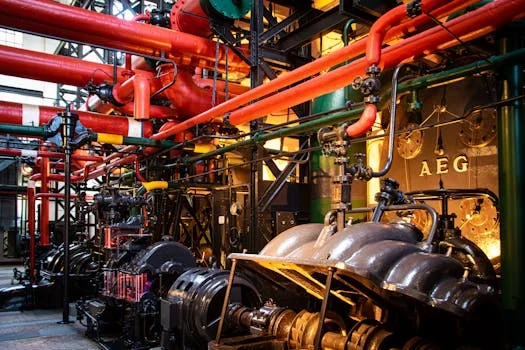
Selecting the right technology requires matching the equipment's hydraulic loading rate and removal efficiency with the specific waste stream of the Ludhiana project. For residential colonies and small industrial units, WSZ series underground STP for Ludhiana’s space-constrained projects provide a biological contact oxidation process that minimizes surface footprint. For high-strength industrial sewage or projects requiring high-quality reuse water, MBR systems for high-efficiency sewage treatment in Ludhiana utilize 0.1 μm pore size membranes to eliminate the need for secondary clarifiers.
| Technology Type | BOD Removal Efficiency | Footprint (per 100 m³/d) | CAPEX Range (Lakhs) | OPEX (per m³) |
|---|---|---|---|---|
| WSZ Integrated (A/O) | 85-92% | 15 – 25 m² | ₹8 – ₹25 | ₹0.8 – ₹1.8 |
| MBR (Membrane Bioreactor) | 95-99% | 6 – 12 m² | ₹18 – ₹45 | ₹2.0 – ₹3.5 |
| SBR (Sequential Batch) | 90-95% | 20 – 40 m² | ₹12 – ₹30 | ₹1.2 – ₹2.2 |
| DAF (Dissolved Air Flotation) | 70-85% (FOG/TSS) | 8 – 15 m² | ₹6 – ₹20 | ₹0.5 – ₹1.5 |
In Ludhiana's dairy sector, high concentrations of grease can clog standard biological systems. Utilizing DAF systems for Ludhiana’s dairy and food processing effluent as a pre-treatment step ensures that subsequent biological stages operate at peak efficiency. lamella clarifiers for Ludhiana’s space-constrained STPs can be integrated into existing plants to increase settling capacity by up to 40% without expanding the physical plant boundaries. For textile units where COD is often refractory, MBR technology is preferred because the high sludge age allows for the proliferation of specialized bacteria capable of breaking down complex organic molecules.
Cost Breakdown: Sewage Treatment Plant Installation in Ludhiana (2025)
Budgeting for a sewage treatment plant in Ludhiana requires a distinction between initial capital expenditure (CAPEX) and the long-term operational expenditure (OPEX). A typical 50 m³/h (1.2 MLD) package STP project in the Focal Point industrial area involves multiple cost centers beyond the equipment itself. While the equipment accounts for roughly 55% of the total cost, civil works and regulatory approvals represent significant portions of the budget.
| Project Component | Estimated Cost (50 m³/h Plant) | Description |
|---|---|---|
| Equipment & Electromechanical | ₹22,00,000 | Pumps, blowers, membranes/media, control panels. |
| Civil Works & Foundation | ₹8,50,000 | Excavation, RCC tanks, and housing for blowers. |
| Piping & Installation | ₹4,00,000 | Internal plumbing and commissioning labor. |
| PPCB Consent & Consultancy | ₹1,50,000 | Application fees and environmental audit reports. |
| Contingency (10%) | ₹3,60,000 | Unexpected soil conditions or price fluctuations. |
| Total Estimated CAPEX | ₹39,60,000 | Fully commissioned system. |
Operational costs are driven primarily by energy consumption (40-60%) and chemical dosing. In Ludhiana, where electricity rates for industrial power average ₹7-₹9 per unit, optimizing blower run-times can save up to ₹40,000 per month on a 50 m³/h plant. Sludge management is another critical OPEX factor; local disposal rates for non-hazardous sludge range from ₹0.3 to ₹1 per cubic meter of treated water. To offset these costs, the Punjab Government offers a 30% subsidy for MSMEs under the Punjab’s 2025 package STP requirements and supplier checklist. An ROI calculation for a Ludhiana textile unit shows that by avoiding PPCB non-compliance fines (avg. ₹2L/month) and reducing fresh water intake, a ₹40L investment typically pays for itself within 3.5 years.
Top 5 Sewage Treatment Equipment Suppliers in Ludhiana: Engineering Comparison
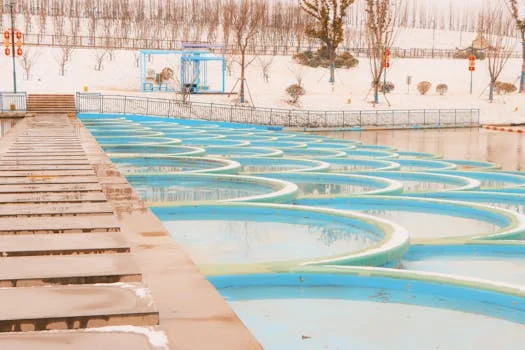
The Ludhiana market features a mix of specialized manufacturers and general environmental engineering firms. Evaluating these suppliers requires a technical audit of their manufacturing capabilities and their history of successful PPCB approvals. The following matrix compares the leading local and regional suppliers active in the Ludhiana industrial belt based on their technology focus and service infrastructure.
| Supplier Name | Primary Technology | Capacity Range | Service Support | PPCB Approval Track Record |
|---|---|---|---|---|
| Eros Envirotech | Compact/Package STPs | 5 – 500 m³/day | Local Ludhiana Team | High (Industrial Focus) |
| National Water Treat | ETP/STP Systems | 10 – 1,000 m³/day | Regional (Punjab) | Moderate (Mixed Projects) |
| Clearline | Biological Systems | 2 – 200 m³/day | Local Ludhiana Office | High (Residential Focus) |
| Waves (Global Aquatech) | Membrane Systems | 5 – 300 m³/day | Remote/On-call | Moderate (Tech-heavy) |
| Kuljeev Engineering | Mechanical Components | Custom Fabricated | Local Workshop | Varies by Consultant |
When evaluating these suppliers, procurement managers should look for "red flags" such as a lack of in-house fabrication, vague energy consumption guarantees, or the absence of a local service center. A reliable supplier should provide a detailed Request for Quotation (RFQ) response that includes a mass balance diagram, a motor list with kilowatt ratings, and a clear membrane/media replacement schedule. Requesting a site visit to an operational installation in Ludhiana (e.g., in the Sahnewal or Doraha clusters) is essential to verify the actual effluent quality and noise levels of the equipment in a real-world setting.
How to Select the Right Supplier: A 5-Step Decision Framework
The procurement of sewage treatment equipment is a multi-decade commitment; selecting the wrong partner can lead to frequent downtime and regulatory friction. Follow this structured framework to ensure technical and financial alignment.
- Define Project Requirements: Quantify the average and peak hydraulic flow rates. Conduct a laboratory analysis of the raw sewage to determine influent BOD, COD, and TSS levels. In Ludhiana, check if the project falls under the Buddha Nullah "sensitive zone" to adjust design parameters accordingly.
- Filter by Technical Expertise: Shortlist suppliers who have successfully commissioned plants for your specific sector (e.g., textile vs. residential). Ensure the supplier offers the specific technology (MBR, SBR, or WSZ) that fits your footprint and effluent reuse goals.
- Evaluate Engineering Proposals: Compare quotes based on Life Cycle Cost (LCC) rather than just CAPEX. A cheaper plant with high energy consumption or frequent membrane replacement will be more expensive over 10 years. Demand performance guarantees for BOD removal rates exceeding 90%.
- Verify Local Support Infrastructure: Visit the supplier’s manufacturing facility if possible. Confirm they have a dedicated service team in Ludhiana or nearby Jalandhar capable of responding to critical blower or pump failures within 24 hours.
- Review the Legal Contract: Ensure the contract includes clear clauses for performance liquidated damages if the treated water fails PPCB tests during the first year. Include a mandatory 2-week training period for your on-site operators and a minimum 2-year warranty on all electromechanical parts.
Frequently Asked Questions
How much does it cost to set up a sewage treatment plant in Ludhiana?
The cost for a small-to-medium STP in Ludhiana typically ranges from ₹5L for a basic 5 m³/day system to ₹50L for a 100 m³/day MBR-based plant. For a standard 50 m³/h industrial installation, the total project cost, including civil work and PPCB consent, averages around ₹37L to ₹40L. Technology choice is the biggest variable; MBR systems are roughly 40% more expensive than WSZ series systems but offer better water quality for reuse.
What are the disadvantages of STPs?
The primary disadvantages include high operational costs, specifically electricity for aeration blowers and membrane cleaning chemicals. MBR systems, while efficient, require skilled labor for membrane maintenance and have higher membrane replacement costs every 5–8 years. Additionally, sludge management can be a challenge if the facility does not have a mechanical dewatering system like a filter press, leading to high disposal volumes.
How much does it cost to install a sewage treatment plant in Ludhiana?
Installation costs generally account for 10-15% of the total project CAPEX. For a 50 m³/h plant, expect installation and commissioning labor to cost between ₹4L and ₹6L. This includes the mechanical positioning of tanks, electrical wiring of panels, and the initial seeding of biological cultures. Civil work, such as RCC tank construction, is billed separately and can add another ₹8L to ₹12L depending on soil conditions.
What is the payback period for a sewage treatment plant in Ludhiana?
For industrial units in Ludhiana, the payback period is usually 3 to 5 years. This is calculated by totaling the savings from avoided PPCB penalties (which can exceed ₹24L per year for recurring violations) and the reduction in water procurement costs through effluent recycling. For residential projects, the ROI is often measured in increased property value and compliance with municipal building bylaws.
How do I obtain PPCB consent for a sewage treatment plant in Ludhiana?
The process begins with an online application on the OCMMS (Online Consent Management and Monitoring System) portal. You must submit the STP design report, site plan, and proof of land ownership. Following the application, a PPCB field officer will conduct an inspection. Once the CTE (Consent to Establish) is granted, you can proceed with installation. After installation, you must apply for CTO (Consent to Operate) by submitting test reports from a PPCB-approved laboratory showing the plant meets discharge standards.