Start with the discharge route and accountable authority
Rural sewage treatment in Turkey generally involves a sewer connection, a buried A/O package plant, or an MBR system. A sewer connection depends on network capacity and approval; a buried package plant suits sites needing compact treatment with limited surface space; MBR adds membrane separation but requires more process and maintenance planning. The buyer should first establish the receiving authority, discharge route and written effluent requirements, then obtain verified flow, site, power and operating data before requesting a wastewater treatment procurement quotation.
Identify the party that controls the application and the receiving-water category: the relevant municipality or local authority, the landowner, the irrigation or reuse recipient, and any environmental authority with jurisdiction over the discharge point. Request the application route, required documents, receiving-water classification, reuse conditions and applicable local discharge limits in writing. A sewer connection feasibility assessment does not establish a decentralized-treatment limit, and a general statement about rural wastewater management does not authorize a particular site.
Keep external data in its original scope. A commercial source reports that US sanitary sewer systems collect about 62.5 billion gallons, equivalent to approximately 235 million tons, of sewer water per day and separately discusses modeled thermal efficiency approaching 85% in a gasification configuration. Neither figure is a Turkish rural treatment criterion, an equipment capacity or an energy requirement for the proposed project.
The permit boundary should be established before equipment selection: who receives the wastewater, under what route, and against which written criteria?
Compare sewer, buried A/O and MBR routes
Choose the route by resolving discharge access, flow variability, available land and the required effluent performance. Sewer connection is viable only if the authority confirms network capacity, a connection route and an approved discharge point. A buried A/O package sewage treatment plant should be considered where surface-space constraints favor a largely below-ground installation. An MBR membrane bioreactor should be compared where the specified effluent requires membrane solids separation or the available footprint is more constrained. These are selection conditions, not site-specific performance claims.
| Discharge route or influent problem | Governing rule or process option | What data settles it |
|---|---|---|
| Municipal sewer infrastructure is available or proposed | Use a sewer connection only after the authority confirms network capacity, connection approval, a discharge point and the applicable charges or works. | Written authority confirmation, service-map information, connection location and site boundary constraints; supplied evidence does not establish network cost or availability. |
| Limited surface space and no confirmed sewer connection | Compare a buried biological treatment plant as a decentralized sewage-treatment route. | Average and peak flow, design horizon, footprint, burial depth, soil and groundwater conditions, installation access and effluent requirements. |
| Tight footprint or effluent specification requires membrane separation | Compare an MBR membrane bioreactor, including membrane cleaning, replacement and specialist maintenance responsibilities. | Influent loads, confirmed discharge limits, membrane configuration, operating hours, operator competence, utilities and maintenance access. |
| Final effluent will be reused rather than discharged | Define the reuse destination and acceptance conditions before selecting the primary treatment route or adding polishing equipment. | Written reuse requirements from the recipient or authority, intended end use, sampling plan and treatment or disinfection boundary. |
Build the site and influent data pack
Price the route only after the design basis identifies how wastewater quantity and quality will vary. Ask the site owner for average and peak domestic sewage flow, current and projected population or facility loading, and the required design horizon. Obtain a measured influent dataset covering COD, BOD, TSS, total nitrogen, total phosphorus, pH, temperature and salinity where applicable. Generic capacity ranges cannot resolve a missing flow basis or loading profile.
Request site information from the landowner, survey team or local authority: groundwater level, soil bearing conditions, flood level, available footprint, vehicle access, utilities and burial constraints. Add operator skill, remote-monitoring requirements and maintenance access to the same data request. For a preliminary equipment comparison, you can also compare A/O, MBR and sewer routes for domestic sewage, but transfer the decision logic only after replacing the illustrative site data with verified project inputs.
| Discharge route or influent problem | Governing rule or process option | What data settles it |
|---|---|---|
| Hydraulic loading is undefined | Require average and peak flow, the design horizon and the period represented by each flow value. | Site owner’s water-demand and occupancy records, current flow measurements, loading forecast and signed design-basis schedule. |
| Wastewater strength is undefined | Require measured COD, BOD, TSS, nitrogen, phosphorus, pH, temperature and salinity data where applicable. | Site owner’s sampling plan and laboratory results identifying sample date, location, method and operating condition. |
| Groundwater, flooding or ground conditions may constrain installation | Include the available footprint, burial limits, flood level, access route, soil bearing conditions and groundwater level in the design basis. | Landowner records, topographic survey, flood information, geotechnical report and marked utility routes. |
| Quoted treatment capacity uses an unclear basis | State whether the quoted flow is hourly, daily or annual; the cited catalog uses m³/h for WSZ and m³/day for MBR. | Supplier capacity schedule with units, operating pattern and correspondence between the selected route and the site flow data. |
| Power and maintenance access are unconfirmed | Verify utilities, operator competence, remote alarms, maintenance access and the intended operating responsibility. | Utility confirmation from the site owner, maintenance-access plan and named operator or service provider. |
Define treatment, pretreatment and reuse boundaries
Define the contaminant and pretreatment boundary before selecting the primary package. Compare influent data with the confirmed discharge or reuse criteria, then determine whether coarse screening, flow equalization, nutrient removal, tertiary filtration or additional disinfection is required. These additions must be justified by the treatment objective rather than included as unspecified “options.”
The supplied GX rotary mechanical bar screen is described as continuous-duty equipment for municipal and industrial headworks, removing suspended solids, rags, plastics and fibrous debris. Confirm whether such a rotary mechanical bar screen for wastewater headworks is necessary for the project’s incoming wastewater and downstream equipment protection. If additional membrane or polishing is required, define the function and acceptance criteria for an ultrafiltration system for water treatment rather than assuming it forms part of the base biological plant.
State the reuse end use before selecting polishing equipment. Irrigation, groundwater recharge and direct reuse have different receiving parties, sampling requirements and acceptance conditions. Obtain the recipient’s written technical requirements and define whether they apply at the treatment-plant outlet, storage point or point of use.
Turn the selection into an RFQ and acceptance plan
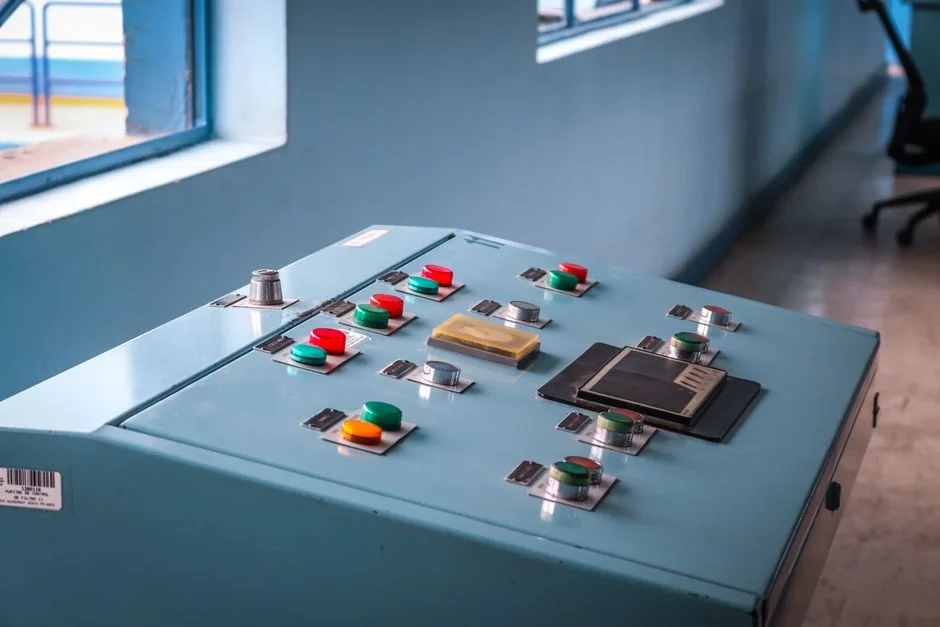
Convert the selected route into an evidence-based RFQ that separates proven site facts from supplier assumptions. Require a process flow diagram, hydraulic and load calculations, duty and standby arrangements, utilities, controls, civil drawings, O&M manual, spare-parts list and commissioning tasks. Make the supplier identify every exclusion, assumption and interface requiring action by the owner or authority.
Define delivery, installation and commissioning boundaries explicitly. State whether sludge removal, odor control, winter operation, effluent monitoring, remote alarms, operator training and performance testing are included. Tie final acceptance to documented tests, defined operating conditions and confirmed influent and discharge requirements; a capacity statement alone does not demonstrate treatment performance.
| Quote line item | Technical scope to specify | Red flags to check before signing |
|---|---|---|
| Design basis and process selection | Approved route, measured flow and loading data, discharge route, applicable limits, process flow diagram, hydraulic calculations and process calculations. | Unstated flow units, reused generic loading assumptions, undefined receiving water or discharge criterion. |
| Equipment and pretreatment scope | Clarification screens, equalization, biological treatment, membranes, filtration, disinfection, sludge handling and duty/standby provisions as applicable. | Headworks or polishing shown only as optional; critical accessories excluded; no treatment train sized against the stated design basis. |
| Civil works and installation | Excavation, foundations, burial, groundwater protection, access roads, utilities, connections, controls and handover documents. | Site conditions remain assumptions; buried depth, flood level or groundwater condition conflicts with the selected equipment. |
| Delivery and commissioning | Transport, unloading, installation, electrical and control work, testing, operator training, spares and documented acceptance. | Transport or crane requirements omitted; “installation” has no boundary; training and commissioning evidence are not scheduled. |
| Performance guarantee and acceptance | Named test parameters, sampling points, test influent conditions, laboratory method, acceptance values and remedy for non-compliance. | Untested guarantee, undefined sampling period, no remedy for failed performance or generic statement that the plant meets capacity. |
| Operations and maintenance | O&M manual, maintenance schedule, membrane or media maintenance, sludge removal, monitoring, remote alarms, training and local service responsibility. | Operator competence is not addressed; membrane replacement, consumables or specialist service costs remain undefined. |
Further Reading
- compare packaged sewage treatment routes for residential projects
- select wastewater flow and level sensors
Frequently Asked Questions
When is an MBR preferable to a buried A/O package plant?
Prefer MBR when the confirmed effluent specification requires membrane solids separation or when the verified available footprint is insufficient for the proposed A/O configuration. Ask the supplier to demonstrate that choice using the site flow, measured loads and written discharge criteria, including the additional requirements for membrane cleaning, replacement and specialist maintenance. Do not select MBR solely from a generic statement that it has a smaller footprint.
What site data is needed to request a reliable quotation?
Provide average and peak flow, the design horizon, measured influent parameters, written discharge and reuse requirements, groundwater and flood information, soil conditions, footprint, access, utilities and operator requirements. Ask the site owner and authority for the source records or written confirmations. For every missing input, require the supplier to state its assumption, price the consequence and identify who must approve it.
What should be included in delivery, installation and commissioning scope?
Request one responsibility schedule covering equipment manufacture, transport, unloading, civil interfaces, installation, utilities, controls, testing, training, documentation, spares and performance verification. Also list exclusions for sludge removal, odor control, winter operation, monitoring, remote alarms and specialist maintenance. A red flag is a broad “delivery and installation” description without named interfaces, dates, responsibilities or acceptance deliverables.
How can a buyer verify treatment performance and acceptance evidence?
Require a signed acceptance protocol before shipment or installation that names the test parameters, sampling points, laboratory methods, influent conditions, duration and pass criteria tied to the confirmed discharge route. Review commissioning records, calibration certificates, operator training records, O&M documentation and a representative performance test. Reject acceptance based only on nameplate capacity or an unquantified statement that the package meets specification.