Define the treatment objective before selecting equipment
Selecting the right equipment for a Libyan residential development requires an assessment of average and peak wastewater flow, influent BOD, COD, suspended solids, effluent requirements, discharge or reuse destination, available space, and maintenance resources. The practical choice is usually between a buried A/O package plant, an MBR system, or a public-sewer connection. The Benghazi study is a sludge study rather than a design standard, but it demonstrates why local conditions and sludge handling must be included in the project basis. A buried WSZ A/O sewage treatment plant and an MBR membrane bioreactor system should be compared against the same site requirements.
Record the intended destination of the treated water to ensure compliance. Discharge applications, landscape or irrigation reuse, and other reuse applications require confirmation against applicable permit or receiving-authority requirements. Ask the developer or authority for the approved effluent specification, sampling requirements, and the identity of the authority that will review the installation. Where reuse is proposed, request the intended application and the water-quality conditions that apply to it.
The project design basis requires average and peak residential sewage flow, influent BOD, COD, suspended-solids concentrations, and the expected housing-unit count or development phasing. A single daily flow figure cannot establish peak capacity or clarify when additional modules will be required.
Establish whether a public sewer is available, feasible, and preferable before proceeding with an on-site plant. This requires confirmation from the relevant authority of the connection point, extension route, capacity constraints, connection charges, approvals, and the party responsible for operation. A useful framing for comparing sewer, A/O and MBR treatment routes is to compare the confirmed obligations of each route rather than treating them as interchangeable equipment options.
Use the Benghazi research as local evidence rather than a current Libyan design standard. University of Benghazi-affiliated research characterized sewage sludge collected from the Guarchia treatment plant and pumping stations in Benghazi. A related study states that Benghazi contains about 36 wastewater-pumping stations, although 16 pumping stations and Guarchia were selected as sampling points for that research. These observations identify local wastewater and sludge issues; they do not establish national effluent limits, design flows, or site-specific reuse criteria.
Compare WSZ, MBR and public-sewer routes
Selecting the optimal route involves matching confirmed treatment objectives to installation constraints, operating responsibilities, and downstream sludge obligations.
| Discharge route or influent problem | Governing rule or process option | What data settles it |
|---|---|---|
| No verified public sewer | Buried WSZ A/O or MBR; review A/O versus MBR requirements with the buried A/O, MBR and package-plant comparison | Design flow, effluent specification, footprint, soil, groundwater, access and operating resources |
| Public sewer available and feasible | Seek the sewer connection before procuring an on-site treatment plant | Connection-point availability, extension distance, authority approvals, capacity confirmation and connection charges |
| Limited above-ground space | Buried WSZ A/O installation, with the installation method confirmed during site design | Available footprint, required burial depth, soil, groundwater, delivery route and lifting access |
| Stringent or reuse-specific effluent quality | Assess the MBR membrane bioreactor system against the confirmed specification | Effluent-quality schedule, reuse destination, required treatment stages, controls and maintenance support |
| Sludge remains part of the operating scope | Define collection, dewatering, storage, removal and disposal for either on-site route | Sludge-generation basis, removal interval, disposal destination, access, power and responsible personnel |
WSZ units can be installed below grade, leaving landscaping above, or mounted on a trailer for mobile deployment. This flexibility makes footprint and installation method explicit selection criteria. MBR warrants closer consideration when the confirmed treatment objective requires it, but its footprint, membrane-related maintenance, controls, and downstream service scope must be compared against the same project data.
A sewer connection may reduce on-site equipment and operating responsibilities, but it should not be assumed to be the lowest-risk route until the relevant authority confirms availability, extension requirements, receiving capacity, and commercial conditions of connection.
Build the site-data and pretreatment basis
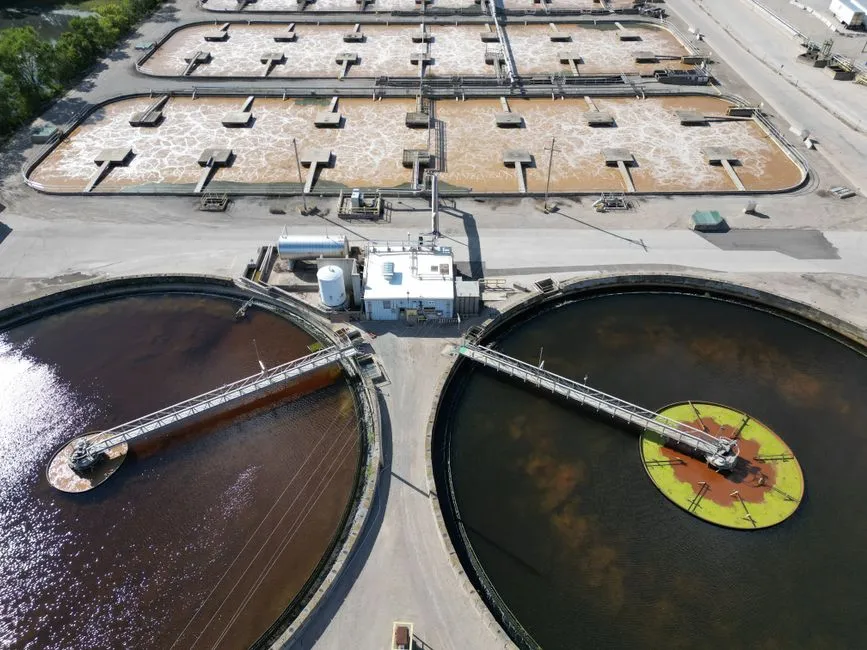
Site surveys and wastewater characterization must be completed before sizing or pricing treatment equipment. Request wastewater flow records, BOD, COD, suspended-solids data, and the expected population or housing-unit count from the developer or authority. Where sampling is needed, agree on the sampling points, periods, and laboratory program before selecting the plant.
The site survey should establish the available footprint, soil conditions, groundwater level, access for delivery and lifting, burial-depth requirements, and the location of the effluent discharge or reuse point. These are physical inputs to installation method and price.
Assess incoming solids, rags, plastics, and other debris to determine if screening and pumping are required. The appropriate pretreatment depends on the selected biological process and the incoming wastewater characteristics. For a mechanical screening option, review the rotary mechanical bar-screen equipment scope and match any proposal to the actual wastewater and delivery-access constraints.
- Obtain the developer’s flow records, housing-unit schedule, and development phasing information.
- Request representative laboratory results for BOD, COD, and suspended solids, with the sampling program documented.
- Complete the site survey, including soil, groundwater, access, burial, and discharge or reuse points.
- Record a screening and pumping basis based on observed incoming solids and debris risks.
Define sludge, reuse and operating responsibilities
Responsibility for the complete residual stream must be assigned before comparing equipment prices. Specify how sludge will be dewatered, stored, removed, and disposed of, including who performs each task and how often. The MedCrave study records that the treatment processes considered produced clarified water containing 20–30 mg/l of suspended solids and a sludge stream of 1–3% solids dry weight. This finding belongs to the cited treatment and sludge-characterization context; it is not a Libyan project design value.
Determine whether a filter press or another sludge-dewatering method is required after the main biological process. Include access, power, and disposal arrangements in the quotation. A plate-frame filter press should be evaluated against the selected sludge-production and handling basis rather than included without a defined function.
For residential wastewater recycling, distinguish treatment from actual reuse infrastructure. Confirm where reclaimed water will go, how it will be stored and distributed, and who will inspect and operate the reuse point. The discharge or reuse schedule should identify sampling points and the evidence needed for approval.
Define the operating package before signature: automatic controls, remote monitoring, spare-parts availability, operator training, maintenance visits, and local support responsibilities. Identify which tasks the developer will perform and which remain with the supplier.
Turn the selection into a quotation and acceptance plan
The entire project scope should be contained within one quotation structure so that exclusions remain visible. The offer should state that equipment selection remains subject to confirmation of site conditions and wastewater characteristics where data has not been supplied. Commercial capacity statements are not substitutes for a verified project design basis or performance guarantee.
| Quote line item | Technical scope to specify | Red flags to check before signing |
|---|---|---|
| Design basis and process selection | Average and peak flow, influent BOD, COD and suspended solids, effluent specification, reuse or discharge destination and development phasing | Quotation relies on unverified flow assumptions or offers capacity without stating the design wastewater |
| Package equipment and pretreatment | Screening, pumping, biological treatment, filtration or disinfection as applicable, equipment dimensions and installation method | Essential process stages or incoming-solids protection are excluded |
| Civil works and installation | Excavation, burial depth, foundations, tank installation, pipework, connections and site restoration | Site conditions, excavation, groundwater control or access are unallocated |
| Electrical supply and controls | Power requirement, controls, automatic operation, monitoring, protection and backup-power interface | Electrical supply, voltage, controls or backup-power responsibility is ambiguous |
| Commissioning and training | Startup, testing, operator training, manuals, spare parts, warranty and support arrangements | Commissioning boundaries, document handover or local support are not defined |
| Sludge and reuse arrangements | Sludge dewatering, storage, removal and disposal; reuse infrastructure where applicable | Residuals or reuse piping are omitted from the offer |
| Performance and acceptance | Performance tests, sampling points, test methods, witnessing rights, acceptance thresholds, rejection remedies and handover documents | No objective acceptance test or remedy is agreed before signature |
Use the wastewater commissioning and acceptance requirements to structure the handover discussion. Define test wastewater conditions, sampling points, test methods, witnessing rights, acceptance thresholds, rejection remedies, and document handover before contract signature. Include wastewater flow and level sensor selection in the controls scope where the selected process requires instrumentation.
Frequently Asked Questions
Which flow figure should be used to size a packaged sewage treatment plant for residential projects in Libya?
Do not select capacity from one flow figure. Request average flow, peak flow, housing-unit or population forecasts, development phasing, and wastewater flow records from the developer or authority to establish the design basis.
Does quoted equipment capacity guarantee that the plant will meet the project effluent specification?
No. Equipment capacity describes the offer, while guaranteed project performance depends on the stated design wastewater and acceptance conditions. Require the supplier to identify the design flow and influent characteristics, the promised effluent parameters, test methods, sampling points, and remedies if the agreed criteria are not demonstrated.
What should be included in the RFQ for a buried A/O or MBR installation?
Include the treatment objective, flow and wastewater data, treatment process, package equipment, pretreatment, civil works, installation method, electrical supply, controls, commissioning, training, warranty, spare parts, sludge handling, and reuse arrangements. State the information still required and make the offer conditional on confirmation of missing site conditions and wastewater characteristics.
How should the buyer select a supplier and define final acceptance?
Compare suppliers using disclosed project references, technical responsiveness, defined local support, spare-parts arrangements, commissioning resources, and clarity on exclusions. Agree on the approving authority, laboratory, sampling plan, test methods, witness rights, acceptance thresholds, and document handover before signature. Obtain written confirmation of responsibility for any authority submission, discharge point, reuse application, or sludge-disposal arrangement.