Choose the discharge route before selecting equipment
For a Dutch hospital, the first decision is the discharge route: connect to the municipal sewer, install on-site treatment, or use a hybrid treatment and disinfection system. Sewer connection transfers more responsibility to the receiving network, but acceptance conditions must still be confirmed. On-site treatment places treatment, disinfection, monitoring and maintenance on the hospital. A hybrid route can combine biological treatment with a dedicated disinfection stage where the destination and permit require it. Equipment selection should follow verified flow, wastewater-quality, site and regulatory inputs.
Identify the intended destination: public sewer, receiving water or an approved reuse point. The relevant hospital treatment source describes mechanical pretreatment followed by disinfection before discharge to the environment or sewer, subject to local legislation. That framework is not itself a Dutch approval: obtain the applicable Dutch effluent permit conditions and municipal sewer-acceptance rules before freezing the process route.
| Discharge route or influent problem | Governing rule or process option | What data settles it |
|---|---|---|
| Public sewer | Use municipal sewer discharge only after confirming acceptance. The hospital remains responsible for demonstrating that its wastewater and connection arrangement meet the receiving authority’s requirements. | Written sewer-acceptance conditions, required pretreatment, sampling points, analytical limits, connection requirements and the responsible municipal authority. |
| Receiving water or approved reuse | Provide project-specific treatment and medical wastewater disinfection; a hybrid route with biological treatment and a dedicated disinfection stage may fit where both treatment duties and pathogen control must be demonstrated. | Permit or reuse approval, receiving-water or reuse objectives, permitted sampling locations, disinfection basis and discharge monitoring requirements. |
| Downstream communal-system influence | Evaluate how on-site hospital treatment affects communal systems. Published research examines this relationship in terms of antibiotics and antibiotic resistance genes, so the design should not treat the downstream network as an unlimited control. | Local utility requirements, wastewater characterization, pharmaceutical data and the agreed pretreatment or monitoring scope. |
| Unconfirmed route or missing permit information | Do not select a package plant from flow alone. Keep the treatment objective open until the destination, approval path and acceptance requirements are documented. | Site owner’s intended destination, permit status, sewer-acceptance decision and a signed design-basis matrix. |
For the Dutch technical context, compare UF versus MBR treatment in the Netherlands against the confirmed reuse or discharge objective. For broader hospital process and compliance questions, use the hospital wastewater treatment engineering and compliance guide to structure responsibilities, but require Dutch approvals as the governing documents.
Identify the hospital wastewater risks that change the process
Separate hospital wastewater streams before selecting a unit, because the required process depends on what enters the system and where its discharge is intended to go. The hospital wastewater source identifies chemicals, pharmaceuticals, pathological biological agents and radioisotopes as possible constituents, particularly in flows associated with infectious-disease wards and autopsy rooms. A representative analysis is more useful than a generic assumption that hospital wastewater has one fixed composition.
Request flow and wastewater-quality data for ward wastewater, laboratories, imaging, kitchens, laundry, cleaning operations and any infectious-disease or autopsy-related flow. The required dataset includes average and peak flow in m³/h, COD, BOD, TSS, oil and grease, pH, pathogens, pharmaceuticals, and relevant radiological or chemical constituents. Ask for separate sample points and sampling periods because a blended daily average can conceal short discharges that determine equipment size and pretreatment requirements.
Keep hazardous solid-waste segregation visible without converting it into a wastewater design assumption. UMC Utrecht reports approximately 200,000 kilograms of contaminated waste annually and uses source-separated streams and dedicated decontamination equipment. The wider waste context from UMC Utrecht is not a wastewater proxy: its approximately 2.5 million kilograms of annual waste, 40% recycling share and stated circular-residual ambitions describe solid-waste management, not hydraulic loading or effluent quality.
For a more detailed example of how hospital flow and treatment selection interact, review the 30 m³/day hospital MBR case study. Use the figures only for that named case, not as a Dutch sizing assumption. A compact medical wastewater treatment system should be shortlisted only after the buyer has defined which streams enter the unit, whether radiological or pharmaceutical controls require pretreatment, and which discharge objective must be met.
Match biological treatment and disinfection to the duty
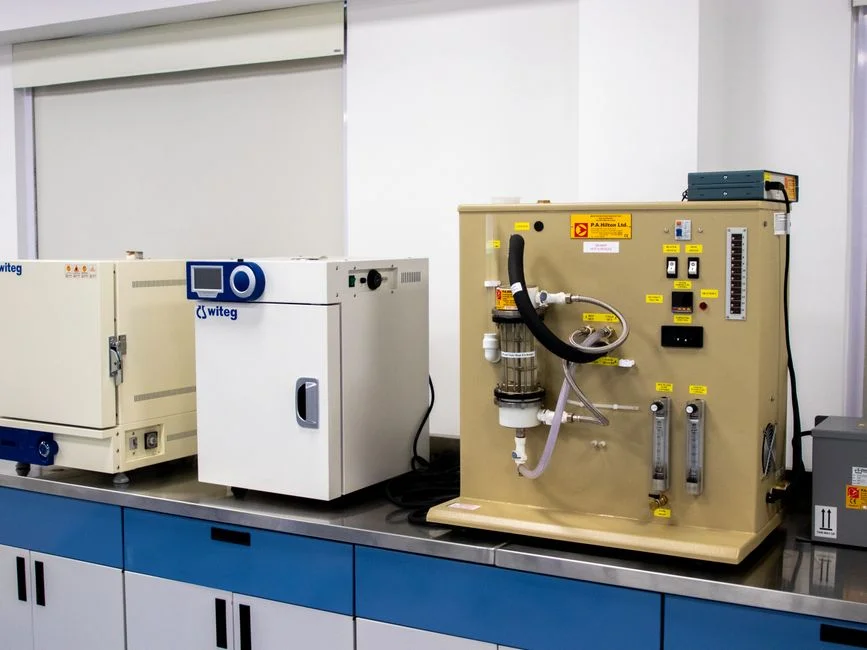
Select the process from the confirmed treatment duty, not from the equipment label. A biological treatment package plant may provide the biological treatment stage where the design basis supports it. An MBR membrane bioreactor combines biological treatment with membrane separation, while ultrafiltration can function as a solids-removal and barrier stage where it fits the approved process. Medical wastewater disinfection must then address the specific pathogen and reuse or discharge objective.
The supplied equipment catalogue specifies 0.03-micron PVDF membranes, capacities from 2,000 to 40,000 L/h and no chemical addition for membrane cleaning. These are catalogue characteristics, not a statement that any capacity fits a Dutch hospital. Match them to the verified average and peak wastewater flow, membrane-loading assessment, maintenance access and required solids separation.
Evaluate UV and chlorine dioxide against the approved design basis rather than assuming equivalent performance. The UV catalogue identifies chlorine-resistant Cryptosporidium and Giardia control, no by-products and no taste change. Chlorine dioxide requires model-specific suitability documentation. The academic source specifically examines disinfection by-product formation with peracetic acid versus sodium hypochlorite, so request an application-specific review of residual chemistry, by-products and downstream receiving conditions.
For process alternatives, use the hospital A²/O and MBR comparison to clarify biological-process alternatives, then require the Dutch supplier to nominate the selected route and its performance evidence. The packaged sewage-treatment approach is useful for identifying package scope, but site conditions and Dutch permit criteria still control acceptance.
Build an RFQ that fixes performance and acceptance
Require each bidder to state the design flow, treatment objective, process route, incoming wastewater analysis, discharge destination and applicable permit or sewer conditions in the quotation. Missing site data should remain visibly marked as an exclusion, assumption or supplier clarification. Do not allow a package description to substitute for the signed design basis.
| Quote line item | Technical scope to specify | Red flags to check before signing |
|---|---|---|
| Design basis and route selection | Average and peak flow; stream segregation; COD, BOD, TSS, oil and grease, pH, pathogens and relevant pharmaceutical, radiological or chemical data; destination; permit and sewer conditions. | “Standard hospital wastewater,” omitted peak flow, no named destination or an offer based only on nominal daily flow. |
| Process and equipment | Selected biological treatment, membrane or ultrafiltration arrangement; disinfection technology; duty, control philosophy, utilities, redundancy and scope boundaries. | MBR, UF and disinfection are compared as product names without stating what each stage removes or how the final duty is achieved. |
| Drawings and controls | Process flow diagram, P&ID, equipment data sheets, control narrative, alarm strategy, sampling points and utility requirements. | Only a layout drawing is offered; instrumentation, controls, sample points or integration with hospital systems remain undefined. |
| Acceptance testing | Parameters tied to the permit or client specification; reference samples, test duration, failed-result procedure, witnessing and handover records. | Acceptance says only “system operates” or relies on startup without defined tests, samples or measurable pass criteria. |
| Operations and handover | Maintenance schedule, operator attendance, training, spare parts, sludge or filter waste handling, commissioning support and documentation. | Residual or filter waste has no handling route, or training, support and consumables are excluded after handover. |
| Delivery and installation | Footprint, access, underground constraints, power, noise, delivery sequence, civil works and commissioning duration. | Equipment dimensions, access envelopes and utility requirements are missing, or their exclusion transfers an undefined construction risk to the hospital. |
Complete the site-input checklist before comparing prices: average and peak flow in m³/h; wastewater-quality data; destination; Dutch permit and sewer-acceptance requirements; available footprint and underground constraints; required effluent quality and disinfection performance criteria. Then request comparable commercial scopes so every quotation includes the same process, services, tests and documentation.
Before signing, require process drawings, P&IDs, equipment data sheets, control narratives, utility schedules, maintenance schedules, spare-parts lists, training, commissioning tests and performance-test methods. For an underground installation, confirm access for maintenance before reviewing a WSZ integrated hospital wastewater treatment plant. Define how failed acceptance results, permit evidence and handover documentation will be handled before placing the order.
Frequently Asked Questions
Which route is most suitable: municipal sewer, on-site treatment or a hybrid system?
Choose the municipal sewer when the receiving authority accepts the wastewater and the connection satisfies Dutch sewer-acceptance conditions. Choose on-site treatment when the destination requires controlled treatment and the hospital can discharge treated effluent to an approved route. Use a hybrid route when biological treatment and a dedicated disinfection stage are both required by the approved design basis. The deciding evidence is the written permit, sewer-acceptance decision and reuse approval—not an equipment catalogue.
How should flow and wastewater composition drive system sizing?
Ask the bidder to size against average and peak flow in m³/h and the measured wastewater characteristics, not against a generic “hospital” profile. Request separate data for ward, laboratory, kitchen, laundry, cleaning, infectious-disease and autopsy-related streams. The buyer should also provide the discharge objective, available footprint, utilities and maintenance-access constraints. A hospital MBR example may illustrate the method, but its project figures must not be transferred to the Dutch site without justification.
What should be verified before accepting a supplier’s compliance claim?
Obtain the Dutch effluent permit conditions, municipal sewer-acceptance requirements, required sampling points, analytical limits and any reuse approval. Ask the supplier to identify which quoted component or performance test demonstrates each obligation. Separately request model-specific disinfection suitability, by-product evidence and the proposed operating controls. A statement that equipment is “compliant” is insufficient until it is traced to a named condition, document and acceptance method.
What should a comparable RFQ include before prices are compared?
Require each quotation to price the same confirmed design basis, process route, equipment, drawings, controls, utilities, installation interfaces, maintenance, training, commissioning and performance tests. Define reference samples, test duration, pass criteria, failed-result handling and handover records. Also identify exclusions for civil works, sludge or filter waste, spare parts and ongoing operator support. If the supplier cannot price a confirmed scope, request the missing site inputs and document every exclusion rather than comparing incomplete offers.