Confirm the Hotel's Wastewater Route Before Selecting Equipment
The practical decision for a Libyan hotel is between connecting to an approved municipal sewer, installing an underground A/O package plant, or using an MBR system. The A/O package plant is a practical site-based option where compact installation and automation matter; MBR becomes more relevant when tighter solids separation or reuse is required. Local evidence from Benghazi notes that wastewater is generally pumped to Guarchia for treatment and that the plant accepts only one quarter of the pumped quantity. Because available evidence does not establish hotel-specific permits or effluent limits, final selection requires verified flow, sewer access, influent characteristics and discharge conditions.
Begin with the receiving route, not the treatment package. Ask the hotel project team, municipal utility and relevant Libyan authority to confirm whether a sewer is physically available at the site, whether connection approval is required, who owns the receiving system and where the hotel may lawfully discharge its wastewater.
Regional context requires caution. A MedCrave Group study from the Chemistry Department of the University of Benghazi reports that wastewater generated by Benghazi is generally pumped to the Guarchia treatment plant. The same source states that only one quarter of the pumped quantity can be accepted and partially treated at Guarchia because of limited capacity and low efficiency. This is Benghazi-specific infrastructure evidence; it does not establish sewer availability, connection conditions or permit requirements for a particular Libyan hotel.
| Discharge route or influent problem | Governing rule or process option | What data settles it |
|---|---|---|
| Approved municipal sewer is available and acceptable | Use the sewer connection as the comparison route, subject to confirmation of ownership, capacity, connection conditions and the authority’s permitted discharge route. | Written confirmation from the receiving utility or authority; connection application, available sewer route, inspection requirements, contribution or connection charges and discharge conditions. |
| No acceptable sewer route is confirmed | Evaluate an underground A/O package sewage treatment plant as a decentralized hotel option. | Verified site survey, design flows, raw-sewage analysis, available footprint, burial depth, soil and groundwater conditions, power supply and final discharge or reuse route. |
| Sewer access is uncertain or constrained | Treat the sewer option as unresolved rather than assuming either availability or rejection. | Confirmation from the municipal utility and site authority on network extension, connection status, ownership, required approvals and any capacity restriction. |
| Verified treatment objective requires membrane solids separation or reuse considerations | Compare the A/O route with an MBR wastewater treatment system against the same design basis. | Approved effluent or reuse specification, treatment and reuse objectives, site constraints, operating resources, monitoring requirements and lifecycle responsibilities. |
Compare Sewer, A/O Package Plant and MBR Routes
The preferred route is the one with a lawful, available and acceptable receiving system.
If sewer access is confirmed, compare its connection obligations and downstream constraints with the operating and site requirements of package treatment rather than selecting equipment before that assessment is complete.
For a decentralized hotel installation, the underground A/O package sewage treatment plant combines anoxic and aerobic biological contact oxidation, sedimentation and disinfection in a buried package unit. This configuration should be assessed against verified treatment objectives, available space, access for maintenance, local operator capability and the chosen discharge route.
The MBR wastewater treatment system combines activated sludge treatment with submerged PVDF membrane filtration. It becomes relevant when the verified project objective warrants membrane solids separation or reuse considerations. That comparison must use confirmed water-quality and reuse requirements; no Libyan hotel-specific effluent limit should be inferred from an equipment description.
A practical sequence is:
- Confirm whether an approved sewer route exists.
- If it does, obtain the connection and discharge conditions in writing.
- If it does not, confirm the site's final receiving route for treated effluent.
- Compare A/O and MBR using the same verified flow, analysis, site and acceptance criteria.
- Include residual sludge, maintenance, power and operator requirements in the commercial comparison.
The broader hotel A/O and MBR route comparison provides decision structure, but the Libyan project must still use local site and authority information.
Size the Plant from Verified Hotel Inputs
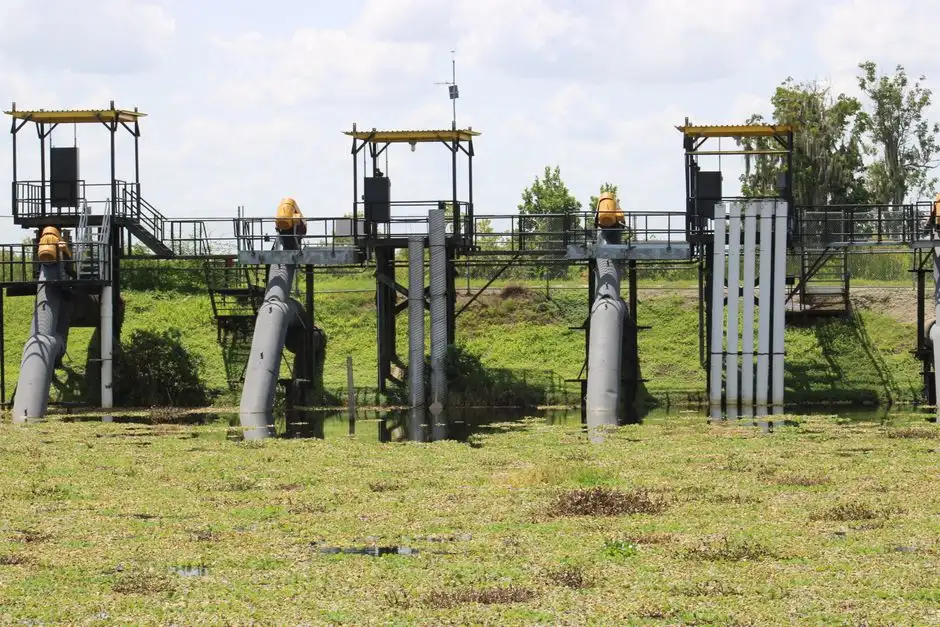
Capacity cannot be selected reliably from occupancy alone. Require average daily flow, peak daily flow, peak-hour flow, the occupancy profile and the unit basis for every submitted flow value. These inputs establish the hydraulic design basis and reveal whether equalization or peak-flow controls are needed.
Request laboratory results for COD, BOD, suspended solids, fats, oils and grease, pH and temperature. Do not allow a supplier to substitute generic hotel sewage assumptions for measured raw wastewater. Sampling should represent the operating period that matters for the design, and the laboratory report should identify the sample date, sampling point, flow conditions and analytical methods.
Solid-containing outputs must also be handled precisely. The University of Benghazi-associated study reports that the sewage treatment processes it examined produced clarified water containing 20–30 mg/l of suspended solids and a sludge stream at 1–3% solids dry weight. Those values are study-specific characteristics, not automatic hotel acceptance limits or evidence of the selected equipment’s performance.
The supplier should state which measured inputs were used, how they govern equipment sizing, and which conclusions remain provisional. A quotation based only on occupancy, fixture count or an assumed average flow should be returned for clarification before technical comparison.
Plan Sludge Handling and Final Disposal
Sludge handling must be priced and permitted as part of the treatment route. Require each supplier to state expected sludge-production basis, solids-capture method, dewatering scope, storage arrangement and the final collection or disposal route. If the selected process requires dewatering before collection or disposal, consider a plate and frame filter press and obtain its operating requirements, solids feed basis, cake handling method and disposal documentation.
The contractor should identify every residual stream, including screenings, grease, septage from any pretreatment equipment and filter-press cake. Ask the hotel and local authority to confirm where each material may go, who transports it and which records must accompany it. A treatment package with no defined residual-disposal path is not a complete proposal.
Turn the Selection into an RFQ and Acceptance Checklist
A defensible site-specific wastewater RFQ should separate process design, equipment supply, civil works, installation, commissioning, training, operation and maintenance, monitoring, sludge handling and warranty support. Make the offer conditional on receipt of verified flow, wastewater analysis, site-survey data, power information and confirmed discharge or reuse criteria.
Set acceptance tests against the approved treatment objective and the final agreed design basis. If no applicable Libyan effluent limit has been verified, state that limitation and require the authority’s written basis before acceptance values are fixed. Do not convert a study result or supplier claim into a permit requirement.
| Quote line item | Technical scope to specify | Red flags to check before signing |
|---|---|---|
| Process design and equipment sizing | Documented design flows, laboratory influent results, treatment objectives, process selection rationale and sizing calculations. | Equipment selected from occupancy alone, generic wastewater assumptions, omitted peak-flow basis or unsupported performance claims. |
| Site survey and civil works | Footprint, burial depth, excavation, access, soil and groundwater conditions, foundations, connections and drainage. | Undefined civil interface, no survey basis, excluded earthworks or installation blocked by access and service constraints. |
| Installation and commissioning | Transport, positioning, piping, electrical supply, controls, connections, testing, startup and performance demonstration. | Delivery, erection, wiring, consumables or commissioning labor excluded without clarification. |
| Monitoring and acceptance | Approved sampling protocol, test methods, instruments, data records, operating parameters and agreed acceptance criteria. | Acceptance based on an unspecified “treated-water quality,” missing laboratory scope or limits that have not been confirmed by the authority. |
| Training and maintenance | Operator training, manuals, routine tasks, spare-parts schedule, response support and maintenance access. | Training or support excluded, spare parts omitted, buried unit supplied without safe maintenance access or no named support responsibility. |
| Sludge handling and final disposal | Sludge estimate, capture method, storage, dewatering scope, transport, disposal route and required documentation. | Residual disposal excluded, dewatering quoted without a feed basis or final disposal route left unresolved. |
| Warranty and commercial exclusions | Defined warranty period, exclusions, response times, spare-parts availability, local support and performance responsibility. | Performance guarantee tied to unverified assumptions or material exclusions hidden in general terms. |
Before signature, verify that the sewer option has been formally resolved, all capacity inputs have a consistent unit basis, the wastewater analysis is traceable, civil conditions are documented and the receiving route is permitted. Use the hotel sewage treatment RFQ preparation framework to check that the final procurement package distinguishes confirmed data from supplier assumptions.
Further Reading
Frequently Asked Questions
How can a buyer confirm whether a municipal sewer is available and what approval is required?
Request written confirmation from the receiving municipal utility or relevant authority. The response should identify the available connection route, system owner, connection process, capacity or ownership restrictions, inspection and contribution requirements, and the permitted discharge route for the hotel. Do not treat general regional descriptions of Libyan wastewater infrastructure as confirmation of service to the property.
How do hotel flow and wastewater analysis determine the required treatment capacity?
Provide average daily flow, peak daily flow, peak-hour flow, occupancy patterns and laboratory results for COD, BOD, suspended solids, fats, oils and grease, pH and temperature. Require the supplier to show how each confirmed input affects hydraulic and process sizing. Generic design assumptions should be identified as assumptions and challenged before equipment selection.
What must a wastewater-treatment quotation include for installation, commissioning, training, maintenance and acceptance testing?
Require separate pricing and responsibility statements for delivery, civil works, installation, electrical and controls work, commissioning, operator training, manuals, maintenance, spare parts, monitoring, sludge handling, warranty and support. Define the sampling method, test responsibility and acceptance criteria in the contract. Where a lawful discharge limit has not been obtained, make that a pre-signature condition rather than inserting an invented limit.
How should a buyer compare an A/O package plant with MBR without assuming unverified Libyan discharge limits?
Compare both routes against the same confirmed flow, wastewater analysis, footprint, receiving route, reuse objective, installation conditions, operator resources and residual-disposal plan. Ask each supplier to identify the treatment objectives that justify its process choice and the proposed monitoring needed to demonstrate them. Use verified authority criteria for acceptance; do not use a regional study value, generic hotel assumption or supplier claim as a discharge limit.