Start with the discharge route and available site data
Domestic sewage treatment in Wrocław must be selected by discharge route rather than equipment catalogue: confirm whether a public sewer connection is feasible; otherwise, compare a buried A/O package plant, an MBR system, and an engineered soil-plant route using daily and peak flow, influent BOD5, COD, TSS and total nitrogen, site conditions, discharge criteria, power, and sludge handling. The supplied evidence supports the need for decentralized treatment in some Polish rural contexts, but it does not establish Wrocław-specific requirements or a ready-made equipment size.
Start the route decision by obtaining:
- Average daily and peak-hour domestic sewage flow, supported by utility records or design data.
- Representative influent results for BOD5, COD, TSS and total nitrogen.
- The intended discharge point and the applicable effluent requirements in writing.
- The competent authority or sewer operator that will verify access, connection, design and commissioning.
- Site drawings, available footprint, excavation depth, soil and groundwater reports, power supply and sludge-disposal arrangements.
A collective sewage system is not automatically the preferred route. The Polish rural-agglomeration study reported by S2 states that only 32% of the described areas consisted of villages with compact buildings where collective sewage was economically justified. That finding supports treating decentralized treatment as a legitimate option, but it does not prove the same result for a Wrocław-area property or development.
Use the A/O, MBR and sewer route comparison as a route-screening framework, then replace generic assumptions with project measurements and local authority requirements.
Compare sewer, package-plant, MBR and soil-plant options
Choose the route that satisfies the required discharge route without creating an unresolved hydraulic, land, groundwater or permitting constraint. A sewer connection remains the preferred option where it is technically accessible and commercially justified, but its viability must be confirmed rather than assumed from proximity on a drawing.
| Discharge route or influent problem | Governing rule or process option | What data settles it |
|---|---|---|
| Public sewer connection | Use where the connection point is accessible, capacity and connection conditions are acceptable, and the resulting commercial arrangement is justified. | Operator confirmation, connection location and depth, required pretreatment, connection cost and discharge obligations. |
| Buried A/O package plant | Use for a defined domestic wastewater duty where biological treatment, solids separation and disinfection can be provided within the available installation conditions. | Daily and peak flow, influent loading, excavation depth, footprint, groundwater, power and sludge-removal method. |
| Integrated MBR system | Use where the treatment objective or space constraint justifies membrane-based separation, subject to project-specific process and control design. | Required effluent parameters, membrane operating requirements, maintenance access, power, controls, pretreatment and solids-management provisions. |
| Soil-plant wastewater treatment | Treat as an engineered site system requiring verification of soil, groundwater, footprint, seasonal performance and the final discharge route. | Site-specific soil and groundwater investigation, available area, climate and seasonal assessment, and authority acceptance of the proposed outlet. |
For the soil-plant option, S2 investigated lysimeters 130 cm deep and 100 cm in diameter during 2012–2014. The installation used sand and clay, gravity drainage and planted treatment. S2 also reports pre-treated domestic sewage COD of 390.6–1583.0 mg O₂·dm⁻³ and Ntot of 47.0–250.2 mg N·dm⁻³. These are research values from the investigated installation, not Wrocław influent limits and not evidence that a nearby site will reproduce the results.
S2 also describes irrigation at 1200 mm·year⁻¹ and 1600 mm·year⁻¹. Do not transfer those experimental loading conditions into a project specification without site-specific hydraulic, soil and climate analysis.
Match process scope to the treatment objective
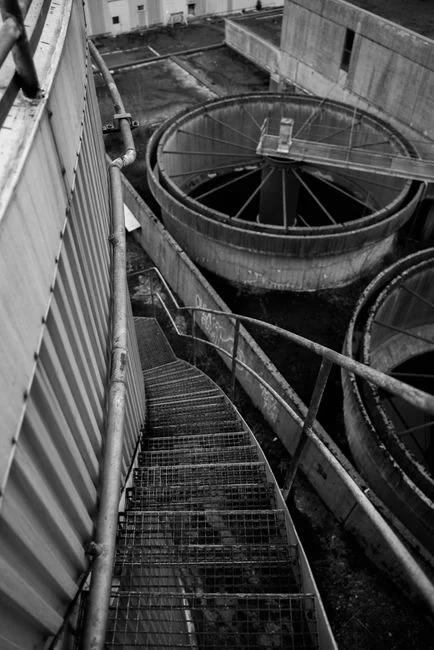
Define what the route must remove before comparing equipment configurations. The WSZ route combines anoxic and aerobic biological contact oxidation, sedimentation and disinfection in a single buried package unit. A buried A/O package sewage treatment plant should therefore be assessed against the complete required treatment sequence, not only its biological reactor.
The supplied soil-plant research used raw domestic sewage discharged into a four-chamber tank, which provided pre-cleaning before irrigation. The research then assessed TSS, BOD5, COD and Ntot in the treated effluent. That sequence illustrates why pretreatment, hydraulic residence and soil-plant performance must be evaluated together; it does not establish a standard treatment train for every Wrocław project.
An integrated MBR sewage treatment system requires a different procurement focus. Ask the supplier to define the membrane module, biological stage, solids separation, controls, cleaning provisions, maintenance access and replacement strategy. For every route, request project-specific effluent parameters, monitoring scope and acceptance tests. Do not infer reuse suitability from equipment alone; establish the intended use and required quality before selecting a process.
For the MBR, the comparison should be explicit: confirm which treatment objectives justify the additional process scope, what pretreatment protects the membranes, how the system responds to the agreed peak flow, and who retains responsibility for membrane cleaning and eventual replacement.
Turn the preferred route into an RFQ-ready scope
A quotation is technically comparable only when it assigns every missing input and states the same performance and delivery scope. Send the same core data request to each bidder, then require each quotation to identify its exclusions, assumptions and offered alternatives.
| Quote line item | Technical scope to specify | Red flags to check before signing |
|---|---|---|
| Design basis and client inputs | Provide average and peak flow, influent BOD5, COD, TSS and total nitrogen, discharge point, effluent criteria, site drawings, soil and groundwater information, power and sludge requirements. | Supplier sizes from fixture count alone, assumes an untested influent, or leaves discharge criteria undefined. |
| Process equipment and pretreatment | Identify the treatment route, duty, process stages, tank or vessel arrangement, access, lifting points and any pretreatment needed to protect the selected process. | Generic equipment wording, excluded screens or pumping, or no stated basis for the required pretreatment. |
| Civil works and installation | Separate excavation, foundations, pipework, connections, chamber construction, backfill, reinstatement, electrical supply, controls and site restoration. | Civil works shown as a broad allowance, with site conditions or utility interfaces unallocated. |
| Controls, commissioning and training | Define alarms, duty/standby arrangements, data logging, factory and site acceptance testing, commissioning, operator training and as-built documentation. | Commissioning means operator instruction only, with no testing protocol, handover records or training scope. |
| Performance acceptance and warranty | Base acceptance on the agreed duty, documented test methods and verified effluent parameters during stated operating conditions. | Unspecified “compliant” performance claims, no sampling responsibility, or acceptance restricted to visual inspection. |
| Sludge, consumables and spares | State sludge production, extraction and disposal duties, routine consumables, recommended spares, maintenance access and replacement responsibility. | Sludge handling omitted, consumables excluded indefinitely, or replacement parts priced without a schedule. |
Assign site flow, sampling and drawings to the client or designer; discharge criteria and authority correspondence to the client; process guarantees, equipment data, utility requirements, controls and acceptance protocols to the supplier. Require the supplier to identify civil interfaces rather than leaving them implicit.
The sewer, A/O and MBR procurement decision and packaged sewage treatment for residential projects provide additional comparisons for quotation structure; their project locations must not be treated as Wrocław requirements.
Check Wrocław-specific approvals before ordering
Do not sign an order until the competent authority, sewer operator, discharge route and local design or commissioning requirements are confirmed for the actual site. Ask the project owner or designer to obtain written confirmation identifying who regulates the proposed discharge and which submissions are required.
Request the applicable effluent criteria and monitoring frequency in writing. The available research does not establish Wrocław-specific discharge limits, sewer connection conditions or permit procedures. The Polish soil-plant study concerns research conditions and must remain separate from a Wrocław permit determination.
Require the selected supplier to support the permit or authority submission with its process description, technical drawings, flow basis, proposed control narrative and relevant equipment documentation. Treat unresolved connection approval, discharge location or required sampling as a pre-signature red flag.
Related Equipment
- integrated MBR sewage treatment system — specifications, capacity range, and technical data
Frequently Asked Questions
How should a domestic sewage treatment system in Wrocław be sized?
Size it from the agreed average flow, peak flow and influent duty, then verify hydraulic retention, peak handling, pretreatment and sludge-removal requirements for the selected route. Do not select equipment from the number of residents or fixtures alone; request the design calculations and operating basis from the supplier or designer.
How much should the quotation cost?
No supported quotation or price is available for a Wrocław-area project, so a defensible budget cannot be stated from the available evidence. Ask each bidder for an itemized price covering process equipment, civil works, installation, utilities, controls, commissioning, testing, training, sludge handling, warranty and spares, with exclusions identified. Then compare quotations only after confirming that they cover the same scope.
How should performance acceptance be defined?
Define acceptance against the agreed influent data, applicable effluent requirements, documented sampling and test methods, and defined operating conditions. Specify factory testing, site acceptance, commissioning, and project-specific performance testing separately. A general statement that the unit will meet legal limits is not an acceptance test.
When is site-specific engineering required instead of catalogue selection?
Require site-specific engineering whenever groundwater, soil, available footprint, discharge location, peak flow, sludge handling or local approval remains unresolved. Soil-plant treatment needs particular site and seasonal analysis; MBR selection needs process, membrane and maintenance design; package-plant and sewer options still require confirmation of hydraulic duty, utilities, civil interfaces and authority requirements.