Start with the discharge route and receiving environment
The choice for domestic sewage treatment in Gdańsk is between municipal sewer connection, a buried A/O package plant, or an MBR system. Sewer connection is normally preferred where legal access and sufficient receiving capacity are confirmed. A buried A/O package plant suits decentralized sites requiring biological treatment, sedimentation and disinfection within a compact installation. MBR becomes relevant when the specified effluent quality, water-reuse requirement or footprint constraint justifies membrane separation. Final selection depends on verified flows, permit limits, site conditions, sludge handling and acceptance criteria.
Begin by identifying the authority responsible for the proposed discharge route and obtaining written confirmation of connection availability, network capacity, applicable charges and any pretreatment requirements. This determines whether decentralized treatment is necessary or merely an alternative to an available sewer.
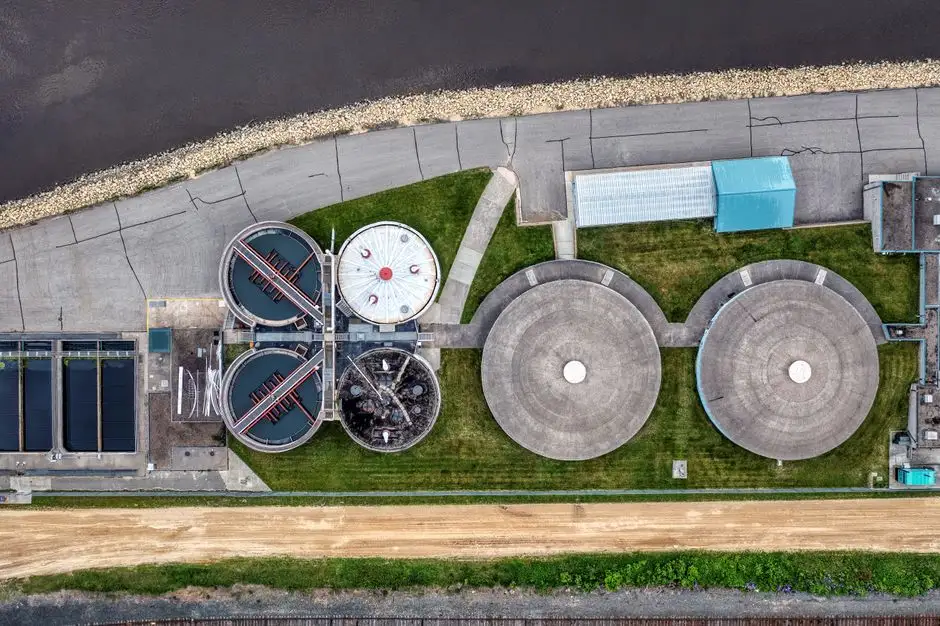
The Wschod wastewater treatment plant provides scale context rather than a design basis for the project. Linnaeus University states that it handles an average sewage flow of 110 000 m³/day and treats 60% of the total sewage quantity in the community of Gdańsk. These figures describe the plant and community; they do not establish available capacity for a specific connection.
The receiving environment also belongs in the project brief. Research published through the National Center for Biotechnology Information discusses an emergency discharge of raw sewage into the Bay of Gdańsk, reporting elevated COD for three days and concerns about organic matter and nitrogen effects. Treatment continuity, monitoring and emergency arrangements require explicit scope even when the selected route is a sewer connection. The A/O, MBR or sewer route comparison provides a useful structure for developing that brief.
Compare sewer, buried A/O and MBR routes
Select the route that satisfies the confirmed discharge route, effluent requirements and operating constraints—not the technology with the highest nominal treatment capacity. Sewer connection remains the preferred route when legal connection, drainage capacity and commercial requirements are confirmed. A buried A/O package plant is relevant for decentralized treatment where a self-contained biological process is required. MBR is appropriate where membrane solids separation is necessary and the available space, sludge-handling system and maintenance resources support that duty.
Do not transfer historical performance at the Wschod plant to prospective equipment. Linnaeus University reports phosphate elimination of 77.6–81.8% during 1993–95, but that result was tied to chemical precipitation at that plant during that period. It is not an acceptance criterion for an A/O package or MBR system.
| Discharge route or influent problem | Governing rule or process option | What data settles it |
|---|---|---|
| A legal sewer connection is available and the receiving network can accommodate the project | Use sewer connection, subject to confirmation of capacity, charges and any required pretreatment | Written connection confirmation, network-capacity evidence, applicable tariff or connection agreement, and authority conditions |
| No sewer connection is available and the site requires decentralized sewage treatment | Consider a buried A/O package sewage treatment plant combining anoxic and aerobic biological contact oxidation, sedimentation and disinfection | Average and peak flows, influent characteristics, permit limits, soil and groundwater conditions, available footprint and sludge-disposal route |
| The required effluent quality, reuse specification or footprint leaves insufficient space for conventional solids separation | Consider an MBR wastewater treatment system with membrane solids separation | Confirmed effluent and reuse requirements, hydraulic loading, membrane-cleaning and replacement provisions, operator access and sludge dewatering arrangements |
| Influent contains variable fats, grit or solids that could overload the selected process | Add pretreatment or revise the process route after a verified influent assessment | COD, BOD₅, suspended solids, nitrogen, phosphorus, fats and grit measurements covering normal and peak conditions |
Test the decision against site and operating constraints

Eliminate a route that cannot meet the confirmed effluent, land, utility, sludge or maintenance conditions. Obtain the design flows and wastewater characteristics before selecting equipment. Required inputs include average and peak domestic sewage flow in m³/day, seasonal and holiday variation, COD, BOD₅, suspended solids, nitrogen, phosphorus, fats and grit.
Confirm the applicable discharge permit, receiving-water conditions and any water-reuse quality requirement. The available research does not establish current Gdańsk-specific limits for an unspecified project, so the permit and receiving requirements must be obtained from the authority responsible for the selected discharge route. Without them, an equipment supplier cannot define a defensible performance guarantee.
Check the physical and operating envelope next: footprint, soil conditions, groundwater level, installation depth, electricity availability, access for maintenance, operator competence and automation expectations. For decentralized treatment, sludge generation, dewatering performance and the final disposal route are equally important because an installation cannot be accepted without a defined residual-treatment pathway.
Request a waste sludge balance as part of the site assessment. Linnaeus University reports that sludge utilization at the Wschod plant was not completely solved, illustrating why dewatering and disposal responsibility must be established rather than assumed. Where filtration is considered for sludge dewatering, the plate-and-frame filter-press option should be evaluated against the actual sludge characteristics and required operating cycle.
Build an RFQ-ready technical scope
Make quotations comparable by requiring the same design basis, battery limits and acceptance tests from every bidder. Ask for a process flow diagram, hydraulic calculation, equipment schedule, controls narrative, utilities consumption and a complete battery-limits drawing. The quotation must also identify which site data the supplier assumes and which remains the buyer’s responsibility.
Separate commercial and technical boundaries before signature. Product supply, civil works, sewer connection fees, installation, commissioning, training, sludge handling, spare parts and long-term maintenance should appear as distinct line items. Define who provides power, water, drainage, access roads, lifting equipment, sampling facilities and final sludge disposal.
| Quote line item | Technical scope to specify | Red flags to check before signing |
|---|---|---|
| Design basis and process guarantees | Average and peak flows, complete influent characteristics, confirmed effluent limits, duty assumptions and treatment process | Guarantee stated only as “domestic sewage” or at average flow without seasonal and peak-duty limits |
| Battery limits and civil works | Exact inlet and outlet connections, underground works, civil interfaces, installation depth, access, power, drainage and required ancillary equipment | Supply-only language that leaves excavation, foundations, pipework or electrical installation unallocated |
| Sludge handling | Expected sludge production, storage, dewatering method, equipment scope, operational controls and final disposal responsibility | No sludge outlet, no operator access or an assumption that disposal is included without a stated destination |
| Commissioning and acceptance | Prerequisites, hydraulic and process tests, sampling points, agreed test methods, witnessing, documentation and remedies for non-compliance | Acceptance relies only on visual inspection or start-up, with no sampling protocol or defined remedy |
| Document and service scope | Document language and set, operator training, warranty, spare-parts list, maintenance intervals, remote support and failure-response times | Documents delivered only after payment, no commissioning support, or undefined response time for critical failures |
For route scope, compare the sewer connection versus decentralized treatment and packaged sewage treatment for residential projects references only as procurement-structure examples; their locations do not establish Gdańsk requirements.
Plan monitoring, maintenance and emergency response
Define how the installation remains compliant when influent, power or process performance changes. Specify routine sampling, flow and level monitoring where justified, alarm handling, operator logs, record retention and named escalation contacts. Sampling points and test methods should correspond to the confirmed permit and acceptance protocol.
Plan maintenance access for screens, pumps, aeration, membranes, sludge equipment, disinfection and controls without assuming that an operator will remain permanently on site. Require the quotation to state maintenance intervals, routine consumables, critical spare parts, remote-support availability and response times for failures. This is particularly important for MBR, where membrane cleaning and replacement must be considered alongside the biological process.
Develop an emergency plan covering bypass prevention, temporary storage, notification, sampling and recovery. The documented Gulf of Gdańsk raw-sewage release described in the academic literature shows why emergency planning should address actual environmental consequences, not only equipment repair. The flow and level sensor selection discussion and wastewater pump maintenance scope can inform the monitoring and maintenance specification, but neither establishes Gdańsk operating limits.
Frequently Asked Questions
How should a domestic sewage treatment plant be sized for a Gdańsk project?
Size it from confirmed average and peak flows, not only daily sewage volume. Include seasonal and holiday peaks, the influent basis, hydraulic peak treatment requirements and any water-reuse demand. Request the supplier’s hydraulic calculation and confirm that its guarantees address the same peak flow and wastewater characteristics.
What should a buyer request to compare treatment costs fairly?
Request itemized pricing for equipment, civil works, connection charges, installation, commissioning, training, sludge handling, utilities, spare parts and maintenance. Require every offer to state exclusions and assumptions so that apparent differences are not caused by unequal scopes. If no quotation has yet been obtained, obtain the confirmed flow basis, permit limits, site data and battery-limits drawing before requesting a price.
How should a supplier be selected for an A/O or MBR route?
Evaluate demonstrated process fit for the confirmed design basis, controls scope, treatment-chain completeness, operator training, service capability, references and commissioning documentation rather than headline capacity alone. Give weight to how the supplier will achieve the agreed effluent results and who is responsible for performance testing. Request evidence that its proposed configuration matches the site’s hydraulic loading, footprint, sludge route and maintenance access.
Which discharge requirements must be verified before ordering equipment?
Verify the permit, receiving-water conditions and any reuse requirement with the authority responsible for the project’s discharge route. The available research does not identify a current Gdańsk-specific permit for an unspecified site. Require the supplier to accept the confirmed requirements as the performance basis; do not substitute historical Wschod treatment figures or generic water-quality values.