Start with the discharge route and required water quality
Domestic sewage treatment in Warsaw should be selected by discharge route, available footprint, effluent quality and reuse objective—not by equipment name alone. A municipal sewer may be simplest where connection is available and accepted. Otherwise, a buried A/O package plant offers an automated, compact route; MBR suits sites requiring high-quality separation or reuse; and a natural system may reduce energy demand but needs adequate land. Polish pilot research reported a 98% BOD reduction and 99.5% ammonium-nitrogen reduction, but these results do not establish Warsaw discharge compliance or replace site design.
First establish whether the treated water will enter a municipal sewer, receive a permitted direct discharge, be reused on site, or support irrigation. That decision determines which parameters must be demonstrated and which authority or utility must approve the route.
Ask the client and designer for the applicable Polish discharge or reuse criteria, together with the approving authority’s written confirmation. The research available for this guide identifies no Warsaw-specific numerical limits, so they must not be inferred from general treatment performance. A Warsaw utility webpage located in the research refers to Warsaw, Indiana, not Warsaw, Poland, and is not applicable local evidence.
Request a measured influent dataset covering daily flow, peak-hour flow, COD, BOD, total nitrogen, ammonium nitrogen, total phosphorus and suspended solids. Also obtain the reuse purpose, available footprint, soil and groundwater constraints, installation boundary, power supply, operator access and sludge-handling requirements. The broader route decision is explained in this comparison of decentralized, constructed wetland and package sewage treatment options.
Compare sewer, A/O, MBR and natural treatment routes
Choose the route by first proving the discharge path, then testing whether its process, footprint and operating obligations match the project requirements. No route can be selected reliably from equipment type alone because connection availability, effluent criteria and site inputs remain unverified.
| Discharge route or influent problem | Governing rule or process option | What data settles it |
|---|---|---|
| Municipal sewer connection is feasible | Confirm connection availability, available sewer capacity, developer or utility conditions and formal connection approval before selecting an off-site treatment package. | Utility connection response, sewer location and capacity evidence, connection conditions, developer obligations and approval correspondence. |
| No accepted sewer connection and a compact, automated installation is required | Consider a buried A/O package sewage treatment plant where its process stages can meet the required effluent quality and reuse objective. | Design and peak flows, influent analysis, footprint, below-grade constraints, power arrangement, sludge handling and effluent criteria. |
| Solids separation is critical to a defined reuse programme | Consider an MBR membrane bioreactor for domestic sewage when the additional equipment scope is justified by the required liquid quality and reuse use. | Reuse specification, required solids and microbiological performance, membrane or replacement provisions, footprint, power demand and operator capability. |
| Land and passive operation are available and maintainable | Develop a natural treatment route only after confirming loading, land area, media, odor control and residual-solids handling; pilot results alone do not establish a Warsaw installation. | Site area, hydraulic variation, soil and groundwater conditions, odor assessment, maintenance access and the approved discharge route. |
This sewer, buried A/O and MBR route comparison provides a procurement framework, but its project context does not establish Warsaw requirements. For natural treatment, the relevant evidence is narrower: the Polish study covered a 2.5-year pilot and reported 98% BOD reduction, 99.5% ammonium-nitrogen reduction and treated-water oxygen content of 4–7 g O2/m3 (S2). Those results describe that pilot, not guaranteed performance for a commercial Warsaw installation.
Check whether a natural treatment system fits the site
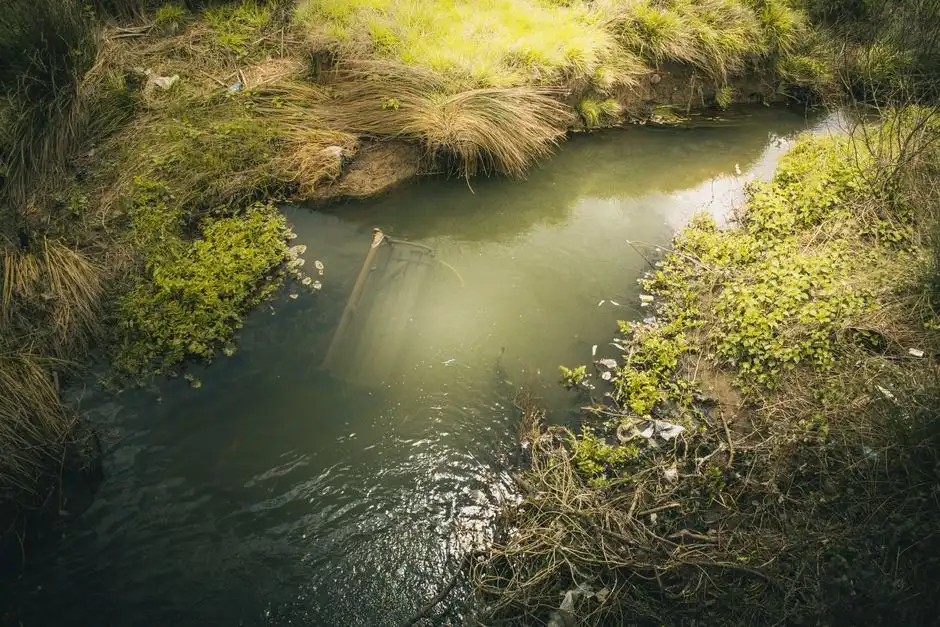
A natural treatment system should advance only when the available land and operating conditions can be demonstrated at the proposed site. The Polish evidence supports investigation, not a ready-made Warsaw design.
S2 reports a compost-bed area of 1 m2 per inhabitant and a daily hydraulic load of about 100 L/m2. These are pilot-study design parameters, not universal sizing rules. The client or designer should reconcile them with the proposed population, flow variation, climate, footprint and applicable discharge criteria before asking a supplier to price the system.
The study also covered a 2.5-year period, with 48 raw-sewage samples and 92 treated-effluent samples. S2 reported complete oxygen access for coexisting heterotrophic and autotrophic bacteria, together with 98% BOD and 99.5% ammonium-nitrogen reductions. Request the underlying sampling protocol and analytical results, including how pilot conditions differed from the proposed site.
Natural treatment still requires a defined management plan for hydraulic variability, odor, sludge or compost removal, media maintenance and inspection access. Ask the designer to confirm groundwater separation, surface-area allocation and whether the receiving authority will accept the discharge route. These site-specific checks may eliminate the natural option before equipment pricing begins.
Build an RFQ that resolves technical and commercial gaps
Issue one common data schedule to all bidders, and do not compare prices until the client or designer has supplied the core site inputs. A quotation is comparable only when bidders are pricing the same flow basis, treatment objective, installation boundary and acceptance tests.
| Quote line item | Technical scope to specify | Red flags to check before signing |
|---|---|---|
| Design basis and capacity | State design flow, peak-flow basis, design horizon, influent dataset, reuse target and applicable effluent criteria. Identify whether capacity is based on average, peak or simultaneous loading. | Undefined “capacity,” omitted peak basis, generic influent assumptions or performance claims without test conditions. |
| Treatment process and equipment duty | List process stages, treatment units, equipment duty, media or membrane specifications, redundancy, sludge handling and disinfection. | Process omissions, unspecified replacement items, single-point failures or reliance on the pilot-study percentages as guaranteed acceptance limits. |
| Installation and exclusions | Define civil works, excavation, installation, connections, power, controls, commissioning, laboratory testing, discharge approvals, training and handover. | Unpriced civil works, power or sludge removal; unclear discharge-permit responsibility; no commissioning boundary. |
| Warranty and service | Require response times, maintenance intervals, spare-parts identification, automation support, membrane or aeration maintenance, documentation and handover records. | Remote-system ownership is unclear, support exclusions are hidden in general terms, or consumables and replacements are excluded. |
Do not use the 98% BOD or 99.5% ammonium-nitrogen reductions from S2 as commercial acceptance thresholds without site-specific design verification. Require the bidder to state the test method, sampling point, test period, operating condition and remedy for non-compliance. Use the wastewater treatment equipment maintenance plan to define the operational information that must accompany the quotation.
Set acceptance, handover and maintenance criteria
Make acceptance conditional on the verified effluent requirement, not on headline removal percentages from unrelated research. Define each parameter, sampling frequency, laboratory method, acceptance point, operating condition and remedy for failure in the contract.
Require operating manuals, as-built information, control narratives, maintenance intervals, identified spare parts, operator training and a clear allocation of remote or on-site automation responsibilities. The acceptance record should identify who sampled the influent and effluent, who performed laboratory analysis and who witnessed commissioning tests.
For MBR, request membrane cleaning, replacement, fouling control and condition-monitoring provisions. For A/O, define access for aeration, sludge removal and disinfection. For natural treatment, specify land and media maintenance, including sludge or compost handling. Assign responsibility for the power connection, civil works, discharge approval, laboratory access, operator training and ongoing compliance records.
For any natural or package option, the handover is not complete until the receiving operator has received the site-specific operating instructions and has demonstrated the required maintenance actions. Procurement of a package sewage treatment plant should therefore include documents and responsibilities, not only the installed equipment.
Frequently Asked Questions
Is a municipal sewer or off-site package plant better for a Warsaw domestic sewage project?
Use the municipal sewer if the utility confirms connection availability, capacity, conditions and approval for the specific development. If no connection is available, compare a package route against the required effluent quality, footprint, power demand, operating capability and total project scope. Ask the client and designer for written connection evidence before selecting equipment.
What flow and influent data are needed to size a domestic sewage treatment system?
Request daily flow and peak-hour flow, plus COD, BOD, total nitrogen, ammonium nitrogen, total phosphorus and suspended-solids concentrations. Also provide the reuse purpose, available footprint, soil and groundwater constraints, and the applicable discharge or reuse criteria. These inputs must be issued to every bidder so capacity proposals use the same basis.
What should a Warsaw sewage treatment plant quotation include so suppliers can be compared?
Require the design-flow basis, influent data, process stages, equipment duty, installation boundary, civil works, power, commissioning tests, discharge-approval responsibility, training, maintenance, spare parts and exclusions. A red flag is a low price that omits site works, power, sludge handling, consumables, testing or permit support.
How should buyers assess a package or MBR supplier's local compliance and delivery capability?
Ask for the supplier’s named compliance contact, local installation and service capability, proposed approval support, commissioning responsibility and documented delivery process for the Warsaw site. Separately request membrane or A/O maintenance arrangements and any projected replacement costs. No supplier’s statement should substitute for confirmation of the applicable Polish discharge or reuse criteria and the approving authority’s acceptance.