Confirm That Reverse Osmosis Fits the Application
An industrial reverse osmosis water-treatment system in Guatemala should be selected by starting with the required permeate quality, then confirming the source water, production rate, pretreatment needs, recovery and disposal route. RO uses pressure to force water through a semipermeable membrane; the academic source also identifies nitrate removal as one application. UF can protect downstream membranes, while EDI can polish RO permeate where very low ionic contamination is required. Because no Guatemala-specific water analysis or verified discharge rule is supplied, the final train and recovery rate require site data.
Define whether the treated water is intended for a manufacturing process, reuse, rinsing, boiler feed or another specified purpose. Record the required permeate quality against the applicable process or reuse criterion. Do not ask for an RO quotation based only on a desired flow rate: the same flow can require different equipment when the feed chemistry, scaling risk or required ionic purity changes.
RO is appropriate as the core separation process when the application requires removal of dissolved constituents and the feed can be conditioned to protect the membranes. The academic material describes pressure-driven transport through a semipermeable membrane and identifies nitrate removal as one RO application; that example does not establish that RO is necessary for every Guatemalan source water. Ask each supplier to identify the specific feed constituents and process requirements addressed by the proposed train.
Use the industrial RO water treatment system information to clarify the proposed configuration, but require the final selection to follow the application definition and verified source-water analysis. A supplier should also identify any constituent outside the RO design basis and the pretreatment step needed to control it.
Match the Treatment Train to the Source Water
Select pretreatment based on the contaminants that threaten membrane performance, and select polishing based on the permeate requirement. Obtain a source-water analysis covering dissolved solids, hardness, silica, iron, manganese, turbidity, colloid risk, biological load and target contaminants.
Use multimedia filtration where suspended solids, turbidity or colloids must be controlled before RO. The supplied product information states that this filter can achieve SDI values suitable for downstream RO membrane protection; request the tested or stated performance and the feed condition on which it depends. Consider UF pretreatment for RO where the analysis and operating envelope support finer solids separation than multimedia filtration provides.
Use EDI only when RO permeate requires further ionic polishing. The supplied product information states that EDI continuously polishes RO permeate without acid or caustic regeneration. It should not be added simply because the project is described as industrial; the required permeate specification must justify it.
Every recovery, flux and removal claim remains site-dependent until it is supported by the source analysis and proposed operating envelope. The following table turns source-water findings into a route decision rather than treating RO, UF and EDI as interchangeable products.
| Discharge route or influent problem | Governing rule or process option | What data settles it |
|---|---|---|
| Suspended solids, turbidity or colloid load ahead of RO | Control the feed before the RO membranes. Compare multimedia filtration with UF pretreatment where the analysis indicates that finer particle separation is required. | Source-water turbidity, suspended-solids results, colloid assessment and the proposed membrane-protection criterion. |
| RO permeate requires additional ionic polishing | Consider EDI after RO only where the required permeate quality justifies the added equipment and operating scope. | Target permeate specification, RO permeate analysis and the supplier’s proposed EDI operating basis. |
| Hardness, silica, iron, manganese or biological constituents present | Require the supplier to identify the specific pretreatment or control measure for each constituent and its compatibility with RO. | Complete source-water analysis, including the identified constituents, plus the proposed operating envelope and treatment sequence. |
| Concentrate from the proposed recovery rate | Do not approve the recovery rate until a documented disposal or further-treatment route is identified. | Feed-water flow, proposed recovery, concentrate analysis basis, disposal point and applicable discharge or reuse requirements. |
Size the System Around Production and Operating Constraints
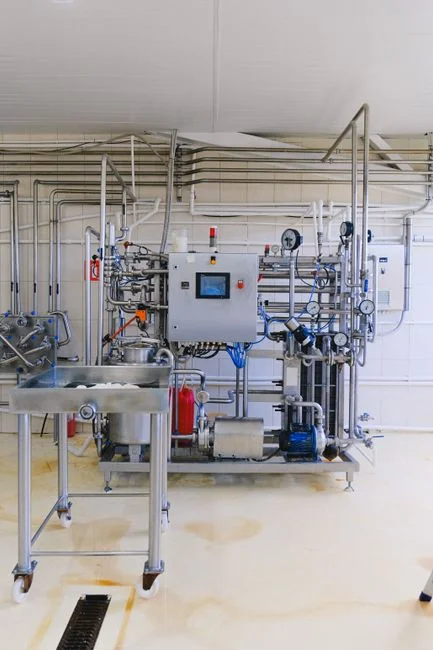
Size the commercial RO plant from usable production demand and site constraints, not from an assumed recovery percentage. The RFQ must state required treated-water output, daily demand, operating hours, peak demand, continuous-duty requirement and any future expansion reserve.
Provide available feed-water pressure and electrical-power information. These inputs affect pump arrangement, pretreatment requirements and utility connections. Also give the supplier the site footprint, installation environment, access for maintenance, drainage arrangements and the concentrate-disposal route. A quotation without these details may show equipment but not a complete operating installation.
Specify whether continuous output is required. HydropureWater’s industrial RO product information identifies PLC-controlled operation and continuous output as product capabilities; these are equipment capabilities, not proof that the selected configuration will meet the buyer’s duty cycle. The supplier must demonstrate how the proposed arrangement satisfies the stated operating schedule.
For additional sizing questions, use estimating industrial RO capacity as a prompt to identify every demand variable—not as evidence of a transferable capacity figure. No production or recovery figure should be finalized before the source-water analysis, permeate target and utility data are available.
Build an RFQ Scope That Can Be Compared
Require quotations to use the same source-water assumptions, permeate targets, recovery basis, pretreatment scope, utilities, concentrate handling and commissioning tasks. Without that alignment, lower prices may reflect different exclusions or less demanding assumptions.
Ask suppliers to state membrane materials and models, replacement intervals, consumables, warranties and local support. The stated commercial experience of over 20 years in B2B water treatment is a vendor positioning claim from Pure Aqua, not evidence of project performance; assess it through references and proposed support resources instead.
Separate the commercial schedule so procurement can compare equivalent costs. Include the plant cost breakdown for procurement planning as a checklist, while requiring the Guatemala quotation itself to identify equipment, freight, civil work, installation, commissioning, training, taxes, duties and long-term consumables separately.
| Quote line item | Technical scope to specify | Red flags to check before signing |
|---|---|---|
| Design basis and RO train | Source-water assumptions, permeate targets, treatment sequence, system recovery basis, membrane materials and models. | Unspecified feed quality, omitted target contaminants or recovery claimed without an operating envelope. |
| Pretreatment and polishing | Identify each filter or polishing unit, its duty, monitoring points and intended control function. | UF or EDI included without a corresponding feed condition or permeate requirement. |
| Controls, instruments and utilities | PLC scope, operator interface, alarms, interlocks, instrumentation, feed-water pressure and electrical requirements. | Controls and critical instrumentation left outside the quoted scope. |
| Installation and commissioning | Define delivery, erection, connections, startup, membrane flushing, performance testing, training and handover. | “Installation” or “commissioning” shown without responsibilities, deliverables or acceptance prerequisites. |
| Concentrate handling | State the assumed recovery, concentrate route, required infrastructure and responsibilities for disposal approval. | Concentrate disposal omitted or treated as outside the supplier’s responsibility without disclosure. |
| Commercial support | List freight, civil work, taxes, duties, training, consumables, warranty exclusions and local service responsibilities separately. | A total price that combines unlike items or hides exclusions and long-term operating costs. |
Set Performance and Delivery Acceptance Criteria
Accept the system through measured performance and completed handover, not equipment delivery alone. Define permeate flow, permeate quality, normalized recovery and operating stability as acceptance measures. Leave numerical limits for the supplier to establish from the verified source-water analysis and application requirements, then review them against the buyer’s process or reuse criterion before signing.
Specify instrument calibration, data logging, alarms, interlocks, PLC controls and the operator interface in the purchase documents. The acceptance test should state test duration, operating conditions, sampling points, measurement methods and the procedure for resolving failed results. This creates a record of what was demonstrated rather than relying on general claims about automatic or continuous operation.
Require documented startup, membrane flushing, performance testing, operator training and handover of operating manuals. Set separate delivery, installation, commissioning and acceptance milestones, and assign each party’s responsibilities. Include a local spare-parts plan, membrane replacement support and maintenance response process in the agreement; the available membrane and filter-element information can support identification of relevant service items, but does not establish replacement intervals for an unspecified source water.
Before issuing the purchase order, obtain the final source-water analysis, application specification, flow schedule, utilities information, space constraints, disposal route and applicable reuse or discharge requirements. Without them, the supplier cannot establish a defensible recovery rate, performance guarantee or acceptance basis.
Frequently Asked Questions
Is UF required before an industrial RO system?
Not always. UF is a candidate pretreatment when the source-water analysis and membrane-protection criteria support finer solids separation than the proposed upstream filtration can provide. Ask the supplier to compare the required feed condition, UF duty, cleaning requirements and capital and operating consequences with the proposed alternative. Do not install UF solely because it is included in a generic treatment train.
When is EDI polishing appropriate?
EDI is appropriate when the required permeate specification calls for further ionic polishing after RO. The EDI polishing system information describes continuous polishing of RO permeate without acid or caustic regeneration, but the decision still depends on the RO permeate quality and application requirement. Request an RO permeate analysis basis and a comparison showing what EDI contributes to the final specification.
What source-water and operating data does a supplier need for sizing?
Provide the source-water analysis, target permeate quality, required output, operating hours, peak demand, expansion reserve, feed-water pressure, electrical power, site constraints and concentrate-disposal route. Also identify target contaminants and any applicable reuse or discharge requirements. These inputs are needed before the supplier can establish the recovery basis, equipment configuration, utilities demand and performance acceptance criteria.
What should be defined when comparing quotations, delivery and acceptance?
Require equivalent design bases and separate prices for equipment, freight, civil work, installation, commissioning, training, taxes, duties and long-term consumables. Before signing, define delivery and commissioning milestones, startup and membrane-flushing records, permeate-flow and quality tests, normalized recovery, operating stability, instrument calibration, data logging, alarms, interlocks, manual handover, warranty boundaries, local spares and maintenance support. A comparable quotation should make all of these responsibilities visible.