
Confirm the discharge route before selecting equipment
Australian hospitals commonly discharge wastewater to an urban sewer for co-treatment, but each project should first confirm its local permit, receiving authority and effluent targets. If on-site treatment is required, compare an A/O biological package plant with an MBR for biological treatment and membrane separation. Add a disinfection stage matched to the effluent use, such as UV or chlorine dioxide, and verify the performance in real hospital wastewater. The available evidence supports route-selection principles; it does not establish current Australian discharge limits or site-specific compliance.
Hospital effluents usually enter an urban sewer, mix with other effluents and are subsequently treated at a sewage treatment plant. A peer-reviewed overview identifies this co-treatment practice as common in Australia, as well as several other countries. That is operational context, not permission for a particular hospital: the receiving sewerage authority, hospital authority and relevant state or territory regulator must confirm the permitted route and any trade-waste approval requirements.
Ask for a written discharge basis covering the permitted sewer connection point, sewer authority conditions, trade waste or sewer discharge approval, effluent parameters, sampling frequency, monitoring obligations and any requirement to segregate hospital wastewater. Request the connection agreement, current discharge monitoring data and the applicable regulator guidance. The hospital wastewater treatment engineering specifications and compliance guide provides a useful structure for compiling site information, but its case-study context should not be treated as an Australian approval.
Do not begin equipment selection without the wastewater flow profile, including peak hourly flow and operating periods; the number of beds and wastewater-generating departments; current sewer connection details; and available composition data. Academic literature reports hospital water consumption in industrialised countries at 400 to 1,200 L per bed per day, but that broad figure cannot size a plant without local flow records (S1, academic review). The key procurement question is whether sewer co-treatment is permitted and acceptable; if it is not, the project needs a defined on-site treatment and discharge route.
Match wastewater characteristics to the treatment route
Select the treatment route by matching the wastewater’s composition and reuse requirement, not by applying a package plant’s nominal capacity. Hospital wastewater includes streams from medical and non-medical activities, and the reviewed literature identifies concerns involving pharmaceutical compounds, metals, disinfectants, detergents, pathogenic microorganisms and organic load. Obtain site-specific analytical data because the literature reports variable pharmaceutical removal and the release of some compounds (S1, academic review).
The same review found conventional activated sludge to be the most widely applied technology among the studies examined, followed by membrane bioreactor technology. A/O biological treatment is a packaged biological route that can be considered where its process configuration and effluent objective suit the site. An MBR combines biological treatment with membrane separation, so it should be evaluated against the required solids separation, footprint and reuse quality rather than treated simply as a higher-capacity activated-sludge alternative.
| Discharge route or influent problem | Governing rule or process option | What data settles it |
|---|---|---|
| Permitted sewer discharge | Confirm sewer co-treatment before procuring on-site equipment. | Written sewer authority conditions, trade waste or sewer discharge approval, connection details and required sampling frequency. |
| Variable flow from clinical and support departments | Check A/O and MBR sizing against measured average and peak flow, including operating periods. | Half-hourly or hourly flow records, water-consumption data, department discharge points and operating hours. |
| Organic and pharmaceutical loading | Define the biological treatment objective and whether pretreatment or a more advanced separation route is required. | Representative influent samples, toxicity assessment, pharmaceutical monitoring and analytical methods. |
| Reuse or strict discharge-quality requirement | Compare the selected MBR with the required solids separation and reuse quality. | Permitted reuse endpoint, effluent specification, sampling points and independent test methods. |
| Limited installation space | Assess an underground A/O package arrangement against footprint, access and maintenance requirements. | Available plan area, excavation constraints, service access, traffic loading and underground-condition information. |
For a packaged A/O route, request the proposed underground A/O package sewage treatment plant. For an MBR route, request the proposed MBR membrane bioreactor wastewater treatment system. In either case, require the supplier to state the sizing basis, hydraulic loading assumptions, treatment objectives and exclusions. The 30 m³/day hospital dialysis MBR case study may inform the questions to ask, but its capacity and site conditions must not be transferred to another hospital without reconciliation.
Choose disinfection for pathogens and discharge conditions
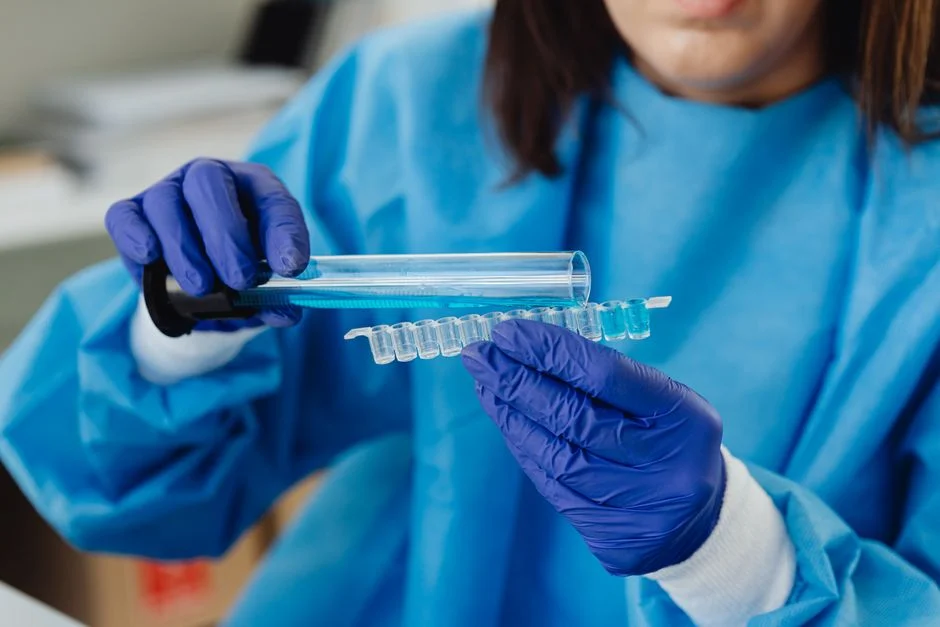
Define whether disinfection is required for pathogen control, pharmaceutical reduction, organic-load reduction or discharge-standard compliance; these are separate objectives and do not justify treating one as a substitute for another. The reviewed hospital wastewater studies used biological treatment with disinfection, membrane treatment with disinfectants, and other combined sequences. The correct route depends on the receiving environment, reuse purpose and regulatory condition.
UV-C is presented as a chemical-free disinfection option, while chlorine dioxide requires model-specific suitability review for the relevant water or wastewater application. Compare these options against the actual target organisms, treated-water flow and quality, residual requirement, site constraints, operator controls and downstream or discharge conditions. If chlorine dioxide is selected, require documentation covering generation, gas handling, chemical supply, occupational safety, materials compatibility and by-product management. The UV disinfection system and chlorine dioxide generator should therefore be evaluated as different process roles rather than interchangeable product labels.
A 2026 study reported continuous 100 h operation of a fixed-bed reactor, greater than 70% removal of dozens of pharmaceuticals in real hospital wastewater and 100% pathogen disinfection (S4, peer-reviewed research). These are research findings for that reactor and wastewater; they are not an Australian regulatory approval, a hospital project specification or a basis for accepting commercial equipment without site-specific verification.
Specify target organisms, the applicable analytical method, UV intensity or chlorine dioxide dose, contact or exposure conditions, any residual requirement, performance-monitoring frequency and operator-safety controls. Identify how by-products will be assessed where chemical disinfection is used. Acceptance should rely on representative commissioning samples and the agreed test method, not product labels or vendor claims alone.
Build the RFQ around technical scope and acceptance
Make the RFQ define the treatment route, performance guarantee and interface boundaries before comparing price. Require the supplier to state whether flow and loading are guaranteed design values, disclose the sizing basis, list the tested influent conditions and identify exclusions for pumps, controls, screens, sludge handling, laboratory equipment or civil works. A quotation that omits these boundaries cannot support a reliable technical or commercial comparison.
| Quote line item | Technical scope to specify | Red flags to check before signing |
|---|---|---|
| Design basis and flow capacity | Average and peak flow, operating hours, wastewater composition, reuse or discharge objective and design loads. | Capacity expressed only as nominal daily volume, or medical wastewater covered without a representative sampling basis. |
| Treatment performance | Guaranteed effluent parameters, defined influent limits, sampling points, test methods and witnessing provisions. | Unspecified guarantee conditions, reliance on averages or no remedy for failed acceptance testing. |
| Equipment and civil interfaces | Complete process scope, duty and standby arrangements, controls, screens, sludge handling, laboratory equipment, civil works and utilities. | Pumps, controls or civil works listed only as “exclusions” without responsibility and price allowances. |
| Disinfection | Target organisms, UV intensity or chemical dose, monitoring, residual requirements, operator safety and by-product review. | “Pathogen removal” without an organism, method or performance condition, or chlorine dioxide equipment without a safety and supply assessment. |
| Commissioning and acceptance | Site-specific testing, training, handover documents, performance period, corrective work and acceptance remedy. | Commissioning limited to start-up, or final acceptance dependent only on a vendor-controlled sample. |
| Operations and commercial terms | Maintenance schedule, spare parts, warranty, remote support, delivery, installation, ongoing analysis and exclusions. | Warranty begins before reliable operation, or testing, consumables and service visits are omitted from the total scope. |
Request commissioning, operator training, maintenance, spare parts, warranty, remote support, delivery, installation and ongoing analytical requirements as separately priced items. This exposes whether the quoted price is for a complete operational system or only the treatment modules. Require the final handover package to include as-built drawings, operating procedures, test records, training evidence, warranty conditions and a clear responsibility matrix.
Frequently Asked Questions
How should a hospital wastewater treatment and disinfection system in Australia be sized?
Size it from verified site flow data, not the hospital bed count alone. Request average and peak hourly flow, operating hours, departmental discharge points, water-consumption records and representative wastewater composition, then have the supplier state how each value affects biological loading, hydraulic capacity and disinfection performance. The literature’s 400 to 1,200 L per bed per day range applies to water consumption in industrialised countries, not directly to plant capacity (S1, academic review).
What evidence should I request from an A/O, MBR or package-plant supplier?
Request the sizing basis, design influent and effluent conditions, process drawings, equipment duties, performance guarantees, sampling points, test methods, commissioning procedure and remedy for failed acceptance tests. Require evidence for the proposed wastewater rather than relying only on catalogue capacity or performance demonstrated on a different wastewater stream.
How should UV and chlorine dioxide be compared for hospital sewage treatment?
Compare them against the target organisms, treated-water characteristics, required dose or intensity, residual requirement, operator safety, utilities and by-product or material-compatibility review. UV offers a chemical-free option as described by the manufacturer, while chlorine dioxide requires a project-specific suitability and safety review. Neither should be accepted without agreed test methods and performance-monitoring requirements.
What must an Australian hospital wastewater quotation include?
Require one integrated quotation covering the approved discharge route, verified design basis, complete treatment and disinfection scope, civil interfaces, controls, sludge handling, laboratory requirements, commissioning, operator training, maintenance, spare parts, warranty, support, delivery and installation. Also require separate quotations for ongoing analytical services and any performance-testing or regulatory approval costs. No reliable price comparison is possible until exclusions and acceptance remedies are stated.
