Choose the Serbian discharge and treatment route
The right system for a Serbian hospital depends on the discharge route, peak flow, wastewater pollutants, available space, and reuse requirements. Compare municipal sewer discharge, a packaged biological plant, an MBR system, and a separate disinfection stage rather than selecting equipment based on peak flow alone. Supply evidence also requires care: ozone exposure for at least 20 min was needed to inactivate DNA and ESBL-producing bacteria in a Japanese hospital study. That finding can inform a verification protocol, but it is not a Serbian discharge limit. The result should be a route matrix, an RFQ scope, and measurable acceptance criteria.
Start by obtaining a written discharge decision from the hospital’s engineering team and the relevant authority or sewer operator. If the hospital will connect to a municipal sewer, request the sewer operator’s acceptance conditions and determine which regional hospital wastewater route comparison issues require clarification for the Serbian site. The underground integrated sewage treatment package may suit an onsite biological route, while an MBR membrane bioreactor for hospital wastewater may be relevant where membrane treatment, footprint, or reuse objectives justify further engineering review.
Do not treat Japanese ozone studies as Serbian regulatory evidence. S1 and S4 concern hospital treatment research in Japan; they support verification questions, not an automatic design condition for a Serbian installation.
| Discharge route or influent problem | Governing rule or process option | What data settles it |
|---|---|---|
| Municipal sewer discharge | Obtain the sewer operator’s acceptance conditions and determine whether a Serbian discharge permit applies to the site. Do not infer a direct-discharge limit from a sewer-acceptance rule. | Discharge permit, sewer acceptance requirements, flow profile, pollutant analysis and any reuse restrictions. |
| Onsite biological treatment | Compare a packaged treatment plant with MBR treatment against treatment objectives, available footprint and maintenance access. | Average and peak flows, COD, BOD, suspended solids, footprint, power, drainage and access. |
| Onsite water reuse | Define the reuse application and treatment train before comparing disinfection stages or advanced treatment. | Required treated-water quality, reuse demand, application-specific acceptance criteria and planned monitoring. |
| Separate medical wastewater stream | Establish whether dialysis, laboratories, kitchens, laundry or clinical activities require isolation, equalization or separate treatment. | Stream-by-stream flow and sampling data, temporary load profile, discharge point and containment requirements. |
Size the system from the full hospital wastewater duty
System sizing must be based on measured duty rather than generic hospital flow assumptions. Request average daily flow, peak-hour flow, the operating profile, and representative wastewater samples from the hospital’s engineering team. The hospital dialysis wastewater MBR case study can help frame the questions to ask, but its project figures should not be transferred to another hospital without matching site data. Establishing a precise baseline ensures the selected technology matches the actual hydraulic and organic load.
- Obtain the complete flow record, including night flow, seasonal variation, peak-hour flow and the operating profile around dialysis, laboratories, kitchens, laundry and clinical decontamination.
- Request analysis for COD, BOD, suspended solids, pathogen indicators and relevant pharmaceutical or antimicrobial residues. Specify sampling dates, sample points and whether results are composite or grab samples.
- Map separate streams and temporary loads, including their flows, pollutant concentrations, discharge points and potential need for balancing or local pretreatment.
- Confirm footprint, access for maintenance, power supply, drainage, installation boundary and expected reuse demand. These constraints determine whether a package plant, MBR or combined train is practical.
Ask the hospital engineer to identify whether data gaps must be closed by additional monitoring before the RFQ is issued. If pharmaceutical or antimicrobial-residue information is unavailable, state that limitation explicitly and request a sampling plan rather than substituting pathogen results for an influent analysis.
Match disinfection technology to the treatment objective
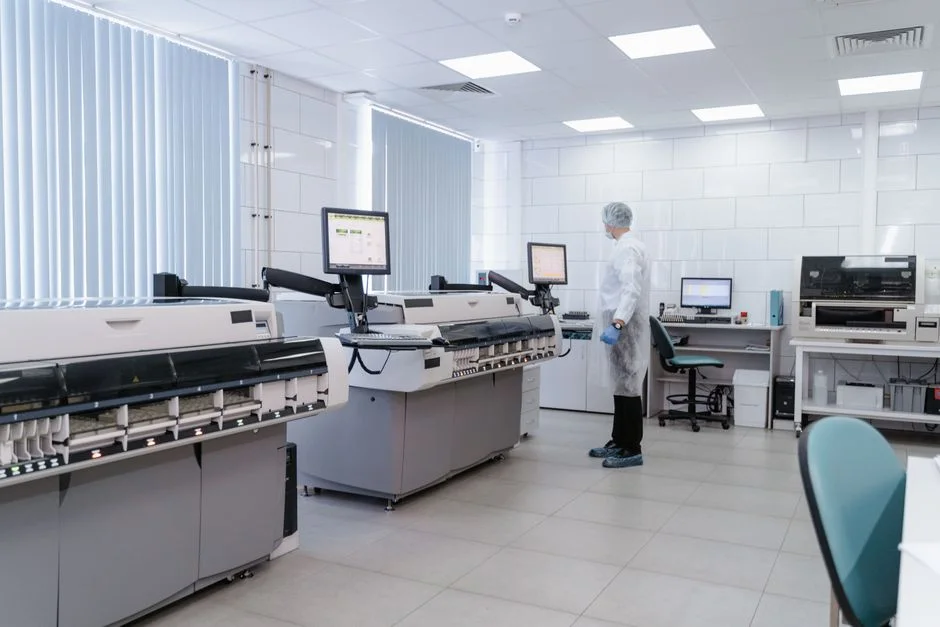
Disinfection technology selection depends on its treatment function and verified operating condition. S1 reported that ozone exposure for at least 20 min was required for adequate inactivation of DNA and ESBL-producing bacteria in a Japanese hospital wastewater study. Use that finding to ask for a pilot or operating-verification protocol; it does not establish a Serbian exposure requirement.
Compare a medical and hospital wastewater treatment system, a chlorine dioxide generator and a UV sterilizer for water treatment by installation route, treatment stage, chemical or power requirements, monitoring, residuals and maintenance access. A biological treatment stage should not be treated as a substitute for a separately verified disinfection function.
Request the supplier’s validation method, tested organism or indicator, operating conditions, monitoring method and residual or contact-time control. S3 identifies a comparative study from 2012 on disinfection by-product formation using peracetic acid versus sodium hypochlorite; request a current, project-specific chemical and by-product assessment rather than assuming either disinfectant is universally suitable.
For any antimicrobial-resistant bacteria objective, require the validation evidence to identify the organism or indicator, sampling point, test method and acceptance rule. Do not transfer a laboratory result into a guaranteed Serbian installation performance claim.
Define the quotation scope and acceptance tests
A comparable quotation must separate design assumptions from priced work. Require the supplier to identify incoming wastewater data, process design, civil works, equipment, utilities, controls, installation, commissioning, training and O&M as separate line items. The hospital wastewater treatment engineering and compliance guide provides a useful structure for the RFQ and handover review, but Serbian permit, sewer and reuse requirements must be established for the actual site. Establishing these parameters early prevents scope gaps during execution.
| Quote line item | Technical scope to specify | Red flags to check before signing |
|---|---|---|
| Incoming wastewater and process design | Reference the flow, analysis and stream assumptions used for sizing; list unresolved data and the design margin. | No site data basis, generic hospital flow assumption, or performance claimed without defined influent and discharge criteria. |
| Equipment and civil works | Separate process equipment, tanks, membrane or packaged treatment, installation, piping, controls and site works. | Civil works or utilities excluded without responsibility being assigned to another party. |
| Installation and commissioning | Define delivery boundaries, erection, connections, power, water, drainage, testing, training and commissioning activities. | Equipment price presented as a turnkey installed price while key site obligations remain unpriced or undefined. |
| Disinfection validation | State the validated organisms or indicators, test methods, operating conditions, monitoring, residuals or contact-time control and project-specific acceptance limits. | Ozone exposure or UV dosage is stated without a test method, operating condition or acceptance record; a Japanese study is presented as a Serbian rule. |
| Performance acceptance | Specify sample points, test durations, operating conditions, reference methods, acceptance criteria, witnesses, failure response and final-payment linkage. | Acceptance depends on an undefined “compliance” claim, with no evidence hierarchy or corrective-action process. |
| O&M and handover | List preventive maintenance, consumables, spare parts, control narrative, alarms, fail-safe behavior, training records, drawings and as-built documents. | O&M excludes membrane replacement, chemicals, UV lamps, dosing consumables or specialist labour without a replacement mechanism. |
Before signature, require the supplier to classify each performance criterion as a Serbian statutory requirement, sewer-acceptance condition, reuse requirement or project-specified acceptance criterion. Make final payment or commissioning acceptance conditional on the agreed tests, with sample points, operating conditions, acceptance records and failure consequences documented in the contract.
Further Reading
Frequently Asked Questions
What information is needed to size a hospital wastewater treatment and disinfection system in Serbia?
Request average daily flow, peak-hour flow, the operating profile, representative wastewater analysis and the intended discharge or reuse route. Identify dialysis, laboratory, kitchen, laundry and clinical streams, then confirm footprint, utilities, drainage and maintenance access. Without these inputs, a supplier can quote an assumed process but cannot produce a defensible site-specific design.
How should ozone, chlorine dioxide and UV be compared for medical wastewater disinfection?
Compare them against the treatment objective, validated test method, operating conditions, monitoring method, residual or contact-time control, utilities and maintenance requirements. Ask the supplier to explain how each option affects antimicrobial-resistant bacteria verification and any project-specific chemical or by-product assessment. The Japanese finding of ozone exposure for at least 20 min is evidence for a verification question, not a Serbian compliance rule.
Which supplier information is needed before comparing quotations?
Require each bidder to show its design basis, process selection, excluded work, utilities, installation responsibilities, controls, commissioning plan, validation evidence, O&M assumptions and handover documents. Treat a generic performance guarantee without a defined influent, sample point, test method and acceptance criterion as incomplete. This is a different check from price comparison because it tests whether the offer can be executed and accepted.
How should cost and budget be evaluated without relying on an unsupported price?
Request a quotation that separates equipment, process design, civil works, installation, utilities, commissioning, training, consumables and O&M obligations. Ask for payment milestones tied to delivery, installation and agreed performance tests, plus the commercial effect of failing those tests. No supported Serbian price is available here, so the buyer must obtain site-specific pricing inputs rather than rely on a generic budget figure.