Start with the Kuwait reuse objective and site data
Kuwait’s water-management objectives support greywater reuse due to scarce fresh water and high desalination costs, with greywater typically representing 50–80% of domestic wastewater [S1]. A 2025 study investigated a pilot plant for treating light greywater from a housing complex for indoor and outdoor reuse [S4]. For equipment selection, compare UF, MBR and packaged biological treatment against the actual source streams, hourly flow, required end use, footprint and maintenance capacity. No supplied evidence establishes a universal flow rate, reuse-quality limit or approval route, so these must be confirmed for the project rather than assumed.
Define the intended destination for the treated water before selecting a system. Existing reuse of treated ordinary domestic wastewater in Kuwait is mainly for irrigation of fodder crops and landscapes, but that practice does not establish the approval route for a new greywater system [S1]. A facility planning toilet flushing, process water, irrigation or discharge needs a different design basis from one planning indoor and outdoor reuse. Request the applicable Kuwait requirement from the authority responsible for the intended reuse or discharge route before treating a proposed water quality as acceptable.
Separate light greywater from high-strength or contaminated inflows. The buyer’s worksheet should record:
- Flow: hourly and daily greywater generation, peak demand and seasonal variation.
- Source coverage: the fraction generated by showers, basins and laundry, together with any kitchen, industrial or contaminated process inflows.
- Quality: results for suspended solids, turbidity, BOD, COD, oil and grease, and microbial indicators.
- Reuse destination: the specific fixture, process, irrigation area or discharge route and its applicable approval basis.
- Installation: available footprint, utilities, delivery access, maintenance access, operating hours, staffing and remote-monitoring requirements.
The Kuwait wastewater treatment cost and compliance guide is relevant when developing the local approval and cost questions, but it does not replace site flow measurement or a project-specific reuse determination.
Compare UF, MBR and packaged biological treatment
Choose the process by required treatment function, source-water quality and operating resources rather than generic suitability claims. UF, MBR and packaged biological treatment perform different jobs and create different maintenance obligations.
| Discharge route or influent problem | Governing rule or process option | What data settles it |
|---|---|---|
| Fine solids, colloids and bacteria must be separated before reuse or downstream treatment | Consider UF where the treatment objective is membrane separation without biological degradation. Confirm the required log-removal and end-use specification before selecting it. | Raw-water suspended solids, turbidity and microbial results; required final-water specification; required permeate or filtrate flow. |
| Organic load requires biological treatment and membrane separation | Consider an MBR where integrated biological treatment and membrane separation are required. Budget attention for aeration, membrane cleaning and sludge handling. | BOD, COD, suspended solids and sludge characteristics; operating hours; cleaning access; aeration and solids-handling provisions. |
| Selected light-greywater streams are compatible with a biological process | Consider packaged biological treatment when the source segregation and treatment objectives fit biological contact oxidation. Request the process basis and operating envelope. | Source-by-source flow and composition; demonstrated process envelope; footprint, utilities and maintenance access. |
| Facility requires a treatment train rather than a stand-alone unit | Define pretreatment, biological treatment, membrane or polishing, disinfection and storage as separate stages with performance duties. | Complete source-water characterization, destination requirements, site constraints and operating responsibility. |
A hollow-fiber UF treatment system should be evaluated against the required separation duty rather than selected solely because the feed is described as greywater. An integrated MBR wastewater treatment system should be evaluated against the organic load and the supplier’s complete biological, aeration, membrane-cleaning and solids-handling proposal.
Greywater usually represents 50–80% of domestic wastewater in Kuwait [S1], establishing the significance of the resource but not the flow, strength or reuse quality of a specific facility.
Match each source stream to the treatment train
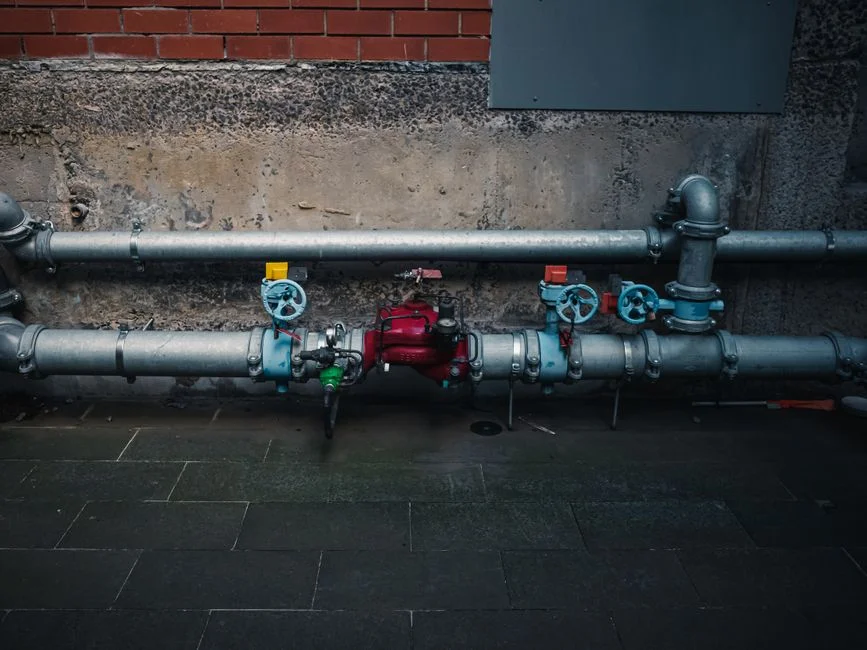
Assign each source stream to the proposed system before asking suppliers to price it. Showers, basins and laundry should be identified separately. Kitchen sources and any contaminated process inflows require their own assessment and may change both the biological load and the pretreatment required.
Request suspended-solids, turbidity, BOD, COD, oil-and-grease and microbial testing. The cited Kuwait context does not establish a universal greywater composition for an individual site [S1][S4]. Sampling should therefore establish the source-water envelope over the intended operating period, including the conditions associated with peak discharge.
The 2025 Kuwait study investigated a pilot plant for light greywater from a housing complex with proposed indoor and outdoor reuse [S4]. Its excerpt provides neither plant capacity nor final-quality values, so it cannot serve as a capacity specification or acceptance guarantee.
Use the UF versus MBR greywater selection to structure the technical comparison, and use the greywater treatment option comparison to test the packaged-plant alternative. Neither should be treated as evidence of Kuwait-specific performance.
Turn the selected route into an RFQ and acceptance plan
Require every bidder to define the same technical scope to ensure quotations describe comparable source envelopes, reuse destinations, process stages and operating obligations.
| Quote line item | Technical scope to specify | Red flags to check before signing |
|---|---|---|
| Design basis | Design flow, daily flow, peak demand, source-water quality envelope, treatment objective and reuse destination. | Flow derived only from occupancy or a national greywater statistic; no source segregation; unclear end-use requirement. |
| Process and guarantees | Every treatment stage, materials, controls, utilities, duty cycle, discharge or reuse conditions and applicable Kuwait requirement. | Unspecified exclusions; generic reuse claims; regulatory approval or capacity claimed without the applicable document and site-specific evidence. |
| Maintenance and support | Membrane or media life, cleaning method, preventive schedule, operator hours, monitoring scope, spare-parts list and local-support responsibility. | No defined cleaning regime; staff requirements omitted; critical spares excluded or support responsibility unresolved. |
| Commissioning and acceptance | Hydraulic, treatment-performance, stability and operator-training checks, with agreed test methods and acceptance records. | Acceptance tied to an undefined sample, uncontrolled start-up condition or unspecified sampling procedure; training or documentation excluded. |
| Programme and handover | Document deliverables, milestones, approvals, operator handover, monitoring requirements and final-payment conditions. | Final acceptance or payment occurs before treatment performance, stability and operator competency are demonstrated. |
Make final payment conditional on the agreed hydraulic, treatment-performance, stability and operator-training checks. Specify sampling points, test methods, operating conditions and the party responsible for witnessing each check. Require the supplier to identify which results come from site testing and which are offered as supplier guarantees.
The containerized treatment plant sizing worksheet provides a useful structure for checking equipment scope, installation assumptions and acceptance, but its site-specific examples must be replaced with measurements from the Kuwait facility.
Frequently Asked Questions
Can the 50–80% greywater statistic be used to size a recycling system in Kuwait?
No. Greywater usually represents 50–80% of domestic wastewater in Kuwait [S1], but that is a national proportion, not a site flow. Size the system from measured hourly and daily flows by source, including peak demand and seasonal variation, then check those flows against the treatment objective.
What data are needed before comparing UF and MBR for a Kuwait facility?
Obtain source-by-source flow, suspended solids, turbidity, BOD, COD, oil and grease, microbial results, the intended reuse destination, applicable Kuwait requirements, footprint, utilities and maintenance access. UF becomes relevant to the selected separation duty; MBR becomes relevant where biological treatment and membrane separation are required. A final end-use specification is needed before either option can be selected.
Which documents and tests should appear in the quotation and acceptance schedule?
The quotation should identify design flow, source-water envelope, process stages, materials, controls, utilities, duty cycle, maintenance, operator hours, spare parts and the basis of every guarantee. The acceptance schedule should define hydraulic, treatment-performance, stability and operator-training checks, including sampling points, test methods and conditions. Do not accept regulatory approval, reuse quality or capacity without the applicable requirement and supporting site-specific evidence.
How should maintenance capability, local support and spare parts be evaluated?
Ask each bidder to state membrane or media life, cleaning method, preventive-maintenance schedule, expected operator hours, monitoring scope, available local support and a complete spare-parts list. Compare responsibility for routine work, specialist intervention and critical-part availability. If the supplier cannot define these obligations in the quotation, maintenance cost and operating reliability remain unpriced risks.