Why Kuwait City Needs Wastewater Treatment Plants: Water Scarcity, Regulations, and Industrial Demand
Kuwait’s groundwater reserves are depleting at a rate where 90% of the nation’s freshwater must be sourced from energy-intensive desalination (Kuwait Institute for Scientific Research 2024). This reliance on desalination makes water production one of the highest operational costs for the state, prompting the Kuwait EPA (2023) to mandate that all new industrial and residential developments include integrated wastewater treatment for reuse. For industrial facility owners, this is no longer a matter of corporate social responsibility but a financial necessity. Treated sewage effluent (TSE) is currently the primary water source for Kuwait’s expanding green belts, cooling towers, and construction projects, with the Umm Al Hayman project alone supplying 500,000 m³/day to various sectors.
Regulatory pressure from the Kuwait Public Authority for Industry (2024) has intensified, with discharge violations now incurring fines up to KWD 50,000 (USD 163,000) per incident. For a factory manager in the Shuwaikh Industrial Area, these regulations create a dual-pressure environment: rising costs for freshwater and the threat of heavy penalties for non-compliant discharge. Consider a mid-sized food processing plant in Kuwait City; during peak summer months, water rationing can halt production lines. By investing in an on-site treatment system, such a facility can transition from a linear consumption model to a circular one, utilizing TSE for non-potable processes and eliminating the risk of regulatory shutdowns.
The demand for high-quality TSE is also driven by Kuwait’s 2035 Vision, which targets 100% wastewater reclamation. Currently, the gap between generated wastewater and treatment capacity remains a bottleneck for industrial expansion. Procurement managers must evaluate wastewater treatment plants (WWTP) not just as waste management tools, but as critical infrastructure that secures water independence and ensures long-term compliance with evolving hospital wastewater treatment standards in Kuwait and other sector-specific mandates.
Wastewater Treatment Plant Costs in Kuwait City: Breakdown by Capacity and Technology
The cost per cubic meter for wastewater treatment in Kuwait ranges from $5.00 for small-scale 100 m³/day facilities to $1.20 for mega-projects exceeding 400,000 m³/day (based on South Mutlaa and Umm Al Hayman benchmarks). Capital expenditure (CapEx) is heavily influenced by the chosen technology, with Membrane Bioreactor (MBR) systems typically commanding a 25% premium upfront compared to conventional activated sludge. However, MBR systems offer a 30% reduction in operational expenditure (OpEx) over a 10-year lifecycle due to their smaller footprint and lower chemical requirements for high-purity effluent.
In Kuwait’s specific climate, engineering costs are further impacted by high ambient temperatures and saline groundwater. High temperatures increase the cooling requirements for biological processes, adding 15–20% to energy costs, while the high salinity of groundwater necessitates the use of 316L or 904L stainless steel and specialized coatings to prevent corrosion, which can add 10% to the initial CapEx. For industrial applications, Dissolved Air Flotation (DAF) is often integrated to handle high oil and grease loads, which are common in the petrochemical and food sectors.
| Capacity (m³/day) | Primary Technology | Estimated CapEx (USD) | OpEx (USD/m³) | Footprint (m²) | Energy (kWh/m³) |
|---|---|---|---|---|---|
| 100 | MBR (Compact) | $1.2M - $1.5M | $0.85 - $1.10 | 150 - 200 | 1.2 - 1.5 |
| 1,000 | MBR / Hybrid | $4.5M - $6.0M | $0.60 - $0.80 | 800 - 1,200 | 0.9 - 1.2 |
| 10,000 | Conventional + UF | $18M - $25M | $0.45 - $0.55 | 5,000 - 7,000 | 0.7 - 0.9 |
| 400,000 | Conventional + Biogas | $480M - $500M | $0.25 - $0.35 | 150,000+ | 0.4 - 0.6 |
Operational costs in Kuwait are also influenced by the labor market and chemical availability. While energy is relatively subsidized, the shift toward "Green Energy" mandates means that plants achieving energy self-sufficiency—like the Umm Al Hayman facility which utilizes anaerobic digestion to produce biogas—are becoming the financial benchmark. This plant aims for 95% energy self-sufficiency, effectively insulating the operator from future energy price fluctuations and cutting annual operational costs by an estimated $3.2M.
Engineering Specifications for Kuwait’s Wastewater Treatment Plants: What You Need to Know
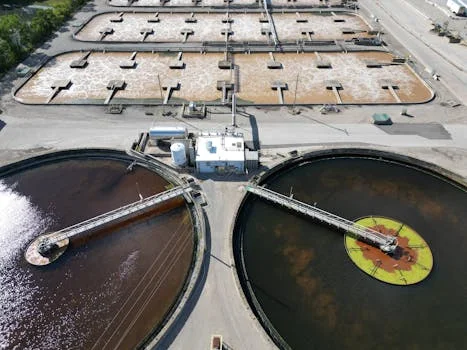
Kuwait’s environmental regulations for Treated Sewage Effluent (TSE) require a Biochemical Oxygen Demand (BOD) of less than 10 mg/L and Total Suspended Solids (TSS) under 15 mg/L to permit reuse in agricultural irrigation (Kuwait EPA 2024). Achieving these levels consistently requires advanced secondary and tertiary treatment stages. For urban projects in Kuwait City, compact MBR systems for urban Kuwait City plants are preferred because they combine biological treatment and membrane filtration into a single step, eliminating the need for secondary clarifiers and reducing the total footprint by approximately 60% compared to conventional methods.
The engineering process at major plants like Umm Al Hayman follows a rigorous sequence: initial screening and grit removal, primary sedimentation, and biological treatment using the Anoxic/Oxic (A/O) process. This is followed by ultrafiltration or membrane filtration to reach the required TSE standards. For industrial facilities, the integration of DAF systems for industrial wastewater in Kuwait’s petrochemical sector is essential for removing emulsified oils and grease that would otherwise foul membranes or inhibit biological activity.
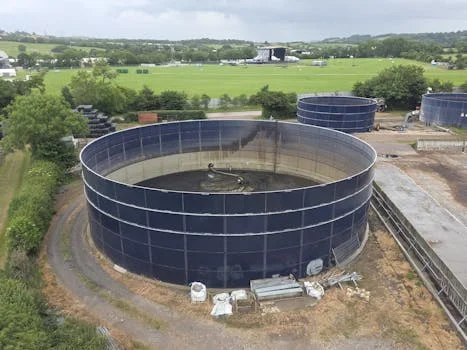
Sludge management is a critical engineering hurdle in Kuwait, as the EPA requires a 90% volume reduction before disposal in designated landfills. This necessitates high-efficiency sludge dewatering equipment for Kuwait’s wastewater plants. Standard configurations include belt presses for municipal sludge or plate and frame filter presses for industrial sludge where higher cake dryness is required. Effective dewatering reduces transport costs and environmental liability, which is vital given the strict penalties for improper waste handling in the Gulf region.
Compliance Checklist: Meeting Kuwait’s Treated Sewage Effluent (TSE) Standards
The Kuwait Environment Public Authority (EPA) mandates a 6-to-12-month permitting window for all new industrial wastewater facilities, requiring a comprehensive Environmental Impact Assessment (EIA) prior to construction. Compliance is not a one-time event; it involves continuous online monitoring and reporting of effluent quality. Failure to meet these standards can result in plant shutdowns and legal liability, particularly if discharge affects the marine environment or public groundwater reserves.
| Parameter | Kuwait EPA Standard (TSE) | Monitoring Frequency | Industrial Requirement |
|---|---|---|---|
| pH Value | 6.5 - 8.5 | Continuous (Online) | Mandatory |
| BOD5 | < 10 mg/L | Weekly (Lab) | Mandatory |
| TSS | < 15 mg/L | Daily (Lab) | Mandatory |
| Total Nitrogen | < 15 mg/L | Monthly (Lab) | Sector Dependent |
| Fecal Coliform | < 2.2 MPN/100mL | Weekly (Lab) | For Irrigation Use |
| Oil & Grease | < 5 mg/L | Daily (Lab) | Critical for Petrochem |
To ensure compliance, procurement teams must verify that their medical wastewater treatment system specifications or industrial plant designs include automated sampling stations. The permitting process involves submitting detailed engineering drawings, a waste management plan, and an emergency response protocol. In 2024, the government introduced a "Green Tier" certification for plants that exceed minimum standards, offering expedited permit renewals and potential subsidies for future expansions.
ROI Calculator: How to Justify Your Wastewater Treatment Plant Investment in Kuwait

Reusing treated wastewater in Kuwait reduces dependence on desalinated water, which currently costs the state between $1.50 and $2.50 per m³ to produce and distribute (Kuwait Ministry of Electricity and Water 2024). For an industrial facility, the ROI is calculated by comparing the cost of purchasing freshwater and paying discharge fees against the CapEx and OpEx of an on-site WWTP. In many cases, the payback period for a 1,000 m³/day MBR system is between 3 and 5 years, depending on the current industrial water tariff and the facility's proximity to TSE distribution networks.
Revenue generation is also possible through the sale of TSE. In Kuwait, the pricing for TSE varies by use case: approximately $0.50–$1.00/m³ for agricultural irrigation and up to $2.00/m³ for high-grade industrial cooling. The Sulaibiya WWTP serves as a prime example of financial viability; operating under a 20-year Build-Operate-Transfer (BOT) contract, it generates significant annual revenue by supplying high-purity water to the oil and agricultural sectors, effectively paying for its initial multi-million dollar investment through consistent off-take agreements.
the Kuwait Green Fund (2024) provides a 20% subsidy on CapEx for facilities that implement advanced reclamation technologies like RO and MBR. When factoring in these incentives, the financial burden of the initial investment is significantly mitigated. For a municipal project, the ROI is often measured in "social return," including the preservation of groundwater and the reduction in national energy consumption associated with desalination plants.
Choosing the Right Wastewater Treatment Technology for Kuwait’s Conditions
Membrane Bioreactor (MBR) systems require 60% less physical footprint than conventional activated sludge plants, making them the primary choice for high-density urban areas in Kuwait City where land costs are a significant CapEx driver. While the initial investment is higher, the ability to produce high-quality effluent that meets the strictest TSE standards without additional tertiary treatment makes MBR the most reliable choice for hospitals and commercial complexes. These systems are also more resilient to the temperature fluctuations common in the region.
For large-scale municipal applications in suburban areas like South Mutlaa, conventional activated sludge remains a viable option due to lower initial costs and simpler maintenance requirements. However, these plants require significantly more land and often necessitate additional ultrafiltration stages to reach reuse standards. In the industrial sector, particularly for refineries and oil-processing units, a hybrid approach is often required. This involves using DAF for primary oil removal, followed by biological treatment and membrane filtration to handle complex organic loads.
| Technology | Best Use Case | Effluent Quality | Maintenance Level | Space Efficiency |
|---|---|---|---|---|
| MBR | Urban/Hospital/Commercial | Excellent (TSE Ready) | High (Automated) | High |
| Conventional | Large Municipal/Suburban | Good (Needs Tertiary) | Medium | Low |
| DAF | Petrochemical/Food/Oil | Pre-treatment only | Medium | Medium |
| Hybrid (DAF+MBR) | Complex Industrial | Excellent | Very High | Medium |
When selecting a vendor, Kuwaiti engineers should look for experience with sewage treatment equipment suppliers in the Gulf region to ensure that the equipment is rated for the 50°C+ temperatures of a Kuwaiti summer. Decisions should be based on a 20-year Total Cost of Ownership (TCO) analysis rather than just the lowest bid, as poor material selection in Kuwait’s corrosive environment can lead to system failure within the first five years of operation.
Frequently Asked Questions
What is the average cost of a small-scale industrial WWTP in Kuwait City?For a 100 m³/day plant using MBR technology, the CapEx typically ranges from $1.2M to $1.5M. This includes engineering, equipment, and installation. OpEx usually hovers around $0.85 to $1.10 per m³ treated, depending on energy costs and chemical dosing requirements.
How long does it take to get environmental approval from the Kuwait EPA?The permitting process generally takes between 6 and 12 months. This includes the preparation of an Environmental Impact Assessment (EIA), review of engineering specifications, and site inspections by the Public Authority for Industry and the EPA.
Can treated wastewater be used for all industrial processes in Kuwait?TSE is suitable for cooling towers, dust suppression, construction, and certain agricultural activities. However, it is generally restricted from use in food production (direct contact) or as potable water unless it undergoes advanced purification like Reverse Osmosis (RO) and meets specific health ministry standards.
What are the main causes of WWTP failure in Kuwait’s climate?High salinity causes rapid corrosion of non-specialized metal components, while extreme heat can inhibit biological activity if cooling systems are not properly sized. Additionally, improper sludge dewatering often leads to operational bottlenecks and regulatory fines for illegal discharge.