
Define the Treatment Objective and Receiving Route
Select an industrial effluent treatment plant and DAF system in Guinea-Bissau by defining the discharge or reuse route first, then sizing around measured flow, pollutant loads and receiving requirements. DAF may serve as primary treatment for suspended solids and FOG removal before biological treatment, but it cannot be specified reliably from a daily flow average. The available evidence contains no identified Guinea-Bissau authority, discharge permit route or site-specific limit, so those items require written confirmation before equipment procurement.
Record the intended role of each treatment stage: primary clarification, downstream biological treatment, final treatment or reuse. Obtain the required effluent parameters, the applicable discharge point and the party responsible for confirming compliance. A general performance target is not a procurement specification until the receiving route and required parameters are documented.
Use the best DAF unit selection framework to separate treatment objectives from equipment configuration. Ask the receiving authority, environmental consultant or client’s compliance lead for the permit basis, applicable limits, monitoring requirements and sampling protocol. If no authority or route can be identified, record that gap explicitly and obtain a written compliance position before relying on a discharge route.
Build the Flow and Effluent Basis
Average, peak-hour and peak-day flows must be established before selecting the DAF tank, recycle pumps and equalisation capacity. A daily average alone can conceal the hydraulics that drive equipment sizing and equalisation requirements.
Request representative wastewater analysis covering COD, BOD, suspended solids, oil and grease, pH, turbidity, temperature and dissolved solids. Sampling should represent normal production, cleaning cycles and identified shock loads. Add measurements that the supplier needs to select chemicals and equipment, including flow temperature and any substances likely to interfere with flotation.
Ongoing monitoring is necessary because temporal effects and shock loads can change DAF effluent predictions. A modelling case study reported different performance under static and dynamic conditions, although it was an unreviewed preprint. Treat that finding as a reason to define monitoring and response arrangements, not as a design guarantee. Use the DAF system engineering specifications to identify the operating data required from the supplier.
Site-input worksheet
- List the intended discharge or reuse route and the receiving location.
- Record average, minimum, peak-hour and peak-day flow data.
- Obtain representative laboratory analyses and production variability.
- Confirm required effluent parameters and compliance documents.
- Record footprint, installation, power, backup-power and operating-skill constraints.
- Quantify expected sludge volume and identify its collection, dewatering and disposal route.
Match the Industrial Stream to the Treatment Route
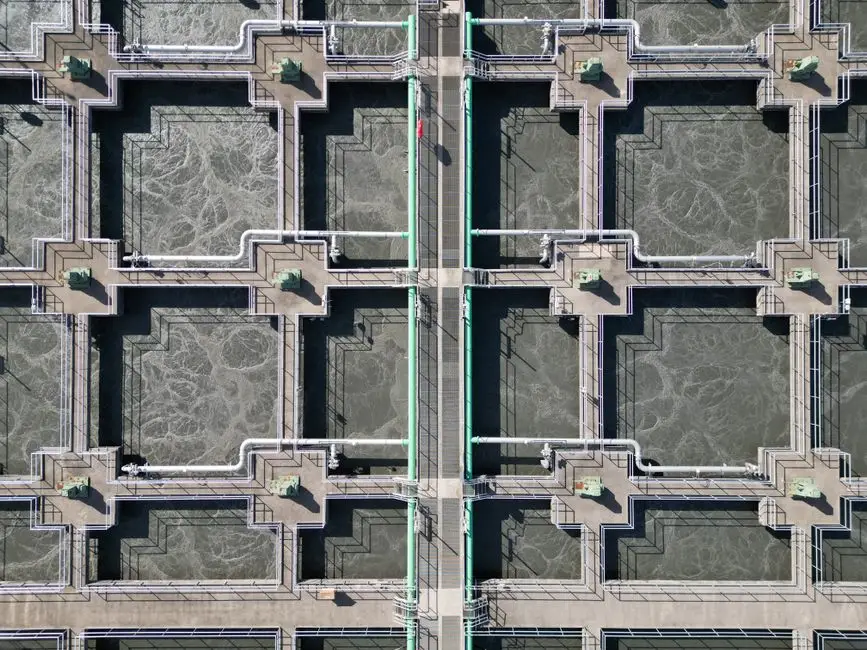
Pretreatment must be matched to the physical wastewater problem before selecting flotation equipment. Variable or fibrous streams require removal and balancing measures, while colloidal or condition-sensitive streams require chemical conditioning. Downstream biological treatment remains a separate scope decision where the objective is organic removal rather than suspended-solids capture alone.
For a tannery application, the treatment train used a 1 mm self-cleaning screen, an aerated balancing tank, aluminium sulphate and polymer dosing, DAF, a sludge holding tank and a high-pressure belt press. That case illustrates a route for a specific waste stream; it does not establish a universal requirement for a Guinea-Bissau site.
| Discharge route or influent problem | Governing rule or process option | What data settles it |
|---|---|---|
| Final discharge or reuse | Define required effluent parameters before assigning DAF as final treatment or primary clarification. | Permit, reuse specification, receiving authority correspondence and signed compliance basis |
| Variable or fibrous flow | Consider coarse screening, segregation and an effluent equalisation tank before DAF. | Peak-flow record, screenability assessment, fibre observations and equalisation-space constraints |
| Colloidal solids or condition-sensitive stream | Include pH adjustment, coagulant and flocculant dosing before flotation. | Representative pH, suspended-solids and turbidity tests plus jar or pilot results |
| Primary solids and FOG removal | Configure DAF as the solids-removal stage, then define downstream biological treatment if required. | Oil-and-grease profile, process mass balance, treatment objective and downstream design basis |
In the tannery case, primary treatment removed an average of 95% of suspended solids and 70–80% of COD, as reported by LeatherMag. These results apply to that installation and must be confirmed at the proposed site rather than transferred directly into a guarantee.
Check DAF Performance and Sludge Handling
The complete flotation circuit and sludge route must be specified, not the flotation tank alone. The quotation should identify the compressor, saturator, recycle pumps, nozzles, scraper, sludge hopper, level controls and instrumentation, together with their interfaces and required utilities.
For an industrial dissolved air flotation system, request the design flow, recycle basis, air requirement and control philosophy. A meat-processing project cited by SIGMADAF Clarifiers used recirculation pumps arranged as 2+1R for 180 m³/h at 50% recirculation, and described micro-air bubbles in the 30–50 micron range. These are project benchmarks, not default selection values for the Guinea-Bissau plant.
Decide where sludge handling enters the plant scope. The same project reported floated sludge at 4–5% solids concentration in its collection hopper. That concentration still requires a destination and treatment route: sludge storage, thickening, dewatering, transport and disposal should be assigned to named parties.
Use the DAF machine specifications to check that aeration, recycle, collection and instrumentation are connected. Specify the PLC-controlled chemical dosing skid separately where conditioning is required, including tanks, metering pumps, duty/standby arrangement, controls and the agreed chemical basis.
Convert Selection into an RFQ and Acceptance Scope
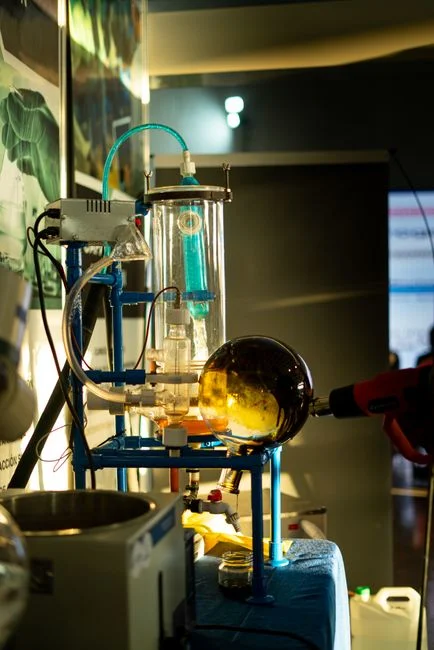
Quotations are made comparable by requiring each supplier to state its design flow, flow-balancing assumptions, influent basis, required outlet parameters and treatment objectives. The buyer should identify missing design data rather than allow the supplier to define the problem after award.
| Quote line item | Technical scope to specify | Red flags to check before signing |
|---|---|---|
| Design basis | Average and peak flows; influent analysis; discharge route; required outlet parameters. | Equipment sized only from daily average flow or unidentified wastewater analysis |
| DAF process equipment | Clarifier, saturator, compressor, recycle pumps, aeration system, scraper, hopper, level controls and instrumentation. | Excluded nozzles, duty/standby pumps, controls, utilities or performance boundary |
| Chemical dosing | pH adjustment, coagulant, flocculant, storage, metering and PLC control with a defined chemical basis. | Chemicals, tanks, installation, calibration or operator training omitted without clarification |
| Equalisation and pretreatment | Screening, segregation, aerated or mixed equalisation and specified transfer duties. | Peak-flow balancing assigned to the DAF unit without equalisation capacity |
| Sludge collection and dewatering | Collection, transfer, storage, thickening, dewatering, discharge and disposal interfaces. | Sludge destination, dewatering duty or disposal responsibility left undefined |
| Civil, utilities and installation | Foundations, bunding, access, power, drainage, connections, unloading and local installation responsibilities. | Excluded foundations, cable routes, site services, permits or specialist installation |
| Commissioning and acceptance | Installation supervision, startup, sampling protocol, training, spares, documents and plant performance acceptance criteria. | No test method, sample period, acceptance limit, remedy or demonstration condition |
| Delivery and support | Delivery scope, documentation, manuals, local commissioning, service support and spare-parts period. | Unclear Incoterms, schedule, customs responsibility, warranty exclusions or remote-only support |
A documented meat-processing delivery included equipment, documentation, manuals and two years of spare parts. Use this only as a scope-comparison example, not as a universal commercial entitlement. Before signature, resolve missing design data, undefined guarantees, excluded foundations or utilities, and unallocated installation or sludge-disposal duties.
Frequently Asked Questions
How do peak flows and wastewater analysis change preliminary DAF selection?
Peak-hour and peak-day flows determine whether equalisation is required and which hydraulic duties the DAF equipment must handle; a daily average is insufficient. COD, BOD, suspended solids, oil and grease, pH, turbidity, temperature and dissolved solids determine process assumptions, chemical needs and the required outlet quality. Ask each bidder to show how its selected flow and influent basis follow from the submitted data.
What chemical dosing and sludge-handling equipment should the quotation include?
Include chemical dosing where the wastewater characteristics require pH control, coagulation or flocculation, with tanks, metering pumps, controls, calibration and chemical assumptions stated separately. For sludge, assign collection, transfer, storage, thickening, dewatering, transport and disposal explicitly. Request expected sludge mass and properties so the bidder can price the selected route rather than label it “not included”.
What must a supplier document to make performance acceptance testable?
Require the guaranteed flow basis, influent limits, outlet parameters, sampling method, test frequency, operating conditions and remedy for failure. State whether acceptance covers suspended solids, COD and other agreed parameters, and whether chemical use or sludge quality forms part of the guarantee. A supplier should also provide the calculation basis for hydraulic loading, recycle rate and solids capture.
How do I compare delivery, installation, commissioning, training and support across quotations?
Create one responsibility matrix showing what each bidder supplies, who constructs foundations and utilities, what must be imported, and who performs local installation and commissioning. Require the quote to identify delivery terms, schedule, manuals, training, warranty, spares and service support. Ask for the full commercial offer and schedule; no verified price basis is available here, so a buyer cannot compare cost or affordability from generic market information alone.