
Choose the discharge and reuse route first
For a Malawian hospital, select the wastewater treatment and disinfection system by confirming the discharge route, reuse objective, measured flows, influent characteristics and site constraints. A sewer connection may be adequate where capacity, authorization and applicable conditions exist; otherwise, compare a package biological plant, membrane bioreactor MBR or onsite treatment train before controlled discharge or reuse. Disinfection must suit the treated effluent and operating conditions. Electrochemical disinfection generates oxidants on site and can avoid hazardous-chemical transport and storage, but it does not replace biological treatment or effluent monitoring. Before procurement, obtain the applicable Malawi permit conditions and site data.
The first decision is not which unit has the longest equipment list. It is where the treated effluent may legally and operationally go. Hospital-level treatment can reduce the spread of untreated contaminants into larger ecosystems and urban treatment systems, according to the academic review on hospital wastewater in low- and middle-income countries. That rationale does not automatically justify onsite treatment where an authorized, adequately capacitated sewer can receive the discharge.
Ask the hospital owner and relevant Malawi authority to confirm the authorized discharge point, any sewer connection conditions, whether the effluent will enter a municipal sewer or shared treatment plant, and whether reuse is permitted for the proposed application. A reuse application—such as irrigation, toilet flushing or cooling—must be evaluated separately from environmental discharge because its water-quality objective and receiving context differ.
Also obtain the confirmed final effluent limits, required sampling points and applicable environmental and water-authority requirements. The supplied research does not establish a verified Malawi-specific permit limit, approval pathway or sizing rule. Those items must be verified with the authority rather than inferred from another jurisdiction or a generic hospital guide. Further route-selection context is available in this hospital treatment and disinfection systems reference.
| Discharge route or influent problem | Governing rule or process option | What data settles it |
|---|---|---|
| Authorized municipal sewer connection | Prepare the discharge for the sewer’s physical, hydraulic and permit requirements; avoid adding treatment capacity unless it is required. | Written connection conditions, sewer capacity, authorized discharge point, pretreatment requirements and applicable effluent limits. |
| Shared treatment plant | Meet the shared plant’s inlet and pretreatment conditions while preserving the required disinfection and monitoring boundary. | Shared-plant acceptance criteria, maximum permitted discharge conditions, sampling protocol and responsibility for final discharge compliance. |
| Direct environmental discharge | Provide biological treatment, effective disinfection and monitoring before the confirmed discharge point. | Malawi permit conditions, receiving-environment information, target organisms, monitoring requirements and residual-management controls. |
| Proposed water reuse | Define the reuse application and its water-quality objective before selecting the final treatment train. | Written permission to reuse, end-use definition, water-quality criteria, application controls and secondary containment requirements. |
| Unverified receiving route | Treat the concept as provisional; do not release equipment selection for final pricing. | Named authority response, approved outlet, applicable permit and confirmed scope between the hospital and receiving party. |
Define the wastewater profile that controls equipment selection
Request measured site data before comparing a medical wastewater treatment plant. Generic domestic-sewage assumptions do not establish hospital treatment capacity, and the hospital review reports that contaminant levels in hospital wastewater are considerably higher than in community wastewater. The design and quotation should therefore rest on hospital-specific flow and water-quality information.
Request daily wastewater volume, peak-hour flow, operating hours and rainfall or storm ingress. Separate the discharge points serving laboratories, laundries, kitchens, toilets and clinical areas because their pollutant profiles and flow patterns differ. Ask whether any wastewater stream is excluded from the hospital effluent or handled separately; an unqualified combined design can conceal both hydraulic peaks and treatment incompatibilities.
The influent sampling plan should cover BOD, COD, suspended solids, oil and grease, pH, pathogens, antibiotics, heavy metals and antimicrobial-resistance indicators, with the final parameter list set by the confirmed permit and process design. The academic hospital-wastewater review specifically identifies antibiotic-resistant bacteria, antibiotic-resistant genes, antibiotics, disinfectants and heavy metals as pollutants requiring attention. Sampling locations, sampling times and laboratory methods must be agreed because a single outlet sample may not represent the operating range.
Do not use bed count alone as the sizing basis. Flow measurements, peak data, the selected discharge route and the reuse objective determine the required treatment train. The 30 m³/day hospital MBR case study provides a worked comparison involving a defined flow, but its capacity does not transfer to a hospital without matching site data.
Match package, MBR and onsite treatment to site constraints
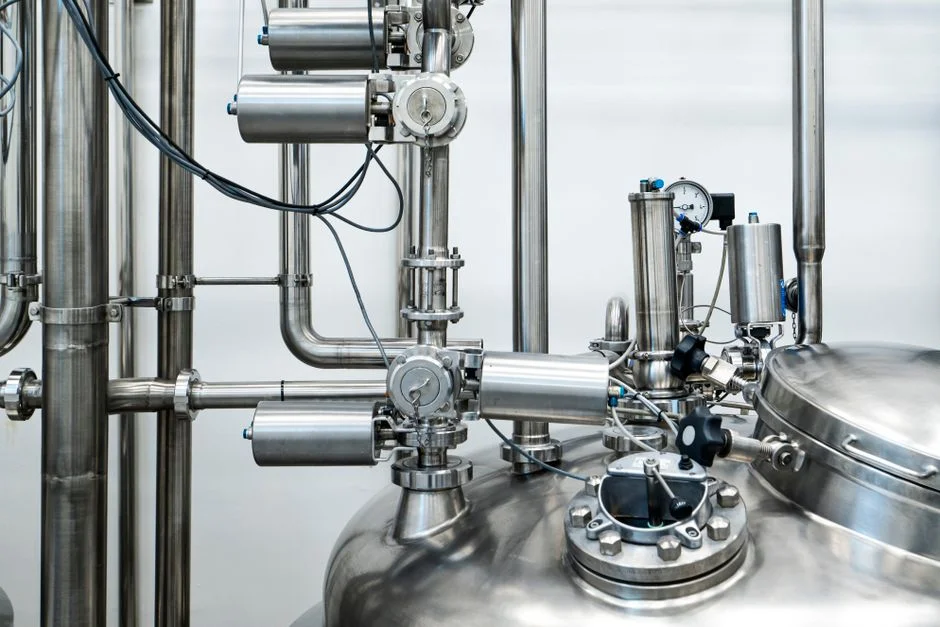
Choose the process route only after testing it against the confirmed flow, wastewater profile, footprint, power supply, operator capability and residual-handling requirements. A package sewage treatment plant may provide a conventional biological route for a controlled site flow; an MBR membrane bioreactor treatment system may be relevant where membrane-based separation, a smaller footprint or reuse-oriented treatment is required; and an onsite hospital wastewater treatment train may be needed where no suitable receiving route is available.
For an MBR proposal, require evidence of feedwater suitability, membrane fouling control, aeration, sludge handling and redundancy. These are not interchangeable features: a membrane can compensate for footprint constraints only if the feed chemistry, solids handling and operating controls support stable performance. The buyer should also establish available power, backup power, maintenance access and operator skill level, because none of these site inputs is verified in the current information.
Basic filtration and sedimentation may leave resistant bacteria and resistant genes present, according to the hospital-wastewater review. This means biological treatment, effective disinfection and AMR-relevant monitoring must be considered as one train. Do not accept a quotation that treats disinfection as a stand-alone item without defining the preceding treatment stage.
Use the hospital wastewater treatment engineering guide for Dakar as a process-comparison reference, while checking every proposed requirement against the Malawian receiving route and confirmed permit. For a smaller installation, the compact medical wastewater treatment system may be relevant for comparison, but its suitability cannot be established without the hospital’s actual flow and influent results.
Select disinfection without losing sight of the water matrix
Select disinfection from the required inactivation performance, treated-effluent matrix, flow variation and operating conditions—not from a general claim that a technology is “effective.” Establish the target organisms, required sampling method, residual or dose control, and whether disinfection is the final treatment barrier before discharge or reuse.
Electrochemical disinfection generates chemical oxidants in situ through redox reactions at an electrode. A Critical Review in Environmental Science & Technology reports that it avoids transport and storage of hazardous materials and can be scaled for centralized and distributed treatment contexts. Those attributes do not eliminate the need to confirm power availability, control logic, by-product management, operator competence and monitoring.
Compare ozone, chlorine dioxide, UV and electrochemical disinfection against the same criteria: treated-effluent characteristics, target organisms, hydraulic variation, energy demand, operator capability, maintenance, by-product controls and residual monitoring. Each route changes the downstream requirements. UV requires adequate optical transmission; oxidant-based routes require dose and residual controls; ozone requires attention to off-gas and by-products; chlorine dioxide requires chemical generation and handling arrangements; electrochemical systems require electrode performance and electrical supply.
Request by-product information rather than comparing products only on microbial claims. The supplied research identifies a comparison of disinfection by-product formation during peracetic acid and sodium hypochlorite treatment, while also noting concerns around potentially toxic by-products and inconsistent disinfection in hospital wastewater systems. Equipment-specific documentation should identify expected by-products, control measures and monitoring. The available chlorine dioxide generator and UV sterilizer references can support technical clarification, but neither can be selected from the current site evidence.
Turn the selection into an RFQ and acceptance plan
Require each bidder to define the complete treatment boundary and the evidence behind it. The hospital wastewater RFQ should state design flow, incoming wastewater basis, treatment objective, process stages, discharge route, disinfection method, monitoring plan, controls, operating sequence, fail-safe arrangements, site assumptions and exclusions. This prevents a high-level catalogue offer from being compared with a bid that includes civil works, commissioning, sludge handling and training.
Allocate every responsibility in writing: wastewater analysis, authority approvals, civil works, incoming power, standby power, sludge handling, operator training, preventive maintenance, consumables, spares, calibration, monitoring and acceptance sampling. If a requirement is excluded, identify who supplies it and when it becomes the hospital owner’s responsibility.
Set performance acceptance against the confirmed Malawi discharge requirements and an agreed sampling method. A generic product statement cannot replace site-specific testing. Identify whether acceptance is based on continuous monitoring, grab samples, laboratory analysis, operational demonstrations or a combination, and define who verifies each result. Also record the handover condition for operating manuals, as-built drawings, controls access, stock of critical spares and demonstrated operator competence.
Complete the worksheet in this order:
- Obtain the authorized route, permit conditions, effluent criteria and sampling points.
- Measure daily flow, peak flow, operating hours and separate discharge streams.
- Complete the influent sampling plan and process-design characterization.
- Issue the same RFQ scope and exclusions to shortlisted bidders.
- Compare treatment boundaries, evidence, monitoring, maintenance and handover.
- Write performance tests and acceptance conditions before contract signature.
| Quote line item | Technical scope to specify | Red flags to check before signing |
|---|---|---|
| Design basis and process route | Measured flow basis, influent characterization, treatment objective, authorized discharge route, process stages and reuse requirement. | Selection based only on bed count, generic domestic-sewage data or an unnamed receiving route. |
| Treatment equipment | Package, MBR or onsite train; biological treatment, solids separation, aeration, sludge handling and redundant critical components. | Unverified feedwater suitability, omitted fouling control or no stated treatment-boundary drawing. |
| Disinfection | Selected method, dose or intensity control, contact or exposure arrangement, by-product controls and residual monitoring. | Microbial claims unsupported by site-representative evidence, with no monitoring or maintenance plan. |
| Civil works and utilities | Foundations, drainage, enclosures, access, power connections, backup arrangement, lighting and site interfaces. | Equipment-only quotation with civil, electrical, standby-power or drainage work left unassigned. |
| Monitoring and compliance | Parameters, instruments, sampling points, laboratory responsibility, calibration, data access and authority reporting support. | Discharge point, limits or protocol remain unspecified, or compliance responsibility is left ambiguous. |
| Sludge and residuals | Collection, storage, removal, transport and disposal responsibility for sludge and treatment chemicals or oxidant residues. | No safe residual-handling route, or discharge responsibility transferred without acceptance conditions. |
| Commissioning and training | Installation checks, functional testing, performance demonstration, operating documents, operator training and competency verification. | Commissioning ends at power-on, with no defined tests, trained operators or handover record. |
| Maintenance and spares | Preventive schedule, response terms, critical spares, consumables, remote or local service capability and maintenance record system. | Support depends on unspecified supplier availability, leaving the hospital without maintainable equipment. |
Frequently Asked Questions
How should a hospital wastewater treatment and disinfection system in Malawi be sized?
Size it from measured daily and peak flows, the confirmed discharge and reuse objectives, and site-specific influent results—not from bed count alone. Provide the bidder with flow records or a measurement campaign, peak discharge data, operating hours, rainfall ingress and separated wastewater streams. The selected route, permit criteria and treatment capacity must then be reconciled in the bid.
What should a hospital wastewater RFQ include so prices can be compared?
Require a total-scope quotation that separates equipment, civil works, installation, commissioning, permits support, training, maintenance, consumables, sludge handling and monitoring. Include the design flow, incoming wastewater basis, process stages, discharge route, disinfection method, controls, exclusions and acceptance method. If no firm price is available, request the quotation inputs needed to price each item rather than accepting an unqualified equipment price.
Which treatment route should be selected: sewer, package plant, MBR or onsite treatment?
Use the sewer where authorization, capacity and connection conditions are confirmed and the receiving party accepts the discharge. Compare a package biological plant, MBR and onsite treatment when the hospital must provide treatment before discharge or reuse. The deciding evidence is the confirmed route, measured flows, wastewater profile, footprint, utilities, operator capability and residual-handling arrangements.
How should suppliers be evaluated before an acceptance test is agreed?
Evaluate demonstrated hospital duty, process evidence, local service capability, spare-parts support and clarity of contractual responsibilities. Ask for the proposed operating sequence, fail-safe arrangements, monitoring plan, maintenance schedule and relevant performance documentation. Then define acceptance tests against the confirmed Malawi discharge requirements, selected process and agreed sampling protocol; a generic catalogue claim should not be accepted as the test result.