Choose the treatment route before selecting equipment
For a hotel in Congo, choose a buried A/O package plant when compact, automated biological treatment with sedimentation and disinfection is sufficient and the effluent route does not require membrane-quality polishing. Choose an MBR when reuse or a stringent discharge specification justifies the added equipment and operating complexity. Neither option can be selected reliably from occupancy alone: obtain average and peak flows, seasonal loading, applicable effluent criteria, site constraints and sludge-handling arrangements before requesting an RFQ.
First establish whether the hotel will connect to a sewer, discharge treated effluent to the environment or reuse treated water on site. These routes require different information and acceptance tests. A sewer connection requires confirmation of the receiving utility’s requirements; environmental discharge requires the applicable permit and receiving-environment conditions; reuse requires a defined end use, such as irrigation, and the quality criteria that govern it.
Confirm whether the project is in the Republic of the Congo or the Democratic Republic of the Congo before identifying the relevant authority, discharge route and regulatory requirement. Hotel wastewater package plant decisions must not be transferred from one jurisdiction to the other without checking the local approval process.
- Record the required effluent outcome and receiving or reuse route.
- Calculate average, peak daily and peak hourly flows from project-specific occupancy and water-use data.
- Screen A/O and MBR configurations against flow, site and operating constraints.
- Issue a site-specific RFQ with defined acceptance tests and exclusions.
Seasonal wastewater loading must remain visible in the selection. A supplier may propose modular expansion so the installation can follow demand: one cited BIOROCK system arrangement supports up to nine units installed in parallel, with stated capacity between 60–300 people. That capacity range belongs to that system and is not a universal people-served factor for hotels.
Untreated or partially treated discharge can pollute receiving waters. Seven Seas Water reports that 70–80% of wastewater in the Caribbean is discharged partially treated or untreated, with effects on groundwater, freshwater and the ocean. This is Caribbean evidence, not a Congo discharge statistic, but it demonstrates why the receiving route cannot remain undefined.
For project-specific route planning, use the Congo hotel A/O versus MBR comparison alongside the Congo packaged sewage treatment project guidance.
Compare A/O package plants and MBR systems
Choose A/O where conventional biological treatment, clarification and disinfection can meet the confirmed effluent route; choose MBR where the specification requires membrane-quality separation or reuse. The comparison must use the same project flows, footprint and acceptance criteria rather than generic claims about treatment quality.
| Discharge route or influent problem | Governing rule or process option | What data settles it |
|---|---|---|
| Discharge to a permitted outfall | A/O package plant with biological treatment, sedimentation and disinfection may be suitable if its quoted performance satisfies the applicable criteria. | Permit conditions, receiving-environment requirements and the supplier’s proposed effluent test method. |
| On-site reuse, including irrigation | Consider an MBR because combining biological treatment with membrane filtration can support higher-quality discharge or reuse. | Defined reuse endpoint, applicable reuse criteria, pretreatment needs and confirmation that the specified reuse is permitted. |
| Compact or mobile installation | The WSZ can be installed below grade with landscaping above or mounted on a trailer for mobile deployment. | Available footprint, soil, groundwater level, access route and whether the project permits below-grade installation. |
| Seasonal peak flow | Screen modular A/O or MBR configurations against peak demand and define how future units would be connected. | Average, peak daily and peak hourly flows; occupied-room profile; and the supplier’s staged expansion basis. |
The buried A/O package sewage treatment plant is relevant where below-ground deployment and conventional treatment stages fit the site. The MBR membrane bioreactor is relevant where the confirmed treatment or reuse requirement supports membrane separation and the hotel can manage the associated equipment.
Supplier process descriptions establish configuration, not compliance with an unstated requirement. Seven Seas identifies sedimentation, filtration, biological treatment and disinfection as common on-site stages and describes MBR as suitable for high-quality discharge or reuse. The buyer must still test that proposed configuration against the site-specific permit or reuse specification.
Size the system from peak hotel demand
Size from measured and documented hotel demand, not a generic occupancy assumption. Ask the hotel for occupied-room counts by season, meal covers, daily water-consumption records and other wastewater-generating activities. These inputs allow the designer to establish the expected wastewater flow and its seasonal variation.
Require every quotation to state whether its design flow is average daily, peak daily or peak hourly. Those values are not interchangeable, and a package selected from the wrong flow basis can be overloaded during occupied periods. The comparison should show the quoted treatment capacity against the hotel’s peak demand and identify how additional capacity would be added without relying on a generic people-served figure.
Request the basis of the supplier’s hydraulic calculation and the agreed duty range for testing. If the supplier quotes a people-served range, ask for the occupancy, wastewater-generation and operating assumptions behind it. A cited BIOROCK arrangement states 60–300 people across up to nine units in parallel; that figure may inform modularity, but it cannot replace a Congo hotel’s measured flow data.
The hotel wastewater package plant comparison for Chad and the Congo hotel A/O versus MBR comparison provide related decision framing, but the selected plant still needs project-specific sizing inputs.
Match the plant to site and operating constraints
Confirm site feasibility before accepting a buried system. The owner’s engineer or site surveyor should provide the available footprint, soil conditions and groundwater level. The supplier should then identify excavation requirements, burial depth, access provisions and any site conditions that would invalidate the proposed installation.
Confirm electrical supply and operational staffing with the hotel’s engineering team. The quotation should define control-system requirements, power demand and backup-power arrangements. The hotel must also identify whether local operators are available for routine monitoring, maintenance and fault response; otherwise the maintenance scope and training requirement need to be made explicit.
Assign sludge handling before contract award. The owner or operator should specify sludge-removal frequency, available storage space and the authorized disposal route. The selected quote should state which solids are removed, how often they must be removed, where temporary storage is provided and what disposal services are excluded.
Catalog values for the WSZ or MBR remain supplier specifications until matched to the project. They do not demonstrate compliance with an unstated Congolese discharge requirement. The project boundary should separate equipment performance, civil works, power, utilities, commissioning, training and long-term operations.
Use the containerized treatment plant sizing considerations and the Congo packaged sewage treatment project guidance to check those interfaces without transferring another location’s design assumptions to this site.
Turn the selected route into an RFQ and acceptance schedule
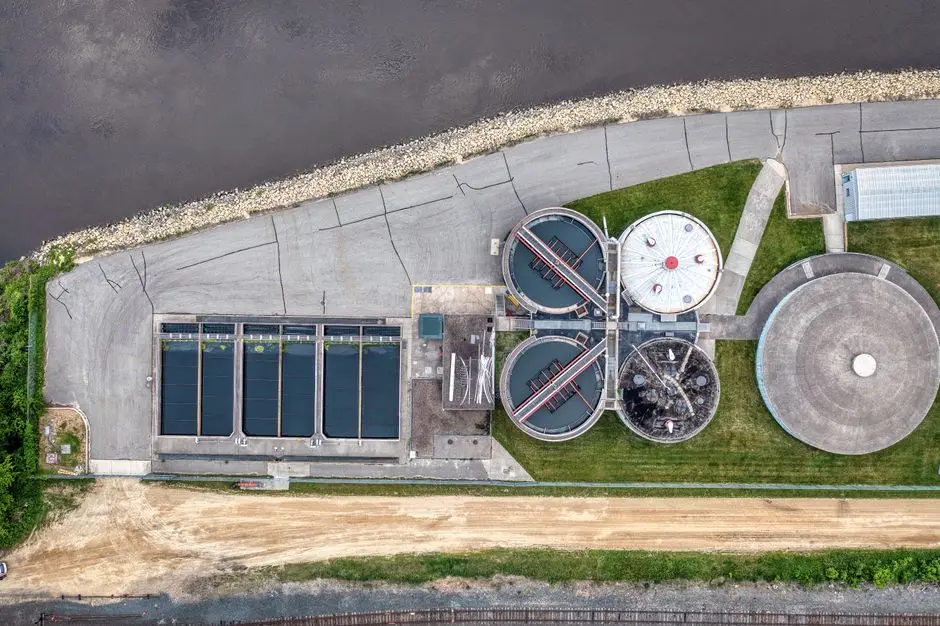
Require the RFQ to identify the design-flow basis, pretreatment, biological process, clarification, disinfection, sludge handling, controls, utilities, civil works and commissioning scope. Request FAT, SAT, performance testing, documentation, spare parts, training, warranty and O&M support as separately priced items so omissions are visible before signature.
| Quote line item | Technical scope to specify | Red flags to check before signing |
|---|---|---|
| Design basis and process selection | Average, peak daily and peak hourly design flows; treatment stages; influent assumptions; and the basis for selecting A/O or MBR. | Only a people-served figure is quoted, or average flow is presented without seasonal peaks. |
| Civil works and installation | Excavation, burial, foundations, access, connections, landscaping reinstatement, drainage, testing and site reinstatement. | “Installation included” without defining civil boundaries, site conditions or exclusions. |
| Mechanical and electrical scope | Pumps, aeration, clarification, disinfection, membranes if applicable, controls, power requirements and backup-power interfaces. | Critical utilities or civil interfaces are deferred to “site works.” |
| Sludge handling | Sludge extraction, storage, removal frequency, handling equipment, authorized disposal route and responsibility for transport. | No route is defined for removed solids, or disposal is assumed to be included without a price or responsibility. |
| Testing and acceptance | FAT, SAT, agreed flow range, sampling points, test methods, permit or reuse criteria, and rectification procedures. | Acceptance relies on a generic “reuse quality” claim rather than a confirmed requirement and method. |
| Documentation and support | Drawings, manuals, training, commissioning records, spare-parts list, warranty exclusions and O&M support. | Training, commissioning attendance or long-term parts support are not separately priced. |
Set acceptance criteria against the confirmed discharge or reuse requirement, the agreed test method and the qualified flow range. Keep regional references separate from project acceptance. WeCP Projects lists a 52.5m³/day conventional activated-sludge mine-camp installation in the DRC in 2019 and a 40m³/day package wastewater treatment plant for a DRC mine hospital in 2015. These references demonstrate regional project context, but they do not establish this hotel’s flow, process suitability, acceptance values or regulatory approval.
The modular sewage treatment design criteria should be used to structure technical responses, while the containerized plant sizing guidance can support scope checks. Neither should replace the confirmed Congo site requirements.
Frequently Asked Questions
How should the peak-flow basis for sizing be obtained?
Request occupied-room counts by season, meal covers, daily water-consumption records and the proposed wastewater-generation assumptions from the hotel. Require the designer to state average daily, peak daily and peak hourly flows, then show which value governs each item of equipment. A generic people-served figure is not sufficient.
What performance and documentation should be included in the quote?
Request FAT, SAT, performance testing, commissioning records, drawings, operating manuals, training, warranty terms, spare parts and O&M support as separately priced items. Define the sampling points, test methods, qualified flow range and confirmed discharge or reuse criteria that will form the acceptance basis.
How should regional project references be evaluated?
Ask the supplier to explain the design flow, process configuration, scope, acceptance tests and operating conditions for each reference. The DRC references at 52.5m³/day and 40m³/day are relevant context, but they do not prove that the quoted equipment meets this hotel’s site-specific requirements.
Which site inputs must the hotel owner provide before approving the treatment route?
Provide the jurisdiction, permitted discharge route or reuse endpoint, occupancy and water-use records, footprint, soil and groundwater information, electrical supply, backup-power needs, operator availability, and sludge-removal, storage and disposal arrangements. Without these inputs, approve only a comparison and RFQ—not final equipment selection or performance acceptance.