Choose the greywater boundary and reuse destination
For a greywater recycling system in Denmark, compare segregated UF, MBR and packaged biological treatment only after defining the source drains, hourly and peak flow, influent load and required reuse quality. UF is appropriate where the objective is solids, colloid and turbidity removal before reuse or downstream treatment; MBR suits projects requiring biological removal with membrane separation, but requires more process control and a defined sludge route. Neither equipment selection nor approval can be confirmed from generic guidance: a Danish case shows filters and reverse osmosis supporting industrial water reuse, while the academic review stresses source segregation, monitoring and applicable legal frameworks.
Start with the source boundary. The 2023 academic review defines household greywater as everything except toilet waste and recommends segregating it at source for decentralized wastewater treatment using separate treatment strategies. That definition does not automatically make every non-toilet drain suitable: record which showers, washbasins, laundry outlets and process-rinse flows are included, and exclude toilet waste, incompatible cleaning chemicals and any stream that would disrupt the proposed biological or membrane process.
Next, define where the water will go. The receiving fixture, industrial process or discharge point should determine the required reuse-water quality, including the parameters that must be monitored and the consequences of exceedance. Fit-for-purpose reuse is supported as an objective in the review, but it does not establish Danish building-specific limits. Do not use a generic “treated greywater” specification as an acceptance criterion.
Keep industrial precedent separate from building-greywater precedent. The Grundfos case at Bjerringbro concerns water from a cathodic electrodeposition surface-treatment application. Its treatment train uses three filtration stages followed by reverse osmosis, and the purified water returns to production baths; the plant recycles 80% of process water, with the remainder becoming solid matter or used to flush the filters (Grundfos). This supports industrial reuse as a documented example, not approval of a domestic or commercial building-greywater installation.
The [UF versus MBR selection method](/blog/16185-greywater-recycling-systems-in-cyprus-uf-vs-mbr-selection.html) and the broader [UF, MBR and package-plant comparison](/blog/16178-greywater-recycling-in-costa-rica-uf-mbr-or-package-plant.html) can structure the next stage, but only after the source drains and reuse destination are fixed.
Match influent conditions to the treatment route
Select the process based on actual influent and required reuse quality, not from the equipment category. The 2023 review notes that greywater characteristics vary with demographic patterns and identifies legal frameworks, monitoring and control systems as continuing design challenges. Ask the supplier to show how its proposed train responds to the measured COD, BOD, suspended solids, surfactants and other relevant contaminants.
| Discharge route or influent problem | Governing rule or process option | What data settles it |
|---|---|---|
| Low-solids stream requiring solids, colloid and turbidity control | Evaluate ultrafiltration as the primary barrier or as pretreatment ahead of a required disinfection or downstream process. Review the proposed hollow-fiber ultrafiltration system against the measured solids load and required reuse-water quality. | Influent TSS, turbidity and particle-size data; the receiving process’s acceptance criteria; and evidence of membrane cleaning, backwash and recovery performance. |
| Organic load requiring biological removal before reuse | Evaluate an integrated MBR membrane bioreactor when biological treatment and membrane separation are both required. Require the supplier to define the sludge route and membrane-cleaning strategy. | COD, BOD, TSS, pH and temperature; organic-load variation; solids-retention and cleaning requirements; and the proposed reject or residual-solids handling route. |
| Combined package treatment | Evaluate the proposed below-grade WSZ route, which combines anoxic and aerobic treatment, sedimentation and disinfection in one buried package. Confirm that the unit protects the biological process from the identified greywater load. | Measured hydraulic and organic loading, inlet conditions, groundwater or site-conditions data, access requirements and the complete treatment and disinfection sequence. |
| Industrial rinse-water reuse with dissolved salts or process residues | Do not copy the Grundfos CED arrangement by default. Its filters and reverse-osmosis train treated industrial rinse water, not building greywater, and the case reports annual treatment of 5,000 m³ with an expected eventual 10,000 m³ per year (Grundfos). | Full constituent analysis, process chemistry, scaling potential, concentrate disposal route and the receiving process’s purity specification. |
Size from measured flow and operating duty
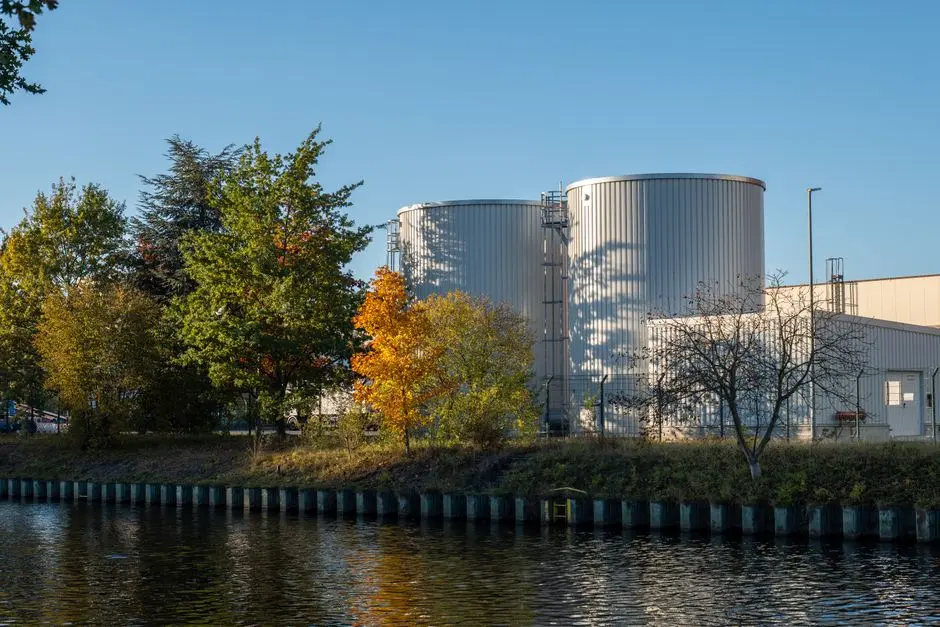
Size the system from a measured duty profile, not from a single peak estimate. Request average flow, peak hourly flow, daily variability, weekend and seasonal profiles, storage requirements, and the number of contributing fixtures or process lines. If these data do not exist, require flow monitoring before final sizing rather than accepting an unverified design assumption.
Obtain representative influent analysis covering COD, BOD, TSS, turbidity, surfactants, oil and grease, pH and temperature. Include the receiving process’s required reuse-water quality, because the same source flow can justify different treatment routes depending on whether the water is used for washing, toilet flushing, industrial rinsing or another specified purpose.
Use the Bjerringbro installation only as a scale reference. Grundfos states that its CED treatment plant handles 5,000 m³ of water annually and was expected eventually to treat 10,000 m³ annually (Grundfos). Those figures describe one industrial application; they do not establish a Danish design flow for a building-greywater system.
Before ordering an underground integrated sewage treatment unit or another package plant, require the supplier to confirm the stated design flow and treatment duty, automatic backwash or membrane-cleaning arrangements, remote monitoring, standby strategy and winter operation. The available project evidence does not establish those operating features, so they must be answered in the technical schedule.
Verify the Danish approval and discharge route
Verify the approval route with the responsible Danish authority before finalizing the treatment concept. The 2023 review identifies the lack of a complete legal framework, together with monitoring and control requirements, as challenges for greywater reuse. This supports an early regulatory check rather than an assumption that a treatment unit can be installed and discharged or reused without project-specific consent.
Ask the relevant Danish municipal or environmental authority which requirements apply to the intended reuse purpose, discharge point, building connection and construction method. Put the response in writing and identify the authority responsible for each approval. Confirm whether the proposal is building-service greywater, industrial process-water reuse or a permitted discharge route.
Do not treat the Grundfos case as the legal precedent for the proposed installation. Grundfos documents industrial water reuse at its Bjerringbro factory, with treated CED water returned to the treatment baths, but it does not establish the approval route for household, commercial or other building greywater. The supplier should identify the permits and technical evidence relevant to the actual site rather than relying on another project’s reuse claim.
Request written acceptance criteria for influent, final effluent, monitoring, sampling, disinfection, maintenance and commissioning. Where the proposal includes a sewer connection, also review the local [sewer discharge and package-plant alternatives](/blog/16187-hotel-sewage-treatment-in-croatia-sewer-a-o-plant-or-mbr.html); a sewer-connection option does not itself establish a direct-discharge limit.
Turn the selected route into an RFQ and acceptance checklist
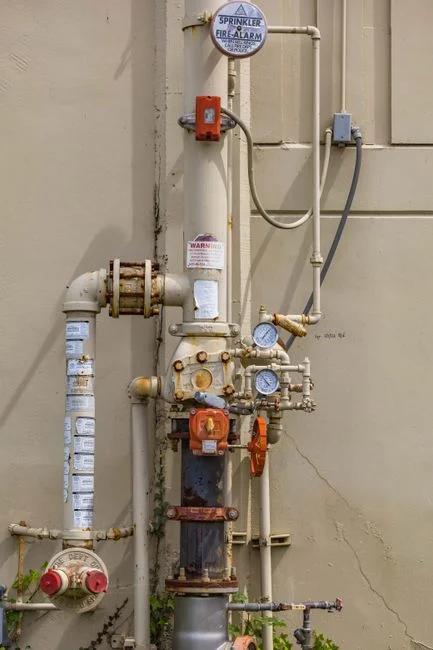
Issue one common RFQ so that bids can be compared on identical technical and commercial boundaries. Require each quotation to state design flow, complete process flow, treatment performance, reuse and reject-water routes, automation, maintenance intervals, spare parts and warranty. Include source segregation, inlet works, treatment, storage, pumping, disinfection, controls, monitoring, utilities, commissioning, training, and sludge or concentrate handling.
| Quote line item | Technical scope to specify | Red flags to check before signing |
|---|---|---|
| Source segregation and inlet works | List every included drain or process line, exclusion points, screening or equalization, pump duty, and the measured flow and quality basis. | The quotation does not identify the actual source boundary, excludes relevant fixtures without explanation, or sizes equipment without stating the design-flow basis. |
| Core treatment and reuse-water quality | Define each treatment stage, final-water parameters, sampling points, disinfection and any required downstream polishing. Identify membrane or filter materials and replaceable-element options. | Performance is stated only as “suitable for reuse” without test methods, acceptance values or the receiving process’s criteria. Review available RO and UF membrane and filter elements for compatibility, but do not treat a catalogue option as proof of system performance. |
| Reject-water, sludge and concentrate management | State the destination, handling method, storage requirement and maintenance responsibility for every residual stream. | Reject water or sludge is described only as “discharged” with no route, capacity calculation, authority requirement or price allocation. |
| Controls, monitoring and maintenance | List sensors, alarms, data logging, remote access, cleaning cycles, consumables, routine service visits, spare parts, training and warranty. | Remote monitoring is promised but no communication protocol or cybersecurity responsibility is assigned; cleaning, membrane replacement or sludge withdrawal is excluded from the price. |
| Acceptance and compliance evidence | Require commissioning tests, sampling method, performance guarantees, training records and documents identifying applicable permits, standards and authority decisions. | The supplier calls a unit “Denmark-approved” or “compliant” without naming the authority, permit route, tested parameters or valid documentation. |
Require pilot results or equivalent performance evidence where the site data is uncertain. The review’s identification of demographic variation in greywater quality and monitoring challenges supports this request. Include treatment-parts, valve and media schedules in the bid comparison, checking compatibility, availability and replacement responsibility rather than comparing catalogue counts alone.
Frequently Asked Questions
When is UF preferable to MBR for a greywater recycling system in Denmark?
Prefer UF when the measured contaminants and reuse objective are principally solids, colloids and turbidity, and when biological removal is not required by the receiving process. MBR becomes more relevant when biological treatment and membrane separation are both required. The deciding inputs are COD, BOD, TSS, turbidity, surfactants, and the receiving process’s written reuse-water quality criteria; equipment type alone cannot decide the route.
Which flow and influent data should be obtained before sizing?
Obtain average and peak hourly flow, daily, weekend and seasonal profiles, fixture or process-line counts, storage demand, COD, BOD, TSS, turbidity, surfactants, oil and grease, pH and temperature. Ask for monitored flow data and representative laboratory analysis. Without those inputs, request a clearly stated design basis and provisional capacity range rather than treating a catalogue flow rating as final sizing.
What Danish approval information should the buyer request?
Ask the relevant municipal or environmental authority, in writing, which requirements apply to the reuse purpose, discharge point, building connection and construction method. Require suppliers to identify the authority, permit route, applicable documents and tested parameters. Do not rely on a general compliance statement or on an industrial process-water case as evidence of building-greywater approval.
What should a complete quote and pre-signature acceptance package contain?
Request one priced scope covering source segregation, inlet works, treatment, storage, pumping, disinfection, controls, monitoring, utilities, commissioning, training and residual-stream handling. Before signature, obtain design-flow calculations, the complete process flow, test methods and acceptance values, commissioning procedures, maintenance schedules, spare-parts commitments, warranty terms and a named compliance route. A quotation that omits reject-water management or gives no measurable acceptance evidence is not comparable.