Define the Haitian discharge route and treatment objective
Specify a high-COD industrial wastewater treatment system in Haiti by first identifying the discharge destination and applicable authority, then obtaining representative wastewater characterization. The treatment train may combine pretreatment, anaerobic and aerobic biological stages, and polishing, but its configuration depends on COD concentration, daily load, biodegradability, inhibitory constituents, hydraulics, and the required effluent quality. No Haitian COD limit or permit requirement can be assumed from international guidance; request written confirmation from the receiving authority and sewer or reuse approver before finalizing equipment, performance guarantees, or acceptance criteria.
Define the route before comparing equipment. For a direct discharge, identify the receiving water and the authority responsible for the discharge permit. For a municipal sewer, obtain the sewer operator’s acceptance criteria, permitted discharge point, pretreatment requirements, sampling protocol, and any surcharge rules. For a centralized treatment facility, confirm its inlet limits and whether the project may discharge partially treated wastewater for further treatment. For industrial reuse, identify the specific reuse application and the water-quality specification that governs it.
The available engineering guidance does not establish a Haitian COD limit. It notes that, in the United States, discharge standards are established permit by permit through the EPA’s National Pollutant Discharge Elimination System, with limits depending on industry, receiving water, and local municipal thresholds (Bristola2). That example shows why a permit-specific basis is necessary; it does not define Haiti’s legal requirements.
For a preliminary RFQ, state the route as discharge, sewer acceptance, industrial reuse, or tighter internal reuse. Use the industrial wastewater treatment equipment selection guide as a structured comparison tool, but require each bidder to identify which authority, permit, customer specification, or reuse criterion governs its proposed guarantee.
Match wastewater characteristics to the treatment train
Match each treatment stage to the wastewater condition it will remove. COD concentration alone is insufficient because the same concentration can represent readily biodegradable organics or a largely non-biodegradable load. Obtain flow and COD measurements across normal production, peak production, clean-up cycles, and shutdowns, then calculate the daily COD mass load from measured flow and concentration.
Biodegradability determines whether biology can carry the main load. A BOD/COD ratio below 0.25 indicates significant non-biodegradable content, while a ratio above 3:1 means biological treatment alone will leave a significant residual COD load (Bristola2). These are engineering benchmarks, not Haitian permit limits and not substitute values for testing the actual stream.
Published concentrations also demonstrate why source separation matters. Slaughterhouse wastewater reaches 1,000–15,000 mg/L, dairy wastewater has been measured as high as 95,000 mg/L in concentrated process streams, and food and beverage processing wastewater typically runs 1,450–2,200 mg/L COD (Bristola2). These values describe different industries and stream conditions; they cannot be used to size this Haitian facility without matching its wastewater.
For a high-strength, biodegradable stream, a defensible sequence commonly starts with equalization and contaminant removal, followed by an anaerobic reactor, aerobic biological treatment, and polishing where required. High-COD guidance identifies pretreatment, anaerobic treatment, aerobic treatment, and advanced polishing, with selection dependent on COD load, BOD/COD ratio, inhibitory compounds, temperature, pH, salinity, hydraulics, biogas objectives, and required effluent quality (GL Environment). Use the site-specific high-COD treatment specification to identify missing project inputs rather than transplanting another country’s requirements.
| Discharge route or influent problem | Governing rule or process option | What data settles it |
|---|---|---|
| Direct discharge to a receiving water | Use the locally confirmed discharge permit as the governing requirement; do not convert a benchmark into a Haitian limit. | Written permit or authority confirmation identifying COD concentration, loading, monitoring, sampling, and reporting conditions. |
| Municipal sewer or centralized treatment facility | Specify pretreatment to protect the receiving facility and obtain its acceptance conditions. | Written sewer or facility limits, discharge point, pretreatment requirements, sampling method, and surcharge rules. |
| Industrial reuse effluent | Define the reuse application and required quality before selecting final polishing. | End-use specification, reuse flow, operating schedule, and confirmation of the accepting party. |
| High COD with a BOD/COD ratio below 0.25 | Test chemical pretreatment and biological suitability; do not assume conventional aerobic treatment will remove the residual COD. | Paired COD and BOD tests, relevant toxicity or inhibition testing, and residual-COD treatment trials. |
| High-strength, biodegradable stream with a possible biogas objective | Consider an anaerobic reactor before aerobic biological treatment, subject to treatability and hydraulic assessment. | COD mass load, flow profile, BOD/COD, temperature, pH, salinity, inhibition, and biogas-use objective. |
Compare pretreatment, biological, and polishing equipment
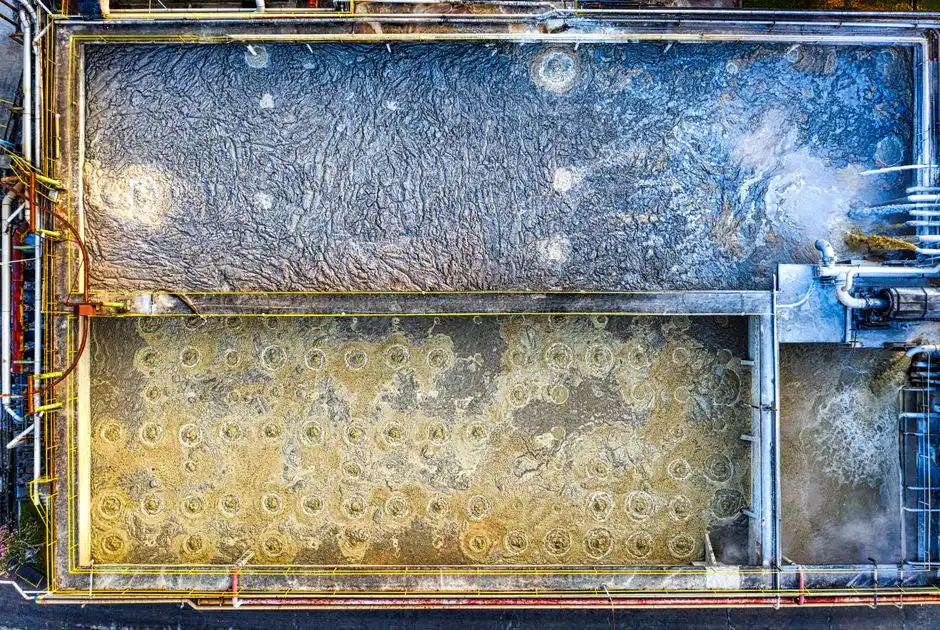
Select equipment by the contaminant and performance gap it closes, not by treating individual products as interchangeable. Pretreatment protects downstream biology; biological stages reduce biodegradable COD; polishing closes the gap between biologically treated effluent and the confirmed discharge or reuse requirement.
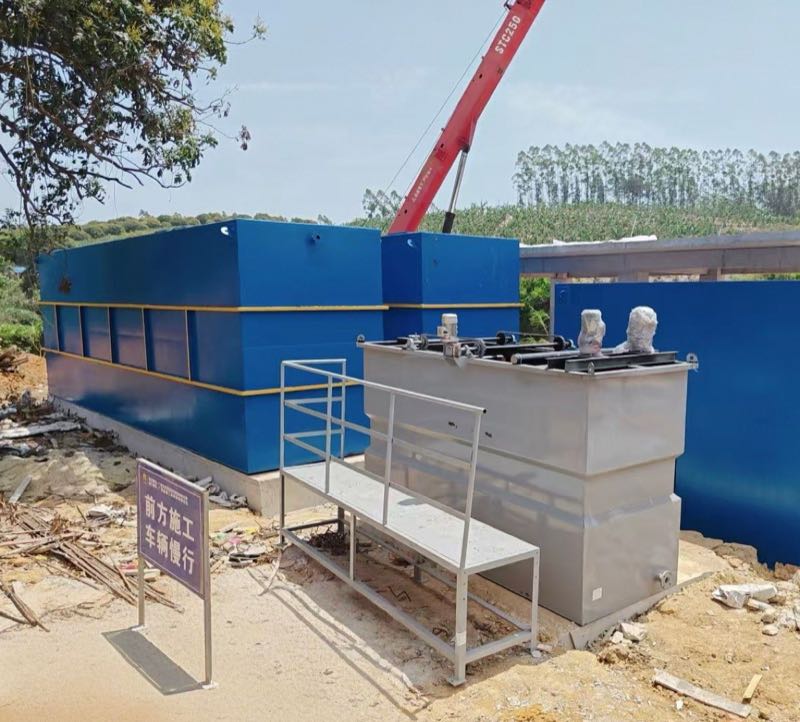
Use equalization to buffer flow, concentration, and production variability. Use coagulation–flocculation and dissolved air flotation where suspended solids, colloids, oil and grease, or floatable material could overload or inhibit later stages. High-COD guidance identifies coagulation–flocculation, DAF, and equalization as pretreatment tools (GL Environment). For a supplier proposal requiring solids or FOG removal, ask for an industrial DAF pretreatment system to specify the required inlet condition, removal objective, chemical demand, sludge yield, and operating controls.
For biodegradable high-strength wastewater, an anaerobic reactor can reduce organic load before aerobic treatment; UASB, IC, and EGSB are options whose selection depends on treatability and project conditions (GL Environment). Aerobic A/O, SBR, or MBR stages can then oxidize residual biodegradable material and stabilize effluent quality. An MBR membrane bioreactor system may be relevant where the required effluent quality or footprint justifies membrane treatment, but the bid should identify the COD and solids performance demonstrated for the proposed wastewater rather than relying on generic product claims.
Add activated carbon, UF, NF, RO, or advanced oxidation only when the required effluent or reuse specification leaves a residual pollutant gap that earlier stages cannot meet. A comparison of DAF, MBR, UF, and RO can help identify the function of each stage, but it does not establish the Haitian project specification. Do not add membranes or advanced oxidation merely because they appear in an offer; identify the target pollutant, required performance, fouling or reject-water risk, and disposal route.
Turn the selected route into an RFQ and acceptance plan
Convert the selected route into objective quotation boundaries. The RFQ should state the design flow, influent COD range, COD mass load, BOD/COD ratio, pH, temperature, salinity, toxicity, suspended solids, oil and grease, required effluent limits, reuse target, operating hours, and available utilities. Ask each supplier to identify missing inputs and state the assumptions used in its proposal rather than filling gaps with generic performance values.
Define the basis of every performance number. State whether it applies to an average inlet, a peak inlet, a guaranteed operating envelope, or an acceptance-test condition. Benchmark concentrations from the industry literature are context, not project guarantees. Require the bidder to demonstrate why its proposed guarantee applies to the actual Haitian wastewater.
| Quote line item | Technical scope to specify | Red flags to check before signing |
|---|---|---|
| Influent characterization and process design | Flow profile, COD range and load, BOD/COD, pH, temperature, salinity, toxicity, suspended solids, volatile solids, oil and grease, and production variability. | The offer sizes equipment from concentration alone, substitutes published benchmark values for site data, or omits clean-up and shock-load conditions. |
| Pretreatment and equalization | Inlet conditions, duty cycle, level controls, solids or FOG removal objective, chemical dosing, sludge production, and bypass provisions. | No defined removal objective, unlimited chemical consumption, or an excluded sludge-disposal route. |
| Anaerobic and aerobic biological stages | Load basis, biodegradability limits, temperature and pH controls, biomass startup, aeration, solids separation, controls, and inhibition response. | Guarantees apply outside the stated wastewater envelope, or biological startup and consumables are excluded. |
| Polishing and reuse equipment | Target pollutants, required effluent quality, sampling point, membrane or carbon condition, reject-water route, cleaning, and replacement responsibility. | A named technology is included without a residual-performance gap, or cleaning, reject handling, and consumables are omitted. |
| Acceptance testing | Approved analytical methods, representative samples, sampling points, test duration, operating conditions, laboratory responsibility, deviation handling, and remedies for failed acceptance. | A short demonstration substitutes for sustained performance, sampling is supplier-controlled, or rejection consequences are undefined. |
| Installation and local scope | Civil works, foundations, drainage, buildings, utilities, odor control, access, electrical supply, commissioning, training, spares, support, and waste or sludge routes. | Equipment price is quoted without site interfaces, local authority requirements, or a clear allocation of installation responsibility. |
Include commissioning prerequisites, operator training, preventive maintenance, biological startup, remote or local technical support, chemicals, spare parts, sludge handling, and utilities. Make local regulatory confirmation a project deliverable or an explicitly assigned buyer responsibility because the available sources do not identify a Haitian COD limit or the applicable Haitian permitting authority.
Review delivery, commissioning, and operating risks
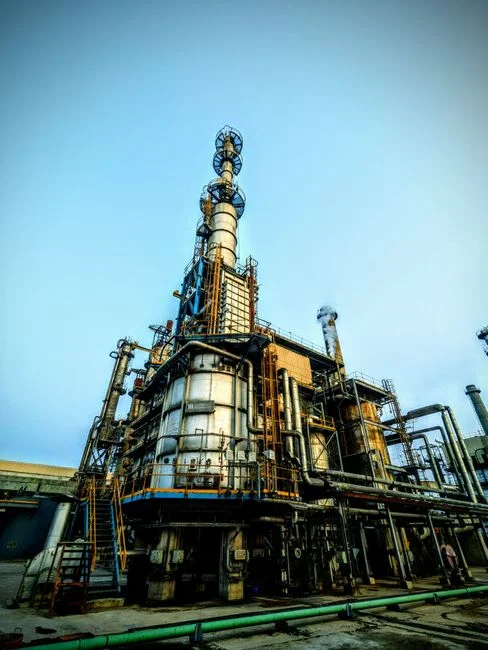
Resolve site interfaces before accepting the installation scope. Confirm power availability and backup arrangements, available footprint, excavation and foundation requirements, drainage, odor control, maintenance access, and the route for residual sludge or waste. A treatment train that meets its nominal performance but cannot be maintained or supplied with utilities is not an installed solution.
Test how shock loads, seasonal production changes, salinity, temperature changes, and inhibitory compounds affect biological stability and equalization requirements. High-COD treatment challenges include extreme organic loading, large wastewater-quality fluctuations, refractory compounds, and toxicity; direct biological treatment may fail when organisms cannot adapt to shock loads or inhibitory conditions (GL Environment). Include these conditions in the supplier’s design envelope and operating procedures.
Assign ownership for sampling, laboratory analysis, operator training, consumables, biological startup, support, and preventive maintenance. For anaerobic equipment, separate a theoretical or expected biogas yield from guaranteed usable energy value. Request a project-specific safety review covering gas collection, storage, ventilation, flame and explosion controls, and the consequence of a gas-balance failure.
Before signature, compare the site-specific high-COD treatment specification against the final quotation. Any unresolved characterization, permit, utility, installation, acceptance, or sludge-disposal item should remain an explicit exception rather than disappearing into boilerplate.
Frequently Asked Questions
How much does a high-COD industrial wastewater treatment system in Haiti cost?
Do not accept a price based only on daily flow or a generic COD range. Request an itemized quotation tied to the confirmed discharge route, measured flow and COD load, biodegradability, required pretreatment, biological stages, polishing, civil works, utilities, commissioning, training, sludge handling, and local installation. The available research provides no Haitian equipment price or quotation, so ask each bidder to state exclusions, assumptions, currency, validity period, payment milestones, and any allowance for site-specific civil or regulatory work.
Which information is required before a supplier can size the treatment train?
Provide the design flow and production profile, influent COD concentration range and daily COD mass load, BOD/COD ratio, pH, temperature, salinity, toxicity, suspended solids, volatile solids, oil and grease, and the required effluent COD or reuse specification. Also provide operating hours, available utilities, footprint constraints, and the receiving authority or reuse party’s written requirements. Until these inputs are resolved, equipment sizing and performance guarantees remain provisional.
When is an anaerobic reactor preferable to aerobic treatment alone?
An anaerobic reactor is a candidate when the wastewater is high-strength and sufficiently biodegradable and the project has a hydraulic, temperature, pH, salinity, inhibition, and biogas-use case that supports it. Request treatability testing and an assessment of the COD load, BOD/COD ratio, inhibitory compounds, hydraulic profile, and required effluent quality (GL Environment). If the BOD/COD ratio is below 0.25, significant non-biodegradable content is indicated, so biological treatment should not be assumed to resolve the full COD load (Bristola2).
How should a buyer compare supplier guarantees and select the most compliant offer?
Compare offers using the same project inputs, discharge destination, and effluent objective. Ask each supplier to identify the governing authority, define guaranteed inlet conditions and sampling methods, distinguish demonstrated performance from a guarantee, state test duration, allocate laboratory and commissioning responsibilities, and list exclusions. Select the offer whose enforceable acceptance method matches the confirmed Haitian discharge or reuse requirement; a benchmark from another country or product literature cannot substitute for local approval.