Why Quito Hospitals Need Decentralized Wastewater Treatment
Quito’s unique geography and infrastructure gap necessitate on-site wastewater management, as only 60% of the city’s hospitals are currently connected to fully functional secondary sewer treatment networks, according to EPMAPS 2024 data. Situated at an elevation of over 9,000 feet (2,850 meters) in the Andes, the Metropolitan District of Quito faces significant hydraulic challenges. The mountainous terrain and dispersed urban layout make the expansion of centralized sewer systems both technically difficult and prohibitively expensive. While urban water coverage in Quito is high at 98.4%, the lag in sewer infrastructure leaves many medical facilities, particularly in peripheral parishes like Tumbaco or Cumbayá, responsible for their own effluent management.
Hospital wastewater is significantly more complex than standard municipal sewage, containing high concentrations of pathogens, multi-drug resistant bacteria, and hazardous chemicals. Typical influent quality for Quito hospitals shows BOD levels of 200–600 mg/L, COD between 400–1,200 mg/L, and TSS ranging from 150–400 mg/L. medical facilities often discharge specific contaminants like mercury from dental departments and high-load pharmaceuticals that standard municipal systems are not designed to neutralize. Without decentralized pre-treatment, these pollutants enter the local watershed, contributing to the viral and bacterial contamination observed in Quito’s urban streams.
The regulatory environment in Ecuador has tightened significantly to address these risks. Under Decreto 3516 (2022), the Ministerio del Ambiente mandates that medical facilities pre-treat effluent before discharge into any public system. Failure to comply results in EPMAPS fines ranging from $5,000 to $50,000 per violation, depending on the severity of the pollutant load. Decentralized systems allow hospitals to maintain total control over their compliance status, shielding them from the legal and financial risks associated with municipal infrastructure failures.
Successful implementations of decentralized solutions are already visible in the region. For instance, the Latacunga Hospital utilized a small-scale wastewater treatment plant (WWTP) featuring anoxic/aerobic (A/O) treatment processes. This decentralized approach reduced BOD by over 90% and successfully eliminated E. coli, providing a blueprint for Quito-based facilities looking to modernize their environmental infrastructure. By treating wastewater at the source, these facilities avoid the heavy surcharges and environmental liabilities associated with raw discharge.
Quito’s Hospital Wastewater Regulations: Compliance Checklist for 2025
Ecuadorian law requires all medical facilities in Quito to adhere to the Unified Text of Secondary Environmental Legislation (TULAS), specifically the limits updated in Decreto 3516 (2022). These regulations establish the maximum permissible limits for discharge into both public sewer systems and freshwater bodies. For hospital facility managers, compliance is not merely an environmental goal but a prerequisite for maintaining an operating license. The 2025 compliance landscape focuses heavily on pathogen reduction and organic load stabilization.
In addition to national laws, EPMAPS (Empresa Pública Metropolitana de Agua Potable y Saneamiento) enforces local requirements in Quito. Hospitals must obtain a ‘Permiso de Vertimiento’ (Discharge Permit), which requires a detailed engineering plan of the treatment system and a characterization of the expected effluent. The application process involves fees ranging from $200 to $1,500 annually, depending on the volume of discharge. Once permitted, hospitals are required to submit quarterly water quality reports verified by an accredited third-party laboratory to prove ongoing compliance with the following parameters.
| Parameter | Sewer Discharge (Decreto 3516) | Surface Water Discharge | WHO 2024 Benchmark |
|---|---|---|---|
| Biochemical Oxygen Demand (BOD5) | <30 mg/L | <10 mg/L | <20 mg/L |
| Chemical Oxygen Demand (COD) | <50 mg/L | <25 mg/L | <40 mg/L |
| Total Suspended Solids (TSS) | <30 mg/L | <10 mg/L | <30 mg/L |
| Fecal Coliforms | <1,000 CFU/100 mL | <200 CFU/100 mL | <10 CFU/100 mL* |
| pH Range | 6.0 – 9.0 | 6.0 – 8.5 | 6.5 – 8.5 |
*WHO recommendation for unrestricted irrigation/reuse.
Disinfection standards in Ecuador align with the WHO’s 99.9% pathogen reduction target. For medical effluent, this typically translates to a 3-log removal for bacteria and a 4-log removal for viruses. Achieving these targets in Quito’s high-altitude environment requires specific considerations for disinfection contact time and oxidant concentration. sludge management is a critical component of the 2025 checklist. Hospitals must treat biological sludge to Class A or B standards per EPA 503 rules before disposal. Common local methods include lime stabilization or controlled incineration, as raw sludge from medical facilities is classified as hazardous waste.
Technical Specifications: Influent vs. Effluent Quality Targets for Quito Hospitals
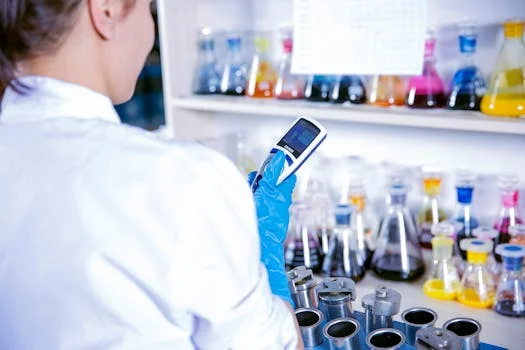
Design parameters for a hospital WWTP in Quito must account for the high variability in medical effluent, which fluctuates based on hospital occupancy, department types (e.g., surgery vs. oncology), and laundry operations. Data from three local Quito hospitals in 2024 indicates that influent typically carries a high nitrogenous load and significant microbial diversity. Engineering teams must design systems capable of handling peak surges while maintaining consistent effluent quality that meets the stringent Decreto 3516 targets.
Typical influent BOD in Quito hospitals ranges from 250 to 500 mg/L, which is nearly double the strength of standard domestic sewage. This high concentration is often due to the concentrated nature of hospital waste and lower per-capita water usage compared to residential areas. Ammonia levels are also elevated, often reaching 30–80 mg/L, necessitating robust nitrification and denitrification stages within the biological treatment process. For facilities discharging into surface waters—common in Quito’s rural valleys—the effluent targets are even stricter, requiring BOD and TSS levels below 10 mg/L.
| Contaminant Category | Typical Influent (Quito 2024) | Required Effluent (Sewer) | Removal Efficiency Target |
|---|---|---|---|
| Organics (BOD/COD) | 400–1,000 mg/L (COD) | <50 mg/L | >95% |
| Nutrients (Ammonia) | 30–80 mg/L | <10 mg/L | >85% |
| Pathogens (E. coli) | 10^6–10^8 CFU/100 mL | <1,000 CFU/100 mL | 99.99% (4-log) |
| Oils and Grease (FOG) | 50–150 mg/L | <20 mg/L | >80% |
| Heavy Metals (Hg, Pb) | 0.05–0.5 mg/L | <0.01 mg/L | >90% |
While Ecuador currently lacks specific limits for pharmaceutical micro-pollutants, international best practices and WHO recommendations are increasingly being adopted by Quito’s environmental engineers. This includes targeting <1 µg/L for common antibiotics like ciprofloxacin to prevent the development of local antibiotic-resistant bacteria. Advanced treatment methods, such as activated carbon adsorption or advanced oxidation processes (AOP), are recommended for hospitals with large oncology or infectious disease departments. Temperature and pH control are also vital; effluent must be stabilized to 15–30°C and a pH of 6–9 using automated sulfuric acid or sodium hydroxide dosing systems to prevent damage to municipal piping and biological ecosystems in local rivers.
Equipment Selection: Comparing MBR, DAF, and Chlorine Dioxide Systems for Quito Hospitals
Selecting the appropriate technology for a Quito hospital depends on available space, budget, and the specific contaminants present in the effluent. The three most common technologies utilized in the region are Membrane Bioreactors (MBR), Dissolved Air Flotation (DAF), and Chlorine Dioxide (ClO₂) disinfection. Each offers distinct advantages for the Andean climate and Quito's regulatory landscape. For instance, MBR systems for hospital wastewater treatment in Quito are increasingly favored for new constructions due to their compact footprint and superior effluent quality.
MBR systems combine biological treatment with membrane filtration, typically using submerged PVDF membranes with a 0.1 µm pore size. This technology achieves 99% BOD removal and a 6-log pathogen reduction, often eliminating the need for secondary clarifiers. While energy-intensive (0.8–1.2 kWh/m³), the resulting water is near-reuse quality, suitable for cooling towers or irrigation. In contrast, comparing MBR, MBBR, and DAF systems for medical wastewater reveals that DAF is superior for removing fats, oils, and grease (FOG) from hospital cafeteria and laboratory drains. DAF uses micro-bubble technology to float solids to the surface for skimming, offering a lower energy profile (0.3–0.5 kWh/m³) but requiring consistent chemical flocculant dosing.
Disinfection is the final, critical hurdle. At Quito’s high altitude, traditional chlorine gas or liquid bleach can be less effective due to temperature fluctuations and rapid dissipation. Chlorine dioxide disinfection for Quito’s hospital effluent is the preferred method because ClO₂ remains effective across a wide pH range and at lower temperatures (5–10°C). It provides a 99.9% pathogen kill rate without producing the harmful trihalomethanes (THMs) associated with standard chlorination. For smaller facilities, compact hospital wastewater treatment systems for Quito clinics often integrate these technologies into a single, modular skid.
| Feature | MBR System | DAF + ClO2 | Standard Activated Sludge |
|---|---|---|---|
| Footprint | Minimal (0.5 m²/m³/d) | Moderate | Large (2.0 m²/m³/d) |
| Effluent Quality | Ultra-high (Reuse ready) | High (Compliance ready) | Moderate |
| Pathogen Removal | 99.9999% | 99.9% | 90–99% |
| Capex (50 m³/day) | $350,000 – $500,000 | $200,000 – $350,000 | $150,000 – $250,000 |
| O&M Complexity | High (Automated) | Medium | Medium |
Cost Benchmarks: Hospital Wastewater Treatment in Quito (2025 Data)
Budgeting for a hospital WWTP in Quito requires an understanding of both initial capital expenditure (CAPEX) and long-term operating expenses (OPEX). For a system with a capacity of 20–200 m³/day, capital costs in 2025 range from $1.2M to $8M. These figures include site preparation, engineering design, equipment procurement, and the complex permitting process required by the Ministerio del Ambiente. The primary cost drivers are the choice of technology (MBR vs. DAF), the level of automation, and the specific site conditions, such as the need for reinforced foundations due to Quito’s seismic activity.
Operating costs are equally critical for long-term financial viability. MBR systems typically incur OPEX of $0.50–$1.50 per cubic meter of treated water, primarily driven by energy for membrane scouring and periodic chemical cleaning. Systems utilizing DAF combined with Chlorine Dioxide are generally more affordable to operate, ranging from $0.30–$0.80/m³, though they require more frequent manual intervention for chemical replenishment and sludge skimming. When evaluating the ROI, facility managers should consider that modern systems can reduce water consumption by 30–50% through reuse in non-potable applications.
| Capacity (m³/day) | Estimated CAPEX (Quito 2025) | Monthly OPEX | Annual Savings (Fines/Water) |
|---|---|---|---|
| 20 (Small Clinic) | $1.2M – $1.8M | $2,500 – $4,000 | $40,000 – $60,000 |
| 100 (Mid-size Hospital) | $3.5M – $5.0M | $8,000 – $12,000 | $150,000 – $250,000 |
| 200 (Large Medical Center) | $6.5M – $8.0M | $15,000 – $22,000 | $350,000 – $500,000 |
To incentivize compliance, EPMAPS and certain local development banks offer financing options for hospitals installing advanced pre-treatment systems. These loans often feature 5–7% APR with terms up to 10 years, provided the system meets specific environmental efficiency benchmarks. A local case study of a 100-bed hospital in northern Quito demonstrated the financial benefit: by installing an MBR system, the hospital reduced its BOD from 400 mg/L to 20 mg/L, avoided $25,000 in annual EPMAPS surcharges, and recycled water for its landscape irrigation, resulting in a total payback period of approximately 4.2 years.
Decentralized vs. Centralized: Which System is Right for Your Quito Hospital?
The decision between a fully decentralized on-site system and a centralized sewer connection (with minimal pre-treatment) depends largely on the hospital’s location within the Metropolitan District of Quito. For hospitals located in the urban core—such as La Carolina, Mariscal, or the Historic Center—centralized discharge is often the most cost-effective route. In these areas, EPMAPS infrastructure is more robust, and hospitals can often meet discharge requirements with simple primary treatment (oil/water separators and pH neutralization), costing between $200,000 and $800,000.
However, for hospitals in Quito’s expansion zones or rural valleys, decentralized systems are the default necessity. In areas like Tumbaco, Cumbayá, and Puembo, sewer coverage is often unreliable or non-existent, and environmental regulations for discharging into local quebradas (ravines) are much stricter. A decentralized system provides these facilities with full autonomy, ensuring that even if municipal services are interrupted, the hospital remains in compliance and operational. These systems also offer the highest potential for water reuse, which is increasingly valuable as Quito faces seasonal water scarcity.
Hybrid systems represent a growing trend for Quito medical facilities. In this model, a hospital performs advanced pre-treatment on-site—such as using DAF for FOG removal and a ClO2 generator for disinfection—before discharging the stabilized effluent into the EPMAPS sewer. This approach reduces the "strength" of the sewage, thereby lowering the volumetric surcharges applied by the utility. This hybrid strategy can save a facility 30–50% in annual operational costs compared to raw discharge, while requiring significantly less CAPEX than a full-scale MBR reuse plant.
To determine the best fit, facility managers should utilize a decision framework:
- Proximity: Is the facility within 500 meters of a high-capacity EPMAPS sewer line? If not, decentralized is required.
- Reuse Goals: Does the facility have significant landscaping or cooling needs? If yes, MBR-based decentralized treatment is the best ROI.
- Budget: Is CAPEX or OPEX the primary constraint? Centralized/Hybrid systems favor lower CAPEX, while decentralized systems favor long-term OPEX stability and risk mitigation.
Frequently Asked Questions
What are the specific EPMAPS fines for hospital wastewater non-compliance in 2025?
Under current Quito municipal ordinances and Decreto 3516, hospitals can be fined between $5,000 and $50,000 per violation. Fines are calculated based on the volume of discharge and the concentration of pollutants exceeding the legal limits. Repeat offenders risk the suspension of their environmental permit and hospital operating license.
Is chlorine dioxide better than UV for hospital wastewater disinfection in Quito?
In Quito’s specific environment, chlorine dioxide is often preferred over UV. UV systems require high water clarity (low turbidity) to be effective, which can be difficult to maintain in medical effluent without extensive pre-filtration. ClO₂ provides a residual disinfectant effect that prevents bacterial regrowth in storage tanks, which UV cannot offer. Similar challenges are addressed in how Amsterdam’s hospitals handle wastewater treatment, where chemical disinfection is often used to supplement filtration.
How often must Quito hospitals test their treated wastewater?
According to EPMAPS and the Ministerio del Ambiente, hospitals must perform characterization tests and submit water quality reports every quarter (every 3 months). These tests must be conducted by a laboratory accredited by the SAE (Servicio de Acreditación Ecuatoriano) to be legally valid. This is consistent with how Nagpur’s hospitals comply with wastewater regulations, where quarterly monitoring is the standard for medical facilities.
Can hospital wastewater be reused for irrigation in Quito?
Yes, provided it meets the WHO 2024 guidelines for unrestricted irrigation (fecal coliforms <10 CFU/100 mL and BOD <20 mg/L). In Quito, this typically requires an MBR system or an advanced tertiary treatment stage following standard biological processes. Reuse is highly encouraged by EPMAPS to reduce the city’s overall water demand.
What is the average lifespan of an MBR system in a Quito hospital?
A well-maintained MBR system has a mechanical lifespan of 15–20 years. However, the membrane modules themselves typically require replacement every 5–8 years, depending on the influent quality and the rigor of the chemical cleaning (CIP) protocols. Regular maintenance is essential to prevent irreversible fouling and ensure the system meets Decreto 3516 targets throughout its lifecycle.