Why Thai Factories Are Switching to DAF Systems in 2025
IEAT fines for industrial wastewater non-compliance doubled in 2023, with penalties now ranging from THB 200,000 to THB 1 million per violation under the Factory Act 1992 amendments. For a food processing plant in Samut Prakan, these regulatory shifts recently translated into a crisis when high Fats, Oils, and Grease (FOG) discharge led to a temporary suspension of operations. The facility was relying on aging gravity clarifiers that could not meet the ONEP 2024 effluent standards, which strictly mandate FOG levels below 10 mg/L and Total Suspended Solids (TSS) under 50 mg/L.
In Thailand, dissolved air flotation (DAF) systems are the standard for industrial wastewater pre-treatment, achieving 92–97% TSS removal and 85–95% FOG reduction (per IEAT 2024 benchmarks). Local suppliers offer systems ranging from THB 800,000 for small food processors (5–20 m³/h) to THB 12M+ for petrochemical plants (200–300 m³/h). Compliance with IEAT’s Factory Act 1992 and ONEP’s effluent standards requires precise sizing and chemical dosing—this guide provides Thailand-specific engineering parameters, cost models, and a vetted supplier checklist.
Beyond compliance, the shift is driven by operational expenditure (OPEX). Internal HydropureWater data from a Thai seafood processor shows that replacing a traditional clarifier with a modern DAF system reduced chemical costs by 40% and avoided THB 1.2 million in potential fines within the first year of operation. In industrial zones like Chonburi and Rayong, where space is at a premium, the 60% smaller footprint of DAF units compared to clarifiers allows factories to expand production capacity without requiring additional land for wastewater infrastructure.
How DAF Systems Work: Microbubble Mechanics and Process Parameters
Microbubbles in a standard DAF system typically measure between 20 and 80 μm, creating a surface area for particle attachment that is 100 to 300 times greater than the 1–3 mm bubbles found in conventional aeration systems. This technical advantage is critical for the removal of low-density solids and emulsified oils that gravity alone cannot separate. The process relies on Henry’s Law, where air is dissolved into a recycle stream of treated water under high pressure (typically 4–6 bar) and then released into the flotation tank at atmospheric pressure, creating a "white water" effect.
Operating pressure is a critical variable for energy efficiency in Thai factories. While global standards vary, Thai suppliers typically standardize at 5 bar to balance saturation efficiency with electricity consumption. The effectiveness of the microbubble attachment is highly dependent on the influent characteristics. For instance, textile plants in Samut Sakhon dealing with dye-heavy wastewater require different PLC-controlled chemical dosing for DAF systems compared to a poultry plant in Nakhon Pathom.
| Parameter | Thai Industrial Range (Influent) | DAF Effluent Performance | IEAT/ONEP 2024 Limit |
|---|---|---|---|
| Total Suspended Solids (TSS) | 100 – 5,000 mg/L | < 30 mg/L | < 50 mg/L |
| Fats, Oils, & Grease (FOG) | 50 – 1,000 mg/L | < 5 mg/L | < 10 mg/L |
| Chemical Oxygen Demand (COD) | 500 – 10,000 mg/L | 40 – 70% Reduction | < 200 mg/L (Total) |
| Microbubble Size | 20 – 80 μm | N/A | N/A |
The chemical flocculation process is the engine of the DAF system. In Thai industrial applications, Polyaluminum Chloride (PAC) is typically dosed at 5–50 mg/L as a coagulant to neutralize particle charges, followed by an anionic or cationic polymer at 0.5–5 mg/L to bridge the particles into larger flocs. This chemical conditioning ensures that the microbubbles can effectively "hook" onto the solids and lift them to the surface for mechanical skimming.
DAF vs. Clarifier: Head-to-Head Comparison for Thai Industrial Wastewater
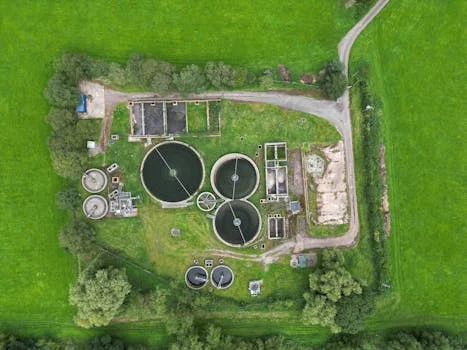
DAF systems achieve 92–97% TSS removal compared to 60–80% in conventional gravity clarifiers, making them the superior choice for the light, greasy solids common in food processing and petrochemical sectors. While clarifiers rely on the density difference between water and solids (sedimentation), DAF uses buoyancy. This fundamental difference allows DAF to handle higher hydraulic loading rates, which translates to a significantly smaller equipment footprint—a major advantage for factories in the Bangkok Metropolitan Region where land costs are high.
Maintenance and sludge management also differ significantly. DAF systems produce a sludge with a higher solids content (3–5% dry solids) compared to clarifiers (0.5–1.5%), which directly reduces the volume of sludge that must be transported and treated off-site. In Thailand, where industrial sludge disposal costs are rising, this 20–40% reduction in sludge volume represents a major annual saving. DAF units have approximately 30% fewer moving parts submerged in wastewater, reducing the frequency of unplanned downtime for rake repairs or basin cleaning.
| Feature | Dissolved Air Flotation (DAF) | Gravity Clarifier | Winner for Thai Industry |
|---|---|---|---|
| Space Requirement | Low (30-50% of Clarifier) | High | DAF (for urban zones) |
| FOG Removal Efficiency | 85 – 95% | 30 – 50% | DAF |
| Chemical Consumption | 30 – 50% Lower | Standard | DAF |
| Sludge Volume | Low (Thickened) | High (Dilute) | DAF |
| Capital Cost (CAPEX) | Moderate to High | Moderate | Clarifier (Initial only) |
For plants requiring secondary biological treatment, the choice of DAF for pre-treatment is often non-negotiable. High FOG levels entering an aerobic tank can lead to filamentous bulking and oxygen transfer inhibition. By using DAF to strip 90% of FOG and 95% of TSS upstream, engineers can compare aerobic and anaerobic systems for post-DAF treatment with greater confidence in their biological stability and lower energy requirements.
Sizing Your DAF System: Thailand-Specific Engineering Calculations
Thai industrial wastewater suppliers standardize hydraulic loading rates at 7 m/h to balance footprint and effluent clarity, though rates can vary between 5 and 10 m/h depending on the specific gravity of the contaminants. Sizing a DAF system is not merely about flow rate; it requires a precise calculation of the Air-to-Solids (A/S) ratio. For high-FOG wastewater like that found in Chonburi’s seafood processing cluster, an A/S ratio of 0.04 to 0.06 is recommended to ensure enough microbubbles are available to lift heavy grease loads.
To estimate the required tank volume, engineers use the formula: Tank Volume (m³) = Flow Rate (m³/h) × Retention Time (min) ÷ 60. In Thailand, the standard retention time for industrial DAF is 20–40 minutes. For a typical 50 m³/h food processing plant with a TSS of 1,200 mg/L, a 30-minute retention time would necessitate a 25 m³ flotation tank. However, seasonal variations—such as the increased organic loads in Nakhon Sawan sugar mills during the crushing season—require a safety factor of at least 1.2x to prevent system bypass during peak flows.
| Industry Type | Hydraulic Load (m/h) | Recycle Ratio (%) | A/S Ratio |
|---|---|---|---|
| Food Processing | 5 – 7 | 20 – 30% | 0.04 – 0.06 |
| Petrochemical | 6 – 8 | 15 – 25% | 0.03 – 0.05 |
| Textile/Dyeing | 7 – 10 | 10 – 20% | 0.02 – 0.04 |
When selecting a system like the DAF systems for Thai industrial wastewater, engineers must also account for the recycle pump capacity. The recycle stream provides the dissolved air; if this pump is undersized, the microbubble density will be insufficient to float the flocculated solids, leading to "solids carryover" and IEAT compliance failure. Always verify that the supplier’s sizing includes the recycle flow in the total hydraulic loading calculation.
DAF System Costs in Thailand: 2025 Budget Benchmarks
Capital expenditure for DAF systems in Thailand ranges from THB 800,000 to over THB 12 million for high-capacity petrochemical applications, with the median price for a 50 m³/h stainless steel (SS304) unit sitting around THB 2.5 million. These costs are heavily influenced by material choice; upgrading to SS316 for highly corrosive environments, such as chemical plants in Rayong, typically adds 20–30% to the equipment price. Automation level is another primary cost driver, with fully integrated PLC systems adding to the CAPEX but significantly reducing labor costs.
Installation and commissioning typically account for 15–25% of the total equipment cost. In the Bangkok metropolitan area, labor rates and specialized crane rentals for tank placement can push these costs toward the higher end of the spectrum. Beyond CAPEX, the Return on Investment (ROI) is calculated by comparing chemical and sludge disposal savings. A 100 m³/h DAF system can save a factory approximately THB 2.4 million per year in reduced chemical dosing and sludge handling fees compared to a clarifier, often leading to a payback period of less than 18 months.
| Capacity (m³/h) | Estimated CAPEX (THB) | Annual OPEX (THB/year) | Typical Application |
|---|---|---|---|
| 5 – 20 | 800,000 – 1,500,000 | 120,000 – 250,000 | Small Food/Beverage |
| 21 – 100 | 1,800,000 – 4,500,000 | 300,000 – 800,000 | Textile/Medium Food |
| 101 – 300+ | 5,000,000 – 12,000,000+ | 1,000,000+ | Petrochemical/Refinery |
Operational costs (OPEX) are dominated by chemical consumption, which ranges from THB 1.5 to THB 4 per m³ of treated water. This includes the cost of PAC and polymer. Maintenance budgets should set aside THB 50,000 to THB 200,000 annually for pump servicing, microbubble diffuser cleaning, and sensor calibration. For budgeting purposes, engineers should also factor in the cost of electricity, which typically accounts for 5–10% of the total OPEX due to the continuous operation of the 5-bar recycle pump.
Thailand’s DAF Compliance Requirements: IEAT, ONEP, and Factory Act 1992
The IEAT Factory Act 1992 mandates pre-treatment systems for any facility discharging wastewater with TSS exceeding 500 mg/L or FOG above 100 mg/L, making DAF the primary choice for industrial compliance. For factories located within IEAT-managed industrial estates, the discharge limits are often more stringent than the national standards to protect the centralized treatment plants. Failure to meet these limits can result in immediate fines and a mandate to install corrective equipment within 30 to 90 days.
ONEP’s 2024 effluent standards have further tightened the requirements for direct discharge into public water bodies. The standard now emphasizes not just the concentration of pollutants, but the consistency of the effluent quality. This makes DAF systems with automated dosing and online monitoring essential. When installing a new DAF, the permitting process through IEAT or the Department of Industrial Works (DIW) typically takes 4 to 8 weeks, requiring detailed engineering drawings and a certified environmental engineer's signature.
- TSS Compliance: Must consistently stay below 50 mg/L (ONEP 2024).
- FOG Compliance: Mandatory limit of < 10 mg/L for all industrial sectors.
- Documentation: Factories must maintain 2-year logs of chemical dosing, sludge disposal manifests, and weekly effluent test results.
- Permitting: New DAF installations require an amendment to the factory's Ror.Ngor. 4 license.
A common compliance pitfall is the lack of proper sludge records. Under Thai law, industrial sludge is classified as waste that must be tracked from "cradle to grave." DAF systems generate significant volumes of thickened sludge that must be handled by an authorized waste contractor. For plants looking at the bigger picture, understanding Thailand’s package wastewater treatment plant requirements can help integrate DAF pre-treatment into a total compliance strategy.
Vetted DAF Suppliers in Thailand: 2025 Checklist for Procurement
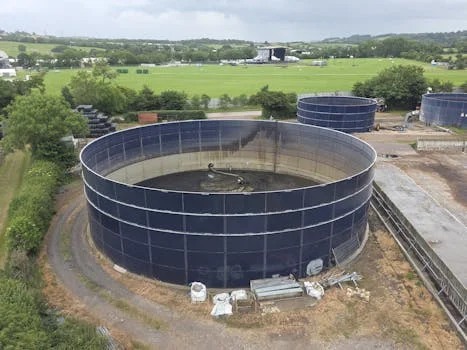
Engineering procurement for DAF systems in the EEC (Eastern Economic Corridor) requires a minimum of 5 years of local operational references to ensure the supplier understands Thai wastewater characteristics. Procurement managers should prioritize suppliers who offer on-site pilot testing. A pilot test using the actual influent from the factory is the only way to accurately determine the required chemical dosing ratios and microbubble retention time, reducing the risk of a full-scale system failure.
One notable case study involved a textile plant in Chonburi that struggled with high color and TSS. By implementing a DAF system, the plant reduced TSS from 1,500 mg/L to 25 mg/L, well within compliance limits. The procurement process for such a system typically spans 12 to 16 weeks, including 4 weeks for engineering design, 8 weeks for fabrication, and 2–4 weeks for on-site installation and commissioning. Red flags to watch for during the RFQ stage include suppliers who cannot provide ISO 9001 certification or those who offer "one-size-fits-all" tanks without specific hydraulic loading calculations.
| Supplier Attribute | Required Standard | Why It Matters |
|---|---|---|
| Local Presence | 5+ Years in Thailand | Ensures availability of spare parts and 24-hour service. |
| Pilot Testing | On-site capability | Verifies chemical dosing and TSS removal before purchase. |
| Certification | ISO 9001 / TIS | Guarantees manufacturing quality and safety standards. |
| Compliance Guarantee | Written IEAT/ONEP assurance | Protects the buyer from regulatory fines post-installation. |
When evaluating quotes, ensure the scope of work includes the DAF systems for Thai industrial wastewater along with the necessary peripheral equipment. A complete package should include the flotation tank, the saturation vessel (recycle system), the mechanical skimmer, and the chemical dosing pumps. Vague quotes that exclude "installation" or "commissioning" often lead to budget overruns of 20% or more during the final phases of the project.
Frequently Asked Questions
What is the difference between clarifier and DAF?
Clarifiers rely on gravity to settle solids (60–80% TSS removal), while DAF uses microbubbles to float solids (92–97% TSS removal). DAF requires 50–70% less space and is significantly more effective at removing Fats, Oils, and Grease (FOG), making it the preferred choice for food processing and petrochemical plants.
What is the purpose of the DAF system?
The primary purpose is to remove suspended solids (TSS), fats/oils/grease (FOG), and colloidal matter from industrial wastewater. This ensures the water meets Thai effluent standards (TSS < 50 mg/L, FOG < 10 mg/L) and protects downstream biological treatment processes from clogging or inhibition.
How much does a DAF system cost in Thailand?
A DAF system in Thailand costs between THB 800,000 and THB 12 million. A standard 20–50 m³/h system typically costs between THB 1.5 million and THB 3 million, depending on the material (SS304 vs SS316) and the level of automation. Installation typically adds another 15–25% to the budget.
What chemicals are used in DAF systems?
Coagulants like Polyaluminum Chloride (PAC) are used at 5–50 mg/L to destabilize particles, and flocculants (polymers) are used at 0.5–5 mg/L to clump particles together for easier microbubble attachment. In some food processing applications, ozone may be added for odor control and improved oxidation.
How often should DAF systems be maintained?
Maintenance should be performed on a tiered schedule: weekly checks for pump performance and chemical dosing levels; monthly inspections of the sludge scraper and weir levels; and annual servicing of the saturation vessel, microbubble diffusers, and PLC sensors to ensure long-term compliance.