Define the Guinean discharge route and permit basis
Selecting a hospital wastewater treatment and disinfection system in Guinea starts with the hospital’s flow, wastewater composition and receiving route, followed by biological treatment, solids separation and validated disinfection. Chlorine can be appropriate, but dose alone is insufficient: S1 states that wastewater chlorine demand must first be exceeded. Its Ebola-virus evidence used sterilized municipal wastewater, so it supports validation planning rather than proving performance in real hospital effluent. S5 reports up to 93.9% TOC removal under optimal electro-peroxone conditions, but that result cannot be transferred to an unspecified site.
First separate the project into three design cases: direct municipal-sewer discharge, permitted treated-water reuse and on-site disposal. Their treatment objectives and acceptance evidence differ; do not combine them into one generic “compliant plant” specification.
Ask the hospital owner and relevant authority to confirm the governing discharge authorization, sewer-entry conditions, receiving-water constraints and any reuse approval in writing. The available scientific evidence does not establish a Guinean regulator, permit limit or sewer-entry rule. A supplier’s reference to compliance identifies a verification task, not proof that the proposed route is approved.
Require the quotation to identify the document behind every performance guarantee and allocate responsibility for permit interpretation, authority liaison and corrective action. For route-specific engineering, use the West African hospital wastewater engineering guide as a comparison aid, not as evidence of Guinean legal requirements.
| Discharge route or influent problem | Governing rule or process option | What data settles it |
|---|---|---|
| Direct municipal-sewer discharge | Confirm the applicable sewer-entry authorization and receiving authority’s discharge conditions before selecting the final treatment and disinfection train. | Written sewer-entry conditions, named authority, permitted discharge parameters and technical contact. |
| Permitted treated-water reuse | Define the intended reuse and the additional barrier required for that specific use; do not infer reuse criteria from sewer-discharge compliance. | Approved reuse application, end use, public-health requirements, monitoring regime and approval holder. |
| On-site disposal | Establish the receiving environment, application method and any pretreatment required before discharge or infiltration. | Site hydrogeology, soil and groundwater constraints, disposal method, receiving-environment requirements and authority approval. |
| Unconfirmed receiving route | Do not fix the disinfection performance guarantee or regulatory compliance statement. | Owner-approved route, discharge point, authorization pathway and the documents that will govern design and acceptance. |
Characterize the hospital wastewater before selecting equipment
Selecting equipment requires a representative wastewater mass balance rather than a headline flow rate alone. Obtain average and peak flows, the operating schedule and separate discharge estimates for toilets, kitchens, laundry, laboratories and dialysis. The site also needs to provide COD, BOD, suspended solids, pH, salinity, nutrients, oils and greases, pharmaceuticals and microbiological indicators, including variation between operating periods.
Request load and mass-balance calculations that reconcile source flows, operating hours and contaminant concentrations. This determines whether equalization, grease interception, source segregation or additional pretreatment belongs in the train. A single diluted or off-peak sample is not a defensible design basis.
Real hospital wastewater acts as both an organic-contaminant and pathogen challenge. S5, in Environment International, reports that an electro-peroxone process could reach 93.9% total organic carbon removal in real hospital wastewater under optimal conditions while also inactivating pathogenic microorganisms. That is a technology-specific research result, not a transferable design capacity or a guaranteed site performance.
For a dialysis facility, use the 30 m³/day West African dialysis MBR case study to structure questions about source flows and peak-load treatment, but calculate the actual site from verified data rather than transferring its flow basis.
| Discharge route or influent problem | Governing rule or process option | What data settles it |
|---|---|---|
| Variable hospital flow across operating periods | Size equalization and biological treatment around verified peak and loading conditions. | Continuous or logged flow data by operating period, catchment population and source discharge estimates. |
| High-strength kitchen, laundry or laboratory streams | Evaluate source segregation, grease interception and equalization before biological treatment. | Separate flow and contaminant measurements for each source, including oils and greases where relevant. |
| Salinity, nutrients, pharmaceuticals or unusual pH | Check biological-process suitability and possible pretreatment or source control. | Representative influent analysis and variability across normal operating periods. |
| Uncertain peak contamination from dialysis or clinical operations | Determine whether storage, standby capacity or segregation is required before final disinfection. | Validated diurnal flow and load profile, shutdown scenarios and operating schedule. |
Compare biological treatment, solids separation and disinfection

Choose an A/O package treatment plant when the verified design basis supports a compact biological route and the site can operate it reliably. Choose an MBR wastewater treatment system when biological solids separation, compact footprint, automation or reuse objectives justify added membrane-system duties. Neither option is defensible without representative effluent data and a confirmed receiving route.
For specialist electrochemical disinfection, use S5 only as a research reference. It achieved up to 93.9% TOC removal in real hospital wastewater under optimal electro-peroxone conditions and simultaneously inactivated pathogenic microorganisms. A quotation should instead specify the feed, operating conditions, test methods, power and chemical requirements, control response and site acceptance criteria for the proposed unit.
Evaluate chlorine-based medical wastewater disinfection by residual concentration, contact time, chlorine demand and monitoring. S1 tested initial sodium-hypochlorite doses of 0, 1, 5 and 10 mgL-1 in sterilized municipal wastewater. Those test doses do not establish a site dose for hospital effluent; organic matter, pH and other constituents must be included in demand testing.
Consider UV or another non-chemical process only after reviewing source control, UV transmittance, fouling, power reliability and the receiving route. Use the MBR versus package plant comparison for hospital wastewater to frame the commercial and operational questions. The decision should record why the selected train best fits the verified site constraints.
Validate disinfection under real operating conditions
Make chlorine-demand testing an acceptance condition, not an installation assumption. S1 states that chlorine demand must first be exceeded before its recommendation for Ebola-virus disinfection can be valid. Because its experiments used sterilized municipal wastewater, the result cannot demonstrate performance in organic hospital effluent.
Specify representative full-scale or pilot testing with actual hospital effluent. Define operating loads, feed characteristics, applied and residual chlorine, pH, contact time, sampling points and analytical methods before testing begins. S1 also reports an Ebola-virus T90 of 2.1 days in sterilized wastewater. Treat this as background on persistence, not as a substitute for site validation or a discharge criterion.
Require the supplier to separate the functions of upstream biological treatment, solids separation, chemical contact, final disinfection and any reuse barrier. A single unit must not receive credit for unsupported performance across the whole train.
Include acceptance tests for treated-effluent quality, microbial indicators, automatic control response, alarm behavior, power interruption and recovery. Test under defined representative loads and document every deviation, resampling decision and corrective action. Route-specific considerations can be framed using the hospital wastewater treatment engineering and commissioning guide, without treating another jurisdiction’s requirements as applicable in Guinea.
Build the quotation scope and catch pre-signature gaps
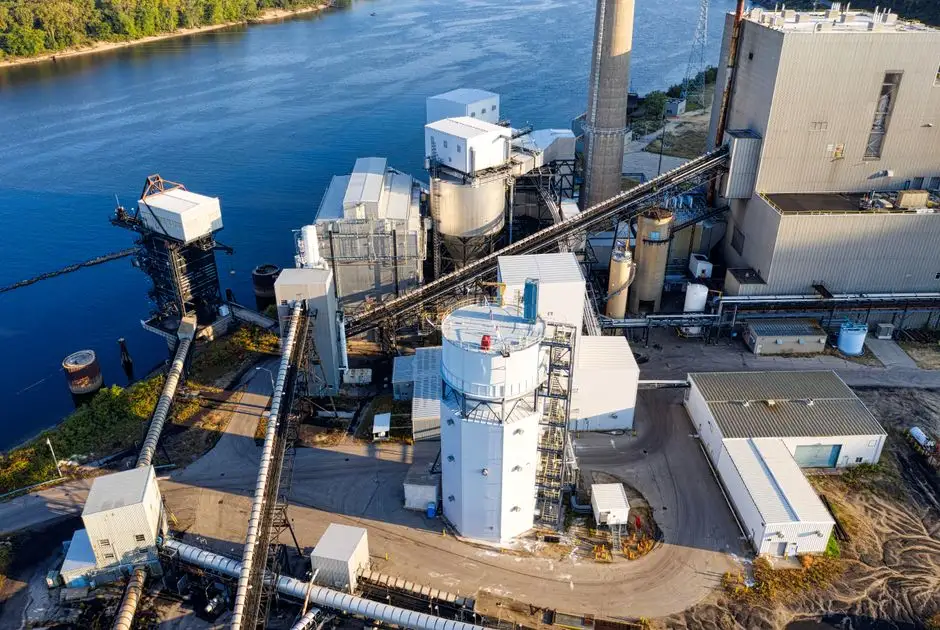
Require an itemized quotation that separates the treatment train from site works and lifecycle obligations. A supplier should identify the design basis, performance guarantees, exclusions, utilities, civil interfaces, commissioning tests, acceptance retests and remedy for non-compliance. Unsupported claims should be rejected before signature.
Also require the supplier to identify any cited standards and provide the proposed local approval route. The available evidence does not verify Guinean approval requirements, so the responsible party must obtain written confirmation from the relevant authority. Tie payment milestones to factory tests, site acceptance, performance verification, operator training and handover of operating manuals, as-built drawings and test records.
| Quote line item | Technical scope to specify | Red flags to check before signing |
|---|---|---|
| Civil works and inlet works | Site survey, excavation, foundations, access, inlet works, equalization, drainage and equipment interfaces. | Excluded civil works, unverified soil or groundwater assumptions, and no defined discharge or utility connection point. |
| Biological reactor and solids separation | Design flow and loading basis, process calculations, sludge removal, redundancy, maintenance access and installed equipment. | Capacity based only on average flow; no peak-load basis; omitted sludge handling; unsupported performance claims. |
| Disinfection system | Residual and contact-time controls, demand testing, sampling, microbial acceptance criteria and power-failure response. | No real-effluent test protocol, no chlorine-demand criterion, or one-unit guarantee covering upstream removal. |
| Controls, instrumentation and alarms | Automatic dosing, flow and residual monitoring, event logging, alarms, remote access and manual fallback. | Controls excluded from price; undefined data outputs; no alarm, outage or recovery test. |
| Installation, commissioning and handover | Scope boundaries, training, operating manuals, as-built drawings, certificates, test records and warranty remedies. | Commissioning defined only as “installation complete”; training, drawings and performance retests excluded. |
| Compliance and guarantees | Governing permit or authorization, applicable standards, responsible liaison party, test methods and remedy for failure. | Blanket “compliant” wording, unnamed authority, unspecified design basis, or no enforceable acceptance remedy. |
Frequently Asked Questions
Does a clinic, hospital and dialysis centre need different treatment capacity and redundancy?
Yes, but capacity cannot be assigned by facility label alone. Request average and peak flows, catchment population, source discharge estimates and operating schedules, then require a load and mass-balance calculation. Also state whether standby capacity is required for clinical shutdowns and how disinfection will operate during power interruption.
How should I select between package biological treatment, MBR and specialist disinfection?
Compare each route against verified flow and load, footprint, reuse objective, receiving route, operator capability and power reliability. For specialist disinfection, request actual-hospital-effluent test results and site acceptance conditions. Do not select from a laboratory TOC-removal figure or a chlorine-dose study conducted in sterilized municipal wastewater.
What must a supplier include in the price and performance guarantees?
Request itemized pricing for civil works, process equipment, sludge handling, controls, installation, commissioning, training, documentation and warranty. Each guarantee should identify its design basis, governing discharge document, test method, sampling conditions, acceptance criterion, retest procedure and remedy for non-compliance.
Is compliance in Guinea already established by a treatment-system reference?
No. A scientific study or another jurisdiction’s guide does not establish a Guinean permit. Require the supplier to identify the approval route, while the hospital owner obtains written confirmation of the applicable authorization, sewer-entry conditions and discharge requirements from the relevant authority.