Wastewater Treatment Plant Cost in Jinja 2025: Engineering Breakdown with Local Data, ROI & Equipment Selection
In Jinja, Uganda, the cost of a wastewater treatment plant (WWTP) in 2025 ranges from $500,000 to $5M USD for municipal projects (1–10 MLD capacity) and $200,000 to $2M USD for industrial systems (50–500 m³/day), depending on technology and compliance requirements. Construction costs average $1,200–$2,500 USD per m³/day capacity, with operational expenses adding $0.15–$0.40 USD/m³ treated. Local factors—such as NWSC connection fees (5–10% of project cost) and NEMA compliance (e.g., <50 mg/L BOD for discharge)—can increase total investment by 20–30%. This guide provides Jinja-specific cost benchmarks, technology comparisons, and an ROI calculator to optimize your project budget.
Why Jinja’s Wastewater Treatment Costs Are Unique: Local Factors That Drive Up (or Reduce) Your Budget
National Water and Sewerage Corporation (NWSC) connection fees in Jinja typically account for 5% to 10% of the total wastewater treatment project budget, a cost often overlooked in initial feasibility studies. Unlike projects in Kampala, Jinja-based facilities must navigate a unique set of logistical and environmental parameters that directly influence capital expenditure (CAPEX). For instance, industrial facilities located in the Njeru or Bugembe zones face transport premiums of 20% to 40% for heavy construction materials like specialty concrete and structural steel, which are primarily sourced from Kampala-based distributors (HydropureWater field data, 2025).
Compliance with National Environment Management Authority (NEMA) discharge standards is a non-negotiable cost driver. In Jinja, discharge into Lake Victoria or municipal sewers requires strict adherence to parameters: Biological Oxygen Demand (BOD) must remain below 50 mg/L, Total Suspended Solids (TSS) below 100 mg/L, and ammonia levels below 10 mg/L. Failure to meet these standards results in environmental levies or fines that can reach 10,000,000 UGX per violation. Consequently, many engineers are opting for a MBR system for NEMA-compliant effluent in Jinja to ensure long-term regulatory safety.
Labor and land costs also differentiate the Jinja market. While rural land may cost as little as $20 per m², prime industrial land in Jinja’s manufacturing corridor ranges from $50 to $150 per m². the demand for skilled sanitary engineers in Jinja’s industrial sector has pushed monthly salaries to the 3M–5M UGX range, which is approximately 15% higher than the national average for similar technical roles.
| Cost Driver | Jinja-Specific Benchmark (2025) | Impact on Total Budget |
|---|---|---|
| NWSC Connection Fees | 5–10% of total project cost | High (Fixed) |
| Material Transport (from KLA) | 20–40% premium on base price | Medium |
| Skilled Engineering Labor | 3,000,000 – 5,000,000 UGX/month | Medium (OPEX) |
| Industrial Land (Njeru/Bugembe) | $50 – $150 USD per m² | Variable |
| NEMA Non-Compliance Fines | Up to 10,000,000 UGX per incident | High Risk |
Wastewater Treatment Plant Cost in Jinja: 2025 Construction Cost Breakdown by Capacity and Technology
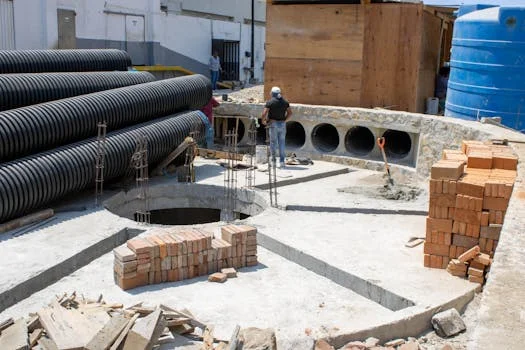
Construction costs for a 500 m³/day conventional activated sludge plant in Jinja range between $1,200 and $2,500 USD per m³ of capacity. This wide variance is primarily dictated by the complexity of civil works and the choice of equipment. Civil engineering in Jinja often requires specialized foundations; for example, sites near the Nile or in Njeru frequently exhibit high water tables, necessitating dewatering and reinforced tanking which can consume 30% to 40% of the total budget. For sites where space is at a premium, a compact underground WWTP for Jinja’s space-constrained sites can significantly reduce land acquisition costs, though it may increase initial excavation expenses.
Equipment procurement accounts for 40% to 50% of the total investment. While local fabrication is available for basic tanks, high-performance components like aeration blowers, membrane modules, and automated sensors are typically imported. European-spec equipment carries a 25% premium over high-grade Chinese industrial systems, though the latter often provides a faster ROI for Jinja’s industrial applications. Permitting and consultancy fees, including NEMA Environmental Impact Assessments (EIA) and NWSC technical approvals, generally require an additional 5% to 10% of the CAPEX.
For industrial operators, particularly in the food and beverage sector, a DAF system for Jinja’s food processing and industrial wastewater is often the most cost-effective solution for pre-treatment. These systems range from $800 to $1,500 USD per m³/day of capacity, offering a lower entry point than full biological systems while still meeting municipal sewer discharge limits.
| Component | Percentage of Total CAPEX | Typical Cost Range (500 m³/day) |
|---|---|---|
| Civil Works & Excavation | 30–40% | $180,000 – $360,000 USD |
| Mechanical & Electrical Equipment | 40–50% | $240,000 – $450,000 USD |
| Installation & Commissioning | 10–15% | $60,000 – $135,000 USD |
| Permitting & Engineering Design | 5–10% | $30,000 – $90,000 USD |
| Total Estimated CAPEX | 100% | $510,000 – $1,035,000 USD |
Operational Costs in Jinja: Energy, Chemicals, and Labor Expenses You Can’t Ignore
Energy tariffs for industrial consumers in Jinja average $0.12 to $0.18 USD per kWh, representing up to 50% of the total monthly operational expenditure (OPEX). In a standard biological treatment plant, aeration blowers are the primary energy consumers. Engineers in Jinja are increasingly looking at Uganda’s 2025 industrial wastewater treatment requirements to balance energy consumption with discharge quality. Utilizing high-efficiency diffusers and VFD-controlled motors can reduce energy costs by 20% compared to legacy systems.
Chemical consumption is the second largest OPEX component. Coagulants like Polyaluminum Chloride (PAC) and flocculants are often imported from Kenya or overseas, with prices ranging from $2 to $5 per kg. To manage these costs, an PLC-controlled chemical dosing for Jinja’s variable wastewater loads is essential, as it prevents the over-application of chemicals during low-flow periods. Sludge management also incurs costs; NWSC landfill tipping fees for dewatered sludge in 2025 are estimated between $50 and $150 per ton, depending on the moisture content and toxicity levels.
| OPEX Category | Unit Cost (Estimated) | Annual Cost (500 m³/day plant) |
|---|---|---|
| Electricity (UMEME Tariffs) | $0.12 – $0.18 per kWh | $25,000 – $45,000 USD |
| Chemicals (PAC/Polymer) | $2.00 – $5.00 per kg | $12,000 – $28,000 USD |
| Labor (3 Operators + 1 Manager) | $500 – $1,500 per month/ea | $18,000 – $36,000 USD |
| Maintenance & Spares | 2–5% of CAPEX annually | $12,000 – $30,000 USD |
| Sludge Disposal | $50 – $150 per ton | $8,000 – $15,000 USD |
Technology Showdown: MBR vs. DAF vs. Conventional Activated Sludge for Jinja’s Wastewater
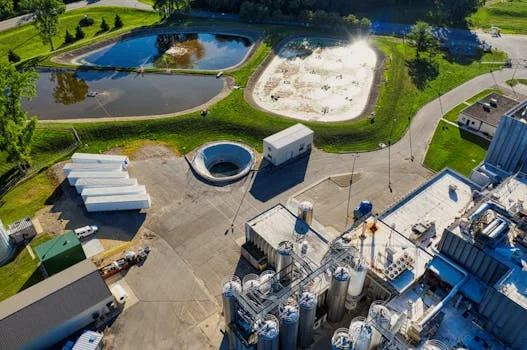
Membrane Bioreactor (MBR) systems require 60% less physical footprint than conventional activated sludge systems but carry a 30% higher initial capital investment. For hospitals and pharmaceutical factories in Jinja, the choice is often driven by effluent quality rather than CAPEX. When comparing MBR vs. ozone vs. chlorine dioxide for hospital wastewater in Jinja, MBR consistently provides superior removal of pathogens and micropollutants, which is critical for facilities near the Lake Victoria catchment area.
Dissolved Air Flotation (DAF) serves a different niche, primarily focusing on the removal of oils, fats, and suspended solids. It is the preferred technology for Jinja’s edible oil refineries and fish processing plants. While DAF systems have a lower CAPEX ($1,000–$1,800 per m³/day), they do not provide the biological reduction of BOD required for direct environmental discharge, often necessitating a secondary biological stage if the water is not sent to an NWSC sewer. Conventional Activated Sludge remains the "middle ground" for municipal applications where land is available, offering predictable cost benchmarks for package WWTPs in Sub-Saharan Africa.
| Feature | MBR (Membrane Bioreactor) | DAF (Dissolved Air Flotation) | Conventional Activated Sludge |
|---|---|---|---|
| Effluent Quality | Very High (BOD < 5 mg/L) | Moderate (TSS removal focus) | High (BOD < 30 mg/L) |
| Footprint | Minimal (Integrated) | Small | Large (Requires Clarifiers) |
| CAPEX | $2,000 – $3,500 / m³ | $1,000 – $1,800 / m³ | $1,200 – $2,500 / m³ |
| OPEX | $0.25 – $0.40 / m³ | $0.15 – $0.30 / m³ | $0.20 – $0.35 / m³ |
| Best Use Case | Pharma, Hospitals, Reuse | Food Processing, Oil/Gas | Municipal, Large Industrial |
ROI Calculator: How Long Until Your Jinja WWTP Pays for Itself?
Industrial facilities in Jinja typically achieve a full return on investment (ROI) within 4 to 7 years by avoiding NEMA non-compliance fines and substituting municipal water with treated effluent. The ROI calculation must factor in the rising cost of groundwater abstraction and NWSC water rates, which currently range from $0.50 to $2.00 per m³ for industrial users. By treating and reusing wastewater for cooling towers, floor washing, or irrigation, a facility can reduce its fresh water demand by up to 70%.
Consider a textile factory in Jinja discharging 500 m³/day. Without a WWTP, the factory may face annual NWSC surcharges and NEMA fines totaling $40,000 USD. By installing a $750,000 WWTP, the factory saves this amount plus an additional $60,000 USD in water reuse savings (assuming 50% reuse at $0.70/m³). Even after accounting for $45,000 in annual OPEX, the net annual saving of $55,000 leads to a technical payback period of approximately 7.5 years, excluding the intangible benefits of brand reputation and regulatory security.
| Financial Metric | Value (500 m³/day Industrial Example) |
|---|---|
| Total CAPEX | $750,000 USD |
| Annual OPEX | $45,000 USD |
| Annual Fine Avoidance | $35,000 USD |
| Annual Water Reuse Savings | $65,000 USD |
| Net Annual Benefit | $55,000 USD |
| Payback Period | 6.8 Years |
Frequently Asked Questions
What is the average cost of a small-scale WWTP for a Jinja hotel? For a hotel producing 20–50 m³/day, a package plant typically costs between $40,000 and $85,000 USD. These systems are often designed as underground units to preserve aesthetic value and minimize odor, with OPEX averaging $300–$600 per month.
How does NEMA enforce discharge standards in Jinja? NEMA conducts unannounced inspections and water sampling at discharge points. Facilities found exceeding limits for BOD, COD, or heavy metals are issued "Improvement Notices" and can be fined up to 10M UGX, with persistent offenders facing facility closure or criminal prosecution.
Can I use treated wastewater for irrigation in Uganda? Yes, NEMA and the Ministry of Water and Environment allow irrigation with treated effluent provided it meets "Category A" standards for unrestricted irrigation. This typically requires MBR or tertiary filtration plus UV disinfection to ensure zero fecal coliform counts.
What are the current NWSC connection fees for industrial plants? NWSC connection fees are calculated based on the distance from the main sewer line and the projected volume of discharge. For most Jinja industrial projects, this fee ranges from 5% to 10% of the total project cost, covering infrastructure upgrades and meter installation.
Is MBR technology too expensive for Jinja’s market? While MBR has a 20–30% higher CAPEX, it is often the most economical choice for Jinja industries with limited land. The high-quality effluent also allows for water reuse, which provides a faster ROI through reduced water bills compared to conventional systems.