

Confirm the Treatment Objective Before Choosing Equipment
For industrial effluent treatment in Benin, a DAF system is most relevant when the required duty is removal of suspended solids, oil and grease, FOG or colloidal material before discharge or a downstream treatment step. DAF works by releasing fine bubbles that attach to suspended material, which is then skimmed from the surface. Selection should be based on representative wastewater analysis, average and peak flow, treatment objective, footprint, utilities and sludge-handling requirements—not on tank format alone. Benin’s exact permit conditions and receiving-water criteria must be confirmed locally before final equipment selection.
A DAF unit is a clarification process, not a complete industrial wastewater treatment plant. It removes suspended material such as oil and solids by releasing dissolved air as fine bubbles, attaching them to particles and skimming the resulting froth. It does not, by itself, establish that soluble contaminants will meet a discharge or reuse specification.
Define the outcome before selecting equipment:
- For direct discharge, obtain the applicable Benin discharge authorization, receiving-water outlet conditions and client or authority acceptance criteria.
- For water recovery or reuse, define the required water quality, expected recovery and whether additional treatment is needed.
- For pretreatment before biological or membrane treatment, specify the solids, oil and grease, colloid and fouling targets that the DAF must meet.
The Research Square case study is useful as technical context, not as a Benin regulatory source. It used COD, pH, turbidity and TDS from equalization-tank effluent as inputs for modelling and reported that static and dynamic models behaved differently under shock loads. Request the site’s own wastewater and production-cycle data instead of transferring those modelling results to Benin. The best DAF unit selection framework and DAF system engineering specifications provide useful technical references for preparing that basis.
Match the Wastewater Profile to the Treatment Route
The process route must be selected based on the dominant influent problem and verified with representative laboratory data. The automatic chemical dosing system may be relevant when the route requires coagulant, flocculant, pH adjustment or specialty dosing, but chemical selection must follow the wastewater analysis and operating trials.
Ask the site laboratory for samples covering normal production and relevant production-cycle variability. The analysis should include pH, COD, BOD, TSS, oil and grease, colloids and soluble contaminants. Add flow measurements for average and peak periods, because the hydraulic and contaminant loads may peak at different times.
| Discharge route or influent problem | Governing rule or process option | What data settles it |
|---|---|---|
| Suspended solids dominate | Use DAF where the treatment objective is suspended-solids capture and clarification. | Representative TSS, solids character, average flow and peak flow. |
| Oil and grease or FOG dominates | Use a flotation route designed to intercept floating contaminants; confirm skimming and sludge handling. | Oil and grease concentrations, emulsification condition, temperature and flow profile. |
| Colloidal material impairs separation | Include coagulation and flocculation before flotation where larger clusters are required. | Colloid characterization, pH, turbidity and jar-test results for candidate chemicals. |
| Soluble contaminant removal is required | Add biological, filtration or membrane stages according to the treatment objective. | COD, BOD, soluble contaminant analysis, toxicity data and required effluent or reuse quality. |
| Downstream biological or membrane treatment | Specify DAF as pretreatment against the downstream process’s solids and fouling limits. | Downstream design criteria, anticipated shock loads and the required clarified-water characteristics. |
DAF feed is often, but not always, dosed with a coagulant or flocculant to form larger particle clusters before flotation. Do not include chemical dosing in the quotation by assumption: identify the conditioning objective, chemical duty, preparation requirements and operator controls separately.
Size the DAF from Flow and Load Data
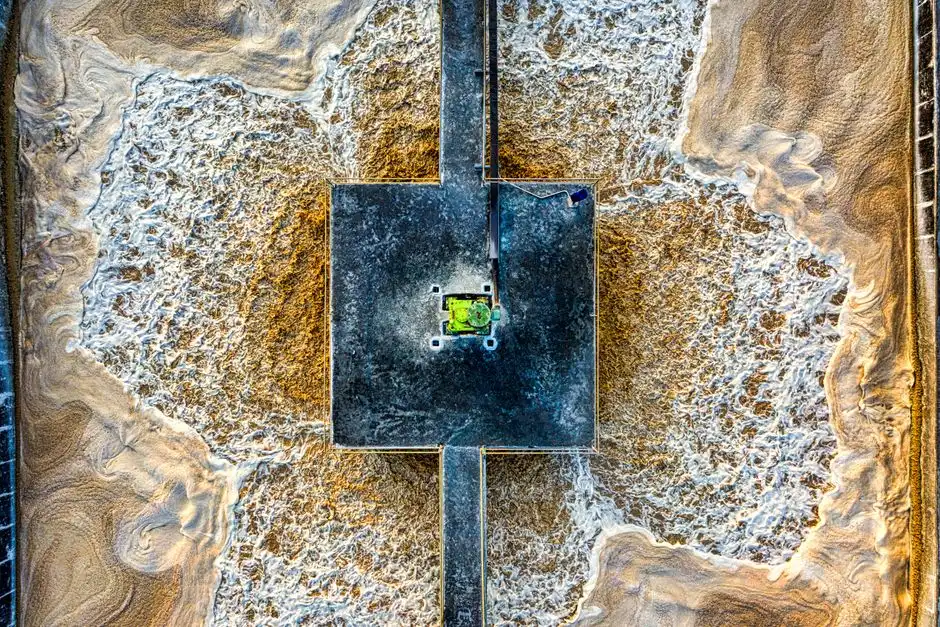
Final sizing requires flow records, representative wastewater analysis and the stated treatment duty. Compare the required treatment capacity with each supplier’s stated capacity and obtain written confirmation of the sizing basis.
The calculation and quotation basis should state:
- Average and peak influent flow, including the operating scenario used for design.
- Influent TSS, oil and grease, colloids and other parameters affecting flotation.
- Equalization volume and return or recycle-flow assumptions.
- Chemical-conditioning criteria and required contact or mixing conditions.
- Required clarified-water quality and the operating conditions under which it must be achieved.
- Tank configuration, hydraulic loading, retention approach, surface area, skimming capacity and sludge-discharge basis.
Equalization and chemical conditioning are part of the treatment train, not incidental accessories. Their performance affects the load presented to the DAF and must appear in the supplier’s sizing calculations and operating narrative.
Configuration timing can be compared, but it must not substitute for site-specific sizing. S3 states that the described rectangular type requires 20 to 30 minutes and assigns 3 minutes to the described circular system; those values provide configuration context only. Ask each bidder to state how hydraulic residence time, surface loading, recycle ratio and equalization are derived for the offered unit. Also identify whether the supply is a packaged HydropureWater DAF system, a custom DAF or part of a wider effluent treatment plant.
Price the Full Treatment and Sludge Scope
Compare quotations on the same installed scope, because a DAF skid price does not establish the cost of a complete industrial effluent treatment plant. Require the quotation to identify every included process unit and every exclusion.
| Quote line item | Technical scope to specify | Red flags to check before signing |
|---|---|---|
| DAF skid | Tank, recycle system, saturation equipment, diffusers, skimmer, sludge collection, local instrumentation and stated duty. | “Complete DAF” does not clearly define whether equalization, pumping, controls or installation are included. |
| Chemical dosing | Tanks, metering pumps, mixers, controls, chemical compatibility and dosing basis for the selected chemicals. | Equipment is listed without a chemical duty, dosing rate or confirmation that the wastewater requires conditioning. |
| Equalization and pumping | Volume basis, flow duty, pump arrangement, solids handling, level controls and required sequencing. | Equalization and transfer pumps are omitted from the total scope. |
| Electrical and controls | Supply arrangement, panel, PLC or other controls, alarms, interlocks, documentation and training. | Supplier supplies local controls only, or commissioning of the site-wide control system is excluded. |
| Installation and site works | Assembly, civil interfaces, foundations, drainage, connections, local labour and testing. | Foundations, wiring, drainage or local installation are treated as buyer-provided without quantities or limits. |
| Sludge treatment and disposal | Sludge consistency, volume or mass basis, withdrawal method, storage, transport and disposal route. | Sludge is removed from the DAF but no downstream handling or disposal responsibility is assigned. |
| Delivery and commercial obligations | Incoterm, destination, freight, import duties, taxes, insurance, customs, delivery date, packing and documentation. | Delivered-to-port wording does not state who bears inland transport, duties or installation after arrival. |
Request separate pricing for the DAF skid, chemical dosing, equalization, pumping, electrical controls, installation, commissioning, training and after-sales support. List compressed air, electrical supply, drainage, foundations, waste disposal, import duties, taxes, freight and local installation as explicit inclusions or exclusions.
Sludge handling affects both equipment selection and total cost. One commercial source states that a plate filter press designed for industrial applications can achieve consistency of 25–28% from 2–3%. Treat this as a vendor-specific statement, not a guaranteed site result. If sludge dewatering is required, obtain the plate-frame filter press duty basis and compare its discharge condition, filtrate handling and disposal requirements with the complete plant.
Set Acceptance Tests and Delivery Responsibilities
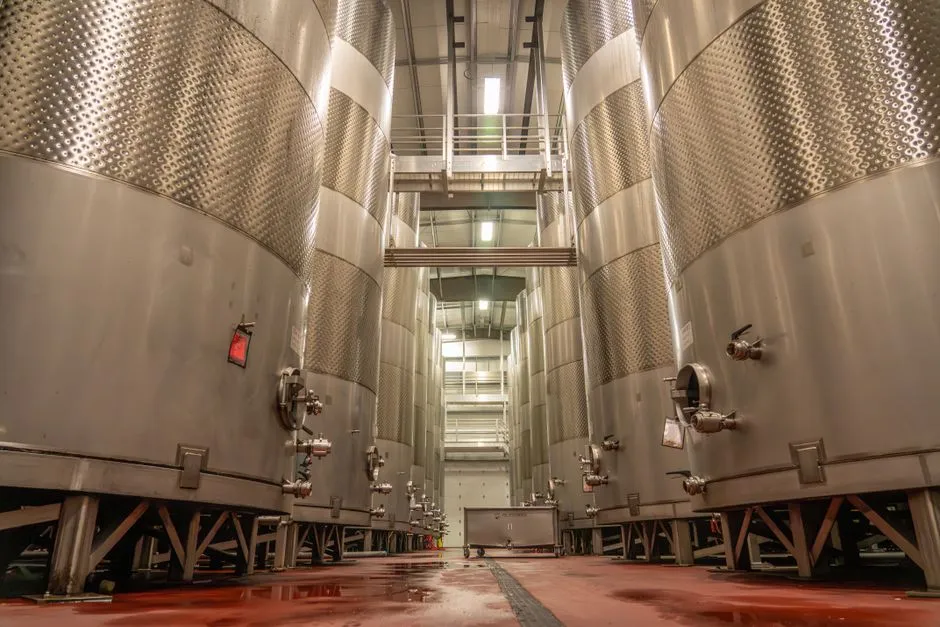
Make acceptance conditional on an agreed test protocol using the specified wastewater and operating conditions. A generic promise of “good separation” is not a contractually testable outcome.
The RFQ should require the supplier to provide:
- Fabrication and inspection records, material documentation, equipment drawings and the manufacturing and inspection schedule.
- Shipping terms, packing details, delivery date, customs responsibilities and evidence of shipment.
- Installation supervision, local commissioning support, operator training, maintenance manuals, electrical drawings and recommended wearing-parts lists.
- Witnessed testing of feed flow, bubble generation, flotation, skimming, clarified-water discharge, chemical dosing, sludge withdrawal, controls and interlocks.
- Measured results under the agreed influent and operating conditions, with deviations identified and accepted in writing before handover.
Include the DAF maintenance protocol in the handover schedule and tie it to operator training. Define who will operate the plant during commissioning, provide chemicals, dispose of test sludge, manage bypasses and retain responsibility for unresolved performance deviations.
Attach the following acceptance schedule to the purchase order:
- Pre-shipment inspection and document review.
- Arrival inspection for damage, completeness and identification of exclusions.
- Hydraulic and utility-connection checks.
- Individual equipment tests for pumps, dosing, instruments and skimming.
- Combined process run using the agreed wastewater condition.
- Measurement and review of the specified performance parameters.
- Training, spare-parts handover, corrections and written acceptance.
Keep final acceptance conditional on the agreed protocol. Require the supplier to state what happens if a measured result falls outside the agreed requirement, including diagnosis, correction and retesting responsibilities.
Related Equipment
- HydropureWater DAF system — specifications, capacity range, and technical data
Frequently Asked Questions
What information is required before an industrial effluent treatment plant and DAF system in Benin can be selected?
Request representative wastewater analysis, average and peak flow records, production-cycle variability, the required effluent or reuse objective, site footprint, utilities, drainage, soil conditions and sludge-handling requirements. If any item is missing, record it as an open design input rather than allowing the supplier to assume a value.
What should a buyer budget for: the DAF skid or the complete effluent treatment plant?
Budget them separately. The DAF skid covers the flotation package, while a complete industrial wastewater treatment plant may also include screening, equalization, pumping, chemical dosing, electrical controls, sludge treatment, installation and commissioning. Ask each bidder for a line-item quotation stating what “complete ETP” includes and what remains excluded.
How should a DAF supplier be selected?
Request verifiable evidence from relevant industrial applications, a written sizing calculation and a clearly assigned commissioning responsibility. Check whether the supplier can provide the stated wastewater duty, identify operating limitations, deliver the required drawings and training, and support corrective action if witnessed tests do not meet the agreed protocol.
Can the selected DAF system be described as compliant with Benin’s discharge requirements?
Compliance is only confirmed once the applicable Benin discharge authorization, receiving-water conditions and client acceptance criteria have been confirmed locally. Ask the site owner or responsible authority for the governing authorization and outlet conditions, then have the process designer demonstrate compliance against those documents. Equipment selection alone does not establish compliance.