Define the Serbian Site’s Greywater and Reuse Objective
Matching the Serbian site’s source-separated flow, intended non-potable use, and treatment endpoint to measured flows, water quality, footprint, and local approval requirements determines the selection of a segregated reuse system, UF-based treatment, or a combined wastewater package plant. UF suits an established treatment objective, MBR integrates biological treatment with membrane separation, and a package plant handles a broader wastewater scope. Because no Serbian site data or Serbia-specific reuse limits were established, the defensible next step is a route comparison followed by a technically bounded RFQ.
Define greywater from the project boundary: water from sinks, showers, bathtubs, and washing machines, excluding toilet wastewater and any stream contaminated by human waste. Ion Exchange Global describes greywater as up to 50–70% of residential wastewater and notes that it is easier to treat and reuse than blackwater, but that percentage is not a Serbian commercial-site flow estimate and should not be used for equipment sizing.
Identify every intended use—such as toilet flushing, landscape irrigation, car washing, cleaning, or industrial cooling—and the corresponding quality requirement. The required endpoint determines whether filtration alone is defensible, whether UF or MBR is needed, whether disinfection is required, and whether a combined package plant is unnecessarily broad. Use the comparison of UF, MBR and package-plant greywater routes to structure that review, but do not treat the other jurisdiction as a Serbian regulatory precedent.
Obtain peak and average flow by source, operating hours, seasonal variation, available footprint, access, power, drainage connections, and the required treated-water endpoint. These Serbian site inputs were not supplied, so no route can yet be selected from flow or footprint alone.
Compare UF, MBR and Package-Plant Treatment Routes
The correct route depends on specific functional requirements, as UF provides a focused membrane option, MBR combines biological treatment with membrane separation, and the package plant addresses a wider treatment train for complex wastewater. Choosing the right system requires balancing contaminant removal needs, the degree of treatment required by the reuse application, and the available installation arrangement.
| Discharge route or influent problem | Governing rule or process option | What data settles it |
|---|---|---|
| Source-separated greywater requiring a defined non-potable reuse quality | Compare an ultrafiltration greywater treatment system with the required treatment sequence: collection, filtration, treatment, storage and reuse, adding disinfection according to the end use. | Measured flow by source, suspended solids, turbidity, COD, BOD, grease, required endpoint and applicable Serbian reuse criteria |
| Organic load and solids requiring biological treatment before membrane separation | Evaluate an integrated MBR membrane bioreactor where biological treatment and membrane separation are both required. | Influent analysis, operating pattern, membrane cleaning requirements, footprint, utilities and residual-sludge route |
| Site requiring treatment of greywater together with additional wastewater flows | Evaluate a wastewater package plant when the treatment scope extends beyond a dedicated greywater reuse train. | Complete wastewater flow and quality inventory, installation depth or arrangement, drainage destination, maintenance access and discharge route |
| Uncertainty over whether all proposed sources qualify as greywater | Do not select equipment until toilet wastewater, kitchen flows and contaminated industrial streams are separated from the intended collection system. | Source-by-source drainage schematic, contaminant inventory and exclusion list signed by the site owner and designer |
Performance cannot be inferred from the technology name alone. The UF option is not automatically adequate for every non-potable application, MBR is not justified solely because the project is commercial, and a package plant should not be selected merely to simplify procurement if it expands the hydraulic and contaminant scope.
Match Influent Conditions to the Treatment Objective
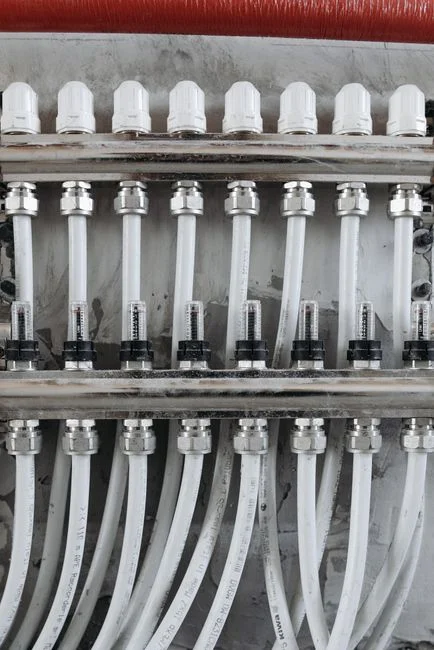
Source-by-source analysis is required to determine the process before fixing the system design. No site analysis was supplied, so the decisive missing inputs are peak and average flow, temperature, pH, turbidity, suspended solids, COD, BOD, grease, hair, lint, and soap characteristics.
| Discharge route or influent problem | Governing rule or process option | What data settles it |
|---|---|---|
| Hair, lint, food particles and soap in the collected stream | Provide collection and filtration before treatment. Ion Exchange Global describes filtration as the stage that removes these materials, followed by treatment and storage; disinfection may be added according to the end use. | Screens or filters proposed by the supplier, solids-loading results, maintenance access and sampled influent characteristics |
| Proposed reuse endpoint is stricter than basic filtration performance | Define whether UF, MBR or another treatment step is required by the intended use, then identify any disinfection requirement separately. | Written reuse specification, treated-water parameters and the competent Serbian authority’s written route |
| Kitchen, laundry or industrial equipment streams are included | Check for contaminants beyond the general greywater description before combining them. Ion Exchange Global includes kitchen sinks within its definition but excludes water contaminated with human waste. | Fixture and equipment schedule, source samples, temperature and grease or cleaning-chemical characteristics |
| Combined wastewater route is being considered | Use the segregated versus combined greywater treatment review as a comparison prompt, then verify local discharge and reuse requirements for Serbia. | Separate flow and analysis for greywater, blackwater and other wastewater; hydraulic profile and destination for each stream |
While the treatment mechanism is established by the influent data, Serbia-specific water-quality limits must be confirmed. Ask the municipality, water utility, or other competent authority for the applicable reuse or discharge route in writing, and attach that document to the RFQ.
Build a Technical RFQ and Set Acceptance Criteria
Every quotation must be traceable to a stated design basis to ensure accuracy. A peak flow alone is insufficient, as the supplier must disclose every missing input, assumption, exclusion, and performance limitation.
- State peak and average flow by source, operating hours, seasonal variation, feed-water analysis, intended reuse, and required endpoint.
- Ask each supplier to state design flow, feed-water basis, treatment objective, treated-water endpoint, recovery route, footprint, utilities, automation, installation boundary, and O&M deliverables.
- For the WSZ package plant, request the process configuration, installation-depth or trailer arrangement, automation, and commissioning scope. Its catalogue configuration uses anoxic/aerobic contact oxidation, sedimentation, and disinfection within one buried unit.
- Define the commissioning tests, sampling points, controls demonstrations, documentation, training, performance guarantees, and remedy for failure.
| Quote line item | Technical scope to specify | Red flags to check before signing |
|---|---|---|
| Design basis and process selection | Peak and average design flows, source-by-source water analysis, intended reuse, endpoint, process train and operating assumptions | No site inputs, unexplained flow margin, treatment selected by equipment type alone, or unreported exclusions |
| Equipment and treatment skid | Filtration, treatment, disinfection where required, storage, pumping, controls, utilities and physical footprint | Missing guarantees, omitted storage or pumping, inaccessible service items, or an equipment list that does not match the stated treatment objective |
| Package-plant installation boundary | Process configuration, buried-unit or trailer arrangement, installation depth, civil interfaces, drainage, access and commissioning scope | Excavation, civil works or connections left undefined; generic claims of an anoxic/aerobic, sedimentation and disinfection arrangement without project-specific sizing |
| Acceptance and handover | Commissioning samples, controls demonstration, operating manual, training, spares, warranty, response times and documented performance remedy | Guarantee tied to untested assumptions, no test protocol, no responsible party, or acceptance based only on startup |
| Operations and maintenance | Cleaning schedule, membrane or media replacement scope, energy-use basis, controls connectivity, local service support and recurring costs | O&M obligations unallocated, replacement items excluded, or energy and service assumptions unsupported by Serbian site data |
Use the technical water-treatment equipment RFQ checklist to ask comparable questions, then adapt the responses to this project’s greywater boundary and intended reuse.
Confirm Local Delivery, Installation and Compliance Assumptions
Local approvals and commercial assumptions remain unresolved until identified by name and confirmed in writing. The available research does not identify the Serbian authority or route for this project.
Ask the supplier to identify who provides the water analysis, site survey, civil interfaces, electrical supply, drainage connection, permits, and commissioning training. Record delivery and installation assumptions, spare parts, membrane or media replacement scope, energy use, controls connectivity, and local service support. Lead time and delivery time were not established by the available sources and must therefore be quoted with their assumptions.
Reject or revise quotations that promise potable use without a specific Serbian approval route, omit disinfection where the reuse endpoint requires it, leave reuse-quality criteria undefined, or rely on generic water-saving claims without the Serbian site’s measured flows and cost data. A workable purchase order assigns each local interface and approval to a party and links final performance acceptance to the confirmed reuse or discharge requirement.
Frequently Asked Questions
Should a Serbian commercial project choose UF, MBR or a package plant?
Choose UF when source-separated greywater and a defined filtration-based reuse objective support a focused membrane route. Consider MBR when biological treatment and membrane separation are both required. Choose a package plant when the treatment scope includes broader wastewater duties. The deciding evidence is measured flow and analysis, intended reuse, endpoint, footprint, and local requirements.
How should equipment capacity be sized for the site?
Require measured peak and average flows by source, operating hours, and seasonal variation. Ask the supplier to state its design flow, required operating reserve, and every assumption used to select the equipment. Do not approve a firm price based only on peak flow.
What should the buyer require for treatment acceptance?
Define the tested treated-water parameters, sampling points, commissioning protocol, controls demonstration, and required documentation in the RFQ. Assign responsibility for failures, retesting, and remedies. Do not accept performance guarantees that rely on site inputs the supplier has not disclosed.
How should suppliers and compliance responsibility be checked before signature?
Require each supplier to identify the Serbian authority route, design inputs, installation boundary, delivery assumptions, local service support, and O&M responsibilities. Obtain the applicable reuse or discharge route from the competent authority in writing. Ask for a breakdown of included and excluded costs; no supported quotation was available for this Serbian site, so a defensible price requires the measured flows, analysis, endpoint, and scope boundaries.