Confirm the treatment route before choosing equipment
For hotel resort wastewater treatment in Spain, choose among a municipal sewer connection, an underground WSZ package plant and an MBR system by confirming the discharge route, peak flows, available land, reuse target and operating resources before selecting equipment. The Balearic study reports that the Balearic Water Agency manages 79 wastewater treatment plants, but this does not establish capacity or availability at a particular hotel. Academic evidence supports decentralized resort treatment and resource recovery, while the modeled AnMBR scenario identified energy demand below 2 kWh·m−3 as favorable. The practical result is a comparison matrix, a stream-sizing worksheet and an RFQ that separates verified requirements from missing site data.
Start with the property location, intended discharge or reuse destination, and responsible local authority. Do not infer that a sewer connection, treatment capacity or Spain wastewater permit is available from national or regional context. For the Balearic Islands, the study reports 79 plants managed by the Balearic Water Agency, although its analysis covered only five facilities. Neither finding confirms service availability for an individual property.
Ask the municipality for written confirmation of connection capacity, seasonal wastewater acceptance conditions, pretreatment requirements, permit ownership and whether stormwater may enter the incoming flow. Also establish whether the municipal route includes treatment or only collection and transport. The A/O package plant versus MBR for a hotel provides a useful process-selection reference, but the applicable route must still be confirmed locally.
Define the hotel wastewater streams and peak loads
Separate blackwater, greywater and rainwater at the concept stage because stream segregation changes both the treatment process and the reuse opportunity. Request average, peak and storm-related flows, the occupancy assumptions behind them, and contributions from laundry, kitchens, pools and other hotel operations. Without measured flow data, suppliers are comparing different design bases rather than comparable systems.
The Spain-focused Balearic study found that rainwater was not separated from wastewater in the majority of the reviewed municipalities. Document the existing arrangement instead of assuming separate drainage: an on-site design may need to retain combined drainage, while a segregated concept may require civil works, separate approval and additional monitoring.
The published resort case concerns a medium-sized 4–5-star hotel and is research context, not a universal sizing template for every Spanish property. The commercial greywater segregation guide can support the separation decision, but local flow, reuse and permit requirements remain site-specific.
| Discharge route or influent problem | Governing rule or process option | What data settles it |
|---|---|---|
| Municipal connection | Use the permitted sewer route if the municipality confirms capacity, seasonal acceptance and applicable pretreatment. | Written connection response, available capacity, prevailing influent conditions, connection costs and permit responsibility. |
| Combined blackwater, greywater and rainwater | Assess WSZ or MBR treatment on the combined wastewater basis; do not quote a segregated design unless the drainage arrangement supports it. | Site drainage drawings, storm contribution, average and peak flow, and the municipality’s position on incoming stormwater. |
| Separated blackwater and greywater | Evaluate dedicated greywater recycling alongside a blackwater treatment route. | Stream-by-stream flows, wastewater analysis, reuse destination, irrigation demand and applicable reuse permission. |
| Occupancy-driven peak loading | Size the selected treatment route for the operating profile submitted by the hotel, including seasonal peaks. | Occupancy forecast, measured flow data, laundry and kitchen schedules, and the design peak identified in the operating record. |
| Uncharacterized foul load | Complete influent analysis before fixing biological loading, pretreatment or membrane capacity. | COD, BOD, suspended solids, fats, oils and grease, nutrients and pH, with sampling locations and dates. |
Compare municipal, WSZ and MBR routes against site constraints
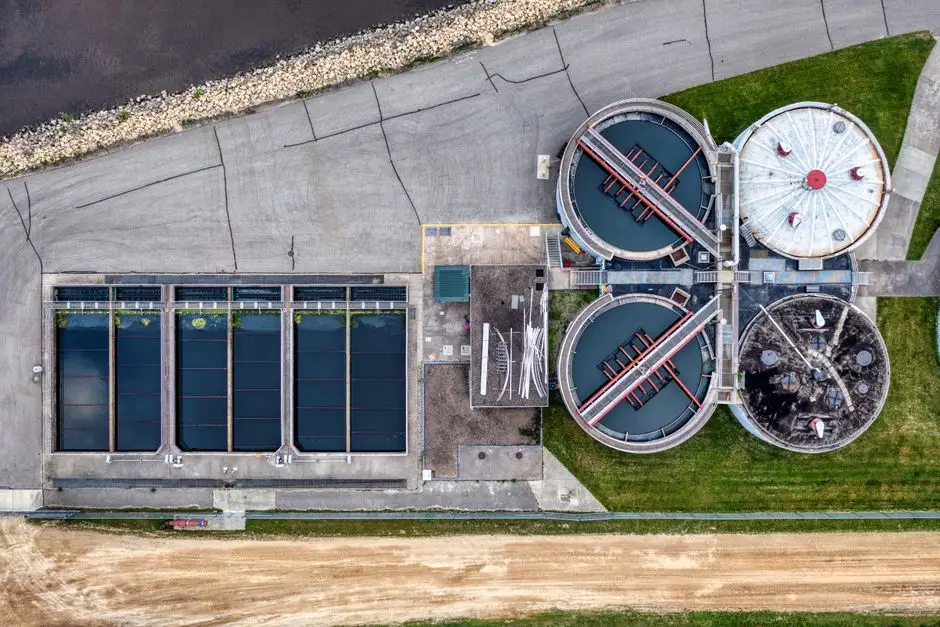
Prioritize a municipal connection when compliant service is available and the authority confirms adequate seasonal capacity, but require written confirmation of pretreatment obligations, connection costs and the operating party. A municipal route avoids onsite plant procurement, but it does not eliminate the need to verify capacity, permit ownership and the consequences of tourism-driven loading.
Use an underground WSZ package treatment plant when the site needs an onsite route, the treatment objective can be met by the proposed process, and the available footprint, soils, groundwater conditions and power supply support installation and operation. Compare this option against the MBR membrane bioreactor using the same influent data, required effluent or reuse quality, footprint, utilities, sludge handling and staffing assumptions.
Do not compare footprint or staffing from brochures alone. Ask each supplier to state the treatment objectives, process stages, installed equipment, controls, maintenance access and residual-handling provisions. The WSZ-versus-MBR decision should follow the verified discharge or reuse destination, not a general claim that one process is inherently better.
Environmental performance must be compared on a stated basis. The modeled resort research reported a 39.8% difference in global warming potential between decentralized and centralized systems under a gate-to-gate approach and stated that further optimization was needed. The same study identified AnMBR energy demand below 2 kWh·m−3 as favorable, making the supplier’s energy basis, operating profile and resource-recovery assumptions part of the technical comparison.
| Discharge route or influent problem | Governing rule or process option | What data settles it |
|---|---|---|
| Compliant municipal capacity available | Select the municipal route when the authority confirms capacity, seasonal acceptance, pretreatment and cost. | Written municipal confirmation, design-flow response, connection specification and permit allocation. |
| No reliable municipal route | Develop a WSZ or MBR onsite concept around the required treatment and reuse performance. | Site constraints, utilities, effluent destination, reuse objective, measured influent data and comparable supplier guarantees. |
| Limited installation area or underground installation | Check whether an underground WSZ concept is physically and operationally feasible. | Survey, soil and groundwater report, excavation constraints, access routes, power, controls and maintenance access. |
| Water-quality or reuse objective requires tighter treatment | Evaluate MBR or the specific treatment train demonstrated to meet that objective. | Applicable effluent or reuse requirements, complete influent analysis and a measurable performance guarantee. |
| Limited operating resources | Compare automation, remote monitoring, operator visits, sludge removal and spare-parts support for each option. | Staffing plan, maintenance responsibility, service scope, utility demand and site-access constraints. |
Build a site-specific RFQ and acceptance checklist
Issue the RFQ only after identifying the missing inputs that can change route, process or price. Require the hotel operator to provide occupancy forecasts, measured flows, effluent analyses, site drawings, soil and groundwater information, power availability, reuse requirements and local approvals. Mark each item as supplied, pending or not applicable; do not let a supplier silently assume the missing value.
Use the water-treatment equipment RFQ checklist as a procurement structure, but tailor the scope to hotel wastewater streams and the selected discharge route. Require suppliers to define the design basis, process guarantees, pretreatment, final treatment, disinfection, sludge removal, controls, utilities, commissioning tests, training, warranty and spare parts.
Make acceptance measurable. Name who witnesses sampling, performance testing, handover documentation and operator training, and state the sampling conditions and documented acceptance procedure. A performance promise without an agreed influent basis, sampling plan and responsible witness is not comparable.
| Quote line item | Technical scope to specify | Red flags to check before signing |
|---|---|---|
| Design basis and capacity | State average, peak and seasonal flows; occupancy basis; stream arrangement; influent analysis; and required effluent or reuse outcome. | Capacity quoted without the operating profile, or treatment guaranteed against an unspecified influent. |
| Process and pretreatment | Identify each process stage, pretreatment duty, final treatment, disinfection and residual or sludge handling. | Generic “hotel wastewater plant” wording with no process list, sizing calculation or residual-handling route. |
| Installation and site works | Define civil works, excavation, soil and groundwater assumptions, power, controls, access, drainage interfaces and commissioning boundaries. | Exclusions for surveys, excavation, groundwater control, connections or power works are left unclear. |
| Performance and commissioning | Define test methods, sampling points, sampling conditions, witnesses, acceptance records and correction of failures. | Guarantee lacks a test protocol, or handover is allowed before demonstrated acceptance. |
| Operations and support | State operator tasks, remote monitoring, preventive maintenance, sludge removal, training, warranty, spare parts and response times. | Staffing or service responsibility is assumed rather than assigned and priced. |
| Permits and interfaces | Allocate responsibility for municipal approvals, discharge authorization, reuse permission, sampling records and liaison with the authority. | Supplier says it will “handle permits” without naming the authority, documentation or approval boundary. |
Frequently Asked Questions
How do peak and seasonal flow changes affect the choice between WSZ and MBR?
Require the same occupancy and flow schedule to be used by every bidder. Ask each supplier to explain how the proposed route handles the documented design peak and seasonal variation, including the effect of pretreatment, membrane operation, storage and tankering assumptions. The choice should follow the submitted treatment train and guarantees, not a generic capacity statement. Further route-selection context is available in the packaged sewage treatment WSZ-or-MBR comparison.
What information must accompany a quotation for comparable pricing?
Attach the approved design basis, stream flows, occupancy assumptions, influent analysis, reuse requirement, site survey, utility data, applicable permit conditions and the requested warranty and service scope. Ask suppliers to separate equipment, civil works, installation, commissioning, sludge handling, operator training, spares and permit-support activities. If the permit, flow data or site survey is unresolved, request a priced assumption and clarification register rather than accepting an unqualified lump sum.
Which performance, commissioning and handover criteria should be included?
Specify the required process outcome, sampling points, sampling conditions, test methods, witnessing roles and corrective-action process. Define what constitutes satisfactory commissioning and list the required as-built drawings, operating manual, maintenance schedule, test records, training records, warranty documents and spare-parts list. Do not accept handover based only on equipment delivery or a general statement that the system is operational.
How can the buyer confirm the discharge route, reuse permission and supplier responsibility?
Obtain written confirmation from the municipality or other responsible authority showing the permitted route, capacity and pretreatment conditions. For reuse, obtain the applicable permission and identify the receiving application before selecting the process. Then place each obligation in the contract: the authority’s approval, supplier technical submissions, operator training, sampling, monitoring and corrective work must have named owners. The hotel WSZ-versus-MBR route discussion can support internal review, but it cannot replace local approval.