North Dakota’s sewage treatment equipment market is fragmented, with local suppliers like Agassiz Chemical and Dakota Water Solutions offering limited turnkey solutions. For industrial or municipal projects, buyers need equipment that meets EPA Region 8 discharge limits (BOD < 30 mg/L, TSS < 30 mg/L) while operating reliably in temperatures as low as -30°F. This guide compares 5 top suppliers, benchmarks costs ($120K–$2.5M for systems handling 50–500 m³/day), and provides ROI data for DAF, MBR, and package plants tailored to North Dakota’s climate and compliance needs.
Why North Dakota’s Sewage Treatment Needs Are Unique
Winter temperatures in North Dakota frequently drop to -30°F, necessitating sewage treatment equipment with insulated tanks and heated aeration systems to prevent catastrophic freeze-ups and biological process failure. In unadapted systems, common failures include pipe bursts, pump cavitation due to increased fluid viscosity, and the death of nitrifying bacteria, which are highly sensitive to temperature drops. According to NDDEQ 2023 winter operation guidelines, equipment must demonstrate freeze protection through heated enclosures or buried configurations to maintain the biological activity required for compliance.
The regulatory landscape is governed by EPA Region 8 and the North Dakota Department of Environmental Quality (NDDEQ). For facilities discharging more than 1 million gallons per day (MGD), limits are strictly enforced: BOD < 30 mg/L, TSS < 30 mg/L, pH between 6.0 and 9.0, and ammonia levels typically below 1.9 mg/L. Industrial dischargers face additional scrutiny regarding Total Dissolved Solids (TDS) and Fats, Oils, and Grease (FOG), particularly in the state’s booming oil/gas and food processing sectors.
Industrial influent in North Dakota varies significantly by sector. Oil and gas operations often deal with high TDS and hydrocarbon loads, while food processing plants in the Red River Valley face massive spikes in BOD and FOG. The following table outlines typical influent characteristics that equipment must be designed to handle in the region:
| Industry Sector | Primary Contaminants | Typical Influent BOD (mg/L) | Typical Influent TDS (mg/L) | Specific Equipment Need |
|---|---|---|---|---|
| Oil & Gas (Bakken) | Hydrocarbons, TDS | 200 – 500 | 5,000 – 10,000 | API Separators / DAF |
| Food Processing | FOG, High Organics | 1,000 – 3,000 | 500 – 1,500 | High-rate DAF / MBR |
| Municipal (Rural ND) | Domestic Waste | 200 – 300 | 300 – 800 | Package Plants (WSZ) |
While local suppliers like Agassiz Chemical & Equipment provide excellent chemical dosing and consulting, and Dakota Water Solutions offers robust local service, there is a notable lack of in-state turnkey equipment manufacturing. This forces procurement managers to evaluate out-of-state and international vendors who can provide fully integrated, cold-weather-ready plants.
5 Sewage Treatment Equipment Suppliers Serving North Dakota: Capabilities and Gaps
Procurement data shows that while local North Dakota vendors excel in chemical supply and service, turnkey equipment manufacturing is largely handled by out-of-state or international providers who can scale to industrial requirements. Choosing a supplier requires balancing the immediate availability of local support against the technical capabilities of specialized manufacturers.
Agassiz Chemical & Equipment (Fargo, ND): This supplier is a regional leader in chemical water treatment and side-stream filtration. With a 4.9/5 rating across 16 reviews, they are the go-to for boiler chemicals and cooling tower maintenance. However, their gap lies in turnkey equipment; they generally do not manufacture large-scale MBR or DAF systems, focusing instead on the consumables and consulting side of the industry.
Dakota Water Solutions: Serving the ND, SD, and MN region for over 50 years, they support over 120 North Dakota communities. Their strength is long-term service contracts and localized troubleshooting. The primary gap is their reliance on third-party equipment, which can lead to fragmented warranties and longer communication chains during custom engineering phases.
Vikas Pump: An international provider offering fully integrated sewage treatment plants with capacities ranging from 1 to 500 m³/h. While they offer turnkey solutions, North Dakota buyers face lead times of 12–16 weeks and a lack of local, on-site emergency support, which is a critical risk during winter operations.
Swagelok Minnesota: Providing high-quality fluid system components, valves, and fittings, Swagelok is essential for the "veins" of a treatment plant. They have supported the water/wastewater industry for 30+ years. However, they are a component provider, not a full-system manufacturer, meaning they cannot provide a completed treatment plant.
HydropureWater: Specializing in turnkey DAF and MBR systems, this manufacturer provides heavy cold-weather adaptations, such as R-30 insulated tankage and integrated heating. Their equipment achieves 92–97% TSS removal (EPA-verified). The primary gap is the logistics of international shipping, though this is often offset by significantly lower capital costs for high-spec industrial systems.
| Supplier | Turnkey Capability | Local ND Support | Cold-Weather Adaptations | Lead Time | Cost Range (USD) |
|---|---|---|---|---|---|
| Agassiz Chemical | Low (Chemical focus) | Excellent | N/A | 2–4 Weeks | $10K – $100K |
| Dakota Water | Medium (Reseller) | Excellent | Regional Specs | 6–10 Weeks | $50K – $500K |
| Vikas Pump | High | None | Optional | 12–16 Weeks | $100K – $1.5M |
| Swagelok MN | Components Only | Good | Material-specific | 1–3 Weeks | Varies |
| HydropureWater | High | Remote/Partner | Standard (Heated) | 12–16 Weeks | $120K – $2.5M |
Equipment Types for North Dakota Projects: Performance, Costs, and ROI
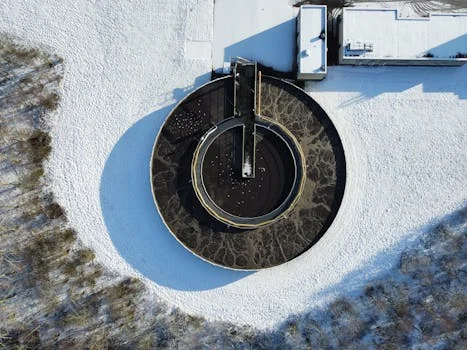
Selecting the correct treatment technology can reduce North Dakota industrial sewer surcharges by up to 60%, with Dissolved Air Flotation (DAF) systems offering the fastest ROI for food processing facilities. For projects in the Red River Valley or the Bakken formation, the choice between DAF, MBR, and package plants depends entirely on the influent profile and the desired effluent quality.
DAF Systems: These are the gold standard for FOG and hydrocarbon removal. In North Dakota, DAF systems for North Dakota’s high-FOG wastewater typically achieve 95–99% FOG removal and 90–95% TSS removal. Capital costs range from $120K to $800K for flows of 50–300 m³/day. The ROI is realized in 2–4 years by avoiding municipal surcharges, which average $0.50–$1.20 per 1,000 gallons for high-strength FOG waste in ND cities.
MBR Systems: When space is limited or the goal is water reuse (essential for hydraulic fracturing or irrigation), MBR systems for reuse-quality effluent in tight spaces provide superior performance, with TSS < 1 mg/L and BOD < 5 mg/L. While capital costs are higher ($500K–$2.5M), the ROI of 5–7 years is driven by water reuse savings, as North Dakota industrial water rates can reach $5.00 per 1,000 gallons.
Package Plants: For remote man-camps or small rural communities, WSZ Series package plants for small communities and remote sites offer a "set and forget" solution. These underground systems utilize the earth's natural insulation to assist with freeze protection. They typically cost between $200K and $1.2M and offer an ROI in 3–5 years by avoiding the high cost of sewer main extensions, which in North Dakota can cost $150–$300 per linear foot.
| Equipment Type | Capacity Range (m³/day) | Capital Cost | O&M Cost/Year | ROI (Years) | Best Use Case |
|---|---|---|---|---|---|
| DAF System | 50 – 500 | $120K – $800K | $15K – $40K | 2 – 4 | Oil/Gas, Food Processing |
| MBR System | 100 – 500 | $500K – $2.5M | $30K – $70K | 5 – 7 | Water Reuse, High Compliance |
| Package Plant | 10 – 80 | $200K – $1.2M | $10K – $25K | 3 – 5 | Remote Sites, Small Towns |
Cold-weather adaptations, including heat tracing and high-density insulation, generally add a 15–25% premium to the capital cost. However, this is a mandatory investment; unadapted systems often fail at ambient temperatures of -10°F, leading to total process loss and NDDEQ fines. You can compare disinfection methods for North Dakota’s industrial wastewater to further refine the ROI of your secondary treatment stage.
Compliance Checklist: Meeting North Dakota’s EPA and NDDEQ Requirements
The North Dakota Department of Environmental Quality (NDDEQ) enforces a secondary treatment standard of 30 mg/L for both BOD and TSS, requiring equipment that can maintain biological activity despite extreme ambient cold. Failure to meet these limits can result in fines ranging from $2,500 to $10,000 per violation incident. For industrial operators, the NDDEQ’s 2024 Permit Writer’s Manual emphasizes the need for robust pretreatment to protect municipal infrastructure.
Compliance also requires strict adherence to sampling protocols. Most industrial permits in ND require continuous monitoring for pH and flow, with weekly composite sampling for BOD and TSS. Data must be submitted via the NDDEQ electronic reporting system (eDMR). To ensure your facility remains compliant, use the following technical checklist when evaluating equipment:
| Requirement | EPA Limit (Region 8) | NDDEQ Limit | Equipment Feature Needed |
|---|---|---|---|
| BOD (5-day) | < 30 mg/L | < 30 mg/L | Optimized Aeration / MBR |
| TSS | < 30 mg/L | < 30 mg/L | DAF or Membrane Filtration |
| Ammonia (NH3-N) | N/A (Flow dependent) | < 1.9 mg/L (>1 MGD) | Nitrification Stages |
| pH Range | 6.0 – 9.0 | 6.0 – 9.0 | Auto-Dosing Control System |
| FOG | < 100 mg/L (Typical) | Strict Industrial Limits | DAF with Skimmer |
| Freeze Protection | Standard BMPs | 2023 Guidelines | Insulated/Heated Enclosures |
For those managing projects across different regions, it can be helpful to compare sewage treatment suppliers in other U.S. states to see how regional compliance varies. Additionally, for rural projects, you can learn about package plants for rural and remote applications to understand how decentralized systems meet similar EPA standards.
How to Select a Supplier: 5 Decision Criteria for North Dakota Buyers
Technical support response time is the primary differentiator for North Dakota operators, as a 24-hour delay in addressing a pump failure during a polar vortex can lead to total system icing. When evaluating a supplier, do not focus solely on the initial purchase price; instead, evaluate the lifecycle support and technical resilience of the equipment provided.
- Local Support and Response: Ensure the supplier has a service partner within a 4-6 hour drive of your facility. Agassiz and Dakota Water offer 24/7 support, which is vital for winter operations. International vendors should have a localized parts warehouse in the U.S.
- Cold-Weather Testing Data: Request performance data specifically from installations operating at -20°F or lower. Ask for pump seal specifications and membrane fouling rates in cold-influent conditions.
- Compliance Expertise: The supplier should assist with the NDDEQ permit application process. According to NDDEQ 2023 data, approximately 30% of industrial dischargers face permit violations annually, often due to equipment that was not sized for peak loading.
- Lead Time Management: Local suppliers deliver in 4–8 weeks for standard components, while turnkey plants from international sources take 12–16 weeks. Plan your construction window to coincide with North Dakota's short building season (May–October).
- Warranty Terms: Demand a minimum 1-year warranty on all mechanical parts and a 5-year warranty on structural tankage. HydropureWater, for instance, offers a 2-year warranty on DAF and MBR systems to mitigate the risks associated with international procurement.
| Supplier Category | Standard Lead Time | Emergency Support | NDDEQ Permit Support |
|---|---|---|---|
| Local ND Service (Agassiz) | 2 – 4 Weeks | < 24 Hours | High |
| Regional Reseller (Dakota Water) | 6 – 10 Weeks | < 24 Hours | Medium |
| International Turnkey (HydropureWater) | 12 – 16 Weeks | Remote/48hr Parts | Technical Data Only |
Frequently Asked Questions
What is the average cost of a sewage treatment plant in North Dakota?Costs typically range from $200K to $2.5M. Package plants for small communities (10–80 m³/day) average $200K–$1.2M, while MBR systems for industrial use (100–500 m³/day) cost $500K–$2.5M. Cold-weather adaptations add 15–25% to these totals.
Do I need a permit for a small sewage treatment system in North Dakota?Yes. The NDDEQ requires a North Dakota Pollutant Discharge Elimination System (NDPDES) permit for any system discharging to waters of the state. Closed-loop systems that use land application may fall under different state plumbing and health codes.
How do I choose between DAF and MBR for my food processing plant?Choose DAF if your primary goal is removing fats, oils, and grease to meet municipal pretreatment limits; it is cheaper ($120K–$800K) and highly effective for FOG. Choose MBR if you need to discharge directly to a stream or want to reuse the water, as it produces much higher effluent quality but at a higher cost ($500K–$2.5M).
Can sewage treatment equipment operate in North Dakota winters?Yes, but standard equipment will fail. You must specify insulated tanks, submersible pumps (which stay warmer than surface pumps), and heated aeration blowers. Properly adapted systems are rated for operation down to -30°F.
What are the penalties for non-compliance with NDDEQ discharge limits?Fines generally range from $2,500 to $10,000 per violation. Beyond financial penalties, the NDDEQ can issue cease-and-desist orders that can shut down industrial production until compliance is achieved.