UK food processing wastewater treatment costs now sit on the same ledger as energy and labour for many factories. UK food processing generates approximately 3.5 million m³/day of wastewater according to 2023 Environment Agency (EA) data, with 60% of this volume discharged directly into the public sewer system under trade effluent consents. Trade effluent charges calculated via the Mogden Formula increased by an average of 12% in 2024 following Ofwat's latest price reviews. For a mid-sized UK food factory, these utility costs now range between £50,000 and £500,000 annually.
Meat processing, dairy production and vegetable washing often produce effluent with COD concentrations exceeding 3,000 mg/L. That load is nearly ten times the strength of domestic sewage. EA enforcement reports from 2024 highlight penalties tied to fats, oils and grease in municipal sewers, and to high COD at local treatment works. The bill moves with load, not with volume alone.
A UK meat processor in the Midlands faced trade effluent charges of £180,000 per year from high suspended solids and organic load. The site fitted a high-efficiency DAF system for FOG and TSS removal. COD concentrations fell by 90% at the source. Mogden-based charges fell by 40%, and the works stepped away from Environment Agency Section 70 enforcement notices.
UK Food Processing Wastewater Treatment Costs
Mogden sewer charges plus OPEX are what set UK food processing wastewater treatment costs. United Utilities' 2026/27 scheme sets reception at £0.5853 per cubic metre and primary treatment at £0.3066 per cubic metre. Settled COD and suspended solids scale the biological and sludge parts. Pretreatment that lowers both cuts the unit rate before chemicals and haulage.
On-site operating bands in this guide run at £8–£25/m³ for DAF, £10–£30/m³ for aerobic biological trains, and £20–£45/m³ for MBR. Capital cost runs from £500 per m³/day of capacity for a basic DAF unit to over £10,000 per m³/day for a high-specification MBR. Most plants we price feel the sludge wagon and the Mogden line before they feel blower power.
Material choice moves the capital line as well. A 316 stainless tank costs more than 304 where chloride from cleaning-in-place is high. Automation, chemical storage and civil work sit outside the bare skid price. Engineers who want line-item splits should read detailed cost breakdowns for wastewater treatment technologies and then re-price the Mogden term with their own sample.
Environment Agency Discharge Limits Food Processing Versus Sewer Consents
Thames Water states that a direct discharge to a watercourse is an Environment Agency matter, while a public-sewer discharge needs that company's consent under the Water Industry Act 1991. Consent conditions are set one site at a time. Food and drink production is on the list of trades that normally need a consent. There is no single national ceiling published on the undertaker pages fetched for this update.
Earlier guidance in this article used screening values of BOD ≤250 mg/L, COD ≤400 mg/L, TSS ≤60 mg/L, and FOG ≤50 mg/L, and attributed them to an EA Technical Guidance Note DETR 2024. Those screens stay in the table below so a designer can still compare raw meat and dairy effluent with a tight sewer target. The fetched United Utilities, Thames Water and Severn Trent pages do not publish that DETR note, and they do not fix one COD number for every food factory.
Thames Water's usual consented window is still numeric on two physical limits. The normal pH range it allows is 6 to 11. Its standard temperature limit is 43.3 degrees Celsius. Oil and grease, suspended solids, ammonia and COD are named as consent items, but the numeric cap is written into each consent after a site review. Most meat and dairy consents we read are tighter on FOG than the COD number first suggests.
| Parameter | Typical EA Limit (2025) | Standard Raw Effluent (Meat/Dairy) | Regulatory Basis |
|---|---|---|---|
| Biochemical Oxygen Demand (BOD) | ≤ 250 mg/L | 1,500 – 3,500 mg/L | Water Industry Act 1991 |
| Chemical Oxygen Demand (COD) | ≤ 400 mg/L | 2,500 – 6,000 mg/L | EA Technical Guidance 2024 |
| Total Suspended Solids (TSS) | ≤ 60 mg/L | 500 – 1,500 mg/L | Trade Effluent Consent |
| Fats, Oils, and Grease (FOG) | ≤ 50 mg/L | 200 – 800 mg/L | Sewerage Sector Guidance |
| pH Range | 6.0 – 10.0 | 4.5 – 11.0 (Variable) | Infrastructure Protection |
Effluent aimed at a sewer should still be planned to hold pH between 6.0 and 10.0 and a temperature not exceeding 43°C, which is the older infrastructure band in this guide. Thames Water's 6 to 11 pH window and 43.3 degrees Celsius cap are the published usual limits for its own consents. High residual chlorine from CIP, and metals from worn equipment, remain grounds for refusal because they harm the biological stage at the sewage works.
Trade Effluent Consent Application UK Food Factory
A trade effluent consent application for a UK food factory goes to the sewerage undertaker when the flow enters a public sewer. Thames Water issues that consent as a legal document under the Water Industry Act 1991. Severn Trent says the same duty applies to a business that manufactures or processes food and drink. Discharge without the consent is not a paperwork gap. It is an offence.
Severn Trent states that it is a criminal offence under Section 118 (5) of the Water Industry Act 1991 to discharge trade effluent without the undertaker's consent. Thames Water states that a breach of any consent condition is also a criminal offence under that Act. Fines often exceeding £20,000 per breach remain the planning figure used in this guide where limits are missed. Most food factories we support file through their wastewater retailer, not by a letter sent only to the works.
Thames Water requires the Trade Effluent Customer application form held on the MOSL website, submitted via the retailer. The undertaker may visit, sample and read meters after consent. It may reject an application when the file is thin or the discharge is too high a risk for the receiving works. If the sewer cannot take the flow, tankering by a licensed carrier is the fallback Thames Water names, and a discharger who disputes the conditions has a right of appeal to Ofwat.
Current project files in this guide still see approval timelines from 4 to 12 weeks, depending on discharge complexity. United Utilities requires a consent or agreement under Chapter III of Part IV of the Act for trade effluent to its sewers or works. It may require flow recording to BS 3680, and every such premises needs a water meter on the incoming supply. Build the sample point before you book the visit, or the clock restarts.
Where domestic sewage is mixed with the trade flow, United Utilities allows 25 litres per head per working day. The allowance rises to 50 litres per head per working day where canteen facilities are available. Living accommodation on a metered supply is allowed 149 litres per head per day, and that domestic slice is not billed on the Mogden formula.
If combined foul and trade flow exceeds 50 megalitres (50,000 cubic metres) a year, a reduced reception charge can apply after a valid application. The 2026/27 scheme also sets a minimum charge of £251.50 when the calculated annual charge would fall below that floor. Most factories we model never hit that floor, because even a small meat line clears £251.50 on volume alone. Use the floor only as a check on a tiny or seasonal discharge.
Mogden Formula Trade Effluent Charges 2025
The Mogden formula for trade effluent charges bills strength as well as volume, and the 2026/27 United Utilities scheme is the current worked version of that idea. Older estimates in this guide wrote the charge as Charge = R + V + Bv + Ot + S. In that shorthand, R is reception, V is the volumetric charge, Bv is biological oxidation, Ot stands in for the COD charge, and S stands in for suspended solids. Treat that line as a memory aid, not as the invoice equation.
United Utilities calculates the 2026/27 unit charge as C = (R + V + B1) + (B2 x Ot/Os) + (S x St/Ss). According to that Wholesale Charges Scheme, R is £0.5853 per cubic metre and V is £0.3066 per cubic metre. B1 is £0.0890 per cubic metre and B2 is £0.2451 per cubic metre. S is £0.2791 per cubic metre.
Os is 350 mg/l of average strength settled sewage, and Ss is 230 mg/l of average strength crude sewage. Your sample is compared with those two regional strengths, not with a fixed pence adder per mg/L. A plant at twice the regional COD therefore pays about twice the B2 term, while R and V stay flat per cubic metre. That is why COD removal changes the bill faster than a small cut in volume.
Ot is the COD of the trade effluent in mg/l after one hour of quiescent settlement at pH 7, or at the pH of the mixed sewage. St is the suspended solids of that same sample. A strong food effluent therefore multiplies B2 and S. It does not add a raw COD number in mg/L onto the reception charge.
Most dairies we model only reach the low unit rate after fat removal, not after a screen on its own. Settle the sample the way the formula defines Ot, or you will price the wrong strength. A one-hour settled COD is lower than a shaken total COD on meat effluent. Quote the lab method beside the number before you lock a payback.
For a dairy processor with a COD of 2,000 mg/L, the total charge often averages £1.20/m³ under the worked example kept in this guide. A pre-treated effluent at 400 mg/L COD might drop to £0.45/m³ in that same example. Those two rates are order-of-magnitude checks from earlier plant budgets. They are not the United Utilities pence tariff, which moves only when Ot/Os and St/Ss change.
A meat processor discharging 50 m³/day who reduces COD from 2,500 mg/L to 500 mg/L can expect to save approximately £120,000 per year in trade effluent charges. If the DAF system CAPEX was £300,000, the payback period is calculated as £300,000 / £90,000 (net savings after OPEX) = 3.3 years. Most 3.3 year cases we are shown already assume polymer and cake haulage sit inside the £90,000 net figure. Leave sludge out and the payback slips.
DAF System for Meat Processing Wastewater UK
A DAF system for meat processing wastewater in the UK is the usual primary step when FOG and settleable solids dominate the Mogden solids term. Micro-bubbles lift insoluble fat and suspended matter to a skimmer. Coagulation and flocculation come first, often through PLC-controlled chemical dosing for coagulation and pH adjustment. DAF in this guide removes 90–98% of FOG and 60–80% of TSS on meat, dairy and snack effluent when the dose is stable.
That removal is what cuts the S term and part of the insoluble COD that feeds Ot. Soluble COD passes the float cell. A meat line that only skims a fat pit and then doses polymer on a Friday set-point will miss Monday's kill. Most abattoir DAFs we commission need the polymer retuned at the start of the fresh-meat shift, not left at the CIP setting.
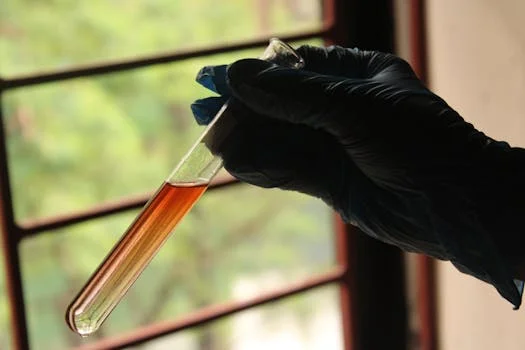
Yorkshire Meat Plant Result at 100 m³/day
A Yorkshire meat plant handling 100 m³/day cut annual trade effluent charges from £180,000 to £108,000 after an advanced DAF install. Raw effluent had averaged a COD of 3,200 mg/L and FOG of 600 mg/L. The consent FOG ceiling that threatened the site was 50 mg/L. Consent withdrawal was a live risk before the upgrade, not a theoretical note.
The installed unit was a DAF rated at 40 m³/h, with PLC-controlled chemical dosing for coagulation and pH adjustment. Polyaluminium chloride (PAC) and polymer broke the emulsified fats before air injection. The line held quality through cleaning-shift surges. COD fell by 92% (down to 250 mg/L) and FOG fell by 98% (down to <10 mg/L).
CAPEX was £250,000 including installation and civil works, OPEX was £12/m³, and payback was 3.5 years. The automated log also cut the staff time spent assembling samples for audits. A similar payback shape is described in how food processing wastewater is treated in other regions, but the charge formula on this page is the UK Mogden scheme only.
Biological Polishing and MBR After Primary Treatment
Biological polishing after DAF is the step that removes dissolved COD the float cell cannot catch. An MBR system for high-strength food processing effluent fits when the consent, or a reuse target, sits beyond flotation. The process pairs activated sludge with ultrafiltration at a typical 0.1 μm pore size, so secondary clarifiers drop out.
Effluent in this guide is quoted at BOD <5 mg/L and TSS <1 mg/L. MBR suits a tight UK yard, and it suits influent at COD >2,000 mg/L that still needs oxidation after fat removal. Do not buy membranes to chase a sewer consent that DAF plus a small aerobic stage can already meet.
Most MBR skids we place on UK food sites are chosen because the yard cannot hold a clarifier, not because the consent already demands reuse. Power for membrane air scour is the OPEX item that surprises buyers. CIP chemical shocks also blind membranes if the wash water is not equalised first. Price the blower and the clean-in-place tank before you compare brochure flux.
Aerobic and anaerobic stages remove dissolved organics that flotation leaves behind. Sequencing Batch Reactors (SBR) are common in the UK where flow swings between shifts. Upflow Anaerobic Sludge Blanket (UASB) reactors are the large-plant choice when biogas can cut energy use by 30–50%. They need stable temperature and a feed that is not a slug of CIP chemical.
A shock load here is a compliance failure, not a bad week. Tank layouts used elsewhere are sketched in how DAF systems are deployed in European food processing. UK consent numbers on this page stay with UK undertakers. Do not import another country's permit table into a Severn Trent or Thames Water consent.
Equipment Selection Checklist for a UK Food Site
An equipment selection checklist for a UK food site starts from influent, footprint and the OPEX that remains after Mogden falls. Start with a 24-hour composite and a flow log that catches peak packing hours, not a single grab at mid-morning. A UK dairy at 100 m³/day with high FOG is a different train from a vegetable packer whose load is mostly silt. Most selection meetings stall on the sludge route and the power supply, not on the brochure removal percentage.
The 10-Point Selection Checklist:
- What is the average and peak daily flow rate (m³/day)?
- What are the raw influent concentrations for COD, BOD, TSS, and FOG?
- What are the specific limits set by your trade effluent consent?
- Is there sufficient footprint for large biological tanks (200 m²+) or is a compact system required?
- What is the target payback period for the capital investment?
- Are there high concentrations of cleaning chemicals (CIP) that could shock a biological system?
- Do you have a reliable route for sludge disposal and what are the local costs?
- Is the production volume expected to expand within the next 3–5 years?
- Does the site have sufficient power capacity for high-energy systems like MBR?
- Is the goal simply compliance, or are you targeting water reuse for non-potable applications?
| Feature | DAF | MBR (Integrated) | Biological (Aerobic/SBR) |
|---|---|---|---|
| Best For | FOG & TSS Removal | High-Strength/Reuse | Dissolved BOD Removal |
| COD Removal | 40 – 60% (Insoluble) | 95 – 99% | 85 – 95% |
| Footprint | Small to Medium | Very Compact | Large |
| Energy Use | Low to Moderate | High | Moderate |
| CAPEX Range | £50k – £300k | £200k – £1M | £80k – £500k |
| Maintenance | Moderate (Mechanical) | High (Membranes) | Moderate (Biological) |
For a UK dairy processor with 100 m³/day effluent (COD 3,000 mg/L, FOG 500 mg/L), primary DAF plus biological polishing is often the lowest-cost route that still meets consent. The biological stage in that hybrid is an Underground Package Sewage Treatment Plant (WSZ Series). This hybrid is quoted here at 92% COD removal with an OPEX of approximately £15/m³. The underground package keeps the yard free where a 200 m²+ clarifier will not fit, so check groundwater level before you bury the tank.
CAPEX and OPEX Benchmarks Beside the Mogden Bill
CAPEX and OPEX benchmarks for a UK food factory are planning bands, not a quote. Sludge disposal in the UK is now £50–£150 per tonne, so a DAF that captures more FOG also makes more cake. Dewatering is a normal extra once that gate fee is real. DAF OPEX in this guide is £8–£25/m³, MBR OPEX is £20–£45/m³ because of membrane air and chemical cleaning, and biological trains sit at £10–£30/m³.
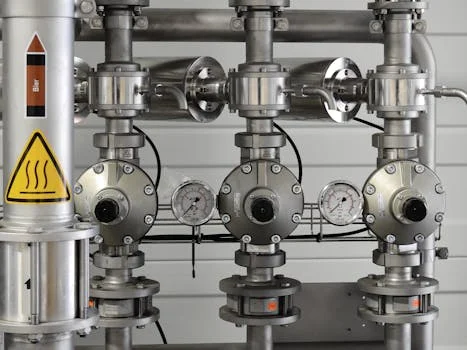
Most plants we size at the lower end of each band only when the operator already has a sludge contract. Without that contract, chemical DAF sludge can erase the Mogden saving. Ask for a cake tonne-per-day figure before you sign the skid price.
| Cost Component | DAF Benchmarks | MBR Benchmarks | Biological Benchmarks |
|---|---|---|---|
| CAPEX (£/m³ capacity) | £500 – £3,000 | £2,000 – £10,000 | £800 – £5,000 |
| OPEX (£/m³ treated) | £8 – £25 | £20 – £45 | £10 – £30 |
| Sludge Yield | High (Chemical) | Low (Biological) | Moderate |
| Typical ROI (Years) | 2.0 – 4.0 | 4.0 – 7.0 | 3.0 – 5.0 |
Use the table as a screen, then rebuild the Mogden line with your Ot and St. A hardware checklist written under another country's statute is Food Processing Wastewater Treatment in New Zealand: 2026 Engineering Specs, Compliance & Zero-Risk Equipment Guide. Use that page for equipment comparison only. Do not copy its permit numbers onto a UK sewer consent.
Who Should Act on These UK Costs
This page is for UK food-factory engineers, EPC designers and buyers who discharge to a public sewer under a trade effluent consent. Use it to choose DAF, MBR or a biological polish, and to test whether Mogden savings can carry the capital. The decision rule is simple. If pretreatment cuts settled COD and suspended solids enough to beat OPEX, the project ranks ahead of most utility-only budgets.
Look elsewhere if the only discharge is direct to a river under an Environment Agency permit. Those limits are written in the permit, and Thames Water points that case to the Environment Agency rather than to a sewer consent. Also look elsewhere if the flow is domestic sewage only. Offices, canteens and hotels are not the food-production consent class Thames Water lists.
Next, lock a 24-hour composite for flow, COD, TSS and FOG, and place the signed consent limits beside the screening table. Price today's Mogden charge and the charge after the train you intend to buy. Send that composite and the draft consent when you request a quote for this UK food factory.
Frequently Asked Questions
What are typical UK sewer limits for food trade effluent?
Most planning tables in this guide still use BOD ≤250 mg/L, COD ≤400 mg/L, TSS ≤60 mg/L, and FOG ≤50 mg/L as screening values for food trade effluent. Thames Water sets the real consent one site at a time, and its published usual bounds are pH 6 to 11 and temperature up to 43.3 degrees Celsius. A direct discharge to a river is an Environment Agency licence, not a sewer consent.
How much does a UK food-factory DAF system cost?
A DAF system for a UK food factory usually costs £50,000 to £300,000 in CAPEX for flows from 4 to 300 m³/h. OPEX usually falls between £8 and £25 per cubic meter once coagulant, polymer, power and sludge haulage are included. Most plants we size for one abattoir shift sit nearer £12/m³ when the fat pit is already in place. Payback in the comparison table is 2.0 – 4.0 years when the Mogden saving exceeds that OPEX.
Can a food factory discharge wastewater without a consent?
No, a UK food factory cannot lawfully discharge trade effluent to the public sewer without consent from the sewerage undertaker. Severn Trent states that discharge without consent is a criminal offence under Section 118 (5) of the Water Industry Act 1991. Thames Water states that a breach of consent conditions is also a criminal offence. This guide still cites fines often exceeding £20,000 per breach where limits are missed.
What is the best treatment for high-FOG meat wastewater?
Dissolved air flotation is the usual first step for high-FOG meat wastewater in the UK. A DAF unit in this guide removes 90–98% of FOG and 60–80% of TSS when coagulation is stable, which cuts the solids term in the Mogden charge. The Yorkshire meat plant at 100 m³/day took FOG of 600 mg/L down by 98% to <10 mg/L against a 50 mg/L ceiling. Biological polishing still follows if dissolved COD stays above the consent after flotation.
How do UK water companies calculate trade effluent charges?
UK water companies calculate the unit charge with a Mogden formula, not a flat fee per cubic metre. United Utilities' 2026/27 scheme uses C = (R + V + B1) + (B2 x Ot/Os) + (S x St/Ss), with Os at 350 mg/l and Ss at 230 mg/l. Earlier shorthand in this guide wrote Charge = R + V + Bv + Ot + S. That shorthand is a memory aid, not the billed equation.