The wastewater treatment plant cost in Mindanao Philippines runs from ₱5M to ₱50M ($90K–$900K USD) at 50–500 m³/day. A 200 m³/day MBR plant in Davao City typically costs ₱25M ($450K USD) installed, including permitting. Industrial payback runs 5–7 years on combined fine avoidance and reuse.
Wastewater Treatment Plant Cost in Mindanao Philippines
A new wastewater treatment plant in Mindanao costs ₱5M to ₱50M ($90K–$900K USD) at 50–500 m³/day. A 200 m³/day MBR in Davao City is typically ₱25M ($450K USD), including installation and permitting. Industrial payback is 5–7 years when avoided fines and reuse are both large. The worked table later shows 9.2 years on conservative savings.
Five drivers set the budget: capacity, technology, compliance, site conditions, and labor plus logistics. Capacity dominates the capital line, and unit cost falls about 30% as a plant grows from small to large. HydropureWater field data (2025) puts a 50 m³/day plant near ₱100,000 per m³ of capacity and a 500 m³/day plant near ₱70,000 per m³ of capacity. That shape lines up with global wastewater treatment cost benchmarks.
Technology is the second swing, and it moves both capital and power. An MBR costs ₱120,000–₱150,000/m³ of capacity, while a conventional activated-sludge STP costs ₱80,000–₱100,000/m³ of capacity. A DAF pretreat skid costs ₱60,000–₱80,000/m³ and is not a full biological plant. Most food factories we size around Davao and General Santos land at the lower end of the chosen band when a slab and a power feeder already exist.
Compliance hardware, meters, and engineering often add 10–15% to capital. An Environmental Compliance Certificate and a Discharge Permit in Davao City can reach ₱1.5 million with consultancy. Flood-prone ground such as parts of Cotabato can lift civil works by up to 20% because tanks sit higher. Rocky ground such as parts of Bukidnon can lift excavation by 15% when blasting or rock breakers are required.
Skilled operators in Mindanao run about ₱800–₱1,200/day, roughly 20% below Metro Manila. Freight the other way can erase that saving. Jobs in Tawi-Tawi or Sulu can add about 30% to equipment transport. Read the capacity table below as installed capital for industrial projects, HydropureWater field data (2025), not as equipment-only ex-works prices.
| Capacity (m³/day) | Approximate Capital Cost (₱M) | Cost per m³/day (₱K) |
|---|---|---|
| 50 | ₱5M – ₱7.5M | ₱100K – ₱150K |
| 100 | ₱8M – ₱12M | ₱80K – ₱120K |
| 200 | ₱14M – ₱20M | ₱70K – ₱100K |
| 300 | ₱18M – ₱27M | ₱60K – ₱90K |
| 500 | ₱30M – ₱45M | ₱60K – ₱90K |
DENR-EMB Region XI Discharge Compliance Cost
DENR-EMB Region XI discharge compliance cost is the permit cash, the effluent limits written on the Discharge Permit, and the daily fine that follows a failed sample. It is a budget line before it is a legal argument.
Wastewater treatment plants are a mandatory investment for industrial, commercial, and municipal projects in Mindanao, driven by environmental regulation and rising water scarcity. Compliance with the Department of Environment and Natural Resources – Environmental Management Bureau (DENR-EMB) discharge standards, particularly in Regions XI (Davao Region) and XII (SOCCSKSARGEN), is non-negotiable for all facilities generating wastewater. Per DENR Administrative Order (DAO) 2016-08, effluent discharge must meet specific parameters, including Biochemical Oxygen Demand (BOD) below 50 mg/L, Chemical Oxygen Demand (COD) below 250 mg/L, Total Suspended Solids (TSS) below 50 mg/L, and Fecal Coliform below 1,000 MPN/100mL for most applications. Design to the parameter list printed on the site's own Discharge Permit, because that document names the values EMB will sample.
The national sewerage backdrop explains why each factory carries its own plant. In 2005, only 5% of the total Philippine population was connected to a sewer network, and most effluents were discharged without treatment. Metro Manila still generates about 2 million cubic meters of wastewater daily, with only 17% of it treated before disposal to water bodies. A Mindanao industrial site almost never has a city sewer to hand its load to, so the treatment step sits inside the fence.
Daily Fine Band under Republic Act 9275
Penalties for non-compliance are substantial. Earlier project briefs quoted fines of ₱10,000 to ₱1,000,000 per day under Republic Act 9275, the Clean Water Act. The statute itself is tighter than that shorthand. Section 28 sets the general daily fine at not less than ₱10,000 and not more than ₱200,000 for every day of violation, and the band is increased by ten percent every two years to compensate for inflation and to maintain the deterrent function of the fines. Ask EMB Region XI for the inflation-adjusted figure that applies on the inspection date before you put a fine number in a board paper.
The higher bands sit on specific conduct, not on an ordinary exceedance. Willful or grossly negligent failure to conduct clean-up operations carries ₱50,000 to ₱100,000 per day of violation. Where the failure results in serious injury or irreversible contamination, the fine is ₱500,000 per day for each day the contamination continues. Gross violations carry ₱500,000 to ₱3,000,000 per day. On a Pollution Adjudication Board recommendation, the Secretary may also order closure, suspension of development or construction, or cessation of operations until safeguards are in place, which is the fine that actually stops a production line.
Permit cash on a Mindanao file sits in the ranges engineers already carry. An ECC, a Discharge Permit, and monitoring fees together run from ₱500,000 to ₱1.5 million. Region XI files are generally faster than the same set in the Bangsamoro Autonomous Region in Muslim Mindanao. Local building, zoning, and local assessment fees add ₱200,000 to ₱500,000. The same national rules sit behind industrial wastewater treatment compliance in the Philippines. Davao City rationed water in 2023, so reuse is a water-supply hedge as well as a permit hedge.
A food processing plant in General Santos City installed a 150 m³/day STP, met DENR standards, and avoided an estimated ₱1.5 million in annual fines. Reuse for cooling towers and irrigation saved another ₱1.5 million a year. The combined ₱3 million per year is the local case this page uses for a food-plant payback story. Do not scale that case to a municipal septage plant.
Earlier notes name a ₱1.2 billion Davao City septage plant at 30,000 m³/day. The City Government of Davao, on 26 June 2025, described the Indangan septage plant as 93 percent completed, expected to be fully operational in August or September 2025. The same notice states a capacity of a hundred cubic meters, also written as 100,000 cubic meters of septage, expandable to 200 cubic meter capacity. Residential customers pay a sanitation fee of ₱3.45 per cubic meter of water consumed, capped at ₱5,971.59 to be paid within five years, for a desludging cycle rather than a 50–500 m³/day factory plant.
MBR System Cost per m³ Mindanao Industrial
MBR system cost per m³ Mindanao industrial duty sits at ₱120,000 to ₱150,000 per m³ of capacity, the top of the three process bands on this page.
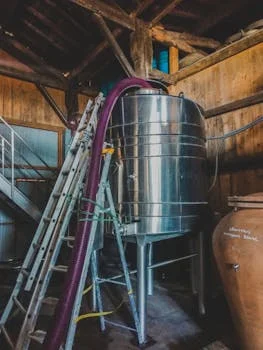
The premium buys footprint and effluent. An MBR needs up to 60% less space than a conventional STP because the biomass concentration is high and the clarifier disappears. For a 200 m³/day plant the MBR footprint is 80–120 m². Most MBR skids we size for Mindanao industrial lots fall in that 80–120 m² band at 200 m³/day when the tanks are stacked beside the blower room.
Product specifications used here put effluent TSS below 1 mg/L and BOD below 5 mg/L, near-reuse quality. Fecal coliform below 1,000 MPN/100mL is a separate test result, and a membrane datasheet does not prove that count. Do not stamp reuse compliance on a datasheet until the coliform result is in from the lab.
Energy is the operating penalty on an MBR. The comparison used on this page cites 0.8–1.2 kWh/m³ for MBR, against 0.4–0.6 kWh/m³ for a conventional STP and 0.3–0.5 kWh/m³ for DAF, labeled there as EPA 2023 benchmarks. Membranes on a 200 m³/day plant are replaced every 5–7 years at ₱2 million to ₱5 million. Put that replacement in the year-five cash line, because reuse for irrigation, cooling, or toilet flushing pays the premium back only when the permit class allows it.
Conventional STP vs MBR Cost Comparison Philippines
A conventional STP vs MBR cost comparison Philippines, at the Mindanao unit rates on this page, is about ₱40,000 per m³ of capacity before land and reuse are counted.
A conventional activated-sludge STP costs ₱80,000–₱100,000 per m³ of capacity. A 200 m³/day plant needs about 200–300 m². Effluent in this comparison is TSS of 20–30 mg/L and BOD of 20–30 mg/L, which sits comfortably inside the DAO 2016-08 screen most briefs use of BOD below 50 mg/L and TSS below 50 mg/L. Where the lot is small, compact underground STPs for Mindanao's limited-space sites keep the same process off the surface and trade excavation for land.
DAF is the third column, and it is pretreatment rather than a full plant. Capital is ₱60,000–₱80,000 per m³, and the footprint for pretreatment at 200 m³/day is 50–80 m². Food plants, slaughterhouses, and textile lines usually put DAF systems for pre-treatment in Mindanao's food processing and industrial plants ahead of biology. Removal can reach 90% of TSS and a large share of fats, oils, and grease, but DAF effluent still needs biological polishing before a DENR discharge.
Grit and settleable solids belong in a settler first. Pair the skid with sedimentation tanks for Mindanao's industrial pre-treatment needs when the raw water carries sand or heavy solids. Conventional plants carry sludge handling instead of membrane replacement, about ₱500,000 per year at a similar 200 m³/day duty in the source comparison. Where the lot is tight and reuse is real, we put the extra capital of the MBR in front of the owner before anyone argues about membrane life.
| Feature | MBR (Membrane Bioreactor) | Conventional STP (Activated Sludge) | DAF (Dissolved Air Flotation) |
|---|---|---|---|
| Primary Application | Industrial, Municipal (high effluent quality, reuse) | Industrial, Municipal (standard discharge) | Industrial Pre-treatment (TSS, FOG removal) |
| Capital Cost (₱/m³) | ₱120K – ₱150K | ₱80K – ₱100K | ₱60K – ₱80K |
| Footprint (for 200 m³/day) | 80 – 120 m² | 200 – 300 m² | 50 – 80 m² (for pre-treatment) |
| Effluent Quality (BOD/TSS) | <5 mg/L / <1 mg/L (near reuse) | 20-30 mg/L / 20-30 mg/L (DENR Class B/C) | 90% TSS removal (requires polishing) |
| Energy Consumption (kWh/m³) | 0.8 – 1.2 | 0.4 – 0.6 | 0.3 – 0.5 |
| Key Maintenance | Membrane replacement (5-7 years) | Sludge handling, aeration system upkeep | Sludge removal, pump maintenance |
Mindanao Permitting, Labor, and Freight
Mindanao permitting, labor, and freight sit on top of the process price, and island delivery can rival a tank package.
- DENR-EMB permitting: An ECC, a Discharge Permit, and ongoing monitoring fees run from ₱500,000 to ₱1.5 million. Region XI is generally more streamlined than BARMM on the same permit set. Budget the consultant inside that band, not as a later extra.
- Local government fees: Building permits, zoning, and local environmental assessments add ₱200,000 to ₱500,000. The city or municipality, not EMB, invoices this line.
- Labor: Operators at ₱800–₱1,200 per day are about 20% below Metro Manila. Remote work on the Zamboanga Peninsula can add a housing allowance or about ₱300 per day per worker if you want the same crew to stay.
- Logistics: Gear moving from Cebu or Manila to Sulu or Tawi-Tawi runs from ₱500,000 to ₱2 million once ferry, handling, and inland haul are included. Island jobs are where that line stops being a contingency.
- Utilities: Power and water hookups in places such as Phividec Industrial Estate in Misamis Oriental, or in Davao City industrial areas, still run from ₱1 million to ₱3 million. Greenfield sites go higher when the feeder and the transformer are new.
Industrial Wastewater Treatment ROI Mindanao Food Processing
Industrial wastewater treatment ROI Mindanao food processing is avoided fines plus reuse savings, minus energy, sludge, and maintenance, on the Mindanao rates below.
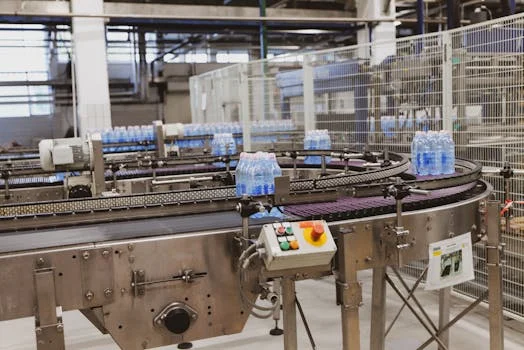
A cannery or slaughter line should confirm the effluent parameters on its Discharge Permit before anyone promises a compliance scope. High-strength influent changes the treatment train, and oil and grease is the parameter that most often forces a DAF step into a food plant. Use the five lines below with the plant's own bills, not with the sample numbers alone.
- Calculate avoided fines: Republic Act 9275 is the statute. The general daily band starts at ₱10,000 to ₱200,000 and steps up by ten percent every two years, so confirm the current adjusted figure with EMB before the board paper. Earlier briefs used ₱10,000 to ₱1,000,000 per day. The worked table below stays conservative at ₱5,000/day and a ₱1,500,000 annual line.
- Estimate water reuse savings: The source article uses Davao City Water District 2023 industrial rates of ₱50–₱150 per m³. Multiply reused volume by that tariff. Cooling, boiler makeup, irrigation, and toilet flushing count only when the reuse standard allows them. The worked case reuses 100 m³/day at ₱100/m³.
- Determine energy costs: The source article uses ₱10–₱15/kWh and labels that band as Meralco 2024 rates. The worked math pins ₱15/kWh. Rebuild the ₱1,095,000 line with the Mindanao power bill if the local tariff differs. MBR at 0.8–1.2 kWh/m³ will cost more per cubic meter than an STP at 0.4–0.6 kWh/m³ at the same tariff.
- Account for sludge disposal: The source article cites DENR Region XI 2023 landfill tipping of ₱2,000–₱5,000 per ton of dewatered sludge. The worked case uses 50 tons/year at ₱4,000/ton, or ₱200,000. An MBR usually makes less sludge than a conventional plant at the same load, which is why this line is below the ₱500,000 conventional handling figure used earlier.
- Calculate net annual savings and payback:
Net Annual Savings = (Avoided Fines + Water Reuse Savings) - (Annual Energy Costs + Annual Sludge Disposal Costs + Annual Maintenance Costs)
Payback Period (Years) = Total Capital Investment / Net Annual Savings
Worked Payback for a 200 m³/day Davao MBR
The worked payback for a 200 m³/day MBR in Davao City uses ₱25,000,000 of capital and returns 9.2 years on the savings below. Treat the grid as a calculator for this rate set, and rebuild it when the local power bill changes.
| Parameter | Value | Notes |
|---|---|---|
| Total Capital Investment | ₱25,000,000 | Includes MBR plant, installation, permitting |
| Annual Benefits/Savings | ||
| Avoided Fines | ₱1,500,000 | Assuming ₱5,000/day fine avoided (conservative) |
| Water Reuse Savings | ₱3,000,000 | 100 m³/day reused @ ₱100/m³ (200 m³/day plant, 50% reuse) |
| Annual Operating Costs | ||
| Energy Costs | ₱1,095,000 | 200 m³/day * 1.0 kWh/m³ * ₱15/kWh * 365 days |
| Sludge Disposal Costs | ₱200,000 | Estimated 50 tons/year @ ₱4,000/ton |
| Maintenance (Excl. Membrane) | ₱500,000 | Operational staff, chemicals, minor repairs |
| Summary | ||
| Total Annual Benefits | ₱4,500,000 | |
| Total Annual Operating Costs | ₱1,795,000 | |
| Net Annual Savings | ₱2,705,000 | |
| Payback Period | 9.2 Years | ₱25,000,000 / ₱2,705,000 |
Note: This sample calculation provides a framework. Actual figures will vary based on specific project details, local rates, and operational efficiency. The initial opening paragraph's 5-7 year ROI for industrial users likely assumes more aggressive avoided fines and water reuse rates, or a lower initial capital cost. For example, if avoided fines were ₱10,000/day (₱3.65M/year) and water reuse savings were ₱4M/year, the net annual savings would increase significantly, reducing the payback period.
Check the arithmetic before you present it. ₱5,000 per day across 365 days is ₱1,825,000, while the table uses a rounded avoided-fine line of ₱1,500,000. Keep the table as the worked case, and say so. Membrane replacement of ₱2 million to ₱5 million in year five to seven is outside the annual ₱500,000 maintenance line. Add it or the 9.2 year payback ignores the largest single repair.
Run the sheet twice, once conservative and once with the plant's real bills, before the payback number reaches a CFO. The two lines that move the answer most are the fine actually charged in Region XI and the water tariff the reuse stream offsets. Energy moves it third, and only when the tariff is far from the ₱15/kWh pin.
Who Should Use This Band, and Who Should Not
Plant engineers, EPC estimators, and procurement leads pricing a 50–500 m³/day industrial or municipal plant in Mindanao are the readers this band serves. A factory, a mill, or a city facility that will hold its own Discharge Permit can use the tables directly. A housing monthly bill cannot.
Selection Checklist Before You Freeze a Budget
- Read the parameter list and receiving-water conditions on the Discharge Permit before picking a technology.
- Measure influent BOD and oil and grease; high-strength influent changes the treatment train.
- Choose MBR, conventional STP, or DAF from footprint and reuse, not from capital alone.
- Add Region XI permit cash of ₱500,000 to ₱1.5 million and LGU fees of ₱200,000 to ₱500,000.
- Price freight on its own for Sulu or Tawi-Tawi, at ₱500,000 to ₱2 million.
- Rebuild energy with the local bill. The sample is pinned at ₱15/kWh and reuse at ₱100/m³.
- Keep membrane replacement, ₱2 million to ₱5 million at 200 m³/day, outside the annual maintenance line.
Look elsewhere if the question is a monthly housing bill rather than industrial capital. Readers who need how much is sewage treatment for 1 sewage treatment plant for 513 units in davao city per month should use that Davao housing page. This page also does not apply another country's effluent law to a Philippine permit.
Freeze the wastewater treatment plant cost in Mindanao Philippines only after the permit conditions, influent numbers, and the power bill sit on one sheet. Send the flow sheet and the Discharge Permit class for a Mindanao equipment quote.
Frequently Asked Questions
Five buyer questions follow: the largest Mindanao facility, whether an STP is required, domestic package cost, the small-shop option, and the build schedule.
What is the largest wastewater treatment plant in Mindanao?
Earlier project notes name a ₱1.2 billion Davao City septage plant at 30,000 m³/day. The City Government of Davao, on 26 June 2025, described the Indangan septage plant as 93 percent completed, with a stated capacity of a hundred cubic meters, also written as 100,000 cubic meters, expandable to 200 cubic meters. That plant treats hauled septage on a five-year cycle. Most industrial plants quoted here are still 50–500 m³/day.
Is a sewage treatment plant required in Mindanao?
Yes. A sewage treatment plant is legally required for new commercial, industrial, and residential developments that generate wastewater, and checklists commonly cite more than 20 dwelling units or over 50 occupants. DAO 2016-08 sets the effluent parameters EMB samples, including BOD below 50 mg/L and TSS below 50 mg/L. The Discharge Permit states the conditions that apply to the site.
How much does it cost to install a domestic sewage treatment plant in Mindanao?
A domestic package plant in Mindanao typically costs ₱1 million to ₱3 million at 10–50 m³/day, including the prefabricated unit, civil works, installation, and essential permitting, based on local supplier ranges from 2024. That band sits below the 50 m³/day industrial row of ₱5M–₱7.5M because the duty is domestic sewage, not high-strength process water. Remote island delivery can still push the installed price up.
What is the cheapest wastewater treatment option for a small Mindanao business?
For a small shop with fats or grit, start with dissolved air flotation at ₱2 million–₱5 million for 50–100 m³/day, which can remove up to 90% of TSS, then polish. A constructed wetland or anaerobic baffled reactor adds about ₱500,000–₱1 million where land is available. DAF alone does not meet DENR discharge limits, because the screen still requires BOD below 50 mg/L and TSS below 50 mg/L. Budget the polishing step or the permit fails.
How long does it take to build a wastewater treatment plant in Mindanao?
Plan 6–12 months for design and permitting, then 3–6 months for construction and commissioning, on a typical Mindanao industrial plant. Larger plants, rocky excavation, or a BARMM site often run longer because freight and permit queues stack. Region XI processing is generally faster than BARMM on the same permit set. Do not start civil works before the ECC conditions are in hand.
Related Equipment
The following HydropureWater products are engineered for the wastewater challenges discussed above:
- MBR membrane bioreactor systems for high-efficiency wastewater treatment in Mindanao — view specifications, capacity range, and technical data
Need a customized solution? Request a free quote with your specific flow rate and pollutant parameters.