How to Choose a Phenol Treatment Process
Phenol removal from industrial wastewater requires a treatment method matched to phenol concentration, COD, salinity, flow variability and the required effluent or reuse quality. The review identifies biodegradation, oxidation, adsorption and membrane options for lower-concentration streams, while higher-concentration streams may require extraction, pervaporation or distillation. Selection must consider both the incoming concentration and the final effluent limit. Selective removal may also be necessary before biological treatment or RO.
Start with source control and complete wastewater characterisation, not a catalogue of technologies. If phenol can be segregated at the point of generation, assess whether segregation, material recovery or closed-loop reuse removes the need for a larger downstream unit. Otherwise, establish whether the wastewater contains suspended solids, oil, salinity, variable discharge and a high COD load that would alter biological, membrane or oxidation performance. A process can remove phenol effectively while still failing on fouling, by-products or secondary waste.
The supplied review does not establish universal concentration cut-offs for selecting a process. It groups methods qualitatively by low and high phenol concentration and calls for selection against both influent concentration and the concentration permitted in the final effluent. Engineers should request measured concentration ranges rather than apply undocumented thresholds.
Use the following matrix to narrow the shortlist, then confirm it against representative wastewater:
| Review grouping | Candidate methods | Engineering question before selection |
|---|---|---|
| Lower-concentration treatment options | Biodegradation; chemical, electrochemical and photocatalytic oxidation; solid-phase extraction; ozonation; RO/NF; wet air oxidation | Will the method tolerate the measured COD, salinity, pH, temperature and flow variation, and can the treated water meet the required discharge or reuse specification? |
| Higher-concentration treatment options | Liquid–liquid extraction; pervaporation; membrane-based solvent extraction; adsorption; distillation | Can the concentrated phenol fraction be recovered or safely handled, and what solvent, energy and waste consequences follow? |
This grouping serves as a screening tool to help compare wastewater COD removal methods, as phenol removal and general organic-load removal answer different questions.
What Phenol Does to an Industrial Treatment Train
Phenol’s relatively high water solubility makes it relevant to industrial wastewater treatment even when it is dissolved rather than visibly present in the solids stream.
Arvia Technology explains that phenol forms stronger hydrogen bonds than alcohols and is consequently more soluble in water. The same commercial source states that sufficiently high phenol concentrations can damage active components in biological or RO systems and that selective removal may therefore need to precede them. These are supplier explanations; the practical response is not to copy a generic cutoff, but to test whether the actual wastewater can impair the proposed biological culture or membrane.
An industrial DAF pretreatment system can remove suspended solids, free oil, FOG and colloidal material. It does not inherently remove dissolved phenol merely because it improves the appearance of the effluent or removes part of the COD. Confirm the treatment objective through a mass balance and targeted phenol analysis.
Likewise, an industrial reverse-osmosis water purification system should be evaluated against the real feed. Salinity, COD, suspended solids, oils, scale-forming constituents and phenol itself can affect either pretreatment requirements or membrane performance and durability.
Do not transfer a drinking-water value into an industrial permit. Arvia cites a US EPA drinking-water limit of 2 mg/L, but an industrial discharger must verify its own sewer consent, trade-effluent consent, direct-discharge permit or reuse specification. The design inputs should include COD, salinity, pH, temperature, flow variability, phenol range, dissolved versus suspended material, and the intended downstream process.
Compare Adsorption, Oxidation, Biological and Membrane Treatment
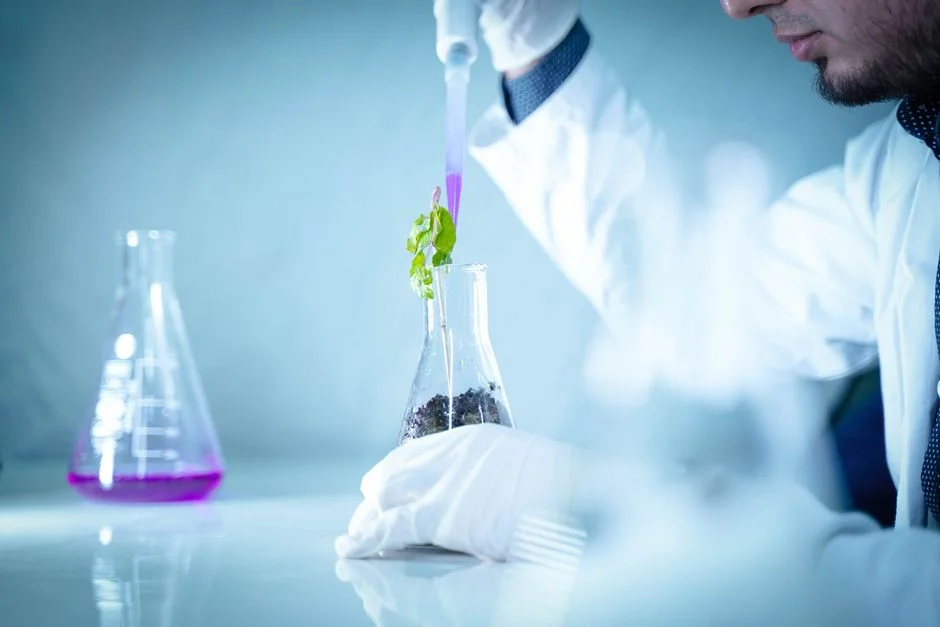
Adsorption concentrates phenol on a solid medium; oxidation destroys or transforms it; biological treatment metabolises it; membranes separate it or its co-contaminants from the treated stream. These mechanisms differ in side streams, energy demands and compatibility requirements.
| Process family | Function and likely treatment position | Main design evidence or limitation |
|---|---|---|
| Adsorption and waste-derived carbon | Source removal or polishing on a phenol adsorption medium | A University of Queensland thesis published 7 August 2024 investigates activated carbon, aerogel, graphene and carbon-nanotube-related waste-derived adsorbents. Media selection and capacity require representative-feed tests. |
| Combined adsorption and oxidation | Contaminants adsorb to media, low electrical current mineralises them, and the media regenerates in-system | This is a supplier-described mechanism. Performance, waste characteristics and energy demand must be verified on site rather than inferred from a general claim. |
| Biological treatment | Biodegradation of phenol and other biodegradable organics, where salinity and toxicity permit | A 2026 halophilic microbial fuel-cell study found complete phenol degradation within 8 days under its tested saline conditions. This is study-specific evidence, not a universal equipment guarantee. |
| RO and nanofiltration | Polishing or separation where the feed and permeate targets are compatible | Both appear among the review’s lower-concentration options, but pretreatment, fouling, concentrate disposal and resistant-organics management must be designed around the actual feed. |
| Advanced oxidation | Chemical, electrochemical or photocatalytic oxidation, ozonation or wet air oxidation | Assess reaction chemistry, transformation by-products, chemical demand, energy use and downstream impacts rather than relying on oxidation potential alone. |
| Higher-concentration recovery and separation | Liquid–liquid extraction, pervaporation, membrane-based solvent extraction or distillation | These are separation or recovery options, not direct substitutes for low-level polishing. The concentrated fraction requires its own management route. |
For biological treatment, the 2026 BioTech study operated an air-cathode microbial fuel cell at organic loads of 1.2, 2.5, 3.2, 4.8, 6.2 and 8.6 g COD/L. It identified 6.2 g COD/L as the optimum tested load and reported 90% total COD removal, 89% soluble COD removal and complete phenol degradation within 8 days. These results apply to the tested halophilic consortium, saline feed and reactor configuration; they should not be transferred to a different wastewater without validation.
Commercial adsorption-oxidation systems provide another route. Arvia reports phenol below 0.5 mg/L, an energy rate of 12.8 kWh per kg of phenol and COD polishing from above 300 mg/L to below the limit of detection in some applications. Treat these as supplier-reported results and request evidence under the buyer’s actual flow, COD, salinity and phenol variability.
Equipment selection can be integrated with an integrated MBR wastewater treatment system, while filtration and regeneration details should be checked where relevant to filter media, valves and treatment parts.
Design a Pretreatment and Phenol-Polishing Sequence
A defensible treatment train moves from measured wastewater character to verified compliance, with each stage assigned a defined contaminant-removal or protection function.
- Characterise and equalise. Establish phenol, COD, salinity, pH, temperature, flow, solids and oil across representative operating conditions. Equalisation or flow control may be needed where batch discharges create peaks.
- Remove solids, oil and colloids. Use DAF, filtration or other pretreatment where the analysis shows relevant suspended material, FOG or colloidal fouling. Do not credit this stage with dissolved-phenol removal without evidence.
- Remove or oxidise phenol selectively. Select the main phenol-control stage according to concentration, stream character and downstream constraints.
- Treat residual biodegradable COD. Use biological treatment where the actual feed supports it; apply selective phenol removal first if toxicity is demonstrated.
- Polish for reuse or discharge. Consider RO, MBR or another polishing step against the final water specification and concentrate-disposal route.
- Verify compliance. Confirm the final effluent with the defined analytical method and operating dataset.
A multi-media pretreatment filter can control suspended material ahead of sensitive equipment. The supplied UF catalogue specifies 0.03 micron PVDF membranes, flow from 2,000 to 40,000 L/h, and automatic backwash and air scour. Those are catalogue specifications for an ultrafiltration water treatment system, not proof that it will remove dissolved phenol or suit every phenolic feed.
| Treatment stage | Required evidence | Decision gate |
|---|---|---|
| Solids and oil pretreatment | TSS, oil and FOG; colloid and fouling tendency | Proceed only if the stage has a defined solids-control function and does not obscure the phenol mass balance. |
| Selective phenol stage | Influent and effluent phenol under representative COD, salinity, pH, temperature and flow variation | Does the stage protect biology and membranes while meeting its assigned removal target? |
| Biological stage | Toxicity, biodegradability, salinity and operating-load data | Use the 2026 microbial fuel-cell study as supporting evidence only for comparable saline conditions. |
| Membrane or reuse stage | Feed chemistry, fouling study, permeate target and concentrate route | Verify compatibility and downstream waste handling before selecting RO, UF or MBR. |
| Final verification | Defined analytical method, sampling plan and permit comparison | Accept the train only against the applicable consent, not a generic drinking-water value. |
Where reuse quality requires it, RO can be the final barrier and MBR can provide biological treatment and solids separation. Both need an influent phenol analysis and compatibility review before selection. The commercial source specifically warns that high phenol concentrations can destroy active biological and RO components, supporting selective removal ahead of those stages.
What Performance Data to Request Before Buying
A purchase guarantee is meaningful only when it identifies the feed, analytical method, operating conditions and waste route to which the supplier is accountable.
Request paired influent and effluent datasets covering phenol concentration, flow, COD, salinity, pH, temperature and operating variability. For each claimed result, ask the supplier to state the analytical method, sample duration, detection limit and treatment of side streams. Then request supporting project data or a representative pilot result.
Arvia’s commercial source reports phenol reduction to below 0.5 mg/L, an energy rate of 12.8 kWh per kg of phenol and COD polishing from above 300 mg/L to below the limit of detection. It also describes results at parts-per-trillion levels in some specialty-chemical applications. These are commercial claims, not independent performance guarantees; they need validation with representative wastewater and a defined analytical method.
| Information to request | Why it matters |
|---|---|
| Influent and effluent phenol data | Shows removal against the real concentration range and operating variability. |
| Test method, duration and detection limit | Establishes whether the reported result can be reproduced and compared. |
| Flow, COD, salinity, pH and temperature basis | Defines the conditions under which the performance claim applies. |
| Whole-train mass balance | Reveals where phenol goes, including secondary streams and membrane concentrate. |
| Secondary-waste route | Covers spent media, regeneration by-products, sludge, chemicals and membrane concentrate. |
| Operating-resource demand | Includes electricity, chemicals, media replacement or regeneration, maintenance and expected downtime. |
| Downstream-protection commitment | Defines how the proposed stage protects biological treatment and RO, including replacement liability. |
Require an explicit proposal for secondary waste, media regeneration or replacement, membrane fouling, chemical consumption, electricity demand, maintenance and downtime. A commercial comparison should show how each item affects whole-train cost and permit risk rather than listing equipment prices alone. Plan an industrial effluent treatment train with the treatment objectives, downstream protection and waste routes documented.
Do not use the cited 2 mg/L drinking-water figure as an industrial discharge limit. Obtain the applicable sewer consent, trade-effluent consent or discharge permit and ask the supplier to demonstrate compliance against that written requirement.
Frequently Asked Questions
What is the most cost-effective method for phenol removal from industrial wastewater?
The research does not support one universal cost ranking. Ask each supplier for a
Frequently Asked Questions
What is the most effective technology for removing phenol from industrial wastewater?
Advanced Oxidation Processes (AOPs), specifically those utilizing Fenton’s reagent or ozone combined with UV radiation, are currently the most effective technologies for phenol degradation. These methods can achieve mineralization rates exceeding 95% by generating hydroxyl radicals that break down the aromatic ring structure of phenol.
For high-concentration influent streams, solvent extraction or steam stripping is often preferred as a pre-treatment step to recover phenol, while adsorption using granular activated carbon (GAC) remains the industry standard for polishing effluent to meet stringent discharge limits.
How much does a phenol removal system cost to operate?
Operating costs typically range from $1.50 to $5.00 per cubic meter of treated water, depending heavily on the influent phenol concentration and the chosen oxidation method. Chemical consumption, particularly for Fenton's reagent (H2O2 and iron catalysts), represents 60-70% of these variable costs.
Energy consumption for systems incorporating UV-AOP or ozone generation adds an additional $0.20 to $0.80 per cubic meter. These estimates exclude sludge handling and disposal costs, which can significantly increase the total cost of ownership if chemical precipitation is utilized.
Should phenol removal be installed before biological treatment or RO?
Phenol removal must be installed upstream of both biological treatment and Reverse Osmosis (RO) systems. Phenol is toxic to the microbial biomass in conventional activated sludge processes, and concentrations exceeding 50-100 mg/L can cause complete inhibition of the nitrifying bacteria population.
Similarly, phenol must be removed prior to RO membranes to prevent organic fouling and potential chemical degradation of thin-film composite (TFC) membranes. Installing treatment upstream ensures the longevity of downstream assets and prevents toxic shock to secondary biological stages.
What wastewater data should I provide when sizing phenol treatment equipment?
To ensure accurate sizing, you must provide the average and peak flow rates, the phenol concentration range (in mg/L), and the Chemical Oxygen Demand (COD) to Total Organic Carbon (TOC) ratio. It is also critical to specify the concentration of competing contaminants such as chlorides, heavy metals, and suspended solids, as these interfere with oxidation efficiency.
Additionally, provide the target discharge concentration, pH, and temperature of the wastewater, as the kinetics of phenol oxidation are highly sensitive to these parameters. Providing a full water chemistry profile, including alkalinity and salinity, is essential for determining the oxidant dosage requirements.
Can a supplier guarantee phenol removal below 0.5 mg/L?
Yes, suppliers can guarantee phenol removal below 0.5 mg/L, provided the system is designed with a multi-stage treatment approach. This usually requires a primary removal stage, such as solvent extraction or oxidation, followed by a polishing stage using high-performance activated carbon or specialized ion exchange resins.
Guarantees are typically contingent upon the influent concentration remaining within a defined range and the absence of inhibitory substances that could interfere with the final polishing step. Performance guarantees are verified through standardized analytical methods like 4-aminoantipyrine (4-AAP) spectrophotometry or Gas Chromatography-Mass Spectrometry (GC-MS).