What Domestic Sewage Treatment Means for Cusco Projects
Domestic sewage treatment in Cusco requires matching the treatment train to the wastewater source, peak hydraulic load, site conditions and discharge route. A packaged A/O system is suitable where a compact, automated installation is needed; an MBR system is appropriate where tighter solids separation or water-reuse potential justifies the added process complexity. The WSZ package plant handles 1–80 m³/h and integrates biological contact oxidation, sedimentation and disinfection. HydropureWater’s MBR system serves 10–2,000 m³/day and provides filtration below 1 μm. Final selection requires measured flow and load data, local permit review and site-specific pilot testing.
Domestic sewage consists of wastewater originating from homes and domestic-scale activities. It is not equivalent to industrial wastewater, even where both are discharged through a sewer or treated by biological equipment. The US EPA explains that collection and treatment of domestic sewage protect public health and clean water before discharge to water bodies or land, or reuse. The applicable Peruvian requirements, receiving route and local authority conditions control the project design; the US EPA material provides the treatment rationale, not a Cusco permit basis.
Cusco’s cited electrocoagulation study examined a different problem: tannery wastewater collected from industries in Sicuani, Cusco. The Chemical Engineering Transactions study reported an initial COD of 2240 mg/L. Its electrocoagulation performance cannot be used to predict domestic A/O or MBR treatment, nor to justify transfer of an industrial process into a domestic equipment specification. The wider 2026 Peru domestic sewage treatment equipment guide provides a broader national context.
Selecting the right technology requires evaluating project-specific inputs before finalizing the design. For a hotel, residence, municipal development or rural site, selection should begin with the quality and variability of the incoming wastewater, the selected discharge or reuse route, applicable Peruvian requirements, and the conditions imposed by the responsible local authority.
Build a Reliable Project Basis Before Choosing Equipment
Reliable equipment selection begins with measured flow, wastewater characterization and site constraints rather than occupancy-based estimates alone. Collect dry-weather and wet-weather flow data, identify average and peak flows, document occupancy and operating hours, and record storage requirements and current and future expansion plans. This data should distinguish normal variation from rainfall-driven hydraulic loading.
Characterize the wastewater by sampling rather than assuming a domestic composition. Request pH, COD, BOD, suspended solids, oil and grease, temperature and conductivity, together with any parameter identified in the project’s discharge authorization. Sampling should establish both the operating baseline and variability relevant to biological loading and pretreatment.
Separate sanitary wastewater from stormwater during the survey. The US EPA states that sanitary sewers collect wastewater only, whereas combined sewers also carry runoff. It also identifies cracks, faulty seals and improper connections as routes for wet-weather infiltration and inflow. In Cusco, the private collection line, receiving sewer and any on-site collection tank must therefore be checked as part of the design basis.
| Procurement input | Information to obtain | Why it affects selection |
|---|---|---|
| Flow and occupancy | Dry-weather and wet-weather flow, average and peak conditions, occupancy, operating hours, storage and expansion plans | Establishes hydraulic loading and whether equalization or staged treatment is required |
| Wastewater characterization | pH, COD, BOD, suspended solids, oil and grease, temperature, conductivity and applicable discharge parameters | Defines process load, pretreatment needs and performance-test basis |
| Collection system | Separate or combined sewer configuration; inspection results; receiving sewer and tank capacity | Identifies sanitary sewer infiltration and inflow or stormwater entry |
| Site and utility constraints | Footprint, burial depth, maintenance access, soil, groundwater, flood exposure, power, odor controls and noise limits | Determines installation feasibility, protection and service arrangements |
| Regulatory route | Discharge authorization, sewer-connection conditions and responsible authority’s requirements | Creates the project-specific compliance basis |
Document the available footprint, burial depth, access for inspection and sludge removal, soil and groundwater conditions, flood exposure, power availability, odor controls, noise limits, and the final effluent discharge or reuse route. The supplied research does not contain a Cusco-specific numerical effluent-limit table. Obtain the applicable limit and authorization from the responsible authority rather than treating a generic guide as a permit.
Ask every supplier to state its design-flow basis, peak-load treatment method, process stages, retention assumptions, power requirements and performance-demonstration basis. A comparable quotation should identify not only the unit, but also the conditions under which its capacity and performance claims apply.
Compare Packaged A/O, MBR and Decentralized Treatment
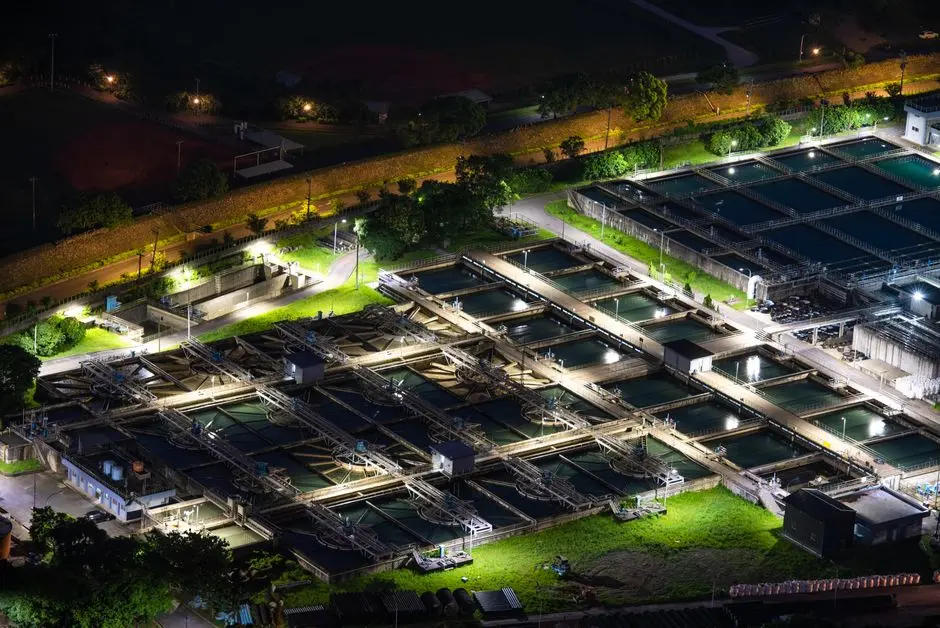
Packaged A/O, MBR and decentralized treatment solve different project problems, so the first comparison should be against project constraints rather than a generic technology ranking. The verified catalog information establishes equipment configurations and capacity boundaries, but it does not establish generic effluent limits or site-specific removal efficiencies.
The underground A/O package sewage treatment plant combines anoxic/aerobic biological contact oxidation, sedimentation and disinfection in one buried package unit. The HydropureWater verified product catalog states a capacity of 1–80 m³/h. It is fully automated, requires no operator, supports below-grade installation with landscaping above, and can be mounted on a trailer for mobile deployment. Its stated applications include residential communities, hotels, hospitals, factories and rural areas; each still requires project-specific sizing and site validation.
The MBR membrane bioreactor system combines activated sludge with submerged PVDF membrane filtration. The verified product catalog states filtration below 1 μm, a footprint 60% smaller than conventional systems, and a capacity range of 10–2,000 m³/day. These are product attributes, not proof that the system is suitable for a particular site. The bidder should demonstrate how the proposed configuration handles the project’s flow, load, solids, discharge route and maintenance access.
| Selection criterion | Packaged A/O | MBR | Decentralized arrangement |
|---|---|---|---|
| Verified catalog capacity | 1–80 m³/h | 10–2,000 m³/day | Not stated in the supplied research |
| Process configuration | A/O biological contact oxidation, sedimentation and disinfection in one package | Activated sludge with submerged PVDF membrane filtration | Distributed treatment close to the wastewater source |
| Installation | Buried unit or trailer-mounted mobile deployment | Footfall stated as 60% smaller than conventional systems | Defined around the receiving system and decentralized infrastructure |
| Key procurement issue | Confirm design flow, peak handling, automation and access below grade | Confirm membrane basis, pretreatment, maintenance and reuse or discharge route | Define pumping, maintenance access, downstream sludge handling and reuse arrangements |
| Effluent claim | No generic limit supplied | No generic limit supplied | Must be established for the proposed installation |
Decentralized sewage treatment is an engineering arrangement that places treatment closer to the wastewater source. It may suit dispersed rural developments or sites without a suitable sewer connection, but the proposal must define the receiving system, pumping requirements, access for maintenance, and downstream sludge or reuse arrangements. A distributed footprint does not eliminate collection, power, controls or maintenance obligations.
Require each supplier to tie proposed effluent performance to the project’s permit basis. Neither the A/O nor the MBR research supplied here provides generic effluent limits or removal efficiencies, so those claims should not be accepted without site-specific evidence and acceptance criteria.
Protect Treatment Performance from Wet-Weather and Site Risks
Wet-weather flow increases can undermine treatment because excess water can exceed the biological and hydraulic capacity on which the design depends. The US EPA states that significant wet-weather flow increases at treatment facilities can create operational challenges and adversely affect treatment efficiency, reliability and control of unit processes. This makes the collection system part of the treatment design, not an ancillary civil-work item.
Cracked sanitary sewers, faulty seals, improper connections and stormwater entry can add hydraulic loading that causes overflow or operating problems. Where feasible, separate stormwater from domestic sewage. Survey the private collection line, identify illicit or faulty connections, and confirm the capacity of any receiving sewer or on-site collection tank. The design must show how the selected unit responds to the project’s documented peak condition rather than relying only on average flow.
For underground installations, the design review must address inspection access, sludge removal, media or membrane maintenance, electrical supply, odor control and flood protection. Below-grade installation can reduce surface disruption, but it can also make routine service dependent on safe entry arrangements and adequate lifting or handling provisions. Suppliers should identify those provisions in the quotation.
The trailer-mounted WSZ option does not remove commissioning requirements. Procurement must cover towing, temporary power, secure connections, operating responsibility and the plan for removing or treating residuals. The 12-step packaged wastewater plant maintenance protocol provides a reference for defining maintenance responsibilities, but site-specific access and operating conditions remain decisive.
Use a Weighted Decision and Procurement Checklist
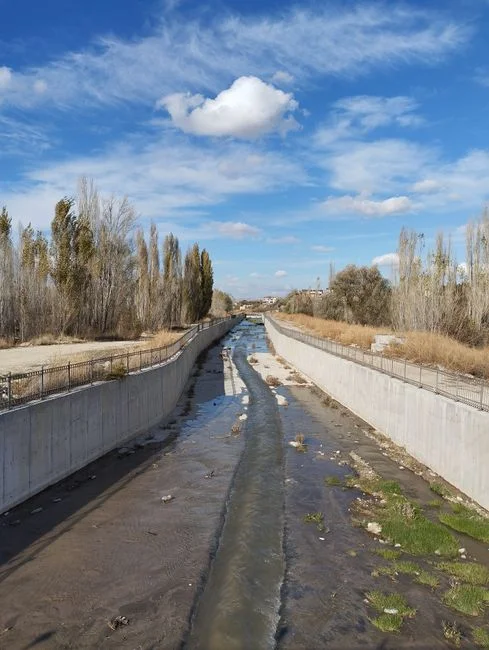
A weighted decision matrix creates a traceable selection rather than allowing the lowest quotation or the most familiar technology to determine the outcome. Weight the verified project requirements: process fit, catalog capacity range, footprint, automation, maintenance access, reuse potential, local service capability and compliance risk. Record the evidence supporting each score so reviewers can challenge assumptions.
| Evaluation step | Required output | Decision control |
|---|---|---|
| 1. Appoint the designer | Named design responsibility and deliverables | Prevents fragmented supplier assumptions |
| 2. Sample and survey | Flow, load, sewer, site and utility basis | Connects capacity to measured conditions |
| 3. Define the permit basis | Applicable authority requirements and discharge or reuse route | Converts regulation into design criteria |
| 4. Issue a technical RFQ | Common inputs, process stages, guarantees and O&M scope | Makes quotations comparable |
| 5. Review guarantees | Test method, influent basis, sampling point, duration and acceptance criteria | Rejects guarantees without an evidence basis |
| 6. Validate where warranted | Pilot-test protocol and decision criteria | Addresses site-specific uncertainty |
| 7. Approve installation and commissioning | Civil works, utilities, safety, testing, training and handover | Defines readiness for operation |
Capacity must match the stated design basis. The WSZ catalog range is 1–80 m³/h, while the MBR catalog range is 10–2,000 m³/day. These are equipment-selection boundaries, not automatically suitable sizes for a Cusco site. A bidder should show where its proposed unit sits within its range and how it handles the documented peak and loading conditions.
Define O&M ownership for routine inspection, aeration and pumping checks where applicable, sludge removal, membrane or media maintenance, disinfection control, spare parts, remote support and emergency response. Also assign responsibility for records, sampling, regulatory liaison and operator training. These obligations should be scheduled and priced rather than left to an installation-day discussion.
The 2025 Cusco tannery study is regional evidence that industrial wastewater requires source-specific process design; its pH 6 condition, current density of 3.09 mA/cm² and 98.6% chromium-removal result cannot be transferred to a domestic A/O or MBR bid. Use the 2026 sewage treatment standards and discharge-limit guide to structure the compliance review, while confirming the project’s requirements with the responsible Peruvian authority.
Frequently Asked Questions
How do I select the required capacity for domestic sewage treatment in Cusco?
Start with measured dry-weather and wet-weather flow, occupancy, operating hours, storage and expansion plans. The WSZ catalog range is 1–80 m³/h and the MBR range is 10–2,000 m³/day, but neither range is a site design. Ask each supplier to state the design-flow basis, peak-load treatment method and capacity margin supported by the proposed equipment.
Should I choose packaged A/O, MBR or decentralized treatment?
Choose packaged A/O where its integrated process and installation arrangement suit the site. Consider MBR where the project’s solids-separation or reuse requirements justify membrane operation and maintenance. Use a decentralized arrangement when treatment must remain close to the source, while explicitly pricing pumping, collection, maintenance access and downstream sludge or reuse arrangements.
How should I compare sewage treatment suppliers in Peru?
Issue