Map every wastewater stream before selecting equipment
A Tshikapa data center typically needs separate treatment strategies for sanitary sewage, cooling-tower blowdown, closed-loop fill-and-flush discharge, water-treatment reject, and maintenance drains. Evaporative cooling leaves dissolved minerals, treatment chemicals, and heat behind in blowdown, so treatment depends on the actual cooling design, make-up-water quality, sewer capacity, and discharge authorization. The preferred route is to characterize each stream, pretreat it locally, control temperature and residual chemicals, then seek sewer authorization, reuse the treated water, or obtain approval for another lawful discharge route. Equipment capacity should not be selected until site-specific flows and approvals are verified.
Do not combine these streams into one undifferentiated wastewater estimate. The sanitary flow from restrooms, kitchens and staff facilities is usually smaller than the cooling-process stream, while evaporative cooling can make blowdown the dominant discharge. This separation is also required in the definition cited by Black Forge Data Centers, “Data Center Wastewater and Cooling Water Discharge,” which follows 40 CFR 401.11: blowdown is discharged recirculating water needed to remove the buildup of dissolved materials. Other process streams can include reverse-osmosis or softener reject and periodic maintenance drain-downs.
| Stream | Controlling characteristics | Information required before design |
|---|---|---|
| Data center sanitary sewage | Organic load, solids, hydraulic peak, local sewer capacity | Fixture count or design population, average and peak sanitary flow, receiving-system requirements |
| Cooling-tower blowdown | Heat, dissolved solids, pH, treatment-chemical residuals, scale and corrosion risk | Cooling configuration, evaporation, average and peak blowdown, make-up-water analysis and chemical program |
| Closed-loop fill-and-flush discharge | Construction chemicals, impurities and possible microbial contamination | Flushing procedure, discharge volume, chemical additions, sampling plan and disposal alternatives |
| RO or softener reject | Salinity, residual treatment chemicals and flow variability | Unit capacity, recovery, reject flow, pretreatment chemicals and intended destination |
| Maintenance and drain-down | Concentrated solids, sediment and chemical residues | Drainage schedule, drain volume, chemical condition and inspection or disposal method |
Obtain the cooling configuration, evaporation rate, make-up-water analysis, chemical program, drainage schedule and closed-loop flushing volume from the mechanical engineer. Treat fill-and-flush water as a separate construction issue: it may contain commissioning chemicals or impurities that the sewer authority has not characterized. EENews, “Data centers face a new environmental concern,” reports that Loudoun Water requires developers to test construction flush-and-fill discharge before it enters the treatment plant and may direct unacceptable water to another disposal facility. The same source separates that construction risk from routine evaporative-cooling blowdown.
The broader sequencing for a Tshikapa project is set out in this data center wastewater and cooling blowdown treatment guide, but its legal and infrastructure conclusions must be verified against DRC and Tshikapa conditions.
Build a water balance that exposes peak discharge risk
Cooling-blowdown capacity must be calculated from the facility’s measured and engineered water balance, because average flow can conceal the discharge event that determines whether the receiving system can accept the stream. Genesis Water Technologies, “Why Cooling Tower Blowdown Is Your Hidden Opportunity,” gives the relationship as blowdown ratio = 1/(cycles of concentration − 1): at 4 cycles of concentration, blowdown is 25% of make-up water; at 6 cycles, it is 20%. Moving from 4 to 6 cycles therefore reduces blowdown by 5 percentage points, or 20%, not the often-assumed 50%.
Build the balance with measured or engineered values for make-up water, evaporation, blowdown, drain-downs and emergency discharges. Request seasonal and operating scenarios from the mechanical engineer rather than applying a generic daily-volume allowance. The calculation should also test the cooling system’s peak blowdown behavior, simultaneous discharge from multiple cooling trains and any temporary discharge associated with filling or draining.
| Water-balance item | Required engineering basis | Decision affected |
|---|---|---|
| Make-up water | Measured flow and complete chemical analysis by source | Cooling chemistry, cycles of concentration and reuse quality |
| Evaporation | Instrumented or engineered estimate for each cooling condition | Difference between intake and discharge |
| Average and peak blowdown | Cooling calculation plus operating scenarios | Equalization and treatment capacity |
| Drain-downs and emergency discharges | Drainage schedule, procedure and retained-volume estimate | Containment and route-specific treatment |
| Reuse return flow | End-use demand, quality requirements and losses | Water balance and residual discharge |
Black Forge Data Centers, “Data Center Wastewater and Cooling Water Discharge,” warns that peak events matter as much as averages: multiple facilities can increase discharges together during heat waves, stressing municipal systems even when annual capacity appears adequate. Its infrastructure examples are precedents, not Tshikapa forecasts. In Goodyear, Arizona, an agreement approved in March 2023 included $36 million from Microsoft toward an approximately $90 million treatment-plant expansion and secured 1.2 million gallons per day of capacity. A Shreveport proposal was estimated at about 2.5 million gallons per day.
The engineering method for converting cooling design into discharge risk is described in the cooling blowdown treatment methodology. For Tshikapa, the immediate output is a set of average, peak and emergency scenarios for each stream—not a single plant-wide flow.
Choose a discharge route before designing the treatment train
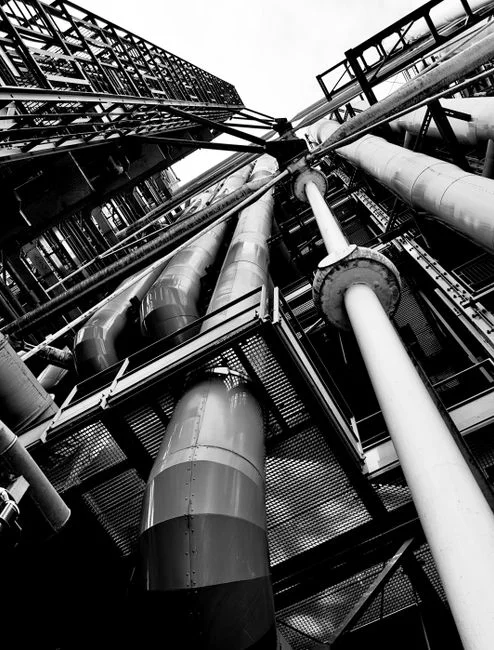
The discharge route determines the required water quality, monitoring regime and civil works, so it must be selected before equipment sizing. Apply this sequence: characterize the stream; identify the lawful route; obtain written utility or environmental acceptance; then size and procure treatment. A technically effective treatment train is not acceptable if the receiving authority has not accepted the discharge or its peak flow.
For sewer discharge, investigate local limits, pass-through and interference, hydraulic capacity, temperature, dissolved solids, pH and residual treatment chemicals. The U.S. framework cited by Black Forge Data Centers defines a significant industrial user as one that discharges average process wastewater of 25,000 gallons per day or more; has process flow equal to 5% or more of the plant’s average dry-weather hydraulic or organic capacity; or is designated by the publicly owned treatment works because it could harm the plant or cause permit violations. The 25,000-gallon count excludes sanitary, noncontact cooling and boiler blowdown flows. This is a U.S. federal pretreatment reference, not a Tshikapa permit threshold. The competent DRC authority must determine the applicable legal route, limits and designation tests.
For reuse, assess the candidate uses described by Genesis Water Technologies and RSP Engineers: construction dust control, landscaping irrigation, equipment washing, toilet flushing and cooling make-up where treatment quality justifies it. Each use needs its own water-quality, health and operational criteria; reclaimed water is not interchangeable with potable make-up water.
Compare whole-life impacts rather than assuming that reuse is automatically superior. The 2026 preprint by Open Engineering Inc, “Reclaiming Cooling: Wastewater Reuse as a Strategic Resource for Data Center Water Management,” found the wastewater-reuse scenario had about twice the global warming potential of the freshwater case, with treatment energy accounting for roughly 80% of the difference. In the study’s ultrafiltration-plus-reverse-osmosis scenario, wastewater energy use exceeded five times the freshwater case, although higher cycles of concentration reduced blowdown and chemical consumption.
Do not select a stormwater or surface-water route by analogy with a U.S. permit. RSP Engineers, “Process Wastewater Considerations for Data Center Operations,” states that discharging industrial wastewater such as cooling-tower blowdown into a stormwater system is prohibited under the U.S. Clean Water Act. That statement does not determine DRC law; it illustrates why the Tshikapa environmental authority must expressly identify the lawful route. The site-specific treatment and permitting sequence is further developed in this data center wastewater treatment engineering guide.
Build a modular treatment train for Tshikapa
A modular train should begin with equalization and characterization because blowdown temperature, flow, pH, conductivity, suspended solids and chemical residuals can vary. The mechanical and treatment teams should agree on online monitoring, grab sampling, hold-up volume and the operating response for each excursion before the civil foundation and skid arrangement are fixed.
For physical separation, Genesis Water Technologies proposes a two-stage reuse concept: media filtration and dissolved air flotation, followed by treatment targeted to identified contaminants. Actual selection depends on the water analysis rather than a generic reuse concept. A dissolved air flotation system is relevant where suspended solids, FOG, oil and grease or colloidal material must be removed; the supplied catalog describes 13 standard models with capacities from 4–300 m³/h. The stated capacity range identifies product availability, not the Tshikapa design load.
| Treatment stage | Applicable function | Design input required |
|---|---|---|
| Equalization and characterization | Buffers flow, temperature and chemistry variation; establishes treatment basis | Peak flows, retention time, water analysis and excursion strategy |
| DAF or other physical separation | Removes suspended solids, FOG, oil and grease and colloidal material where analysis supports it | Solids loading, oil characteristics and verified flow |
| Ultrafiltration | Removes bacteria, colloids and suspended solids without chemical addition where required | Feed quality, recovery, cleaning and reject route |
| Chemical dosing | Controls pH, coagulation and flocculation where the analysis demonstrates a need | Residual chemicals, chemical supply, storage and dose-control limits |
| Biological treatment | Handles the organic load in sanitary sewage as a separate stream | Sanitary design flow, organic loading and effluent route |
| Disinfection | Controls pathogens after source control and required treatment | Reuse or discharge target and verification method |
Where bacteria, colloids and suspended solids must be removed without chemicals, ultrafiltration pretreatment may be considered. The supplied catalog describes hollow-fiber systems with 0.03-micron PVDF membranes, automatic backwash and air scour, and capacities from 2,000–40,000 L/h. Those are catalog specifications; the selected duty must be based on verified feed flow, recovery and fouling behavior.
Use automatic chemical dosing only for demonstrated pH adjustment, coagulation or flocculation needs. The supplied dosing-system information describes a PLC-controlled, skid-mounted, pre-wired and factory-tested system. Final selection must reconcile chemical compatibility, power availability, operator access and the permitted residual limits.
Keep sanitary sewage outside the blowdown train. The supplied WSZ range combines A/O biological contact oxidation, sedimentation and disinfection in a buried package unit for 1–80 m³/h, while MBR systems may be relevant where compact treatment and reuse-quality effluent are required. Disinfection verifies performance; it does not correct unidentified commissioning contamination. EENews reports that unexpected microbial findings in a fill-and-flush discharge complicated acceptance in Cheyenne, demonstrating why construction discharge needs its own sampling and disposal decision.
Verify performance, commissioning, and local O&M before purchase
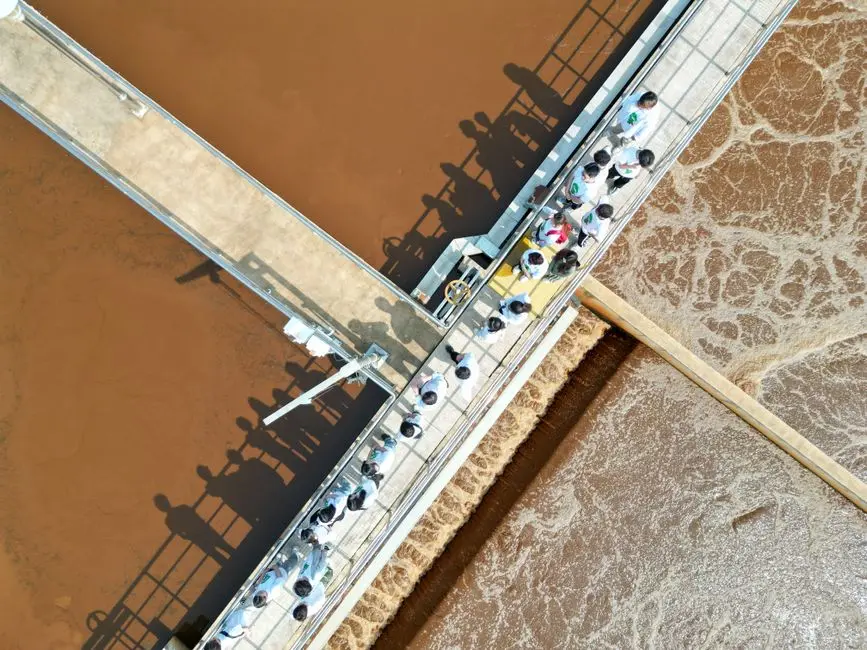
Procurement should require source-water characterization and a coordinated process guarantee, rather than accepting nominal equipment capacity as proof of performance. The guarantee must identify the verified stream, design flow and chemistry, required effluent or reuse quality, test methods, acceptance period and remedy for non-compliance.
Specify monitoring according to the selected route. At minimum, the procurement schedule should define how flow, temperature, pH, conductivity or dissolved solids, suspended solids and residual treatment chemicals will be measured, sampled, recorded and reported. Requirements for certified laboratory analysis, calibration and data integration should be explicit where the authority requires them.
| Procurement package | Minimum evidence required | Risk addressed |
|---|---|---|
| Design basis | Measured or engineered flows and chemistry by stream | Incorrect capacity or treatment selection |
| Performance test | Agreed test protocol, sample points, acceptance criteria and retest procedure | Ambiguous guarantees and disputed acceptance |
| Commissioning | Flush-and-fill testing, chain of custody and an approved alternative disposal route | Unaccepted discharge and contamination exposure |
| Local O&M | Operator training, remote support, local spare parts and response commitments | Extended downtime after shipment |
| Maintainability | Access to membranes and DAF inspection points, maintenance intervals and chemical inventory | Imported-equipment operating burden |
| Compliance | Approved compliance matrix, monitoring plan and permit-transfer process | Discharge route not accepted by authorities |
Include commissioning tests, operator training, maintenance intervals, spare-parts lists, membrane or DAF inspection access, operator interfaces, power requirements, chemical availability and clear acceptance criteria in the supplier scope. For imported equipment, ask for response time for failed membranes and dosing pumps, local technician support and the names of stocked spares. A remote supplier’s commissioning certificate is not evidence that the site can sustain operation between service visits.
For fill-and-flush, require testing before sewer entry, chain-of-custody procedures and an approved alternative route if the utility rejects the stream, following the control described by EENews. Do not let construction sequencing create an uncontrolled discharge.
The final sizing and compliance matrix must be approved by the applicable Tshikapa utility or environmental authority and a licensed wastewater engineer. Product capacity ranges alone are not a design. The procurement framing in this data center wastewater treatment procurement reference can support that review, but its local conclusions must be replaced with Tshikapa evidence.
Frequently Asked Questions
What treatment capacity does a data center in Tshikapa need?
Size each stream from measured and engineered peak flows, not an average campus-water assumption. Cooling configuration, evaporation, make-up-water chemistry, chemical program, drain-downs, emergency discharges and the selected discharge or reuse route determine the duty. No defensible Tshikapa capacity can be stated until those inputs and local approvals are available.
How should treatment cost and reuse value be compared?
Request a whole-life cost comparison covering treatment capital and operation, water purchases, sewer charges or negotiated infrastructure contributions, chemicals, energy, disposal and reuse value. No Tshikapa quotation is available in the research, so request a site-specific price after flows, chemistry and the authorized route are fixed.
Which supplier-support commitments should be required?
Require process guarantees, local O&M support, operator training, commissioning evidence, stocked spare parts, monitoring integration and a documented wastewater-characterization basis. Also ask the supplier to provide the exact proposed duty, acceptance method, response time and site-specific exclusions rather than relying on a general catalog capacity.
Can an unapproved environmental outfall be selected because it appears cheaper?
No. Sewer discharge requires written acceptance and applicable local limits, while an environmental outfall requires confirmation from the competent DRC authority. Do not treat U.S. Clean Water Act precedents, or a stormwater connection visible at the site, as proof that a discharge is lawful in Tshikapa.
Does industrial wastewater reuse always reduce environmental impact?
No. The 2026 Open Engineering Inc study found the wastewater-reuse scenario had about twice the global warming potential of the freshwater case, with treatment energy accounting for roughly 80% of the difference. Compare each reuse route using its own treatment train, energy demand, chemical use and displaced freshwater.
Related Equipment
- dissolved air flotation system — specifications, capacity range, and technical data