
What Transfers When BMW Buys a Texas Auto Plant?
When BMW acquires an auto plant in Texas, wastewater compliance is a transfer of permits, records, reporting duties, and successor environmental liability—not a post-closing administrative task. Under 30 TAC §305.64, the buyer inherits the seller’s TPDES permit and must file a TCEQ change-of-ownership within 30 days of closing; the permit number transfers and is reissued in BMW’s legal name. The seller’s DMR history, notices of violation, and open enforcement matters therefore become Day 1 exposure. Diligence must separately address federal metal-finishing limits, EPCRA reporting, easement rights, and the adequacy of the plant’s treatment train.
The key distinction is between a dealership and a manufacturing plant. The previously reported AutoNation transaction concerned a Texas BMW/MINI dealership and was announced in 2004; it did not establish an industrial wastewater permit-transfer precedent. An automotive assembly acquisition instead implicates industrial discharge authorization, categorical metal-finishing requirements, chemical reporting, conveyance rights, and process-water treatment.
Under 30 TAC §305.64, the buyer files a TCEQ CORE change-of-ownership form within 30 days of closing. The existing permit number transfers and is reissued in the successor’s legal name; BMW does not receive a new permit with a clean compliance history. The seller’s Discharge Monitoring Reports, Notice of Violation ledger, and any open Enforcement Actions or Agreed Orders travel with the asset and become the buyer’s exposure on Day 1 (HydropureWater, “BMW Texas Plant Acquisition: 2026 Wastewater Compliance Guide,” 2026).
Accordingly, a permit-transfer checklist is incomplete. Legal must verify the permit instrument and transfer filing; EHS must reconstruct the compliance history; engineering must test whether the installed system can meet the transferred limits under the plant’s actual operating envelope; and finance must price violations, corrective actions, capital retrofits, and operating liabilities. Purchase-agreement language cannot extinguish obligations imposed on the successor by law.
Four Compliance Rails to Diligence Before Signing
Four diligence rails must be reviewed in parallel because each can create a separate closing condition, capital item, or enforcement exposure. The control sheet should identify the responsible deal-team owner, required evidence, applicable deadline, and financial consequence for every rail.
| Compliance rail | Required evidence | Owner and deadline | Financial consequence |
|---|---|---|---|
| TPDES permit | Permit and authorizations; at least eight quarters of DMRs from EPA ECHO; NOV and enforcement ledgers | Legal and EHS before signing; CORE filing within 30 days after closing | Corrective action, monitoring, penalties, and treatment-capex exposure |
| 40 CFR 433 | Categorical applicability analysis; total nickel and total cobalt results; site-specific permit limits | Environmental engineer before signing | Metal-removal equipment, chemical use, and tighter discharge-limit compliance |
| EPCRA Section 313 | Prior-year Form R status for nickel, cobalt, and NMP; chemicals inventory and threshold analysis | EHS; successor filing by July 1 for the prior calendar year where required | Reporting correction and successor-liability exposure |
| Easements and conveyance | Drainage-district maps; pipeline-crossing agreements; outfall authorizations | Legal and property counsel before signing | New easements, relocation, enforcement exposure, or loss of the permitted discharge route |
TPDES rail. Obtain at least eight quarters of DMRs from EPA ECHO and identify every parameter that has operated within 80% of its limit, as directed by the HydropureWater 2026 guide. Those parameters have little operating margin if BMW changes chemistry, production, or flow. Reconcile the DMR record with the permit, self-reporting requirements, and NOV or Agreed Order status.
Metal-finishing rail. Federal categorical standards under 40 CFR 433 limit total nickel and total cobalt to below 1.0 mg/L in metal-finishing discharge. The acquired permit may be tighter: 30 TAC Chapter 307 and site-specific Colorado River basin limits can be more restrictive where receiving-stream assimilative capacity is constrained (HydropureWater, 2026). Confirm which standards apply to each process area, then compare them with the permit.
EPCRA rail. Obtain prior-year Form R status for nickel, cobalt, and NMP. At typical auto-plant throughputs, the HydropureWater 2026 guide identifies each as subject to the July 1 filing deadline for the prior calendar year. If the seller omitted a required filing, the buyer must address the successor obligation rather than assuming the purchase agreement resolves it.
Easement rail. A TPDES permit authorizes discharge quality and rate; it does not grant property or conveyance rights. Pull drainage-district maps and confirm that every active pipeline crossing and outfall is independently authorized. The Robstown pipe-crossing precedent reported by KRIS 6 / EnvNewsBits on 2026-02-17 shows why this rail cannot be folded into permit review.
Choose the Correct Texas Permit Path
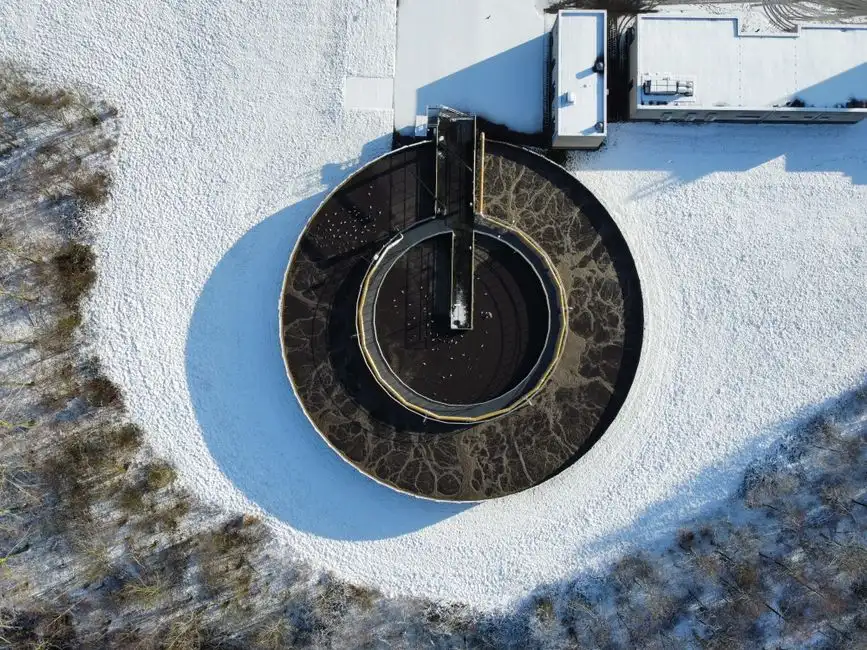
Combined process flows above 50,000 gpd require an individual TPDES permit under the supplied 2026 guide, but the permit path must be selected from actual process flows and satellite-operation coverage rather than the buyer’s corporate structure.
| Site condition | Permit path to verify | Diligence question |
|---|---|---|
| Combined process flow above 50,000 gpd | Individual TPDES permit | Do the permit flow limit and authorized discharge points cover current and planned production? |
| Smaller paint shop, R&D pilot line, or training center | TXR050000 multi-sector general permit, if eligible | Does each satellite operation have its own Notice of Intent and eligible SIC code? |
| Expanded or altered discharge route | Permit revision or supplemental authorization | Are outfalls, monitoring points, flow limits, and receiving-water provisions current? |
| Tighter site-specific limits | Apply the permit condition controlling the site | Do 30 TAC Chapter 307 and basin limits require more stringent metal removal or monitoring? |
Do not assume BMW’s corporate standards replace the acquired site’s legal discharge authorization. Identify the permittee, authorized discharge points, flow limits, monitoring requirements, and named receiving-water provisions. If a paint shop, pilot line, or training center qualifies under TXR050000, verify its own Notice of Intent rather than assuming campus-wide coverage.
Use the TCEQ’s current industrial wastewater rules and water-quality guidance as the official regulatory check where a secondary article conflicts with the current permit or agency page. The permit file and applicable TCEQ requirements should control the transaction model, not a generic assumption about automotive plants.
Turn the Permit File Into a Treatment Design
Final treatment sizing requires current permits, flow and influent testing, and the final equipment proposal; the benchmark train identifies required functions but cannot replace site data.
| Process stage | Design role | Supplied benchmark |
|---|---|---|
| Equalization | Absorb hydraulic and load variation; control mixed pH | 6–12 hours; PLC-controlled coagulant and pH dosing to pH 6.5–7.5 |
| DAF | Remove oil, grease, suspended solids, and colloids | 4–300 m³/h; 80–95% FOG removal; downstream TSS below 100 mg/L for body-shop and cathode-coating streams |
| Coagulation, flocculation, and lamella clarification | Remove dissolved metals as hydroxide precipitates | pH 9–10; lamella surface loading of 20–40 m/h |
| NMP vacuum distillation | Recover solvent for reuse; required only for in-house cathode coating | Closed-loop solvent recovery, not wastewater treatment |
| MBR | Biological treatment and membrane separation | Turbidity below 1 NTU; MLSS 8,000–12,000 mg/L; peak sizing near 5,000 m³/day at full EV scale |
| Two-pass RO | Polish water for reuse | Permeate conductivity below 50 µS/cm; 70–85% recovery; 15–30% reject |
| Disinfection | Final microbial control | Chlorine dioxide or UV at the final reuse or discharge point |
Begin by mapping industrial streams separately. Body-in-white wastewater can contain metalworking fluids, drawing compounds, lubricant emulsions, and nickel- and cobalt-bearing rinse water. Paint-shop wastewater can add phosphate pretreatment, E-coat rinse, detackifier chemistry, and high COD. Equalization must absorb the pH swings created when these streams converge, while segregated sampling points allow the buyer to identify the source of metal-loading excursions.
Use an industrial DAF system for oil, FOG, and suspended solids as the pretreatment reference, then use coagulation, flocculation, and lamella clarification for dissolved metals. Compare DAF versus clarifier selection for EV wastewater against the acquired plant’s actual stream characteristics rather than assuming the newest treatment sequence is required.
If cathode coating occurs in-house, evaluate NMP vacuum distillation as a solvent-recovery add-on. If coating is outsourced, do not include that stage by default. Use an MBR membrane bioreactor for industrial wastewater reuse where the benchmark biology and membrane requirements apply, followed by two-pass RO and disinfection where reuse quality must be met.
Treat DAF, MBR, RO, and sludge dewatering as an integrated equipment system. The final hydraulic balance, chemical consumption, recovery target, waste characterization, and equipment footprint must follow from the permit and site testing rather than from a reference flow alone.
Use the Equalization Basin to Estimate Retrofit Risk
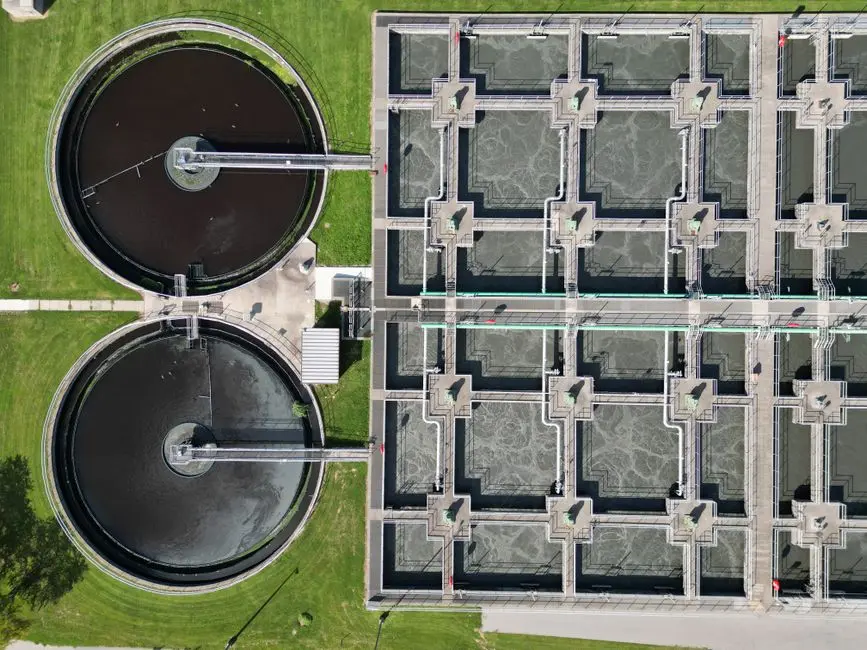
The equalization-basin influent-channel count is a fast physical indicator of whether the acquired plant previously segregated wastewater streams. The HydropureWater 2026 guide describes the observation as taking about one hour during a site walk.
Count the active influent channels during the visit rather than accepting management’s statement that streams are segregated. One channel indicates that incoming streams were historically combined. In that case, segregation retrofit may be the highest-impact Phase 1 capital line because new collection piping, equalization capacity, pumping, controls, and sampling points may be needed to meet limits under a changed production mix.
Five or more channels indicate that the prior owner implemented stream segregation. According to the HydropureWater 2026 guide, that observation typically reduces the retrofit capital estimate by a factor of two or more. The figure is a screening benchmark, not a substitute for design: channel function, active use, hydraulic capacity, and installed equipment still determine scope.
Reconcile the count with P&IDs, flow meters, sampling points, chemical-use records, and permit-application data. If the drawings show segregation but the basin has one active influent channel, investigate bypasses, retired lines, and changed operating practice. The channel count is most useful as an independent check that can reset the capital estimate before equipment selection.
Compare Capital, Reuse, and Disposal Options
The supplied 2026 benchmark places a 1,500 m³/day DAF, MBR, and RO base train at $1.5 million–$6 million, equivalent to $1,000–$4,000 per m³/day or $4–$16 per gallon (HydropureWater, 2026). These are benchmark figures, not a site quotation.
| Configuration | Capital basis | Decision use |
|---|---|---|
| Base train: DAF, MBR, and RO | $1.5M–$6M for 1,500 m³/day | Base case for treatment and reuse when no NMP recovery or ZLD equipment is required |
| Base train plus NMP vacuum distillation | Upper end of the base-train range plus the distillation column | Use when cathode coating is performed in-house |
| ZLD-ready configuration | Approximately 1.5x–2.5x base-train CAPEX | Use when the acquisition model requires alignment with automaker 2030 zero-liquid-discharge targets |
| Metal-rich sludge dewatering | Separate budget line | Price sludge handling rather than obscuring it within a generic treatment allowance |
Capital comparison must distinguish treatment from solvent recovery. NMP vacuum distillation serves cathode-coating solvent reuse and should be included only where the acquired plant performs cathode coating in-house. A ZLD-ready configuration is a separate strategic case with a materially higher capital requirement; it should not be inserted into the base estimate without an approved water-reuse or zero-liquid-discharge requirement.
Include brine disposal in operating cost. At 15–30% reject, a 1,500 m³/day plant produces 225–450 m³/day of liquid leaving the site, with the supplied disposal tariff of $0.40–$0.90 per 1,000 gallons (HydropureWater, 2026). The source’s worked example uses 300 m³/day of reject and a $0.60 per 1,000-gallon avoided-disposal credit, producing approximately $48 per day, or about $17,500 per year. Model the actual reject rate, hauling route, tariff, and reuse fraction before applying those values.
Add metal-rich sludge dewatering as a discrete procurement item. The financial model should separately show base treatment, optional NMP recovery, ZLD readiness, sludge handling, disposal, chemical use, utilities, and contingency. Otherwise finance will understate the cost of meeting the transferred permit limits and the cost of pursuing water reuse.
Execute the First 90 Days After Closing

The first 90 days should convert diligence findings into filed documents, verified compliance history, a physical site diagnosis, and an approved capital basis.
| Timing | Required action | Accountable owner | Deliverable |
|---|---|---|---|
| Days 0–30 | File the TCEQ CORE change-of-ownership form with NOV and Agreed Order history; confirm TXR050000 NOI coverage for satellite operations; verify prior-year EPCRA Form R status for nickel, cobalt, and NMP | Legal, EHS | Filed transfer, permit-coverage matrix, and TRI remediation calendar |
| Days 30–60 | Verify SWPPP currency for active construction; review the eight-quarter DMR trend and flag parameters within 80% of their limits | EHS and plant engineering | Compliance-risk register with operating margin |
| Days 60–90 | Complete the equalization-basin influent-channel count and reconcile it with P&IDs before locking Phase 1 capital | Wastewater engineer | Verified retrofit estimate and treatment design basis |
| Day 90 onward | Close drainage-district and pipeline-easement files; establish the treatment procurement basis; re-baseline the ZLD path against automaker 2030 targets | Legal, engineering, procurement, and finance | Closed diligence exceptions and approved capital plan |
Pre-signing diligence should still assign owners and request documents before closing. The 30-day filing obligation cannot justify deferring the permit, DMR, TRI, and easement reviews until after the transaction. Legal should prepare the CORE filing, EHS should validate the compliance and reporting records, engineering should test the treatment envelope, and finance should carry unresolved liabilities as explicit deal-model items rather than contingencies hidden in closing funds.
The calendar is an implementation framework based on the HydropureWater 2026 guide. Exact permit conditions, agency filing instructions, and local requirements should be confirmed during diligence. Day 90 is a capital-decision gate, not permission to defer unresolved permit, reporting, or easement obligations.
Frequently Asked Questions
Does the TPDES permit transfer when BMW acquires the Texas plant?
Yes. Under 30 TAC §305.64, the buyer inherits the seller’s TPDES permit and must file a TCEQ change-of-ownership within 30 days of closing. The permit number transfers and is reissued in the successor’s legal name, but the seller’s DMR history, NOV ledger, and open Enforcement Actions or Agreed Orders remain part of the compliance exposure (HydropureWater, 2026).
How should treatment capacity and equipment sizing be verified?
Begin with the combined process flow, permit limits, eight-quarter DMR history, and current flow and influent testing. Verify whether streams are segregated through the equalization-basin channel count and P&IDs. Then size equalization, DAF, metal-removal clarification, MBR, RO, disinfection, and sludge handling against the actual treatment objectives; the reference values in the HydropureWater 2026 guide are benchmarks, not final design inputs.
What capital options should the buyer compare?
Compare the base DAF-MBR-RO train, NMP vacuum distillation where cathode coating is in-house, and a ZLD-ready configuration. The supplied 2026 benchmark is $1.5 million–$6 million for a 1,500 m³/day base train, while ZLD-ready capital is approximately 1.5x–2.5x the base train. Require a site-specific proposal separating equipment, installation, chemicals, sludge handling, utilities, disposal, and contingency.
How should an industrial wastewater supplier be selected?
Require the bidder to demonstrate compliance with the transferred permit and applicable categorical limits, provide a process and mass-balance basis, identify each treatment function, and price performance boundaries and long-term consumables separately. Check whether the proposed equalization, DAF, MBR, RO, disinfection, and sludge-handling units integrate as one system. Final selection should follow site testing and the final equipment proposal, not a benchmark flow presented as an installation-ready design.