Why COD Removal Does Not Guarantee API Removal
Pharmaceutical API wastewater COD removal is not a single-technology decision: bulk oxygen demand and compound-specific active pharmaceutical ingredient removal measure different outcomes. Veolia reports MBBR removal of 75% for ketoprofen and 73% for gemfibrozil, compared with 10% and 15% using conventional activated sludge. Membrane filtration can separate suspended material and biomass, but it does not by itself mineralize dissolved API molecules.
COD, or chemical oxygen demand, measures the oxygen required to chemically oxidize material in water. Residual API molecules can contribute to that demand, but COD reduction does not identify which compounds were removed. A process can achieve strong bulk COD removal while leaving a persistent pharmaceutical pollutant, inhibitory transformation products or residual toxicity untreated.
The biological evidence demonstrates why compound-specific analysis matters. Veolia’s moving bed biofilm reactor, or MBBR, removed 25% of clofibric acid versus 8% for conventional activated sludge, and 22% of diclofenac versus 4% for conventional activated sludge. These results are reported for the pharmaceutical compounds and systems described by Veolia; they are not transferable guarantees for every wastewater matrix.
Consequently, equipment selection should require three separate performance definitions: bulk COD removal, removal or destruction of named APIs, and toxicity reduction. An integrated MBR membrane bioreactor can combine biological treatment and solids separation, but its suitability still depends on biodegradability, API identity, toxicity and the required effluent quality.
Characterize the Wastewater Before Choosing Equipment
Representative batch-based sampling must come before technology selection because production, cleaning and campaign schedules determine the wastewater received by the treatment train. Veolia’s workflow analyzes on-site composite samples, with sampling frequency tied to the production batch schedule; its example is two samples per week for four weeks.
That sampling should be paired with flow, production and cleaning records. A single grab sample can conceal batch shocks, dilute a high-strength stream or miss an API that appears only during one campaign. The buyer should therefore retain source and batch information with every analytical result.
| Characterization item | Decision supported | Evidence or required input |
|---|---|---|
| COD and biochemical oxygen demand | Organic loading and biodegradability | Request both; measure them on representative composites |
| Flow, production and cleaning schedule | Equalization, hydraulic loading and batch-shock control | Site production records and flow monitoring |
| Nitrogen, phosphorus and TSS | Nutrient balance and solids separation | Grindeks case: nitrogen 100–200 mg/L, total phosphorus 8 mg/L and TSS 50 mg/L |
| pH, temperature and salinity | Biological and oxidation operating conditions | Site measurements across representative batches |
| API-specific concentration | Compound removal or destruction | Validated analytical results for the APIs manufactured |
| Toxicity | Biological inhibition and oxidation requirement | Site-specific toxicity assessment |
The Grindeks Meldonium wastewater profile reported by Veolia provides a useful pharmaceutical example: COD 2,000–7,000 mg/L, nitrogen 100–200 mg/L, total phosphorus 8 mg/L, TSS 50 mg/L and pH 4–10. These are project values, not universal design limits.
For the cited Veolia project, composite samples were filtered at 1.6 μm before laboratory work. That filter size must be preserved when comparing analytical results because filtration removes suspended material before the sample is assessed. The broader pharma ETP upgrade planning for expanded production should begin with these site-specific measurements rather than a generic COD loading assumption.
Build the COD Removal Treatment Train
A staged pharmaceutical wastewater treatment train separates four functions: equalization and physical pretreatment, biological COD removal, targeted oxidation for persistent APIs, and membrane separation or reuse polishing. Assigning each stage a defined contaminant role prevents a membrane or oxidation unit from being credited with performance it cannot deliver.
- Equalization and physical pretreatment. Equalize batch flows and loads before biological or oxidation equipment. Where suspended solids, oils or colloidal material could interfere, apply coagulation or DAF pretreatment for pharmaceutical wastewater. DAF separates oils, grease and flocculated solids; it is not a substitute for destroying dissolved APIs.
- Biological COD removal. Use a biological reactor for biodegradable organic load. Veolia identifies MBBR as suitable for APIs with moderate or difficult biodegradability and describes separate compartments for readily biodegradable and more difficult-to-biodegrade COD. Biological reactor sizing should use site COD loading and flow variation, as discussed in the biological reactor sizing using COD loading guide.
- Targeted advanced oxidation. Add an advanced oxidation process when persistent APIs or toxicity remain after biological treatment. Liu, Gaudino and Cravotto’s 2026 review covers standalone hydrodynamic cavitation and hybrid processes using H₂O₂, persulfate, peroxymonosulfate, percarbonate, Fenton, catalysts, ozonation and photocatalysis. It also notes that pharmaceutical degradation mechanisms in water matrices remain uncertain, which supports site-specific pilot validation.
- Solids separation and polishing. Use MBR where biological solids separation and reuse-oriented effluent quality are required. The integrated MBR membrane bioreactor combines activated sludge treatment with submerged PVDF filtration below 1 μm, but membrane performance must be verified against the actual wastewater and reuse criteria.
| Train stage | Primary contribution | What it does not establish |
|---|---|---|
| Equalization, coagulation and DAF | Flow, solids, oil and colloid control | API destruction or dissolved COD removal |
| MBBR or activated sludge | Removal of biodegradable COD and selected APIs | Reliable removal of every persistent API |
| Advanced oxidation | Oxidation of selected persistent dissolved pollutants | Solids separation |
| MBR or membrane separation | Biomass retention and solids separation; polishing where demonstrated | Mineralization of dissolved APIs |
Do not transfer the 99.5% COD removal reported by Muslim and Asel in their petroleum-wastewater electrochemical study to pharmaceutical performance. That result concerns an oily petroleum-refinery matrix and specific electrochemical conditions; it does not establish removal of pharmaceutical APIs.
Compare Biological, Oxidation and Membrane Options
Biological treatment, advanced oxidation and membranes solve different treatment problems and should be combined according to wastewater biodegradability, API persistence and reuse requirements. Veolia’s compound-specific comparisons show that reactor configuration can materially change performance even when the biological objective is similar.
| Compound | MBBR removal reported by Veolia | Conventional activated sludge removal reported by Veolia |
|---|---|---|
| Ketoprofen | 75% | 10% |
| Gemfibrozil | 73% | 15% |
| Clofibric acid | 25% | 8% |
| Diclofenac | 22% | 4% |
These results identify relative differences within Veolia’s reported cases; they do not establish guaranteed removal for a buyer’s wastewater. APIs require individual analytical methods and site-specific validation.
At Grindeks, five MBBR sections were arranged in series to address COD, nitrogen, phosphorus and phenols, followed by complete nitrification and denitrification. Veolia describes the first MBBR section as removing readily biodegradable COD and the next as addressing more difficult-to-biodegrade COD. This compartmentalization differs from a single mixed biological zone because each compartment supports microorganisms associated with a different contaminant group.
The comparison should therefore be made by function:
- Biological treatment: principal benefit is removal of biodegradable COD; operating concern is variable loading, inhibition, sludge behavior and incomplete removal of poorly biodegradable APIs.
- Advanced oxidation: principal benefit is oxidation of persistent dissolved APIs; operating concerns include oxidant use, energy demand, transformation products and the wastewater matrix. The 2026 cavitation review identifies these mechanisms and sustainability questions but does not provide a universal pharmaceutical removal guarantee.
- MBR: principal benefit is biological treatment integrated with solids separation; operating concerns include membrane cleaning, replacement and downstream performance. It does not substitute for oxidation where molecular destruction is required.
- Standalone membrane separation: principal benefit is retention of suspended material and dissolved species according to the selected membrane; operating concern is fouling and concentrate management. It does not mineralize dissolved API compounds.
The selection rule is conditional: favor a biological-centered train when the load is predominantly biodegradable; add targeted oxidation when persistent APIs or toxicity remain; add membranes when solids separation or reuse is required. Multi-media filtration and RO and UF membrane elements should be evaluated against the specific reuse target rather than included by default.
Validate Performance Through Pilot Testing
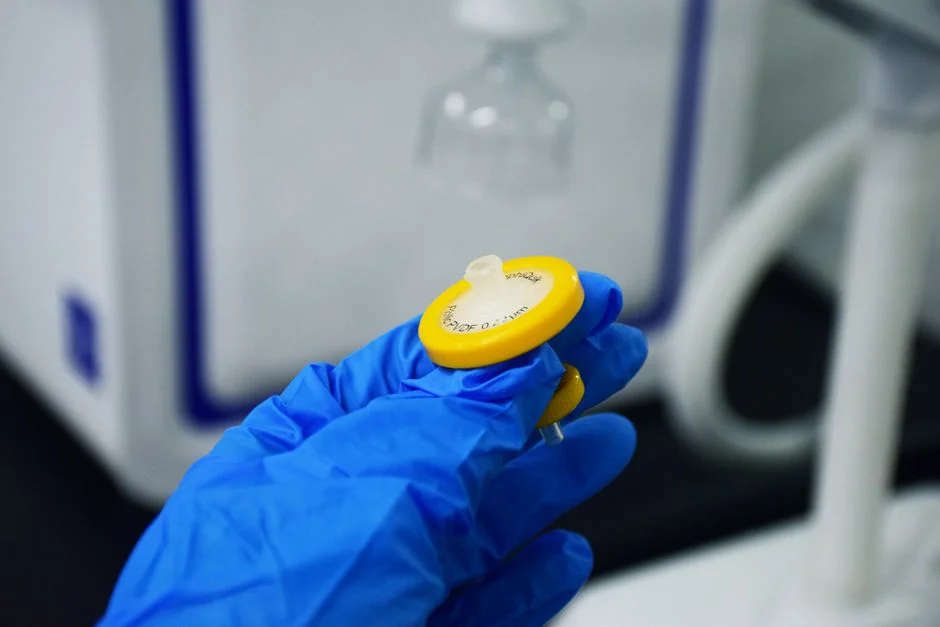
Pilot testing converts a treatment concept into site-specific evidence before full-scale commitment. Veolia documents a sequence of analyzing composite on-site samples, constructing and operating a full-scale MBBR pilot for two months, and then building the final plant.
The pilot should span representative production campaigns rather than test only a favorable batch. Record COD removal, API-specific removal, toxicity, sludge behavior and downstream membrane or oxidation performance. The analytical protocol should also establish whether removal is calculated from mass, concentration, influent-outlet averaging or composite samples.
| Pilot question | Evidence the buyer should request |
|---|---|
| Does the process cover actual wastewater variability? | Composite samples linked to production, cleaning and campaign records |
| Is COD removal accompanied by API control? | Compound-specific influent and effluent results using identified analytical methods |
| Is toxicity reduced? | Before-and-after toxicity results linked to each treatment stage |
| Will downstream equipment perform? | Membrane flux, fouling, cleaning demand or oxidation chemistry observations |
| What operating conditions were validated? | pH, temperature, hydraulic loading and contaminant concentration ranges |
| What remains after treatment? | Residual-chemical and byproduct management requirements |
Preserve the wastewater source and 1.6 μm laboratory filter size in every comparison, consistent with the cited Veolia workflow. A single laboratory removal percentage without the matrix, operating conditions, analytical method and sampling basis is not enough for sizing.
Commercial comparison should also cover startup, shutdown, membrane cleaning, membrane replacement, sludge handling and residual-chemical or byproduct management. An industrial COD removal treatment-train comparison can provide a useful framework, but its wastewater-specific performance figures must not be transferred to pharmaceutical applications.
Questions to Ask a Wastewater Equipment Supplier
A supplier’s guarantee must define what is being removed, under which wastewater conditions and by which analytical method. “COD removal” alone does not establish removal of named active pharmaceutical ingredients, and neither guarantee establishes toxicity reduction or industrial effluent reuse suitability.
- Performance scope: Does the guarantee cover COD, specific APIs, toxicity, or only flow and basic operating conditions?
- Evidence relevance: Were the results obtained with wastewater resembling the site’s APIs, production schedule, pH and toxicity profile?
- Pilot acceptance: How does the supplier define pilot success, and which analytical methods, sampling frequencies and calculation bases will apply?
- Equipment boundary: Which pretreatment, biological stages, oxidation units, membrane modules, controls, sludge-handling provisions and lifecycle consumables are included?
- Operations: What are the operator requirements, maintenance intervals, spare-parts availability and supplier support arrangements?
- Design basis: Which operating ranges were used for pH, temperature, hydraulic loading and contaminant concentration, and how will startup and shutdown affect the guarantee?
Ask the supplier to identify unresolved assumptions in writing. A technically credible proposal should state which wastewater data are missing, which performance claims are conditional, and what test would close each gap before final equipment selection.
Frequently Asked Questions
What does a pharmaceutical wastewater COD removal system cost?
The supplied research provides no equipment pricing or total-cost-of-ownership figure, so no responsible cost range can be stated. Request a written quotation tied to site flow, COD loading, API inventory, toxicity, variability, effluent limits and reuse targets. Ask separately for pretreatment, biological treatment, oxidation, membranes, controls, sludge handling, utilities, consumables, maintenance and pilot costs.
How should a buyer select a supplier with relevant pharmaceutical API experience?
Require compound-specific data from wastewater resembling the plant’s actual API, production schedule, pH and toxicity profile, together with the analytical methods and sampling basis. Check whether pilot success criteria, guarantee boundaries, included equipment, operator requirements, maintenance support and spare-parts availability are stated explicitly.
What inputs are required to size the treatment train?
Flow alone is insufficient. Final sizing requires representative COD and flow data, biodegradability information, API-specific concentrations, toxicity, batch and cleaning schedules, physical characteristics and applicable discharge or reuse targets. Pilot results then establish the operating ranges and treatment performance that support full-scale equipment selection.
Does pilot validation eliminate compliance risk?
No. A pilot demonstrates performance under the tested conditions, but it does not replace final design or project-specific compliance verification. The selected train must be checked against the discharge or industrial effluent reuse limits applicable at the project location, using the agreed analytical methods and sampling basis.