What an Effluent Treatment Plant in Bangkok Must Achieve
An effluent treatment plant in Bangkok should be selected by wastewater characteristics, final discharge route, required pollutant control and operating conditions—not by nominal capacity alone. A practical industrial ETP can combine equalization, primary treatment, biological treatment, tertiary treatment, sludge management and automation. Flow, pollutant load, pH, temperature, COD, BOD, TSS and TDS must be verified through sampling and analysis. Technology selection may involve DAF for suspended solids, FOG and colloidal matter, MBR for compact biological treatment and membrane separation, UF for solids removal, and nanofiltration where advanced effluent polishing or reclamation is required. Final equipment specifications and compliance criteria must be confirmed against the applicable Bangkok discharge authorization and receiving system.
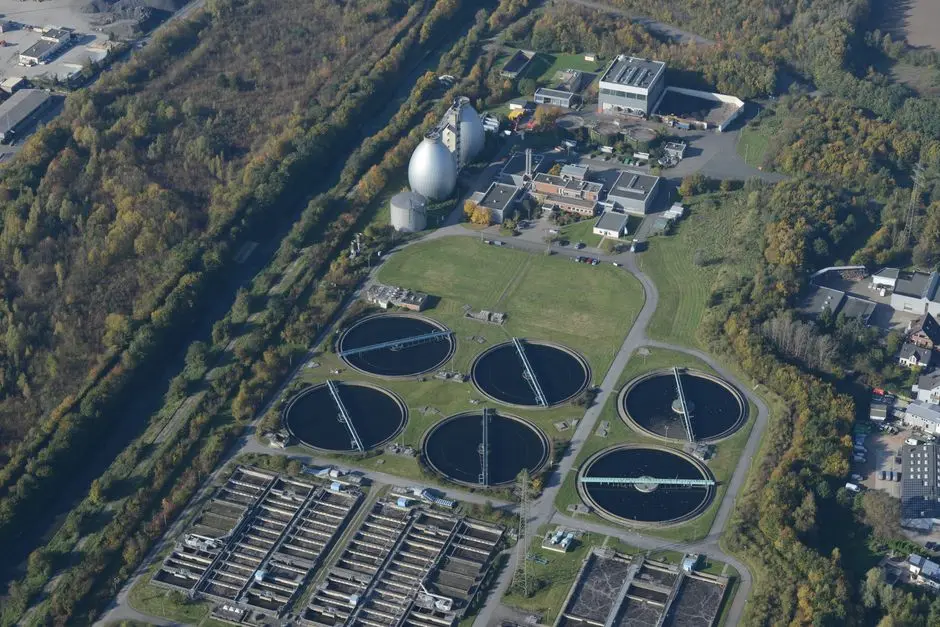
On Nut Sewage Treatment Works is an operational municipal wastewater facility serving the Bangkok area and discharging treated effluent into waterways that flow toward the Gulf of Thailand, according to Utility Radar. That municipal reference is useful for geographic context, but it is not a substitute for industrial ETP design. A factory treatment plant must address its production wastewater, discharge obligations and operating envelope. The framework for comparing ETP supplier comparison, costs and compliance requirements is therefore useful only when its assumptions are replaced with project-specific data.
Define the destination before defining the equipment. Controlled discharge, acceptance into a sewer, reuse within the factory and broader effluent reclamation impose different treatment objectives and monitoring requirements. The buyer should identify the receiving point, applicable authorization and required final-water quality before selecting a process train.
Shachi Engineering’s Bangkok ETP source, updated March 2026, describes the industrial sequence as equalization, primary treatment, biological treatment, tertiary treatment, sludge management and automation. It also identifies changing flow, pollutant load, pH, temperature and production conditions as design variables. The project brief should therefore capture production variation, batch discharges, flow peaks and minimum operating conditions—not only an average daily flow.
Characterize the Wastewater Before Selecting Equipment
Representative sampling across production cycles is the foundation of a defensible industrial wastewater treatment plant design. A single outlet sample cannot establish the load entering the treatment train, while outlet-only assessment can conceal residual contaminant risks. The sampling plan should cover normal production, batch releases, cleaning operations, peak discharge periods and any production line whose chemistry differs materially from the others.
Request laboratory analysis for COD, BOD, TSS, pH and TDS, then add constituents that may control treatment selection: oil and grease, surfactants, color, nutrients, heavy metals, phenols, ammonia or specific toxic compounds. The buyer should also record sampling time, sample condition, production state and analytical method so results can be compared with future operating data.
The textile-industry study by the Pakistan Journal of Scientific & Industrial Research Series A, Physical Sciences provides a useful evidence model. Researchers measured TDS, BOD, COD, pH and heavy metals at both inlet and outlet points of ETPs in Dhaka export processing zones. They found persistent TDS exceedances despite general compliance with Bangladesh’s ECR 1997, demonstrating why compliance with one parameter set does not establish that every receiving-system risk has been addressed. This study is transferable as a sampling and monitoring method, not as evidence of Bangkok wastewater composition or limits.
Ask each supplier to explain how flow, pollutant load, pH and temperature affect equalization, biological loading, filtration, chemical consumption and downstream polishing. For example, high variability affects equalization volume and treatment stability; elevated temperature changes biological reaction conditions; and residual suspended solids or colloids can affect membrane and filtration duties. The COD removal technology comparison provides a useful framework for connecting analytical parameters with unit-duty calculations.
| Information to obtain | Why it affects selection or sizing |
|---|---|
| Flow profile: average, peak, minimum and batch discharges | Sets equalization, treatment rate, pumping and storage requirements. |
| COD and BOD loads | Defines biological and secondary-treatment duties. |
| TSS, oil and grease, and colloidal matter | Indicates the need for primary separation, DAF and downstream solids removal. |
| pH and temperature | Affects chemical dosing, biological conditions and materials. |
| TDS and project-specific contaminants | Determines whether conventional treatment is sufficient or advanced separation is justified. |
| Production schedule and reuse targets | Defines production variation, storage and final-water objectives. |
Before finalizing equipment size, require the wastewater flow profile, production schedule, batch-discharge information, water-reuse targets and receiving-point details. If these inputs remain incomplete, ask for a stated data-gap list and exclusion in the proposal rather than allowing an unqualified capacity figure to become the design basis.
Match Each Treatment Stage to the Pollutant
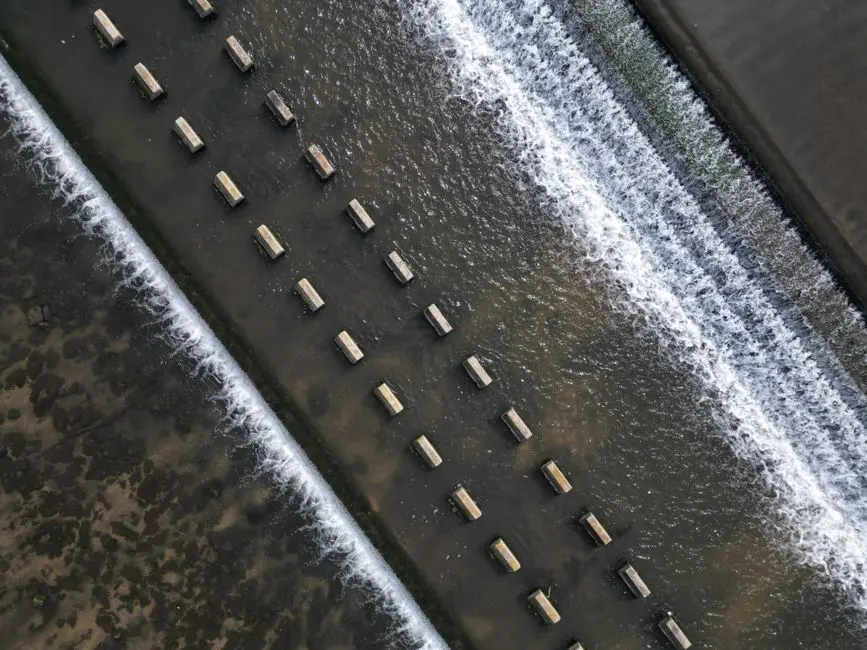
A treatment train should be assembled from defined process duties rather than from a list of products. Shachi Engineering’s March 2026 process architecture starts with equalization, followed by primary treatment, biological treatment, tertiary treatment, sludge management and automation. In practice, each stage should answer one question: what contaminant or operating instability is removed, and what condition must be achieved before the next stage can function reliably?
- Equalization: buffers flow, load and batch discharges, while providing the residence time required for mixing and controlled feed.
- Primary treatment: removes material that can be separated physically or with limited chemical assistance, such as settleable solids and some oil and grease.
- DAF: separates suspended solids, FOG, oil and grease and colloidal matter where those are confirmed treatment targets.
- Biological treatment: addresses biodegradable organics and can be paired with membrane separation in an MBR configuration.
- Tertiary treatment: provides additional solids removal or polishing needed to meet the selected discharge or reuse objective.
- Sludge management and automation: control residual solids, chemical dosing and process response; they are part of plant performance, not ancillary items.
The catalog range for a DAF system for industrial wastewater covers 4–300 m³/h across 13 standard models. An integrated MBR wastewater treatment system covers 10–2,000 m³/day and combines biological treatment with submerged PVDF membrane filtration below 1 μm. A ultrafiltration system for solids removal covers 2,000–40,000 L/h, uses 0.03 μm PVDF membranes and includes automatic backwash and air scour.
Nanofiltration should be treated as an advanced polishing option, not as the default response to industrial COD or suspended solids. University of Twente research on direct nanofiltration evaluated its potential to polish wastewater treatment plant effluent to EU Water Framework Directive standards and produce water suitable for agricultural or direct or indirect potable use. The buyer must first define the intended reuse and final-quality objective; the research then supports technical assessment of nanofiltration for that specific purpose.
Constructed wetlands are another researched option. Wageningen University and Research’s September 2022 thesis examined their removal of micropollutants from treatment-plant effluent. That evidence supports further evaluation for a defined micropollutant problem, but does not make wetlands a default industrial ETP stage or establish their performance for a Bangkok factory.
| Stage or technology | Primary role | Evidence or scope |
|---|---|---|
| Equalization | Flow and load buffering | Must reflect measured variability and batch releases. |
| DAF | Suspended solids, FOG, oil and grease, colloids | Catalog range: 4–300 m³/h across 13 models. |
| MBR | Biological treatment with membrane separation | Catalog range: 10–2,000 m³/day; filtration below 1 μm. |
| UF | Solids removal and membrane pretreatment | Catalog range: 2,000–40,000 L/h; 0.03 μm PVDF; automatic backwash and air scour. |
| Nanofiltration | Advanced polishing and reclamation assessment | Supported by University of Twente thesis research. |
| Constructed wetlands | Researched micropollutant-removal option | Wageningen University and Research thesis, September 2022. |
Include sludge collection, thickening, dewatering, storage and disposal in the scope. The COD removal technology comparison should be used alongside the project’s solids balance. A treatment proposal that omits sludge fate, dewatering duty or chemical residuals leaves a major lifecycle obligation undefined.
Compare DAF, MBR, UF and Advanced Polishing
DAF, MBR, UF and nanofiltration solve different treatment problems, so their comparison depends on the confirmed contaminant load and the required final-water quality. A suspended-solids or oil-removal duty may justify DAF; biodegradable organics may require biological treatment; an MBR can combine that biological stage with membrane separation; UF can provide solids separation or membrane pretreatment; and nanofiltration becomes relevant when the project needs advanced polishing or reclamation.
| Technology | Target contaminants or duty | Catalog capacity | Role in the treatment train |
|---|---|---|---|
| DAF | Suspended solids, FOG, oil and grease, colloidal matter | 4–300 m³/h across 13 standard models | Primary separation before downstream biological or filtration stages. |
| MBR | Biodegradable organics with membrane separation | 10–2,000 m³/day | Compact biological treatment; PVDF membrane filtration below 1 μm. |
| UF | Bacteria, colloids and suspended solids; pretreatment duty | 2,000–40,000 L/h | 0.03 μm PVDF membranes, automatic backwash and air scour, without chemical addition. |
| Nanofiltration | Advanced polishing and reclamation | Project-specific | Final separation stage after final-water objectives and pretreatment requirements are defined. |
The MBR catalog describes a 60% smaller footprint than conventional systems, but that is a catalog claim tied to the compared configuration, not a universal site-layout guarantee. Footprint should therefore be checked against actual basin volumes, membrane maintenance clearances, equalization, sludge handling, chemical storage and access routes.
Capacity figures also use different time bases. DAF is expressed as an hourly flow rate, while the cited MBR range is expressed per day. These figures cannot be ranked directly without peak-flow and operating-hour assumptions. Request instantaneous flow, daily volume, redundancy and operating-mode definitions for every proposed unit.
Do not accept generic pollutant-removal percentages or guaranteed compliance figures unless the supplier provides them for the project wastewater, specified flow and load, operating conditions and applicable limits. For UF, the relevant design questions are feed quality, solids loading, membrane area, backwash frequency and cleaning strategy—not simply whether the membrane pore size is stated.
For MBR selection, use the MBR versus conventional activated-sludge comparison to examine biological loading, membrane fouling, controls, sludge behavior and operating effort. The supplier should show where each technology sits in the proposed train and which upstream and downstream duties it assumes.
Turn the Selected Process into a Plant-Sizing Brief
A plant-sizing brief should convert verified wastewater conditions into unit-duty calculations. Start with design flow, peak flow, minimum flow, operating hours, production variability, batch discharges and any agreed future-expansion allowance. Shachi Engineering’s March 2026 Bangkok ETP guidance identifies changing flow, wastewater load and production conditions as factors that must be addressed in the design.
Request separate calculations for equalization, primary treatment, biological treatment, separation, filtration and polishing. For each unit, the calculation should state design flow, applied load, hydraulic retention or loading basis, redundancy, operating controls and expected performance under the agreed influent envelope. A package capacity without supporting calculations is not enough for technical comparison.
Include chemical consumption, electrical load, air demand, sludge yield, maintenance access and control philosophy in the request for quotation. Also define what is excluded—such as site utilities, disposal routes, building works, sampling laboratories or permits—so that suppliers quote comparable scope. Chemical dosing should show the measured demand, control method, storage requirements and operating response, rather than being treated as a fixed percentage of flow.
Clarify whether each equipment capacity means design average, peak treatment rate or total daily volume. The cited DAF and UF ranges are hourly rates, while the MBR range is daily; a supplier must convert or reconcile these bases using the project’s operating profile. Minimum-flow operation should also be considered because extended underflow can affect biological stability, filter operation and equalization.
Confirm Bangkok installation constraints before accepting the layout: available footprint, equipment-access routes, power supply, drainage, floor loading, drainage connection, discharge connection and space for sludge handling and maintenance. The technology, compliance and cost guide can inform the request, but its site assumptions should not be transferred automatically to a Thai factory.
A useful sizing brief therefore contains verified wastewater data, the treatment objective, unit-duty calculations, utilities and solids balances, control requirements, site constraints, scope exclusions and commercial assumptions. Without those items, a low quotation may simply reflect a narrower duty or omitted obligation.
Evaluate Bangkok ETP Suppliers with a Technical Due-Diligence Checklist
Technical due diligence should test whether a supplier can demonstrate a complete, site-specific treatment design rather than reproduce a standard package. Ask every shortlisted supplier for the wastewater characterization, treatment-train rationale, sizing calculations, P&ID, equipment schedule and control narrative. Differences between suppliers should then be traceable to design assumptions, equipment selection and site constraints.
Request reference projects with comparable wastewater characteristics, flow, treatment objectives and operating conditions. A generic installation list is not equivalent to a comparable performance reference. Where possible, ask how the reference plant was commissioned, what parameters were monitored, how sludge was handled and whether operating performance changed after production changes.
Monitor flow, pH and project-relevant treatment parameters, including COD, BOD and TSS where they form part of the required treatment objective. Shachi Engineering’s March 2026 Bangkok ETP guidance identifies COD, BOD, TSS and pH as key controllable parameters. The supplier should define sample points, instruments, calibration requirements, alarms, interlocks and the response to excursions.
The textile-industry study by the Pakistan Journal of Scientific & Industrial Research Series A, Physical Sciences supports a monitoring approach based on real-time monitoring, dynamic KPIs, statistical process control, pollutant-specific targets, rigorous long-term monitoring and adaptive management. Its Bangladesh textile context is not a substitute for Bangkok authorization, but its control logic is transferable: establish parameters and trends suited to local risks rather than relying only on periodic compliance samples.
Evaluate the complete operating package: sludge management, maintenance, spare parts, operator training, warranty and remote or local support. Ask who holds responsibility for membrane cleaning, DAF servicing, pumps, blowers, chemical dosing and instrumentation. Confirm that chemical dosing is controlled and integrated; PLC-controlled skid-mounted systems are available for coagulants, flocculants, pH adjusters and specialty chemicals, but the required dose must still be established from project wastewater and operating data.
Use the pretreatment-limit guide as a prompt for checking discharge-route constraints and supplier documentation. A credible response should identify which limits are project-specific, which are assumed, and what monitoring or pretreatment is needed to prevent exceedance.
Finally, check change-control procedures. Ask how design-flow revisions, new production lines, chemical substitutions, sludge-disposal changes and permit variations are assessed before implementation. Any change that affects unit duty, chemical demand, footprint or final-water quality should trigger documented engineering review.
Plan Commissioning and Long-Term Operating Control
Commissioning should verify the treatment process under actual factory conditions, not merely demonstrate that individual equipment starts. Require a written plan covering influent characterization, wet commissioning, control verification, sampling points, operator demonstrations and performance verification. The acceptance procedure should identify who supplies utilities, chemicals and trained operators during each stage.
Agree in advance how COD, BOD, TSS, pH, TDS and other applicable parameters will be measured. For each parameter, define the sampling location, analytical method, frequency, responsible party and corrective-action threshold. If the project requires real-time control, specify the instrument, calibration interval, data recording and alarm response; if a parameter is monitored by grab sampling, state the operating decisions that depend on it.
Review sludge handling, membrane cleaning, UF backwash, chemical dosing and preventive maintenance before accepting the operating-cost model. Ask for expected cleaning frequencies, consumable quantities, replacement intervals, operator tasks and the effect of downtime on the permitted discharge arrangement. The wastewater and cooling-blowdown treatment guide can support this review, but the relevant reference is its treatment-control logic rather than an unrelated facility’s operating conditions.
Long-term KPI reviews should identify gradual deterioration or changing production loads before they become a discharge failure. Compare flow, pollutant loads, treatment performance, chemical use, sludge generation, membrane condition and alarms against the accepted design basis. Use the Bangladesh textile study’s recommended combination of pollutant-specific targets, statistical process control and adaptive management as a diligence framework, while retaining Bangkok-specific limits and receiving-system requirements.
Commissioning records should close the loop between the proposal and operation: confirm installed equipment, test controls, record baseline performance, train operators and transfer operating procedures. Scheduled KPI reviews then provide the mechanism for adjusting chemical use, biological operation, cleaning frequency and maintenance priorities as the factory’s wastewater changes.
Frequently Asked Questions
How much should an effluent treatment plant in Bangkok cost?
A defensible quotation requires the wastewater analysis, flow profile, pollutant loads, treatment objective, discharge route, site constraints and equipment scope. Ask each supplier for capital cost, installation, commissioning, utilities, chemicals, membranes, sludge handling, maintenance, spare parts, operator training and warranty as separate items. No defensible generic price can be stated from the supplied research; request a site-specific quotation after the design basis is agreed.
Which treatment system is best for industrial wastewater in Bangkok?
There is no universally best system. DAF addresses suspended solids, FOG, oil and grease and colloidal matter; MBR combines biological treatment with membrane separation; UF supports solids removal or membrane pretreatment; and advanced polishing such as nanofiltration should follow a defined final-water or reuse objective. Select the train only after verifying the wastewater and applicable Bangkok discharge requirements.
How is an industrial ETP sized in Bangkok?
Size each unit from design flow, peak and minimum conditions, pollutant loads, production variability and future expansion. Require calculations for equalization, biological treatment, separation, filtration and polishing. Also verify the supplier’s capacity time basis, because an hourly treatment rate and a daily treatment volume are not directly comparable.
Which documents should a Bangkok ETP supplier provide?
Request the wastewater analysis, treatment rationale, P&ID, equipment schedule, unit-duty calculations, utilities and chemicals estimate, sludge-management plan, control philosophy, commissioning plan and comparable references. For compliance risk, require a written link between each monitored parameter, the operating control, the discharge objective and the corrective action.
When is nanofiltration or another polishing stage justified?
Add advanced polishing when a defined reuse or final-water-quality objective requires it and the upstream treatment can provide suitable feed quality. University of Twente research supports assessing direct nanofiltration for polishing treatment-plant effluent and reclamation, but it does not establish performance for every industrial wastewater. Require project-specific membrane, pretreatment, fouling, energy and operating-cost analysis before including it.
Related Equipment
- DAF system for industrial wastewater — specifications, capacity range, and technical data