
Map the hotel’s wastewater before choosing equipment
A Toronto hotel or resort in 2026 needs a wastewater treatment approach matched to its wastewater streams, occupancy pattern, discharge or reuse objective, and site constraints. Guestrooms, staff areas and laundry generate domestic sewage; kitchens require grease and solids control; pools and spas need separate assessment; and oily or high-strength flows may need DAF pretreatment. An underground A/O package plant may suit a constrained site, while an MBR may suit projects prioritizing compactness or membrane-quality separation. DAF is pretreatment, not a substitute for biological sewage treatment.
Start with a stream-by-stream inventory. For each source, record its flow characteristics, operating schedule, sampling results and intended destination:
| Hotel stream | Design questions | Possible treatment role |
|---|---|---|
| Guestrooms and staff areas | Daily occupancy, suite occupancy, bathroom fixtures, seasonal variation and simultaneous discharge | Domestic biological treatment |
| Kitchens and restaurants | Grease, food solids, cleaning chemicals, dishwashing and discharge timing | Source control, screening, FOG removal or DAF pretreatment |
| Laundry | Linens per day, wash cycles, lint, detergents and discharge schedule | Equalization, screening and biological treatment |
| Pools and spas | Backwash, chlorinated water, disinfectant demand and water chemistry | Separate assessment before discharge or reuse |
| Conference and outdoor areas | Event peaks, washdown water, landscaping runoff and maintenance chemicals | Segregation, equalization and treatment as applicable |
The Ritz-Carlton Toronto illustrates why room count is an incomplete design basis. The hotel reports 263 guest rooms, including 56 one-bedroom Corner Suites, four Simcoe Suites, two Wellington Suites and one Ritz-Carlton Suite, alongside extensive food service and event facilities (Ritz-Carlton Toronto, 2026). Suite use, occupancy patterns, restaurant operation and discharge timing also affect wastewater generation.
Extended-stay room use deserves the same scrutiny. Chelsea Toronto states that its One and Two Bedroom Premium Suites are designed for extended stays (Chelsea Hotel Toronto, 2026), so a buyer should examine prolonged room occupancy and associated wastewater patterns rather than relying only on published room-night statistics. A hotel wastewater treatment system selection guide provides a useful comparison framework, but Toronto approval requirements still need site-specific confirmation.
Define the objective before selecting equipment: sanitary sewer discharge, pretreatment at a Toronto treatment plant, land-based irrigation or another reuse application. Request peak-hour and daily flows, water-use records, kitchen and laundry schedules, pool or spa discharge information and wastewater sampling results. These values must come from the property’s records and sampling program.
Follow the treatment train from screening to disinfection
A complete treatment train separates solids, removes contaminants biologically, clarifies the treated flow, disinfects it where required and routes the final effluent to an approved destination. The sequence begins with source segregation and flow equalization, followed by screening, FOG or solids removal where justified, biological treatment, clarification, disinfection and final handling.
Screening protects downstream equipment. A rotary mechanical bar screen can remove suspended solids, rags, plastics and fibrous debris before they reach pumps, valves or biological processes.
DAF belongs before biological treatment when kitchen, laundry or other streams contain material FOG, oil and grease, suspended solids or colloidal matter. It removes floatable and settled material, but it does not replace biological treatment of dissolved and biodegradable organic matter.
An MBR combines activated-sludge treatment with submerged PVDF membrane filtration. A WSZ package instead combines anoxic and aerobic biological contact oxidation, sedimentation and disinfection. These are different process arrangements, not interchangeable labels for the same equipment.
Disinfection must be evaluated as the final process within the approved treatment train. UV, chlorine dioxide and other products are options. The treatment objective, receiving system, reuse application and authority’s written requirements determine the defensible choice.
Choose between packaged A/O, MBR and DAF treatment
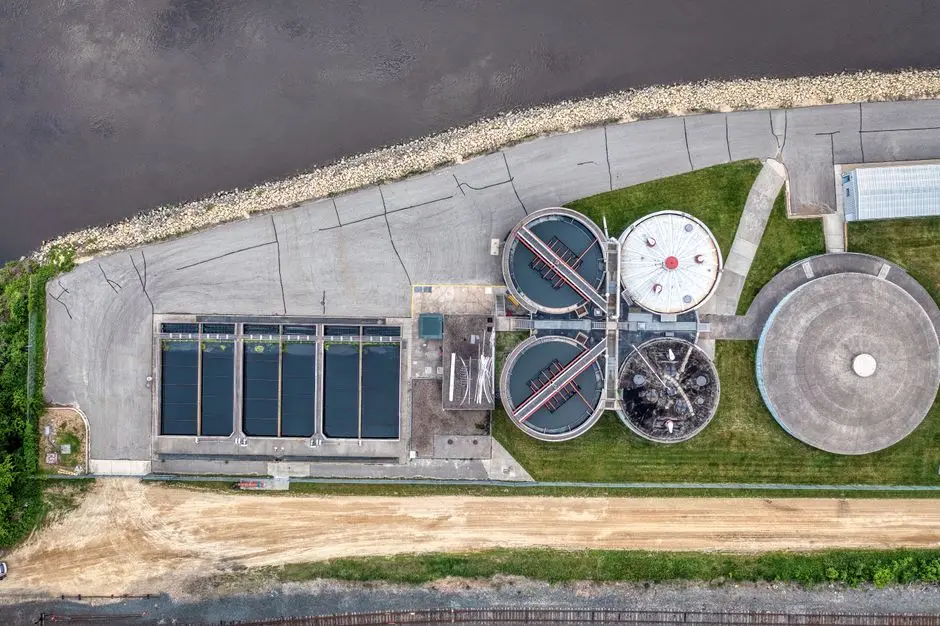
The correct technology follows from the treatment duty: a complete biological system for domestic sewage, membrane separation where its operating characteristics fit the project, and DAF where upstream solids or FOG control is required. Product capacity establishes what equipment is offered—not what the site requires.
| System | Supplied product specification | Suitable role | Decision checks |
|---|---|---|---|
| WSZ packaged A/O plant | 1–80 m³/h; anoxic/aerobic contact oxidation, sedimentation and disinfection; stated applicability to hotels | Integrated buried or mobile domestic sewage treatment | Peak flow, treatment objective, treatment capacity, buried-installation constraints and operating support |
| MBR | 10–2,000 m³/day; submerged PVDF filtration stated as less than 1 μm | Compact biological treatment with membrane separation | Actual organic and solids loading, footprint, membrane maintenance, redundancy and required effluent quality |
| DAF | 4–300 m³/h across 13 standard models | Pretreatment for FOG, oil and grease, suspended solids or colloidal matter | Wastewater characterization, removable contaminant loading, chemical and sludge handling, downstream capacity |
Use the WSZ system when the hotel needs an integrated domestic sewage treatment train and site constraints favor a buried or mobile package. The supplied specification lists capacity from 1–80 m³/h and includes anoxic/aerobic biological contact oxidation, sedimentation and disinfection. Confirm that the selected duty covers the hotel’s actual peak flow and treatment objective; the stated range is not a design guarantee for every property.
Use an MBR when compactness or membrane-quality separation is important and the wastewater and operating requirements support membrane operation. The supplied product range is 10–2,000 m³/day, with filtration stated as less than 1 μm. Treat both as product specifications rather than guaranteed site performance. Required footprint, membrane cleaning, replacement provision and operating labor must be included in the evaluation.
Use a DAF pretreatment system when FOG, oil and grease, suspended solids or colloidal matter threaten downstream biological processes. Its supplied range of 4–300 m³/h across 13 standard models does not make it a complete sewage treatment plant. Its duty must be matched to measured stream characteristics and downstream hydraulic capacity.
Do not select technology solely by nominal capacity. Compare wastewater characterization, required effluent or reuse quality, available footprint, installation approach and the authority’s discharge or reuse conditions. The relevant packaged options are the underground package sewage treatment plant, MBR membrane bioreactor and DAF pretreatment system.
Build a Toronto-ready sizing and approval checklist
A bid should begin with documented design inputs and confirmed approval responsibilities, not with a catalogue selection. Package the following information into the design basis and request written supplier responses:
| Procurement package | Required inputs | Supplier response |
|---|---|---|
| Flow basis | Average daily, peak-hour and peak-day flows; seasonal variation; kitchen and laundry discharge timing | Selected duty, hydraulic assumptions and sizing calculation |
| Wastewater characterization | Suspended solids, BOD, oil and grease, FOG, pH and any receiving-authority parameter | Process selection, equalization, pretreatment and biological-loading review |
| Approval route | Discharge point, receiving system, permit, approval and sewer-use requirements | Supporting calculations, drawings and compliance schedule |
| Site and installation | Soil, groundwater, frost protection, excavation access, utilities, noise, odour and landscape impacts | Civil works, installation method and below-grade feasibility |
| Commercial scope | Process design, civils, installation, commissioning, controls, training, spares, monitoring and operation | Separated pricing, responsibilities and warranty terms |
Compile the flow data from operating records rather than room count. Confirm whether discharge is to a sanitary sewer or another receiving system, and determine whether the City of Toronto, receiving treatment authority or another authority requires a permit, approval or sewer-use review. Obtain effluent limits in writing for the proposed discharge and reuse route.
Record site constraints before equipment is offered: soil conditions, groundwater, frost protection, excavation access, utility conflicts, noise, odour, impacts on occupied areas and whether below-grade installation is feasible. A treatment package may fit the process requirement yet remain impractical if delivery, excavation or maintenance access is inadequate.
Compare quotations on delivered scope. Process design, civil works, installation, commissioning, controls, training, spare parts, monitoring and long-term operation are separate procurement items. A containerized MBR sizing methodology illustrates the need to connect design inputs with the proposed configuration, but its project context does not replace Toronto-specific approval confirmation.
The Ritz-Carlton Toronto reports a carbon footprint of 39.99 kg per room night and a water footprint of 820.77 litres per room night (Ritz-Carlton Toronto, 2026). These figures provide hotel sustainability context only. They are not treatment-sizing, treatment-energy or compliance values.
Plan for operation, monitoring and future expansion
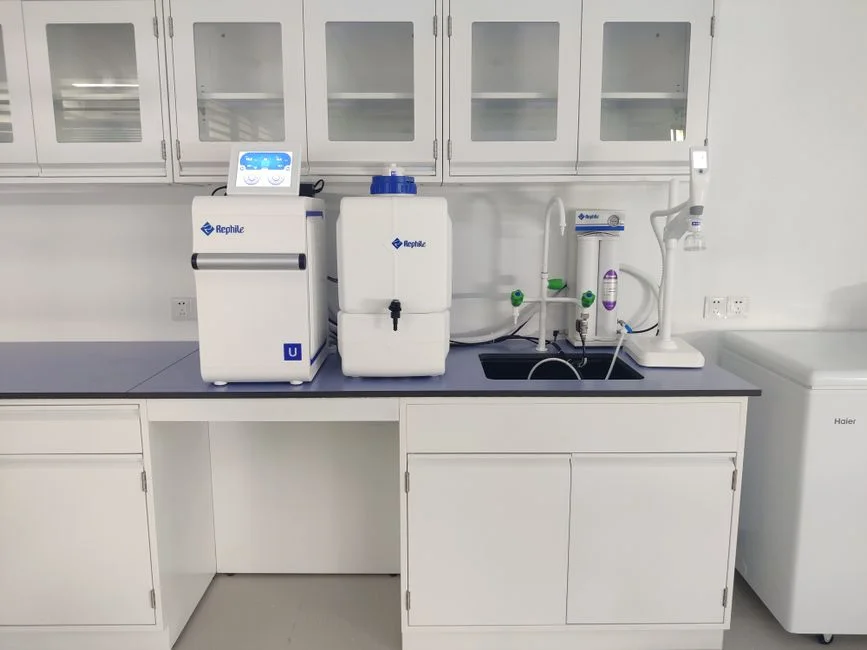
The lowest capital price is not necessarily the lowest life-cycle burden. Compare operator involvement, aeration, pumping, membrane or media maintenance, chemical use, sludge handling and monitoring before accepting a proposal. Building an operational plan ensures the chosen system remains compliant over its lifespan.
The WSZ specification describes automatic operation and a no-operator-required configuration. Confirm what routine inspection, maintenance, response and eventual repairs still require; automatic equipment does not remove the owner’s operating responsibilities.
For an MBR, price membrane cleaning, replacement life, spare-element availability and bypass or redundancy. For DAF, identify chemical consumption, recovered sludge handling and how pretreatment performance affects downstream biological treatment. A supplier should state who performs each task and at what frequency.
Reserve space and assess treatment capacity for event-driven occupancy increases, additional food-service outlets, laundry expansion or a future change from discharge to reuse. If reuse is a possible future objective, ask what additional verification, treatment and approval steps would be required rather than assuming the current discharge design can be converted.
Document operating responsibilities and obtain supplier support before comparing capital cost alone. Clarifier and scum performance is relevant to biological-system operation and maintenance planning; this 2026 clarifier-scum engineering guide provides the relevant operator context for that discussion.
Frequently Asked Questions
Should a Toronto hotel choose packaged sewage treatment, MBR or DAF?
Choose complete biological treatment for domestic sewage and DAF for pretreatment where measured FOG, oil and grease, suspended solids or colloidal matter require it. An MBR is an alternative biological treatment arrangement when membrane separation and its operating requirements fit the site. DAF alone is not a complete sewage treatment plant.
How should a hotel wastewater system be sized?
Size it from measured average daily, peak-hour and peak-day flows, seasonal occupancy, water-use records and the operating schedules of kitchens and laundry. Guest-room count is not a sufficient basis. Use a packaged MBR selection guide for hotels as a process for checking product duty against actual demand, not as a source of Toronto flow assumptions.
What should a supplier quotation include?
Request separate pricing and responsibilities for process design, civil works, installation, commissioning, controls, training, spare parts, monitoring and long-term operation. Require the proposed process duty, design calculations, guarantees, schedule, warranty and support terms. Comparing equipment price alone can conceal major site and lifecycle costs.
Do water-reuse goals justify MBR?
They may justify evaluating MBR, but they do not prove reuse approval. Less-than-1-μm filtration is a supplied product description, not a site-specific water-quality guarantee. The buyer must obtain the proposed reuse standard, pilot or verification evidence, treatment requirements and written approval from the relevant authority.
What regulatory evidence should be obtained before ordering?
Obtain written confirmation of the discharge point, receiving authority, permit or approval requirements, sewer-use review, applicable effluent conditions