What Rural Sewage Treatment in Thailand Must Solve
Rural sewage treatment in Thailand is usually a decentralized challenge because many communities lack sewer networks and rely on septic tanks, cesspools or package plants. A 2014 Water Environment Partnership in Asia brief estimated national wastewater generation at approximately 10 million m³/day, while the study reported on-site tank BOD removal of only 43–59% and effluent BOD of 849–1,436 mg/L in tested facilities. For villages, resorts and remote developments, the practical choice is between an upgraded on-site system, a buried package plant or an MBR system based on actual flow, land availability, effluent objectives, sludge handling and local operating capacity.
The Water Environment Partnership in Asia policy brief dated March 2014 identified three domestic wastewater routes: centralized treatment, cluster treatment and on-site treatment. As historical context, it reported that Thailand generated approximately 10 million m³/day of wastewater, while 100 plants had combined capacity of about 2.7 million m³/day, equivalent to about 27% of generated wastewater. These are 2014 figures—not current 2026 capacity estimates—and must be checked against current Pollution Control Department and local-authority information.
The decision sequence should be:
- Establish whether a sewer extension is technically feasible and financially justified.
- Characterize all domestic flows, including grey water, groundwater ingress and any commercial discharge.
- Define the receiving-water or reuse objective with the relevant authority.
- Select biological treatment, solids separation, disinfection and residual-waste handling as one complete process.
A septic tank is an on-site sanitation component, not a complete treatment plant by itself. A project must also address biological treatment, solids separation, disinfection, the effluent route and sludge or septage management. The [domestic sewage equipment selection and compliance guide](/blog/14346-domestic-sewage-treatment-in-pasig-2026-equipment-selection-compliance.html) provides a related review of how treatment equipment and discharge obligations should be assessed.
Measure the Actual Wastewater Flow Before Sizing Equipment
Design should begin with measured and forecast flow, because grey water can carry most of the organic load even when the toilet flow is small. The March 2014 Water Environment Partnership in Asia brief estimated household wastewater at 150 L/capita/day, comprising 45 L/capita/day from the kitchen, 20 L/capita/day from washing, 20 L/capita/day from toilets and 65 L/capita/day from bathing. It attributed 81 g/capita/day of BOD loading to kitchen wastewater and reported that grey water represented 87.8% of total household BOD loading.
These figures are research context, not a current Thailand-wide regulatory sizing rule. The buyer should request current occupancy, daily flow records, seasonal variation, groundwater ingress, kitchen and laundry flows, and any hospitality or industrial discharge. Where reuse, receiving-water constraints or industrial inputs require detailed design, request BOD, COD, TSS, pH, nutrient and salinity testing rather than relying only on population estimates.
| Design input | Evidence or information required | Procurement implication |
|---|---|---|
| Household flow | March 2014 WEPA estimate: 150 L/capita/day | Validate against metered and seasonal flows before selecting hydraulic capacity. |
| Toilet flow | March 2014 WEPA estimate: 20 L/capita/day | Do not size from black water alone where kitchens, laundry and bathing are discharged locally. |
| Kitchen flow | March 2014 WEPA estimate: 45 L/capita/day | Include kitchen characteristics in the biological loading and pretreatment review. |
| Grey-water BOD | March 2014 WEPA: 81 g/capita/day from kitchen wastewater; 87.8% of household BOD load from grey water | Characterize the complete household effluent, not only the toilet stream. |
| Site and service inputs | Groundwater level, flood exposure, power, effluent route and truck access | Resolve these inputs before comparing buried equipment, pumps or septage routes. |
Document the site’s groundwater level, flood exposure, access for trucked septage or sludge, power availability and proposed effluent route before selecting a technology. For a buried package option, the [WSZ underground package sewage treatment plant](/product/1-wsz-underground-integrated-sewage-treatment.html) should be evaluated against the verified site conditions rather than selected from nominal capacity alone.
Compare Septic Tanks, Package A/O Plants and MBR Systems
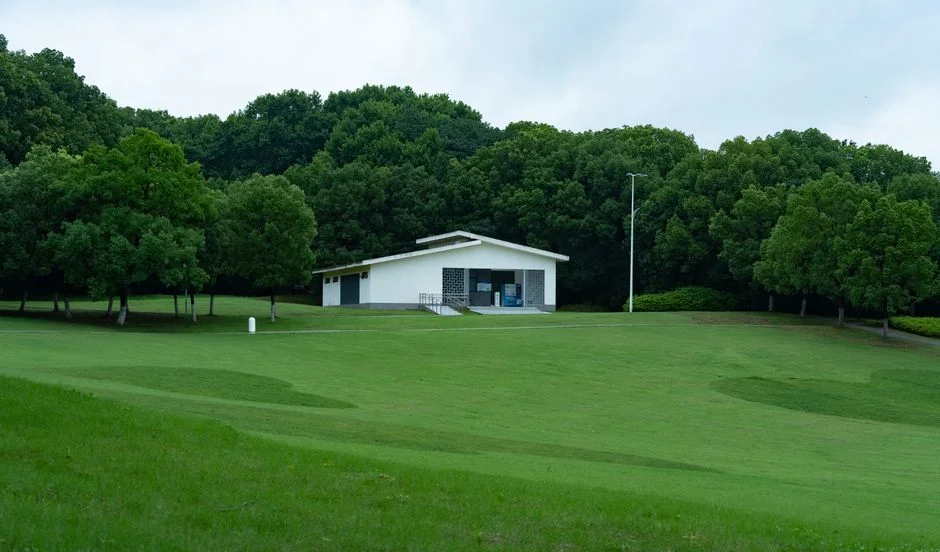
A septic tank remains viable only where groundwater, soil, setback and maintenance conditions permit safe containment and the residual septage has a formal collection and treatment route. A buried A/O package plant adds biological treatment, clarification and disinfection within a compact installation. An MBR adds membrane separation to activated sludge, increasing treatment intensity and process-control requirements.
The 2013 study cited in the March 2014 Water Environment Partnership in Asia brief tested one-cesspool, two-cesspool and commercial package septic tanks and reported BOD removal of 43–59%. Those results are study-specific observations, not a universal product guarantee. The same study reported average effluent BOD of 849–1,436 mg/L across the tested systems.
The [WSZ underground package sewage treatment plant](/product/1-wsz-underground-integrated-sewage-treatment.html) uses anoxic/aerobic A/O biological contact oxidation, sedimentation and disinfection in one buried unit. HydropureWater’s verified catalog describes full automation without an on-site operator and a capacity range of 1–80 m³/h. It can be installed below grade with landscaping above or mounted on a trailer for mobile deployment. These are catalog specifications, not field-performance or effluent guarantees; require the supplier to state the design basis and applicable test points.
The [MBR membrane bioreactor for rural wastewater](/product/2-mbr-integrated-wastewater-treatment.html) combines activated sludge with submerged PVDF membrane filtration below 1 μm and covers 10–2,000 m³/day in the verified catalog. Compared with the WSZ architecture, the buyer should expect a more treatment-intensive process and greater dependence on membrane maintenance, controls and trained support. Neither footprint, automation nor nominal capacity alone proves suitability for a particular community.
| Decision factor | Conventional on-site system | Buried package A/O plant | MBR system |
|---|---|---|---|
| Core treatment | Local containment; no complete biological or disinfection process unless added | Anoxic/aerobic contact oxidation, sedimentation and disinfection | Activated sludge followed by submerged membrane filtration |
| Footprint | Distributed tanks or cesspools; depends on soil and site constraints | Single below-grade unit in the WSZ configuration | Greater treatment intensity; confirm tankage, plant layout and ancillary requirements |
| Residual waste | Septage collection, transport and treatment required | Sludge or septage handling must be included in the process scope | Sludge handling must be included and may support more intensive operations |
| Operating burden | Periodic desludging; risk if maintenance is not scheduled | Automated operation is stated in the WSZ catalog, but routine site checks remain necessary | Greater process and membrane-control dependence; clarify training and remote support |
| Selection trigger | Containment and soil/groundwater conditions are suitable, and septage has a lawful treatment route | Land is limited, treatment is required close to source and the application fits the package design basis | Tighter effluent or reuse objectives justify the added treatment and operating complexity |
The 2014 Water Environment Partnership brief cited building-type BOD limits of 20, 30, 40, 50 and 200 mg/L for Types A, B, C, D and E. Treat these only as historical examples from that brief; confirm the current category and receiving requirement with the authority having jurisdiction. Wastewater-energy recovery is also an optional concept, not a standard rural process: the International Plasma Technology Center reports modeled thermal efficiency approaching 85% for its most efficient sludge-to-energy configuration, but that figure is not evidence for a package plant specification.
Plan Installation, Sludge Handling and Long-Term Operations
The equipment purchase does not complete the project unless inlet works, biological treatment, solids separation, disinfection, effluent storage or reuse, sludge stabilization, dewatering and approved disposal or reuse are assigned. A hydraulic model should check peak and seasonal flows, equalization requirements and the consequences of groundwater ingress. A structural and corrosion basis is also necessary where units are buried or exposed to flood conditions.
Maintenance must be planned before tank installation. The March 2014 Water Environment Partnership brief reported that only 46% of surveyed households desludged within one year; 34% waited one year and 27% waited one to five years. These survey results show why a scheduled service contract should form part of procurement rather than being left as a post-installation expectation.
Where conventional tanks or hybrid systems remain part of the solution, assign septage collection, transport, treatment and final disposal. The 2014 Water Environment Partnership brief cited an AECOM and Eawag estimate that approximately 70% of collected septage was disposed of in the environment. That historical finding indicates an environmental and contractual gap that the project must close.
| Project function | Required supplier or owner information | Written responsibility |
|---|---|---|
| Site and installation | Soil, groundwater, flood level, excavation, lifting, access, power and effluent route | Named design and construction lead |
| Operation and monitoring | Routine monitoring scope, alarms, remote monitoring, backup power and response procedure | Operator or service contractor |
| Septage and sludge | Collection interval, transport, receiving facility, dewatering, testing and final destination | Owner, local authority and waste contractor, as applicable |
| Effluent compliance | Applicable objectives, sampling points, laboratory method and reporting responsibility | Named permit holder or delegated party |
| Maintenance support | Maintenance intervals, spare parts, field response time and training records | Supplier and local operating organization |
HydropureWater’s verified catalog lists filtration areas from 1 m² to 500 m² for its [plate and frame filter press](/product/9-plate-frame-filter-press.html), which may be relevant where controlled sludge dewatering is required. Equipment selection must follow the confirmed sludge characteristics and approved destination. Mechanical screening requirements can be considered with the [rotary mechanical bar screen](/product/13-rotary-mechanical-bar-screen-gx.html).
Require the supplier to define routine monitoring intervals, alarm responses, response times for remote sites and responsibility for final effluent or sludge sampling. No monitoring interval should be assumed from equipment marketing alone.
Use a Pre-Approval and Procurement Checklist

Equipment should be ordered only after the site, discharge route, residual-waste chain and operating responsibilities are documented. Obtain a site plan showing treatment units, wells, water lines, access roads, drainage, flood levels, power and the proposed effluent route. This is the first gate against a package solution that cannot be installed, maintained or discharged lawfully.
Request the following before commercial comparison:
- Process flow and hydraulic calculation, including peak-flow and equalization assumptions.
- Structural, corrosion, burial and flood design basis.
- Equipment schedule, electrical drawings and control narrative.
- O&M manual, commissioning plan and performance-testing protocol.
- Design flow, daily flow range, influent basis, treatment objectives and guaranteed test points.
- Sludge yield, utilities, emissions or odor controls, backup power and communications.
- Operator training, maintenance documentation, spare parts and post-commissioning support.
Confirm applicable Thai environmental and building requirements, local-government approvals, discharge location, reuse requirements and land-use constraints with the relevant authorities before finalizing the equipment. The [industrial effluent limits and compliance guide](/blog/176-industrial-effluent-limits-thailand-2025-standards-compliance-tech-guide.html) is a related reference, but it does not replace confirmation of the requirements applicable to the actual rural project.
Require performance testing, operator training, maintenance documentation, spare parts and post-commissioning support in the commercial scope. A lower equipment price is not comparable if one quotation excludes civil works, sludge handling, power backup, permits or long-term service.
Frequently Asked Questions
How much does a rural sewage treatment plant cost in Thailand?
The supplied research contains no defensible current equipment price for rural sewage treatment in Thailand. Request a site-specific quotation that states the design flow, treatment objectives, civil works, excavation, power, effluent facilities, sludge handling, commissioning and long-term support separately. The March 2014 Water Environment Partnership brief included historical willingness-to-pay findings, but these are not a 2026 procurement budget.
Should a rural community choose a package A/O plant or an MBR system?
Choose a buried A/O package plant when its documented process, footprint and operating model fit the site and effluent objective; the WSZ catalog specifies 1–80 m³/h. Choose MBR when the required treatment intensity justifies membrane operation and the community can sustain the associated controls and maintenance; the MBR catalog covers 10–2,000 m³/day and filtration below 1 μm. Confirm design flow, peak loading, footprint, utilities, training, spares, remote response time and guaranteed test points before choosing.
What size sewage treatment system does a rural village need?
Start with measured and forecast flow, not a generic population multiplier. The March 2014 Water Environment Partnership brief provides 150 L/capita/day as a household estimate, but it is contextual evidence rather than a current universal sizing standard. Validate it with occupancy records, meter data, seasonal variation, grey-water flows and groundwater ingress.
Can a rural sewage treatment system be installed underground?
Yes. The [WSZ underground package sewage treatment plant](/product/1-wsz-underground-integrated-sewage-treatment.html) is documented in HydropureWater’s verified catalog as a below-grade installation with landscaping above. Burial does not remove the need to review soil, groundwater, flooding, structural loading, ventilation, access and maintenance requirements.
Who is responsible for septic tank desludging and final sewage sludge disposal?
The project agreement should name the party responsible for each step: collection, transport, treatment, testing, transport of treated solids and final disposal. Do not leave these duties implied by the equipment purchase. This is particularly important where on-site tanks remain part of the system, because the March 2014 Water Environment Partnership brief cited an estimate that approximately 70% of collected septage was disposed of in the environment.