What limits must a Temple food plant actually meet?
Food and beverage plants near Temple meet pretreatment limits by designing to the strictest applicable requirement—not just the federal minimum. The governing framework is 40 CFR 403, the applicable categorical pretreatment standard, and the controlling Temple POTW industrial discharge permit and sewer-use requirements. Equipment selection must follow characterization of the actual waste streams and the permit’s monitoring, reporting, and operating conditions. A defensible bid therefore starts with the current permit documents, not a generic food-industry limit table.
40 CFR 403 establishes the federal National Pretreatment Program framework, while local POTWs act as control authorities for permitting, compliance oversight, and enforcement. Food-sector requirements must also be matched to the plant’s actual operation: 40 CFR 405 for dairy, 406 for grain mills, 407 for canned and preserved fruits and vegetables, 408 for canned and preserved seafood, and 409 for meat products. The 2026 food and beverage pretreatment compliance guide explains how those layers combine.
For a Temple-area facility, verify the current site-specific Temple POTW industrial discharge permit, sewer-use requirements, state pretreatment program, applicable categorical subpart, monitoring frequencies, sampling method, reporting portal, and enforcement history. The design basis is the strictest applicable concentration or loading condition—not an average that conceals a CIP release or production peak.
| Document | Procurement question | What it controls |
|---|---|---|
| Current Temple POTW industrial discharge permit | Is it current, and which limits and monitoring conditions apply to this facility? | Site-specific discharge, monitoring, reporting, and enforcement requirements |
| Sewer-use requirements | Are local prohibitions, surcharges, or discharge procedures stricter than the federal standard? | Local operating and regulatory conditions |
| Applicable categorical subpart | Which regulated food-processing operation matches the plant? | Federally applicable pretreatment requirements |
| State pretreatment program | Which electronic reporting and noncompliance procedures apply? | Reporting, notices, and enforcement process |
Ask each bidder to identify the permit condition that every proposed unit must satisfy. If the bid cannot map equipment performance and controls to a permit clause, it is not yet a defensible compliance proposal.
Characterize the streams before selecting equipment
Separating incompatible streams prevents a short CIP release from controlling the entire food processing wastewater treatment train. Dairy and meat wastewater typically contain 1,000–10,000 mg/L BOD, while fryer, rendering, and stickwater FOG can reach several thousand mg/L (HydropureWater, 2026). Those loads should be separated from process water, CIP chemicals, floor washing, cooling blowdown, rendering or fryer streams, and high-solids production waste before the plant decides what to combine.
Keep these streams distinct initially:
- Process water: washing, cooking, cooling, and packaging flows with variable organics and suspended solids.
- CIP chemicals: concentrated acidic or caustic releases that drive pH and temperature excursions.
- Floor washing: washdown containing settled food solids and FOG.
- Cooling blowdown: potentially lower-strength flow that may carry heat or lubricants and may need separate handling.
- Fryer, rendering, or production solids: high-FOG or high-solids material that can overload flotation or screening.
Total phosphorus in cereal, dairy, and meat wastewater commonly falls between 10–100 mg/L as P, making phosphorus removal a design consideration where the permit applies (HydropureWater, 2026). Characterize representative production, washdown, and CIP conditions rather than relying on one daytime grab sample. The dataset should document flow, temperature, pH, FOG, BOD, TSS, and phosphorus across operating conditions.
| Required input | Reason for collection | Equipment affected |
|---|---|---|
| Forward flow | Establishes the continuous hydraulic basis | Screening, equalization, DAF, biological reactor |
| Peak-to-average ratio | Reveals washdown and batch-release surges | Equalization and hydraulic treatment capacity |
| Raw BOD | Defines the biological organic load | Activated sludge or MBR |
| Raw FOG | Defines the flotation and solids-removal load | DAF, conditioning, skimming |
The four core sizing inputs are forward flow, peak-to-average ratio, raw BOD, and raw FOG (HydropureWater, 2026). The soft-drink wastewater equipment-selection guide provides a useful decision framework, but its process assumptions must be replaced with Temple plant data. Sample across the production and sanitation cycle, then request laboratory results for every proposed unit.
Build a treatment train that controls each violation mode
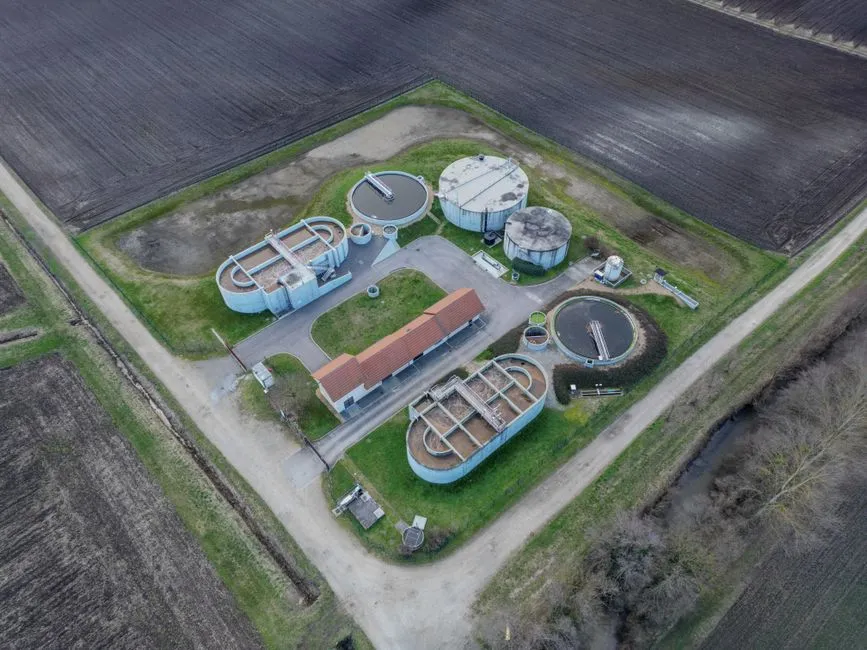
A defensible sequence is screening, equalization, DAF, biological treatment, chemical precipitation, and final polishing, because each stage controls a different failure mode. Screening protects downstream equipment from solids; equalization buffers production batches, CIP flow, pH, and temperature; DAF captures FOG, oil, colloids, and floatable solids; biological treatment removes soluble and particulate organics; precipitation addresses phosphorus; and polishing protects the final permit limit (HydropureWater, 2026).
DAF is the appropriate front-end unit when FOG or emulsified oil is a major constraint. Preliminary design parameters cited by HydropureWater in 2026 include surface loading of 4–25 m/h, an air-to-solids ratio of 0.005–0.02, and recycle of 20–40% of forward flow, all subject to actual wastewater testing. A dissolved air flotation system for food-process FOG removal should therefore be selected against measured FOG, TSS, flow variability, and skimming requirements—not by tank volume alone.
Biological capacity depends on the load and footprint objective. The 2026 research cites conventional activated-sludge HRT of 8–24 hours, MBR HRT of 4–10 hours, conventional MLSS of 3,000–5,000 mg/L, and MBR MLSS of 8,000–12,000 mg/L. These are design-context ranges, not acceptance criteria. An MBR membrane bioreactor for high-quality industrial effluent may suit sites needing compact solids separation or a high-quality polishing result, but the bid must show how the selected loading protects the permit during peak production and CIP conditions.
| Observed failure | Probable stage | Check before buying |
|---|---|---|
| FOG breakthrough | DAF conditioning or hydraulic loading | Coagulant control, recycle rate, surface loading, and feed composition |
| pH excursion | Equalization or trim | Working volume, mixing, pH probes, trim controls, and fail-safe routing |
| Hydraulic overload during CIP | Equalization | Peak flow, CIP duration, available working volume, and downstream headroom |
| Solids breakthrough | Flocculation or precipitation | Mixing, dose control, solids loading, and settling performance |
Treatment temperatures above 40 °C from CIP and cooking operations are routine and require equalization or cooling where needed to protect downstream biology (HydropureWater, 2026). For broader unit comparisons, see the 2026 meat-processing wastewater COD removal comparison and food-processing COD removal technology comparison.
Choose DAF, clarifier, and biological equipment by application
DAF is generally favored for food lines with emulsified oil or FOG, while lamella clarification is generally more appropriate when TSS is the dominant polishing constraint. HydropureWater’s 2026 DAF range is 4–300 m³/h across 13 standard models, while its lamella clarifier is rated at 20–40 m³/m²/h surface loading. The cited application range also reports that lamella clarification can reduce chemical consumption by up to 30% compared with conventional clarification.
| Decision point | DAF | Lamella clarification | Conventional activated sludge | MBR |
|---|---|---|---|---|
| Primary constraint | FOG, emulsified oil, colloids | TSS-dominated clarification or polishing | Biodegradable organics | Biodegradable organics with solids separation |
| Compactness | Application-dependent | Application-dependent | Requires larger reactor volume | Research reports a 60% smaller footprint than the cited conventional-system configuration |
| Sludge or solids handling | DAF skimmings | Clarified solids | Waste activated sludge | Concentrated waste activated sludge |
| Operational concern | Recycle, conditioning, skimming | Sludge withdrawal and solids loading | Aeration and mixed-liquor control | Membrane cleaning and controls |
| Effluent separation | Float and clarified underflow | Clarified overflow | Conventional settling | Research reports filtration below 1 μm |
Do not treat MBR as universally superior. Compare footprint, energy, sludge production, membrane maintenance, controls complexity, reuse potential, and acceptance testing against the permit. The research-reported sub-1-μm filtration and 60% smaller footprint apply to the cited catalog configuration, not automatically to a Temple installation.
Chemical dosing is a controllable process unit. Typical food and beverage applications cited by HydropureWater in 2026 use 50–250 mg/L of alum or 30–150 mg/L of ferric chloride. PLC-controlled dosing can reduce consumption by 10–20% versus manual feeding by trimming dose to actual flow-proportional load. Require interlocks, dose alarms, verification, and access to chemical-use records.
The DAF versus clarifier selection for food and beverage wastewater provides a useful application comparison. For Temple, the deciding question remains simple: which constraint dominates after representative testing?
Turn the permit into monitoring and reporting controls
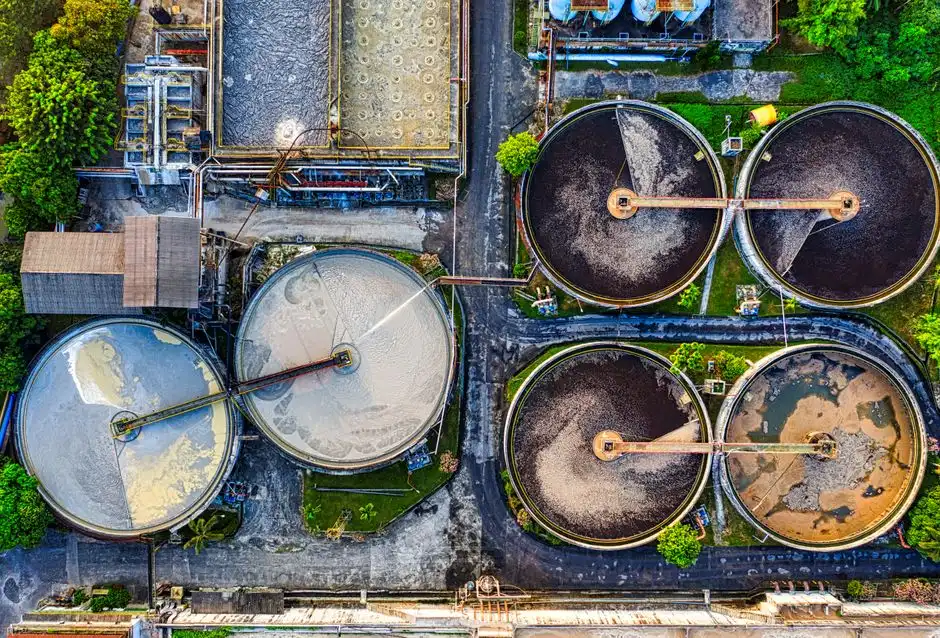
The permit must become an operating control system, not a document filed after sampling. HydropureWater’s 2026 research reports that most food and beverage categorical permits require 24-hour composite sampling for BOD, TSS, FOG, and total phosphorus at frequencies ranging from monthly to quarterly, with continuous pH and flow monitoring for significant industrial users. The Temple permit must be checked for the exact requirements.
Build the following compliance loop:
- Characterize: establish representative raw and treated-wastewater data before final sizing.
- Control: use flow-paced chemical dosing, equalization mixing, pH trim, and equipment interlocks.
- Record: retain pH, flow, high-FOG, high-flow, and equipment-fault events in an auditable alarm or event log.
- Escalate: assign responsibility for operating excursions and required notifications.
- Report: submit monitoring results and noncompliance information through the authority’s applicable process.
- Verify: reconcile laboratory results, operational records, and submitted reports before closeout.
Connect short CIP pH excursions to equalization working volume and the fail-safe pH trim loop. An excursion that was controlled but not recorded still leaves a defensibility gap; an excursion that exceeded a permit condition may trigger the applicable electronic noncompliance and discharge-monitoring process. A passing composite sample does not erase an unreported operating excursion.
Require the SCADA or CMMS supplier to document event definitions, alarm priorities, retention, user permissions, reporting interfaces, manual backup, and the path from sensor failure to safe operation. The 2026 food-processing COD removal technology comparison outlines how treatment performance and reporting controls should be connected.
Organic-waste pressure is also increasing. A 2024 Nature Food study found that state-level policies alone projected only 5–14 kg per capita of likely diversion potential, indicating continued pressure on organic-waste management. That does not set a Temple discharge limit, but it reinforces the need to document diversion and residual handling rather than assume sewer capacity is unlimited.
Plan sludge handling and performance acceptance
DAF skimmings and biological waste activated sludge need a permitted destination before either treatment system is purchased. Where dewatering is required, a plate-and-frame filter press can reduce the volume of sludge sent for disposal or another permitted route. HydropureWater’s 2026 research cites a plate-and-frame filtration-area range of 1–500 m² and 22–28% dry matter cake in the cited pretreatment application.
Include residuals in the bid comparison. Chemical consumption, aeration power, sludge hauling, disposal volume, media replacement, and downtime affect operating cost and compliance exposure. A treatment train that meets the permit but leaves residuals without a compliant destination is not a complete project.
| Acceptance item | Information required from the bidder |
|---|---|
| Hydraulic capacity | Tested flow range, peak-flow response, and representative influent conditions |
| Treatment performance | Guarantee tied to each governing permit condition and stated test method |
| Automatic controls | Set points, interlocks, fail-safe routing, alarms, and event logging |
| Sampling access | Representative monitoring points and safe composite-sample provisions |
| Sludge handling | Residual generation, dewatering method, destination, and expected cake-performance basis |
| Performance testing | Protocol, acceptance period, influent characterization, retest conditions, and remedy for failure |
The filter press versus centrifuge comparison provides additional context for dewatering evaluation. Do not accept a universal ROI promise. Require the supplier to price sludge handling, media replacement, chemical consumption, power, maintenance, controls integration, and permit-compliance contingency. For the filter press specifically, require actual cake-performance testing rather than relying only on the cited 1–500 m² and 22–28% application ranges.
Frequently Asked Questions
What is the minimum compliance scope for a Temple food plant?
Use three layers: 40 CFR 403, the applicable categorical pretreatment standard, and the current Temple POTW industrial discharge permit with its sewer-use requirements and state program. Do not substitute a generic POTW limit table for the site-specific permit. Ask the control authority to identify any monitoring, sampling, reporting, or surcharge conditions not contained in the federal standard.
How should DAF capacity be selected without averaging away CIP peaks?
Size preliminary DAF capacity from forward flow, peak-to-average ratio, raw BOD, and raw FOG, then test representative influent. HydropureWater’s 2026 research cites 4–25 m/h surface loading as preliminary context, not a final Temple design value. The final selection should also verify recycle, conditioning, skimming, and peak hydraulic response.
Should a plant choose activated sludge or MBR?
Compare the 2026 research ranges of 8–24 hours HRT and 3,000–5,000 mg/L MLSS for conventional activated sludge against 4–10 hours HRT and 8,000–12,000 mg/L MLSS for MBR. Then check footprint, energy, sludge, controls, membrane maintenance, and acceptance testing against the vendor’s proposal and the permit. The shorter MBR residence time is not, by itself, proof of compliance.
What should buyers request about cost and supplier selection?
Request an itemized operating-cost schedule covering chemicals, power, aeration, sludge hauling or disposal, media replacement, maintenance, controls integration, and permit-compliance contingency. Also request an acceptance-test protocol tied to representative influent and the governing permit. Compare the filter-press basis using the researched 1–500 m² filtration-area range and cited 22–28% dry-matter application data, but require actual cake-performance testing before award.
Related Equipment
- dissolved air flotation system for food-process FOG removal — specifications, capacity range, and technical data