
Which treatment platform fits a Oneonta semiconductor project?
For semiconductor wastewater in Oneonta, MBR is usually the stronger option when the project prioritizes compact equipment, low suspended solids, reliable solids separation, downstream RO protection or reuse. Conventional activated sludge can be more economical when serviceable reactors and clarifiers already exist, the segregated streams are biologically compatible and land is available. Neither platform alone removes every semiconductor contaminant: fluoride, metals, dissolved salts and nonbiodegradable chemicals require source control and tailored pretreatment or polishing. The final selection should follow wastewater characterization, local permit and reuse requirements, pilot testing and a full lifecycle-cost comparison.
This is a site-specific engineering and procurement decision, not a contest between two generic treatment technologies. An MBR cost-per-m³ framework is useful for building a bid comparison, but it cannot establish the Oneonta answer without characterized flow, load, chemistry and receiving requirements.
MBR generally fits projects where footprint, direct solids separation, downstream reverse osmosis or reuse-oriented treatment justify membrane capital and maintenance. Conventional activated sludge remains credible when compatible biological reactors and secondary clarifiers are already available, segregated streams are biologically treatable, and available land supports clarification and equalization.
The local decision still requires the applicable Oneonta discharge permit or reuse specification, site utilities, available footprint, sludge route, flow and wastewater-matrix data. “Semiconductor wastewater” describes a collection of streams, not one standardized effluent: wafer and photolithography discharges, ultrapure-water blowdown, cooling-water blowdown, scrubber exhaust and general process streams can differ materially during production, cleaning, upsets and shutdown.
How the two biological systems work differently
Conventional activated sludge uses suspended microorganisms to remove biodegradable organics and support selected nutrient-removal reactions, followed by a secondary clarifier. MBR combines suspended-growth biology with membrane filtration: the membrane retains biomass and directly produces solids-separated permeate.
The EPA’s Membrane Bioreactor Systems fact sheet, published in 2021, states that membrane filtration can replace the secondary clarifier and sand filters in a typical activated-sludge installation. This distinction affects the downstream treatment train: MBR eliminates those conventional separation steps from the core biological configuration, although pretreatment, polishing and residual dissolved-contaminant removal remain necessary.
The higher retained-biomass concentration supported by an MBR can reduce the required biological reactor footprint. The EPA identifies smaller space requirements and easier automation as potential advantages. Compactness does not mean less installed equipment, however: membrane modules, air-scouring, controls, equalization, maintenance access and chemical cleaning must be included in the site arrangement.
Conventional treatment separates the biological inventory from the liquid in a secondary clarifier, making clarifier hydraulics, sludge properties and settling behavior part of process reliability. MBR replaces that settling dependency with membrane flux, differential pressure, fouling and cleaning performance. Neither architecture substitutes for source control, toxicity control or dissolved-contaminant removal. A better solids separator does not convert fluoride, metals or salts into particles that can be filtered out.
Performance, footprint and operating-risk comparison
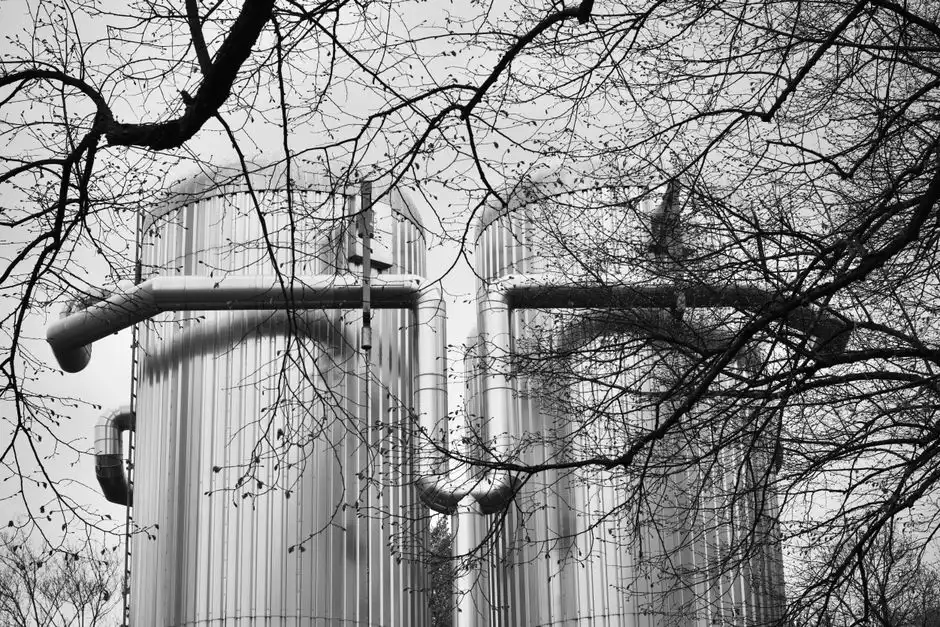
MBR generally improves solids separation and biological footprint, while adding membrane-specific capital, energy and maintenance risk; conventional activated sludge avoids those membrane obligations but depends on clarification performance. The EPA’s 2021 fact sheet states that MBR capital and operating costs are typically higher than conventional systems for the same throughput.
| Procurement issue | Membrane bioreactor system | Conventional activated sludge | Evidence status and buyer check |
|---|---|---|---|
| Solids separation | Membrane retains biomass and produces directly separated permeate. | Secondary clarifier settles biomass from treated water. | EPA, 2021 fact sheet: membrane filtration can replace the secondary clarifier and sand filters in a typical activated-sludge installation. |
| Biological footprint | Higher retained-biomass concentration can support a smaller bioreactor. | Requires biological reactor and secondary clarifier area. | Compare the complete site, including equalization, aeration, controls and maintenance access. |
| Upstream protection | Requires debris control and chemical compatibility appropriate to the selected membrane. | Requires protection against biological upset, bulking and clarifier overload. | Require pretreatment performance tied to the characterized wastewater. |
| Peak-flow handling | Additional membranes or equalization may be needed. | Equalization and clarifier capacity must handle the selected design envelope. | EPA, 2021: peak design flows generally should be no more than 1.5–2 times average design flow. |
| Redundancy | Consider one additional membrane tank or unit for full-treatment applications. | Redundancy depends on the reactor and clarifier configuration. | EPA, 2021; determine whether treatment continues during maintenance. |
| Aeration and scouring | Includes biological aeration and membrane scouring. | Includes biological aeration; no membrane-scouring system. | EPA, 2021, identifies air-scouring energy as an MBR cost factor. |
| Cleaning and replacement | Requires membrane cleaning, fouling control and eventual replacement. | No membrane replacement; clarifier and solids handling remain. | EPA, 2021; price the actual cleaning regime and replacement interval. |
| Automation | EPA identifies easier automation as a potential advantage. | Requires controls for biological operation and clarification. | Require alarms, data logging, normalized flux and differential-pressure reporting. |
| Sludge handling | Produces conventional waste activated sludge. | Produces conventional waste activated sludge. | Confirm thickening, dewatering and disposal capacity. |
| RO compatibility | Can provide low-solids permeate when operating targets are achieved. | May require tertiary filtration before RO. | Assess against the receiving RO-feed specification, not a generic permeate claim. |
Commercial 2026 comparison claims report more than 95% COD removal, more than 99% TSS removal, turbidity below 0.1 NTU and NH₄⁺-N below 1 mg/L on fab duty. These are supplier-associated performance claims, not universal guarantees for Oneonta. The same commercial comparison reports approximately 0.3–0.6 kWh/m³ more MBR energy use.
The verified catalog for an integrated membrane bioreactor system specifies 60% less footprint than conventional systems. Treat that figure as a supplier specification, not an independently verified Oneonta outcome. Conventional treatment remains the lower-capital, lower-membrane-maintenance option when existing infrastructure is compatible and serviceable.
Semiconductor contaminants that decide the answer
The wastewater matrix—not the semiconductor label—determines biological loading, pretreatment requirements and the need for downstream polishing. A defensible design starts by segregating wafer, photolithography, ultrapure-water blowdown, cooling-water blowdown, scrubber-exhaust and general process streams, then documenting their variability.
| Required input | Why it affects platform selection | Decision use |
|---|---|---|
| Flow and loading profile | Production, cleaning, upsets and shutdown can change hydraulic and organic loading. | Set equalization and biological capacity from measured average and peak conditions. |
| COD or TOC, pH, temperature and suspended solids | These affect biological loading, reaction rates, membrane environment and equalization design. | Determine biological assessability and peak-load response. |
| Conductivity, metals, fluoride and hardness | Dissolved species can inhibit biology, foul membranes or require removal before polishing. | Define precipitation and dedicated pretreatment requirements. |
| Cleaning chemicals and process-specific compounds | Toxicity and biodegradability determine whether streams can share a bioreactor. | Complete toxicity and biological assessability testing. |
| Discharge or reuse endpoint | Governs the required solids, dissolved-solids and trace-contaminant performance. | Set analytical acceptance criteria and downstream polishing. |
The commercial 2026 semiconductor comparison recommends fluoride precipitation to pH 8–9 with approximately 1.5 times the stoichiometric Ca²⁺ excess. That is a design starting point requiring engineering validation, not a blanket Oneonta prescription. An automatic chemical dosing system should be evaluated around the validated dose, mixing, pH control and residual-slip criteria.
TMAH, ammonia, copper and fluoride can inhibit or destabilize biological treatment. Source segregation, equalization, precipitation and dedicated pretreatment may be necessary. A rotary mechanical bar screen can protect downstream membranes from debris, but it does not remove dissolved contaminants or resolve biological toxicity.
Neither MBR nor conventional activated sludge removes every dissolved contaminant. Metals, fluoride, dissolved salts and nonbiodegradable chemicals may require precipitation, ion exchange, reverse osmosis, demineralization or another defined process. Commercial claims concerning specific solids-retention times and contaminant tolerances are comparative design context, not guarantees for an untested Oneonta wastewater matrix.
Reuse and reverse-osmosis protection
Reuse must be defined by the receiving application and analytical specification; MBR permeate cannot be labeled directly reusable until its chemistry is confirmed. Solids-separated biological effluent can protect downstream RO, but it does not by itself establish suitability for cooling-tower makeup, ultrapure-water makeup or another process application.
The commercial 2026 comparison associates MBR effluent below 1 mg/L TSS and below 0.1 NTU turbidity with an estimated 2–3 times lower RO cleaning frequency than a CAS, clarifier and sand-filter train. This is a comparative estimate from a commercial source, not a guaranteed Oneonta operating outcome. It should be tested through pilot data and the RO supplier’s fouling model.
The same source reports that modern fabs in Taiwan and Korea target 40–80% reclaim rates. Those figures are external market context, not Oneonta targets. The receiving water specification—not the sector benchmark—should set the required recovery and polishing sequence.
Depending on the endpoint, the downstream train may include multimedia filtration, ultrafiltration, an industrial reverse osmosis system, demineralization or ion exchange. UF can remove residual solids and colloids, while RO addresses dissolved salts and rejected constituents. HydropureWater’s industrial RO specification lists recovery rates up to 95%; this is a product capability that requires project-specific validation against feed chemistry, concentrate disposal and system controls.
MBR value should therefore be evaluated through avoided potable-water purchases, potential reductions in RO cleaning and lower compliance risk—not only through the lowest equipment price. If the reuse endpoint does not require the resulting solids quality, those benefits may not offset membrane cost.
A lifecycle-cost and procurement framework
Comparable bids require the same characterized basis, complete treatment-train scope and explicit operating assumptions. A universal price per cubic metre would be misleading because equalization, pretreatment, energy, labor, sludge handling and membrane replacement can differ materially between sites and configurations.
| Bid package | Required information | Evaluation question |
|---|---|---|
| Characterized basis | Average flow, peak relationship, COD or TOC, toxicity, chemistry and required endpoint. | Are all bidders pricing the same wastewater and service envelope? |
| Equalization and pretreatment | Tank volume, mixing, screening, pH control, precipitation chemicals and residual handling. | Is membrane and biological protection included, or treated as an allowance? |
| Energy and consumables | Aeration, scouring, cleaning chemicals, laboratory supplies and controls. | Are cleaning frequency and aeration demand tied to the selected matrix? |
| Membrane or conventional assets | Material, pore size or MWCO, effective area, design flux, temperature, cleaning chemistry, expected cleaning frequency, spare capacity and replacement terms. | Can the proposed operating envelope be verified rather than inferred? |
| Lifecycle obligations | Labor, sludge handling, commissioning, membrane replacement and disposal. | Is the quoted price complete for the asset’s operating life? |
| Site and compliance | Permit, footprint, access, utilities, redundancy, sludge route, controls, service support and acceptance testing. | Can the proposed system be permitted, maintained and tested at Oneonta? |
Each bidder should provide performance evidence on a representative semiconductor wastewater matrix, not only municipal MBR references. The EPA’s 2021 cost factors—cleaning, fouling control, eventual replacement and air-scouring energy—should be compared against clarifier, sludge and land requirements for conventional activated sludge. The 2026 MBR cost-per-m³ guide provides a framework, not a defensible Oneonta project price.
From wastewater characterization to final selection

A sequential workflow reduces procurement and compliance risk because reactor size, pretreatment and acceptance criteria cannot be selected reliably from the facility classification alone.
- Segregate and characterize the streams. Establish flow, load, chemistry and variability during production, cleaning, upsets and shutdown.
- Define the receiving requirement. Establish the applicable Oneonta discharge permit or reuse specification, analytical limits and any RO-feed requirements.
- Test biological compatibility. Complete toxicity testing, biological assessability work and representative pilot testing before selecting a process platform.
- Size the treatment system. Base equalization and biological capacity on average flow, the peak relationship and load variability—not average flow alone.
- Protect the membrane system. Apply the EPA’s 2021 fine-screen requirement and the selected manufacturer’s 1–3 mm cutoff range as the relevant reference, then add debris and chemical protection required by the actual wastewater.
- Check peak and maintenance capacity. The EPA’s 2021 guidance indicates that peak design flows generally should be no more than 1.5–2 times average design flow and recommends considering an “N plus 1” membrane tank or unit for full-treatment applications.
- Compare lifecycle performance. Evaluate energy, cleaning, sludge, controls and final treatment-train performance under peak, upset and maintenance conditions.
- Write enforceable guarantees. Tie guarantees to the characterized wastewater and require pilot evidence for flux recovery, cleaning response, permeate quality, biological stability and energy use.
Final membrane and polishing selection should then reflect the confirmed endpoint, available space and demonstrated operating envelope. An RO and UF membrane selection should not precede that work because membrane compatibility and pretreatment requirements depend on the actual treatment train.
Frequently Asked Questions
Which platform is cheaper for a Oneonta semiconductor facility?
No universal project price or cost ranking can be supplied without characterized flow, load, chemistry, site conditions and the required discharge or reuse endpoint. The EPA’s 2021 fact sheet states that MBR capital and operating costs are typically higher than conventional treatment for the same throughput, while the 2026 MBR cost-per-m³ guide should be used as a bid framework. Request lifecycle pricing that includes equalization, pretreatment, energy, labor, sludge handling, controls, commissioning and membrane replacement.
How should a buyer select an MBR supplier for pilot testing?
Require evidence on a representative semiconductor wastewater matrix rather than municipal references alone. Ask each bidder to define membrane material and geometry, effective area, design flux, temperature limits, cleaning chemistry, expected cleaning frequency, spare capacity, replacement assumptions, controls and performance guarantees. The pilot should then demonstrate flux recovery, cleaning response, permeate quality, biological stability and energy use.
Can MBR permeate be reused directly in semiconductor operations?
Not without an application-specific specification. MBR provides solids separation, but dissolved salts, fluoride, metals and nonbiodegradable compounds may require UF, RO, ion exchange, demineralization or another polishing step. Establish the receiving application and analytical limits before describing the permeate as reusable.
Can conventional activated sludge be retained for the Oneonta project?
Yes, if compatible reactors and a serviceable secondary clarifier already exist, segregated streams prove biologically treatable, and land is available for clarification and equalization. Confirm those conditions through stream segregation, toxicity testing, biological assessability work and representative pilot testing. If those conditions fail, compare a complete MBR treatment train against retrofitting the conventional platform.