
What Changes When LG Energy Solution Acquires the Plant?
When LG Energy Solution acquires a battery plant in Hungary, wastewater should be treated as an inherited site liability, not as an assumption transferred with the business. The buyer must separately verify permits, sewer pre-treatment authorization, stormwater controls, treatment capacity, monitoring records, waste contracts, and outstanding corrective actions. Wastewater must then be segregated by process, characterized by flow and contaminants, and routed through treatment matched to the authorized discharge or reuse route. No DAF, MBR, or other package should be selected from plant averages alone; representative data, pilot testing where needed, and regulator confirmation determine the compliant solution.
The acquisition changes the decision sequence. Before asking what treatment capacity to add, the buyer should establish whether the site is legally authorized to operate its existing discharge route, whether the recorded wastewater balance reconciles with the installed treatment train, and whether environmental obligations attach to the legal operator, land, sewer infrastructure, or wider industrial park. Those allocations may require separate contracts with the authority, sewer operator, landlord, or neighboring users.
Expansion cannot be evaluated only against planned production. Current water-consumption limits, sewer pre-treatment authorization, stormwater provisions, and correspondence with the competent authority must be reconciled with the proposed operating profile. Equipment that exists on site is not necessarily permitted, adequately capacitated, or supported by operating evidence.
Plant-specific evidence must remain separate from contextual information about other Hungarian battery facilities. The battery-gigafactory wastewater treatment framework is useful as a diligence structure, but reported project figures, alleged incidents, or enforcement outcomes concerning another operator cannot be attributed to an acquired LG Energy Solution site without site-specific evidence.
Verify the Permit and Operating Record Before Choosing Equipment
Acquisition diligence should test whether the wastewater system is permitted, matched to current production, and supported by auditable operating records. The minimum document set begins with the current integrated environmental permit and every amendment, the sewer pre-treatment authorization, water-consumption conditions, stormwater provisions, and regulator correspondence. Installed capacity should then be reconciled with metered flows, documented process flows, and each production phase. Any mismatch becomes a potential capital or operating liability rather than an assumed future optimization.
Greenpeace Hungary reported that summer 2024 amendments made battery production, components, waste pretreatment, and recycling subject to environmental-impact assessment. It also reported that battery manufacturing falls within the Industrial Emissions Directive for production capacities exceeding 15 tons of battery cells. Those regulatory points establish a diligence context, but the operative obligations of the acquired site must be verified from its own permit and authority records.
The operating record should include discharge-monitoring results, chemical inventories, process-flow diagrams, influent and effluent analyses, analytical methods, calibration records, bypass events, sludge destinations, hazardous-waste contracts, incident notices, non-compliance findings, and corrective-action plans. Treatment capacity that cannot be reconciled to these records is unverified capacity.
| Evidence gate | Records to obtain | Acquisition test |
|---|---|---|
| Legal authorization | Integrated environmental permit, amendments, sewer pre-treatment authorization, stormwater provisions | Is the proposed discharge or reuse route currently authorized? |
| Hydraulic capacity | Installed flow meters, documented process flows, peak-flow records, treatment ratings | Do measured flows and peaks reconcile with the installed train? |
| Operational credibility | Influent and effluent results, calibration records, bypass log, laboratory methods | Is there a traceable chain from sample point to reported result? |
| Residual liabilities | Regulator correspondence, corrective-action plans, waste contracts, sludge destinations | Which obligations remain open at closing? |
Create a compliance register that gives every relevant condition a limit source, monitoring point, analytical method, reporting date, responsible role, and corrective-action record. That register becomes the basis for equipment guarantees and the incident protocol; equipment specifications cannot substitute for it.
Segregate Every Wastewater Stream at Source
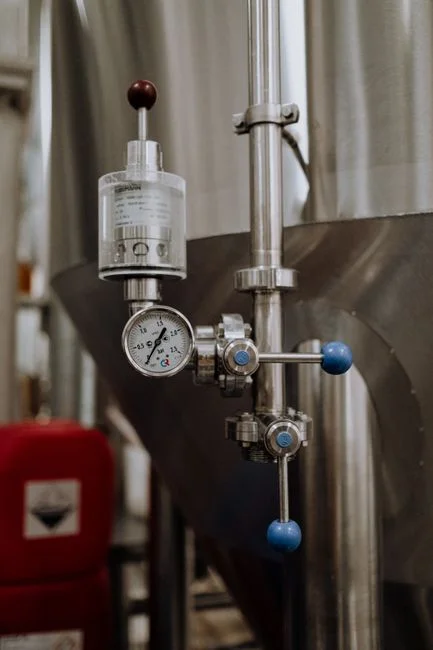
Wastewater stream segregation is the control that makes both treatment selection and permit compliance auditable. Each source needs an identifiable collection route, flow meter, sample point, chemical inventory entry, and authorized destination. Combining streams merely because they reach the same treatment plant obscures contamination, makes sampling less representative, and can make apparently compliant blended effluent mask an incompatible source.
Separate cathode production, electrode coating, electrolyte handling, cleaning and rinsing, laboratory and HVAC drains, sanitary sewage, contaminated stormwater, and firewater where applicable. Equalize only compatible flows. Remove oil and solids before balancing pH and flow; apply biological treatment only where the fraction is biodegradable; polish for the authorized reuse or discharge route; and dewater residual solids before disposal.
| Stream | Required source evidence | Design consequence |
|---|---|---|
| Cathode production and coating | Solvent inventory, concentration, variability, and collection point | Closed handling, source capture, and a validated treatment route |
| Electrolyte handling and cleaning | Cleaning chemicals, concentrations, batch practices, and discharge destination | Dedicated containment and assessment of recovery or source reduction |
| Cleaning and rinsing | Reuse history, rinse-water temperature and flow, and chemical use | Closed-loop rinsing and condensate segregation before sizing equipment |
| Laboratory and HVAC drains | Chemical inventory and discharge route | Separate collection unless compatibility is demonstrated |
| Stormwater and firewater | Drainage map, isolation points, and permitted contingency capacity | Controlled drainage, monitoring, and incident containment |
NMP must be managed as both a wastewater and air-emission issue. Greenpeace Hungary reported that 81 tons of NMP solvent could have been released into the air from the Samsung SDI plant in Göd in 2021, described as 75 times the 2024 emission limit. That is wider Hungarian regulatory context, not evidence about the acquired LG Energy Solution site. Its wastewater relevance must be established through the site’s chemical inventory and representative samples.
Keep defective batteries, production waste, sludge, and other solid residues in a separate classification and mass-balance system. The disposal route and legal classification of those materials must not be inferred from wastewater analysis.
Characterize the Wastewater Before Sizing the Treatment Train
Representative wastewater data must establish both hydraulic load and contaminant variability before treatment equipment is sized. Sampling should cover production phases rather than only a commissioning day or clean-water condition. Analysis should address pH, conductivity, COD, BOD, TSS, oil and grease, NMP or other process chemicals, relevant metals, toxicity, and flow.
Source reduction comes before downstream treatment. Closed-loop rinsing, dry-cleaning practices, chemical recovery, and condensate segregation can reduce the flow or contaminant load that the treatment train must handle. They also make the residual wastewater more predictable. A quoted treatment line should therefore identify the expected contribution from each source and state whether production changes will alter that balance.
Pilot testing is appropriate where biodegradability, chemical removal, membrane behavior, reuse quality, or permit compliance remains uncertain. Regulatory confirmation should cover the final discharge, sewer pre-treatment, or reuse route; laboratory results alone do not establish legal acceptability.
| Decision input | Evidence required | Why it affects selection |
|---|---|---|
| Flow | Stream-specific metering and representative peak data | Sets equalization and hydraulic capacity |
| Contaminant concentration and variability | Phase-specific analyses using identified methods | Determines physical, biological, or polishing needs |
| Permit or sewer limits | Current operative authorization | Defines the required treatment objective |
| Reuse specification | End-use quality requirements | Determines whether additional polishing or disinfection is justified |
| Residual solids | Expected quantity, characteristics, and disposal route | Defines dewatering and disposal scope |
Require a mass-and-load-based quotation stating the treatment objective, design envelope, power and chemical consumption, sludge quantities, performance guarantees, and exclusions. No defensible price can be given without measured flows, representative analyses, permit limits, reuse targets, and sludge-disposal assumptions.
Match Treatment Equipment to the Waste Profile

DAF should be selected only when sampling confirms oil, grease, floatable solids, or colloid-heavy material that physical separation can remove. It is a pretreatment step, not evidence of biological treatment or final compliance. The industrial DAF pretreatment system range covers 4 to 300 m³/h across 13 standard models, but no model should be selected before the required flow, contaminant load, and treatment objective are agreed.
Biological treatment is justified by demonstrated biodegradability and an acceptable loading envelope. The MBR decision must address membrane fouling, cleaning demand, footprint, energy, lifecycle cost, and final reuse requirements. The MBR membrane bioreactor for industrial wastewater range handles 10 to 2,000 m³/day and provides filtration below 1 µm, but those equipment attributes do not establish that MBR is appropriate for the acquired wastewater.
Where treatment captures solids, sludge dewatering should precede the authorized disposal route. The referenced plate and frame filter-press range covers 1 to 500 m² of filtration area, but the required area depends on the solids capture rate, dewatering objective, operating cycle, and cake-disposal route. Disinfection belongs only where the reuse or discharge specification requires it.
| Treatment role | When it may be justified | What it does not establish |
|---|---|---|
| Equalization and flow control | Compatible streams require buffering and batch management | Removal of process chemicals or final compliance |
| DAF | Sampling confirms removable oil, FOG, floatable solids, or suitable colloids | Biodegradability or complete discharge compliance |
| Biological treatment | Representative testing confirms an acceptable biodegradable fraction | Removal of non-biodegradable process chemicals without further treatment |
| MBR | Biological solids separation, low suspended solids, or reuse potential justifies membrane polishing | Automatic compliance with an unspecified discharge route |
| Sludge dewatering | Treatment generates solids requiring an authorized disposal route | The legal classification or destination of the material |
| Disinfection | The reuse or discharge requirement demands it | Compliance where other permit limits remain unmet |
The resulting treatment train should be conditional: segregation and equalization, physical pretreatment where justified, biological treatment where suitable, membrane or other polishing where required, and solids dewatering where applicable. Equipment selection remains subordinate to characterization and the authorized destination.
Build Monitoring, Automation and Incident Response Around the Permit
Each permit condition becomes controllable only when it has an owner, measurement point, method, reporting date, and auditable response. Specify automatic flow-totalizing, conductivity, pH, and turbidity instruments at suitable control points, supported by calibrated manual samples that verify analytical results. The automatic chemical dosing system should therefore be designed around measured flow, alarms, interlocks, and a defined batch-release check rather than a fixed chemical feed.
Set escalation thresholds for exceedance, bypass, chemical spill, rising inlet loading, and loss of treatment capacity. Name the role authorized to stop production, divert flow, notify authorities, and direct sampling. An abnormal flow should be stopped or transferred only to a permitted contingency route.
| Control | Required operating rule | Evidence retained |
|---|---|---|
| Flow and batch control | Confirm batch identity, destination, and treatment availability before release | Batch-release record and meter trace |
| Chemical dosing | Feed from measured flow; apply high-level alarm and high-high diversion | Calibration, alarm, and interlock log |
| Analytical control | Use continuous indications to trigger checks and manual analyses to verify results | Chain of custody, method, result, and validation record |
| Stormwater protection | Isolate contaminated drainage and use the approved incident route | Drainage map, isolation record, and sampling evidence |
| Utility failure | Maintain hydraulic control through the risk-assessed redundancy | Drill report, corrective action, and capacity confirmation |
During an exceedance or bypass, stop the source, isolate and contain affected flow, notify the relevant authority under the site’s approved procedure, protect stormwater, and preserve sampling evidence. The plan must identify where contaminated water may lawfully be held and who directs cleanup. Hazardous-waste transfers, sludge disposal, and wastewater operations remain in separate records so an incident does not blur classification or destination.
Assess redundancy for power, aeration, pumping, chemical storage, and standby instrumentation based on the plant’s failure scenarios. Test the response through tabletop exercises and production-startup drills involving production, maintenance, laboratory, contractors, and municipal-response interfaces.
Make the Final Investment Decision on Verified Risk
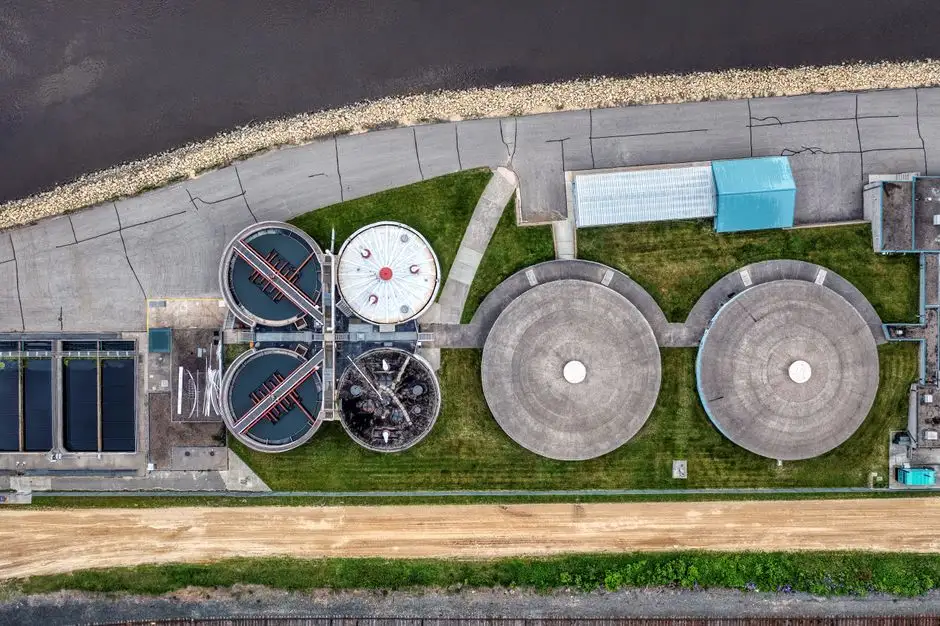
The acquisition decision should classify the site by what its evidence demonstrates, not by the presence of treatment equipment. A defensible outcome is one of five conditions: compliant and adequately capacitated; compliant but requiring documented optimization; capacity-constrained; characterization incomplete; or materially non-compliant. This classification determines whether the investment plan is a monitoring obligation, a rehabilitation project, a capacity expansion, a formal revalidation exercise, or a major remediation and replacement program.
Compare options using verified compliance risk as well as capital cost. Include energy, chemicals, sludge, maintenance, downtime, local service support, and the consequences of an authorization gap. The MBR versus conventional activated-sludge framework illustrates why technical choices must be tested against the actual objective rather than adopted by default.
| Evidence classification | Required investment response |
|---|---|
| Compliant and adequately capacitated | Document performance, monitor compliance, and test expansion separately |
| Compliant but requiring optimization | Define operating changes, verification tests, and accountable owners |
| Capacity-constrained | Validate peak loads, then scope hydraulic and treatment upgrades |
| Characterization incomplete | Fund sampling, pilot work, and permit clarification before final sizing |
| Materially non-compliant | Prioritize authority engagement, remediation, and legally viable treatment options |
Require suppliers to guarantee process parameters against an agreed influent envelope and provide comparable reference performance, FAT and SAT protocols, spare-parts availability, local support, and a total-cost model. Use acceptance and performance-testing obligations to determine whether existing equipment can be rehabilitated before assuming replacement. The defensible decision follows the evidence gates; it does not precede them.
Frequently Asked Questions
Does the acquisition automatically transfer the seller's wastewater obligations?
No automatic transfer can be assumed. The buyer must verify the current permits, site conditions, compliance history, infrastructure responsibilities, outstanding corrective actions, and waste contracts, then allocate those obligations contractually with the seller, authority, sewer operator, and other responsible parties. The acquisition should close only with a documented permit-and-liability register.
What data are needed to size wastewater treatment equipment?
Request stream-specific flows, representative analyses across production phases, the current permit and sewer limits, any reuse specification, and sludge-disposal assumptions. Require mass-and-load calculations that show how each source contributes to peak hydraulic and contaminant load. Without those inputs, a supplier cannot provide a defensible design envelope or price.
How should DAF and MBR be compared for battery manufacturing wastewater?
DAF is a physical separation step for suitable oil, grease, floatable solids, or colloids; it does not demonstrate biological treatment or final compliance. An MBR combines biological treatment with membrane solids separation and filtration, but its justification depends on biodegradability, fouling behavior, required effluent quality, footprint, and operating cost. Characterization must determine whether either role belongs in the train.
What should LG Energy Solution check before selecting a wastewater supplier?
Require an agreed influent envelope, stated treatment objectives, enforceable process guarantees, comparable reference performance, FAT and SAT protocols, local service support, spare-parts availability, and a total-cost model. Check that the supplier excludes uncertain items explicitly, especially sludge destination, analytical methods, reuse quality, authority acceptance, and performance outside the agreed operating envelope.
How should the acquired plant respond to a wastewater exceedance or bypass?
Follow the site’s approved incident-response and regulatory-notification procedure. Stop the source, isolate affected flow, transfer it only to a permitted contingency route, protect stormwater, notify the required authorities, and preserve sampling evidence. The plan must identify who can stop production and authorize transfer, sampling, cleanup, and external communications.