Which Packaged Sewage Treatment Plant Fits a Housing Development in Ho Chi Minh City?
A buried WSZ A/O sewage treatment plant is the leading fit when a compact, automated residential solution is required; it combines anoxic/aerobic contact oxidation, sedimentation and disinfection in one unit and handles 1–80 m³/h. An integrated MBR membrane bioreactor is the stronger option when membrane-grade solids separation or water reuse is the priority; its listed range is 10–2,000 m³/day with filtration below 1 μm. The final choice depends on verified design flow, available land, sewer-connection opportunities, discharge route, sludge handling and Vietnamese authority requirements—not simply on the development’s unit count.
Nominal equipment capacity is only a screening reference. A supplier must demonstrate that its rated flow represents the project’s design duty under the agreed wastewater characteristics, collection method and operating conditions. Neither option should be selected before the receiving route and approval pathway are confirmed.
| Selection issue | Buried WSZ A/O package | Integrated MBR system |
|---|---|---|
| Stated equipment range | 1–80 m³/h | 10–2,000 m³/day |
| Process configuration | Below-grade unit combining anoxic/aerobic biological contact oxidation, sedimentation and disinfection | Integrated activated-sludge treatment with submerged PVDF membrane filtration |
| Primary selection advantage | Compact integration for a residential treatment duty where simpler installation is the priority | Membrane-grade solids separation where low-solids effluent or reuse objectives drive the design |
| Design checks still required | Hydraulic and biological loading, peak-flow treatment, equalization, disinfection, solids removal and redundancy | Hydraulic and biological loading, membrane area, aeration, membrane maintenance, solids removal and redundancy |
| Project dependencies | Verified design flow, excavation and burial conditions, sewer connection, discharge route and sludge logistics | Verified design flow, available footprint, reuse or discharge objective, power and maintenance access, and sludge logistics |
Ho Chi Minh City’s expanding municipal treatment network does not establish that a particular housing development can connect to it. Connection feasibility remains a site-specific issue requiring confirmation from the relevant authority or utility, including the available connection point, capacity allocation, construction status and applicable conditions.
Start with the Development's Wastewater Design Basis
The development’s verified wastewater generation and collection boundary must be established before a packaged plant is sized. Unit count or design population is only an input to that calculation; it does not establish hydraulic loading, biological loading, treatment duty or required equipment capacity.
Prepare a design-basis package covering the following information:
- Design population, unit mix and development phasing.
- Average and peak residential wastewater flow.
- Groundwater infiltration and unwanted stormwater entry.
- Commercial, amenity or other non-residential flows.
- The physical collection boundary and wastewater origins.
- Proposed receiving point, discharge route and applicable approval requirements.
Map where wastewater originates and whether gravity sewer connections are feasible. Decide whether the package serves one phase or the completed development; treating phases separately can avoid installing capacity that the site cannot support, while designing only for an early phase can leave later housing without an approved collection route.
Document elevation constraints between the collection system, package and discharge point. Confirm access for maintenance vehicles and tanker trucks, electrical supply, control-system requirements and the operational consequences of a power interruption. These constraints can determine the feasible process and footprint as much as the treatment objectives do.
| Input to obtain | Why the buyer needs it | Question for the supplier |
|---|---|---|
| Verified wastewater-generation basis | Prevents selection from unit count alone | Which flow and duty assumptions underpin your proposed package? |
| Average and peak flow | Establishes hydraulic treatment and equalization requirements | Does the rated flow cover the stated average and peak conditions? |
| Wastewater quality and collection boundary | Defines biological loading and pretreatment needs | Which influent characteristics and entry points did you use? |
| Receiving point and connection conditions | Tests whether treated flow has a lawful, workable destination | What civil connection works and approvals are included? |
| Power, access and sludge route | Determines operability after installation | How are power failure, maintenance access and solids removal handled? |
Ask each vendor to define its rated flow in writing. The quotation should disclose any duty range, peak-flow treatment, equalization, redundancy and operating assumptions. Do not convert homes or residents into an equipment size without a verified wastewater-generation basis and peak-factor review.
Compare Buried A/O and MBR Packages for the Site
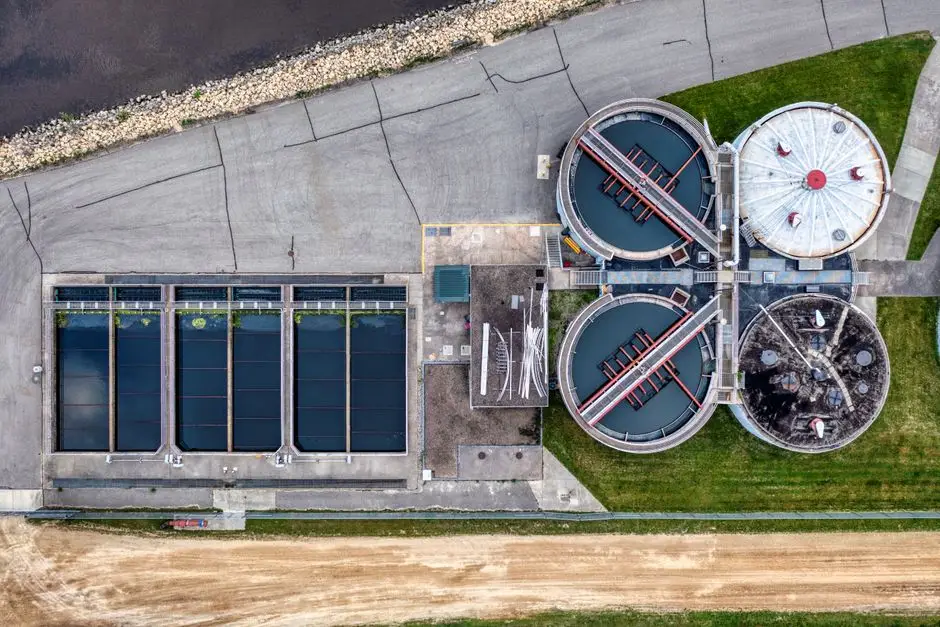
The buried WSZ A/O option integrates biological treatment, solids separation and disinfection below ground, allowing the landscape above the unit to remain available. HydropureWater lists residential communities among its intended applications and states a capacity range of 1–80 m³/h. Its attraction is installation simplicity for a conventional residential treatment duty, provided that excavation, groundwater, access and discharge arrangements are resolved.
The integrated MBR option combines activated-sludge treatment with submerged PVDF membrane filtration. HydropureWater states a range of 10–2,000 m³/day, filtration below 1 μm, near-reuse-quality effluent and a 60% smaller footprint than conventional systems. These are equipment claims, not proof that an MBR package is appropriate for a particular development. The supplier must demonstrate that the proposed configuration meets the project’s flow, effluent objective and operating constraints.
| Engineering comparison | Buried WSZ A/O | Integrated MBR |
|---|---|---|
| Primary process emphasis | Anoxic/aerobic contact oxidation, sedimentation and disinfection in one below-grade unit | Activated sludge followed by submerged PVDF membrane filtration |
| Integration benefit | One underground package with automatic operation and landscaping preserved above it | Integrated treatment and membrane separation; HydropureWater states a 60% smaller footprint than conventional systems |
| Main project question | Can the residential duty and site conditions be handled through conventional biological treatment and solids separation? | Do the reuse or low-solids objectives justify membrane-specific capital, operating and maintenance requirements? |
| Required engineering evidence | Hydraulic and biological loading, equalization, peak treatment, aeration, sedimentation, disinfection, sludge removal, maintenance and redundancy | Hydraulic and biological loading, membrane area, aeration, solids separation, membrane maintenance, sludge removal and redundancy |
| Selection condition | Preferred candidate for a straightforward residential duty where compact, simpler integration is the priority | Preferred candidate where membrane-grade solids separation or reuse objectives drive the design |
Do not compare the options by footprint alone. Require the process designer to document membrane area where relevant, aeration demand, solids inventory, disinfection, control sequencing, sludge withdrawal, maintenance access and standby arrangements. The process train should match the collection strategy and the required treatment result.
For another decision framework, compare buried A/O and MBR sewage treatment plants for housing developments, while sizing methodology for a containerized MBR sewage treatment plant shows how capacity assessment must remain tied to the design basis.
Fit the Package into Ho Chi Minh City's Wastewater Context
Ho Chi Minh City’s wastewater infrastructure expansion demonstrates investment in treatment capacity, but it is not project-level evidence that a housing development has a feasible sewer connection. Trade.gov reports that the Nhiêu Lộc-Thị Nghè plant has a capacity of 480,000 cubic meters per day, was set to be completed by 2025 and aims to meet approximately 71% of the city’s current wastewater treatment needs.
Trade.gov also reports a proposed plan for six new plants and one upgrade, with approximately $1.3 billion in projected investment. It separately describes the Thu Duc City project as a $524 million MBBR project intended to treat up to 1.1 million cubic meters daily and serve approximately 1.8 million residents across eight districts.
Those city-scale investments can improve the wider treatment context, but a developer still needs written confirmation of:
- The available sewer or drainage connection point.
- Whether capacity is allocated to the development.
- The construction and commissioning status of the relevant infrastructure.
- Connection standards, inspection requirements and applicable charges or conditions.
- Whether the authority or utility will accept the proposed treatment route and discharge arrangement.
Governance is a separate risk to investigate. A 2008 University of Waterloo dissertation on peri-urban HCMC identified poor communication between farmers and government officials, limited farmer participation, weak integration among agencies, little accountability and transparency, and water-management priorities that can favor economic growth over environmental health. That study concerns peri-urban pollution governance rather than packaged treatment plants, but it demonstrates why responsibility and communication should not be left implicit.
Translate that context into project controls. Obtain written confirmation from the relevant receiving authority or utility, identify the party responsible for approvals, sewer connection and discharge compliance, and resolve unresolved responsibilities before ordering equipment. A supplier’s statement that its package is “suitable for HCMC” is not a substitute for project-specific confirmation.
Plan Collection, Installation and Operating Logistics
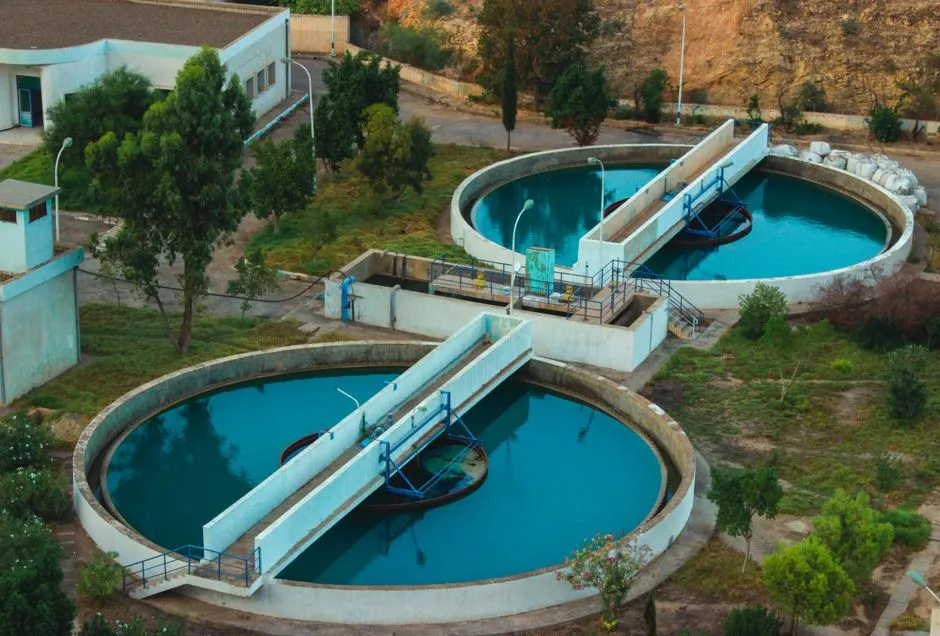
The civil layout must resolve collection, treatment and maintenance as one system. Map sewer routes, package location, access covers, electrical supply, control enclosure, odor-control provisions, effluent connection and the maintenance vehicle path before freezing the civil works.
For a buried package, the design must address excavation, groundwater, buoyancy, access, soil conditions and landscaping loads through civil and geotechnical review. Confirm whether the package is installed in phases and how construction traffic, temporary drainage and commissioning access are coordinated. Do not treat the treatment unit as an independent tank dropped into the development; its buried envelope interfaces with the surrounding ground, collection pipes and access routes.
The solids route must be defined with the same care as the effluent route. Identify where sludge is removed, whether it is dewatered on site or removed by tanker, and who holds responsibility for transport and disposal. Where upstream protection is needed from rags, plastics, fibres and suspended solids, a rotary mechanical bar screen can protect downstream pumps, valves and biological treatment processes.
Where an on-site sludge-dewatering step is justified, a plate and frame filter press is available with a stated filtration-area range of 1–500 m² in manual, hydraulic and automatic PLC-controlled formats. Confirm whether dewatering is required by the project or merely assumed, and whether the selected format matches available operators and maintenance capability.
| Design package | Buyer decision | Required evidence |
|---|---|---|
| Collection and treatment layout | Can wastewater reach the unit and treated effluent reach the approved route? | Surveyed levels, routes, connection details and coordinated civil drawings |
| Buried installation | Can the ground and groundwater conditions be accommodated? | Civil and geotechnical design addressing excavation, buoyancy, access and applied loads |
| Solids management | Where do sludge removal, dewatering, transport and disposal sit? | Named responsibilities, access route and disposal arrangements |
| Operation and control | How does the package behave during a power interruption? | Control narrative, emergency provisions, monitoring, spares and local service access |
Obtain confirmation of power-failure behavior, emergency storage or bypass provisions, remote monitoring, spare-parts strategy and local service access. These items belong in the procurement package because they affect operability after delivery.
Use a Supplier Due-Diligence and Selection Workflow
A comparable selection process is more defensible than evaluating technical claims one at a time. Issue the same design-basis and information request to every supplier, then require responses in a consistent format. This exposes differences in assumptions rather than hiding them behind incompatible quotations.
- Issue one project information request covering flow data, site constraints, treatment objectives, documentation, commissioning boundaries and warranty responsibilities.
- Require each supplier to state the design flow, treatment process, duty assumptions, performance guarantees, control philosophy, footprint, utilities, civil interfaces and sludge-handling method.
- Check whether the quotation includes local-approval support, electrical and control documentation, operation and maintenance manuals, training, commissioning, spare parts and a documented warranty pathway.
- Price installation location, commissioning access, operator availability, service response and sludge disposal as commercial deliverables rather than post-award details.
- Compare lifecycle considerations from disclosed operating assumptions, while withholding final acceptance from generic return-on-investment claims until a site-specific cost model is complete.
- Request the nearest completed comparable reference and verify its actual package configuration, treatment basis and operating conditions.
| Quotation check | Evidence to request | Risk if omitted |
|---|---|---|
| Sizing basis | Design flow, average and peak duty, wastewater characteristics, equalization and redundancy | Equipment may be selected for the wrong duty |
| Performance and compliance | Stated guarantees, test methods, approval support and defined discharge route | Unclear acceptance criteria and approval responsibility |
| Installation | Footprint, civil interfaces, access, utilities and power-failure provisions | Site works and operational disruption after award |
| Commissioning and service | Training, manuals, commissioning plan, spares, local support and warranty pathway | Plant may not be operated or maintained as intended |
| Sludge responsibility | Removal method, dewatering need, transport and disposal allocation | Residual operating obligation remains unresolved |
Technical scoring should follow the project constraints. Weight the sewage design basis, discharge route, footprint, civil interfaces, process performance, automation, documentation, commissioning and service support according to their effect on the development. Do not let a compact footprint or an attractive equipment range displace unresolved sizing or compliance issues.
Frequently Asked Questions
What flow range should be used to screen a packaged sewage treatment plant for HCMC housing?
Use the buried WSZ A/O sewage treatment plant range of 1–80 m³/h and the integrated MBR membrane bioreactor range of 10–2,000 m³/day as equipment reference points only. Size the proposed package against verified average and peak wastewater flows, wastewater characteristics, equalization and redundancy assumptions.
How much will a packaged sewage treatment plant cost for a housing development in Ho Chi Minh City?
A defensible price cannot be determined without the design flow, treatment objective, site civil work, installation conditions and utility requirements. Request an itemized quotation separating the treatment package, collection and discharge works, civil installation, controls, commissioning, training, service, sludge handling and any site-specific power or odor-control provisions. A general equipment price or generic savings claim is not an adequate project budget.
Should the project connect to the municipal sewer or install a decentralized treatment package?
Do not assume a connection until the relevant HCMC authority or utility confirms availability, location, capacity and connection conditions. If a gravity connection is not feasible, compare a decentralized residential sewage treatment plant with an MBR package against the verified discharge route, treatment objectives and site constraints. Written confirmation from the receiving party should precede the final technology and civil-works decision.
How should buyers compare suppliers for a decentralized wastewater treatment package?
Issue the same design-basis request to every bidder and require disclosure of design duty, performance guarantees, local-approval support, commissioning scope, operator training, maintenance, service access, utilities, civil interfaces, sludge responsibilities and warranty pathway. Check the nearest completed comparable reference and confirm its configuration and operating conditions. Select on complete project deliverables rather than equipment range or footprint alone.