What Does MVR Evaporator Capacity Actually Mean?
MVR evaporator capacity is the verified net water-evaporation duty at specified feed and concentrate conditions; it is not the wastewater feed rate entering the system. Determine evaporation rate from the solids and water balance, then confirm that the heat-transfer equipment and compressor can sustain that duty without fouling. Boiling-point elevation and compression ratio constrain the operating envelope, while operating hours and feed variability determine the required instantaneous rate. ENCON reports a standard capacity band of 500–1,350 gph and offers custom configurations for larger volumes, but those figures are not a substitute for a site-specific mass balance and performance guarantee (ENCON, undated).
MVR compresses vapor to raise its pressure and saturation temperature. The compressed vapor condenses in the main heat exchanger and supplies latent heat for further evaporation, making the process a closed heat-recycle loop rather than a conventional system that produces steam for every kilogram of water removed.
| Capacity term | Meaning in the bid | Buyer check |
|---|---|---|
| Feed flow | Wastewater entering the evaporator per unit time | State design, minimum and maximum feed conditions. |
| Net evaporation rate | Water removed between specified inlet and outlet conditions | Use consistent mass and solids balances. |
| Distillate flow | Condensed water produced | Reconcile it with feed and concentrate streams. |
| Concentrate flow | Residual liquor leaving the separation stage | State its concentration, temperature and solids basis. |
| Operating hours | Time available to meet daily or annual treatment duty | Distinguish continuous, intermittent, batch and ramp operation. |
| Guaranteed production | Specified net evaporation under stated conditions | Require a test protocol and acceptance tolerances. |
Ask each bidder to state the operating basis in the same units and conditions. A proposal quoting 1,000 gph of feed may remove substantially less water than a proposal quoting 1,000 gph of evaporation. Any guarantee that omits feed chemistry, outlet concentration, operating schedule or fouling conditions is incomplete.
Build the Evaporation Mass Balance Before Sizing Equipment
The defensible sizing sequence starts with the water removed, not the incoming feed volume. The process runs from wastewater feed through pretreatment and feed conditioning, into an evaporator circulation and heat-transfer loop, then to vapor compression and condensation. Distillate leaves as recovered water, while concentrated liquor exits from the separation stage. Every stream and condition must be reconciled before equipment is selected.
- Establish feed flow and its design, minimum, maximum and future conditions.
- Measure total and dissolved solids, temperature, density, viscosity and pH.
- Identify scaling constituents, suspended solids, oils, colloids, hardness and non-condensable gases.
- Define the required outlet concentration and whether crystallization occurs.
- Calculate the net evaporation rate, then reconcile feed, distillate and concentrate flows.
- Convert daily wastewater volume into instantaneous evaporation duty for the permitted operating window.
Lexin’s selection framework centers on three numbers: evaporation duty in tonnes of water per hour, liquor boiling-point elevation and compressor compression ratio (Lexin, undated). Operating hours matter because a unit intended to process a daily volume during a limited window must have a higher instantaneous evaporation rate than one operating continuously. The proposed schedule should also identify whether startup steam or steam assist during ramps is required.
Energy figures are preliminary screening tools, not guarantees. YASA reports MVR power consumption of 6–48 kWh per tonne of treated water (YASA, undated). That broad benchmark does not describe the selected configuration, feed chemistry or operating schedule; obtain a vendor heat balance based on the actual duty.
| Mass-balance item | Required basis | Proposal question |
|---|---|---|
| Feed | Flow and analysis at the inlet | Which flow and water chemistry were used? |
| Evaporation | Net water removed per hour | Is the rate guaranteed at the stated outlet condition? |
| Distillate | Condensed product flow and required quality | What contaminants are excluded from the distillate? |
| Concentrate | Residual flow, solids concentration and temperature | Does the concentration boundary precede crystallization? |
| Schedule | Operating hours, startup and ramp conditions | How is daily volume reconciled with instantaneous duty? |
Where suspended solids or oily material could interfere with evaporation, evaluate industrial DAF pretreatment as part of the process basis rather than adding it later as an accessory.
Match BPE and Compression Ratio to the Compressor
Boiling-point elevation is the difference between the liquor’s boiling temperature and the boiling temperature of water at the same pressure. It is a core design variable because increasing concentration can narrow the available temperature-driving force and increase the compression, electrical duty or number of compression stages required.
Lexin reports that the MVR compressor raises vapor pressure from approximately 70 kPa(abs) to about 110–160 kPa(abs), with a saturation-temperature rise of 6–15 K depending on the duty (Lexin, undated). These figures must be checked against the actual liquor because evaporation changes both composition and boiling temperature during the process. Vendor confirmation should cover vapor duty, compression ratio, drive arrangement, materials, turndown and operation across the expected feed range.
| Selection parameter | Vendor confirmation required | Reason it affects capacity |
|---|---|---|
| Net vapor duty | Mass flow and volumetric flow at compressor inlet | Sets the compressor mass-flow envelope. |
| Compression ratio | Pressure ratio across the stated operating range | Determines the available temperature lift. |
| BPE | At inlet and final concentration | Reduces usable driving force and changes power demand. |
| Turndown | Minimum stable vapor flow and control method | Must match variable feed without unstable operation. |
| Materials | Wetted-part compatibility with feed chemistry | Corrosion can limit reliability and effective throughput. |
| Drive and speed | Type, control range and vibration limits | Sets operating flexibility and rotating-equipment risk. |
Lexin estimates the compressor at 40–60% of installed equipment cost (Lexin, undated). That is a commercial selection warning, not a universal budgeting percentage: it means the compressor package, vapor properties and operating envelope deserve independent review. In the heat-pump loop, vapor generated from the circulating liquor is compressed, condensed in the heat exchanger and reused to drive evaporation.
Select the Heat-Transfer Configuration for the Wastewater
Heat-transfer configuration must follow the wastewater’s fouling, viscosity and crystallization risk. Lexin describes falling-film evaporators as appropriate for clean, non-scaling liquors, while forced-circulation evaporators are the standard arrangement for liquors that will crystallize inside the evaporator because the pumped loop keeps crystals suspended and sweeps heated surfaces at high velocity (Lexin, undated).
ENCON’s forced-circulation flash arrangement maintains sufficient pressure in the circulation loop to suppress boiling in the main heat exchanger. An orifice creates a downstream pressure drop that allows boiling in the separation tank. ENCON states that high circulation and boiling outside the heat exchanger reduce scaling tendency, cleaning downtime and the risk of reduced evaporation rates (ENCON, undated).
| Design issue | Falling-film route | Forced-circulation route | Required proposal detail |
|---|---|---|---|
| Feed character | Clean and non-scaling | Viscous or crystallizing liquor | Analysis and pilot evidence supporting the choice. |
| Heat exchanger | Distributed thin film | High-velocity pumped circulation | Surface area and construction details. |
| Scaling exposure | Risk concentrated at distributor and heating surfaces | Suppressed boiling in the main exchanger | Fouling allowance and cleaning method. |
| Maintenance | Distributor and tube inspection | Circulation loop, valve and exchanger inspection | Access, cleaning cycle and spare-parts list. |
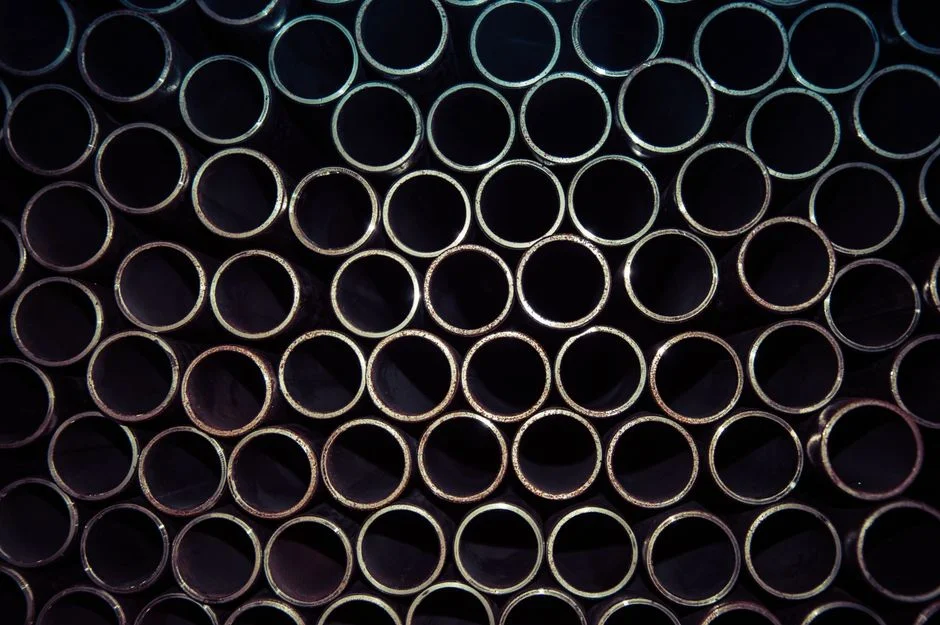
ENCON describes plate heat exchangers as compact with high exposed surface area, while shell-and-tube exchangers occupy more space but resist scaling and fouling better (ENCON, undated). The proposal should therefore specify heat-transfer area, materials, design pressure, cleaning method and fouling allowance rather than quoting evaporation capacity alone.
Pretreatment should address actual contaminants. Suspended solids, oils, colloids, hardness and non-condensable gases can affect operability. Depending on the analysis, evaluate automatic chemical dosing for wastewater pretreatment or membrane and filter pretreatment, and specify how each stage affects the evaporator’s guaranteed feed envelope.
Set the Design Feed Envelope and Reliability Basis
A commercially sized unit can still be unreliable if its feed envelope and operating assumptions are undefined. Specify design, minimum, maximum and future feed flows, including seasonal, batch and startup variation. The schedule must show available operating hours and whether the unit must reach steady operation without external steam or may use steam assist during startup and ramps.
Set the fouling and scaling basis from the wastewater analysis, expected pretreatment performance and cleaning frequency. For crystallizing or near-saturation streams, require the vendor to define the final concentration boundary and determine whether a separate crystallizer is needed. Lexin notes that many plants concentrate in the MVR unit only to just below saturation and then send hot concentrate to a separate crystallizer; it also advises evaluating mixed or steam-assisted schemes for plants operating fewer than roughly 4,000 hours per year or handling strongly variable feed (Lexin, undated).
Operational evidence matters as much as catalog design. After commissioning an MVR system in 2019, the Gotsu Mill encountered heater blockage from scale and compressor vibration. Stronger vapor-drain cleaning and open cleaning of the compressor were required before stable operation was achieved, according to the Japan Technical Association of the Pulp and Paper Industry (undated publication details).
Require the control package to cover temperature, pressure, liquid level, alarms, concentrate discharge, distillate transfer and automated clean-in-place cycles where included. ENCON states that its standard automation performs these functions and continuously monitors key variables (ENCON, undated).
Compare Vendor Proposals With a Common Capacity Basis
Proposal comparison fails when vendors quote different capacity units, different feed conditions or different meanings of energy use. Normalize every bid against the same feed range, outlet concentration, operating schedule, utility basis and performance-test conditions. A larger unit is not automatically more economical if BPE, fouling or pretreatment constraints reduce its effective throughput.
| Comparison item | Required information | Decision test |
|---|---|---|
| Capacity | Guaranteed net evaporation rate and production basis | Is the rate net water removal under the same feed and concentrate conditions? |
| Feed envelope | Design, minimum and maximum flows and water chemistry | Is performance demonstrated across the specified range? |
| Energy | Specific or total consumption and calculation boundary | Does the figure represent modeled or measured performance? |
| Compressor | Type, vapor duty, compression ratio and turndown | Does the selected equipment cover BPE and feed variability? |
| Heat transfer | Area, configuration, materials and fouling allowance | Is the cleaning basis consistent with the wastewater analysis? |
| Utilities | Electricity, steam, cooling water, chemicals and drains | Are all utility demands and operating hours included? |
| Commercial scope | Controls, commissioning, test, spares and exclusions | Are quoted duties and guarantees technically comparable? |
Published energy figures illustrate why definitions are necessary. YASA reports 6–48 kWh per tonne of treated water (YASA, undated); Lexin reports 15–40 kWh per tonne of water for water-like liquors (Lexin, undated); and Vanoo reports 15–25 kWh per tonne of treated water for its MVR configurations (Vanoo, 2026-02). These figures cover different scopes and should not be placed in one bid column without the vendor’s system boundary.
For operating-cost context, ENCON reports typical MVR operating costs of $0.01–$0.02 per gallon (ENCON, undated). Request a site-specific calculation based on electricity, feed chemistry, operating hours and maintenance rather than applying that figure directly to a different wastewater or tariff.
Avoid the Most Common MVR Sizing Errors
The most consequential sizing errors occur before equipment geometry is fixed. Review the following sequence before approving a proposal:
- Do not size from feed flow alone. Complete the water and solids balance and identify the actual evaporation rate.
- Do not omit BPE. The final concentration affects boiling temperature, driving force and compression requirements.
- Do not convert a benchmark into a guarantee. Generic energy figures cannot replace a configuration-specific heat balance.
- Do not treat pretreatment or fouling as optional. Suspended solids, oils, hardness, scaling and non-condensable gases affect the usable capacity.
- Do not ignore operating hours. A limited operating window may require a higher instantaneous rate than continuous service.
- Do not leave the concentration boundary undefined. Near-saturation operation may require a separate crystallizer and different fouling controls.
Supplier selection should begin with the actual wastewater. ENCON states that its consultative specification process includes complimentary bench-scale analysis and boil analysis of the customer’s waste or process stream (ENCON, undated). For difficult feeds, require pilot evidence of scaling rate, fouling rate and cleaning response where the concentration boundary or feed variability cannot be represented reliably by analysis alone.
Also require the manufacturer to state in writing the assumptions behind every headline figure. Capacity, power consumption and operating cost are meaningful only when the feed chemistry, concentrate concentration, operating schedule, fouling allowance and system boundary are attached to them.
Frequently Asked Questions
What is the formula for MVR evaporator capacity?
Capacity is the net evaporation rate: the mass of water removed per hour between the specified inlet and outlet conditions. Use the feed and concentrate solids balances to determine that removal, then reconcile it with feed, distillate and concentrate flows. Feed flow alone is not evaporation capacity, and the result must be divided by the intended operating hours to verify that the daily wastewater duty can be handled.
How much does an MVR evaporator cost to operate per tonne?
Published preliminary benchmarks range from 6–48 kWh per tonne of treated water according to YASA (undated), while Lexin reports 15–40 kWh per tonne of water for water-like liquors and Vanoo reports 15–25 kWh per tonne for its configurations (Vanoo, 2026-02). For a budget, request a site-specific calculation showing electricity price, operating hours, feed chemistry, fouling allowance and maintenance. Also ask for a cost per tonne of removed water, not only per tonne of incoming feed.
Should I size an MVR evaporator for peak or average wastewater flow?
Size against the required treatment duty and operating schedule, not an unlabeled “peak” or “average” rate. Provide design, minimum, maximum and future feed flows to each supplier. If the plant must process a daily volume during a limited operating window, calculate the necessary instantaneous evaporation rate from that window. Then confirm turndown, feed variability and startup or ramp requirements in the guarantee.
What wastewater analysis should I send to an MVR evaporator supplier?
Send a representative analysis covering total and dissolved solids, temperature, density, viscosity, pH, hardness, scaling constituents, suspended solids, oils and colloids. Identify non-condensable gases, the required outlet concentration and the proposed pretreatment. Also provide feed-flow history and the operating schedule. These inputs are needed to determine BPE, fouling risk, heat-transfer configuration and the compressor operating envelope.
How do I compare MVR evaporator bids when vendors quote different capacity units?
Convert every bid to net evaporation rate under one common set of feed, concentrate and operating-hour conditions. Confirm whether each figure is feed handling, evaporation or guaranteed production. Compare compressor vapor duty, compression ratio, turndown, heat-transfer area, fouling allowance, utilities, controls, commissioning and performance-test criteria. Require the quoted energy metric to be identified as specific consumption, total plant consumption or a modeled value.
Related Equipment
- industrial DAF pretreatment — specifications, capacity range, and technical data