Sewage Treatment Equipment Suppliers in Makassar: 2025 Engineering Guide with Costs, Compliance & Vendor Checklist
In Makassar, selecting a sewage treatment equipment supplier requires balancing Indonesia’s PP 22/2021 effluent standards (BOD ≤ 30 mg/L, COD ≤ 100 mg/L) with local water quality challenges like high salinity and organic loads from food processing. Top suppliers like Indotara and Yanmar dealers offer technologies such as MBR (0.1 μm filtration) and DAF (92–97% COD removal), but costs range widely from IDR 500M for small package plants to IDR 5B for industrial systems. This guide provides a vendor checklist, compliance matrix, and ROI calculator to help buyers navigate these trade-offs.
Why Makassar’s Wastewater Treatment Needs Are Unique
Makassar's coastal location and burgeoning industrial sectors present distinct wastewater treatment challenges that necessitate specialized equipment and supplier selection. Typical municipal and industrial wastewater in the region exhibits elevated levels of Biochemical Oxygen Demand (BOD) ranging from 200–500 mg/L, Chemical Oxygen Demand (COD) from 400–1,200 mg/L, and Total Suspended Solids (TSS) between 300–800 mg/L, according to data from SNV's 2023 report on decentralized wastewater treatment. the proximity to the sea results in influent salinity levels of 5,000–15,000 mg/L Total Dissolved Solids (TDS). This high salinity can accelerate equipment corrosion and significantly inhibit the efficiency of biological treatment processes, particularly nitrification. Regulatory compliance under Indonesia’s PP 22/2021 imposes strict effluent standards, with penalties for non-compliance including fines of IDR 100 million to IDR 1 billion, or even facility shutdowns. A 2023 SNV pilot project in Makassar demonstrated that decentralized systems could achieve up to 90% BOD removal, but this success was contingent on the use of salinity-resistant materials, such as duplex stainless steel, for critical components.
| Parameter | Typical Makassar Influent Range | Impact on Treatment | Regulatory Standard (PP 22/2021) |
|---|---|---|---|
| BOD | 200–500 mg/L | High organic load requires robust biological treatment | ≤ 30 mg/L |
| COD | 400–1,200 mg/L | Demands effective oxidation or removal processes | ≤ 100 mg/L |
| TSS | 300–800 mg/L | Requires efficient solid separation stages | ≤ 30 mg/L |
| Salinity (TDS) | 5,000–15,000 mg/L | Corrosion risk, reduced microbial activity in biological stages | N/A (focus on effluent quality) |
Sewage Treatment Technologies Compared for Makassar’s Conditions
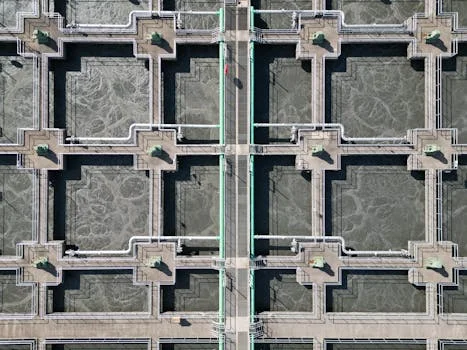
Selecting the appropriate sewage treatment technology is paramount for achieving compliance and operational efficiency in Makassar. Each technology offers distinct advantages and disadvantages influenced by factors like footprint, energy consumption, CAPEX, OPEX, and critically, salinity tolerance. For projects demanding a small footprint and high effluent quality, Membrane Bioreactor (MBR) systems, such as HydropureWater's DF Series, are ideal. These systems utilize 0.1 μm filtration membranes to achieve excellent BOD and TSS removal rates (often < 10 mg/L), but they come with a higher CAPEX and potential membrane fouling issues in high-salinity environments without careful design. Dissolved Air Flotation (DAF) systems are highly effective for treating high organic loads, particularly from food processing and textile industries, achieving 92–97% COD removal, but their tolerance to high salinity can be limited and may require pre-treatment. Conventional Activated Sludge or Anaerobic-Oxic (A/O) processes, represented by our WSZ Series underground integrated sewage treatment plant, offer a more budget-friendly solution with a larger footprint, suitable for sites with ample space and less stringent effluent demands. Chlorine Dioxide Disinfection is typically used as a final polishing step for pathogen reduction.
| Technology | BOD Removal (%) | COD Removal (%) | TSS Removal (%) | Footprint (m²/m³) | Energy Use (kWh/m³) | CAPEX (IDR/m³) | OPEX (IDR/m³/year) | Salinity Tolerance |
|---|---|---|---|---|---|---|---|---|
| Conventional A/O (WSZ Series) | 85–95 | 70–85 | 80–90 | 0.5 – 1.0 | 0.5 – 1.5 | 8,000,000 – 15,000,000 | 500,000 – 1,000,000 | Moderate |
| MBR (DF Series) | >95 | >90 | >98 | 0.1 – 0.3 | 1.0 – 2.5 | 20,000,000 – 35,000,000 | 1,500,000 – 2,500,000 | Requires specialized membranes/materials |
| DAF | 70–85 | 92–97 | 85–95 | 0.3 – 0.6 | 0.8 – 1.8 | 12,000,000 – 20,000,000 | 1,200,000 – 2,000,000 | Limited; susceptible to high dissolved solids |
| Chlorine Dioxide Disinfection | N/A | N/A | N/A | Minimal | 0.1 – 0.3 | 5,000,000 – 10,000,000 | 200,000 – 400,000 | High |
A typical MBR process flow involves:
- Screening: Removal of large solids.
- Anoxic Tank: Initial biological treatment for denitrification.
- Aeration Tank: Aerobic biological treatment for BOD and ammonia removal.
- Membrane Filtration: Ultrafiltration or microfiltration to separate treated water from biomass.
- Disinfection: Final pathogen inactivation (e.g., UV or chlorine).
For DAF systems, the process typically includes:
- Coagulation & Flocculation: Addition of chemicals to clump suspended solids.
- Dissolved Air Injection: Fine air bubbles attach to flocs, causing them to float.
- Flotation & Skimming: Scum is removed from the surface.
- Sludge Removal: Collected sludge is dewatered.
For A/O systems (WSZ Series), the flow is generally:
- Equalization Tank: Buffers flow and concentration variations.
- Anaerobic Tank: Biological removal of phosphorus.
- Anoxic Tank: Biological removal of nitrogen.
- Aeration Tank: Aerobic biological treatment for BOD removal.
- Clarifier: Settling of biomass.
Compliance Checklist: Meeting Indonesia’s PP 22/2021 Standards
Navigating Indonesia’s PP 22/2021 effluent standards is critical for any wastewater treatment project in Makassar. The key parameters mandated include BOD ≤ 30 mg/L, COD ≤ 100 mg/L, TSS ≤ 30 mg/L, a pH range of 6–9, and fecal coliform counts not exceeding 3,000 MPN/100mL. To ensure your chosen equipment supplier can meet these stringent requirements, it is vital to request comprehensive third-party test reports. Reputable suppliers should be able to provide documentation from accredited laboratories such as Sucofindo or Institut Teknologi Sepuluh Nopember (ITS) Surabaya, ideally for projects conducted in Sulawesi or similar environmental conditions. Common pitfalls to avoid include suppliers who offer generic 'universal compliance' claims without specific data on salinity tolerance or seasonal influent variations, which are prevalent in Makassar. A thorough compliance matrix is essential for mapping each technology's proven performance against these specific regulatory benchmarks.
| PP 22/2021 Standard | Conventional A/O (WSZ Series) | MBR (DF Series) | DAF | Chlorine Dioxide Disinfection |
|---|---|---|---|---|
| BOD (≤ 30 mg/L) | Achievable (typically < 20 mg/L) | Achievable (typically < 5 mg/L) | Limited (relies on upstream processes) | N/A |
| COD (≤ 100 mg/L) | Achievable (typically < 60 mg/L) | Achievable (typically < 30 mg/L) | Achievable (typically < 50 mg/L) | N/A |
| TSS (≤ 30 mg/L) | Achievable (typically < 20 mg/L) | Achievable (typically < 5 mg/L) | Achievable (typically < 10 mg/L) | N/A |
| pH (6–9) | Requires pH adjustment | Requires pH adjustment | Requires pH adjustment | N/A |
| Fecal Coliform (≤ 3,000 MPN/100mL) | Requires post-disinfection | Requires post-disinfection | Requires post-disinfection | Effective (typically < 10 MPN/100mL) |
Vendor Evaluation Framework: 7 Criteria for Makassar Buyers
When evaluating sewage treatment equipment suppliers in Makassar, a structured approach focusing on seven key criteria will mitigate risks and ensure long-term operational success. Firstly, assess their local experience; suppliers with a proven track record of projects in Sulawesi, particularly Makassar, understand the regional challenges and regulatory nuances. Secondly, scrutinize their compliance documentation, demanding third-party test reports specifically for PP 22/2021 standards and ideally from local accredited labs. Thirdly, evaluate technology suitability, ensuring the proposed solution is designed for Makassar’s high salinity and organic loads, and fits the available footprint. Fourthly, prioritize after-sales support, confirming the availability of spare parts and qualified technicians in Makassar for prompt maintenance. Fifth, demand CAPEX/OPEX transparency, with detailed breakdowns that account for all potential long-term costs. Sixth, gauge customization flexibility; a one-size-fits-all approach rarely works for unique industrial or institutional needs. Finally, review warranty terms, particularly for critical components like membranes, which typically require a minimum of two years. For a hypothetical hotel project treating 50 m³/day, a vendor scoring highly across these criteria would demonstrate a clear understanding of local conditions and offer a robust, compliant, and cost-effective solution.
| Criterion | Weight (%) | Score (1-5) | Weighted Score | Notes |
|---|---|---|---|---|
| Local Experience (Sulawesi) | 20 | References, site visits | ||
| Compliance Documentation (PP 22/2021) | 20 | Third-party lab reports | ||
| Technology Suitability (Salinity, Footprint) | 15 | Design review, material specs | ||
| After-Sales Support (Makassar) | 15 | Spare parts availability, service response | ||
| CAPEX/OPEX Transparency | 10 | Detailed cost breakdown | ||
| Customization Flexibility | 10 | Adaptability to site needs | ||
| Warranty Terms | 10 | Duration, coverage | ||
| Total Score | 100 |
Cost Breakdown: Sewage Treatment Equipment in Makassar (2025)
Accurate budgeting for sewage treatment equipment in Makassar requires understanding both Capital Expenditure (CAPEX) and Operational Expenditure (OPEX), which can vary significantly based on project size and technology. For small-scale projects (10–50 m³/day), such as those for individual hotels or smaller industrial facilities, CAPEX typically ranges from IDR 500 million to IDR 1.5 billion. Medium-sized projects (50–200 m³/day) for larger institutions or industrial parks can expect CAPEX between IDR 1.5 billion and IDR 3.5 billion, while large-scale municipal or industrial park applications (200–500 m³/day) may require IDR 3.5 billion to IDR 5 billion. These CAPEX figures generally break down into approximately 60% for equipment, 20% for installation, and 20% for civil works. OPEX components include energy costs (IDR 200–500/m³), chemicals (IDR 100–300/m³), labor (IDR 50–150/m³), and maintenance (5–10% of CAPEX annually). Implementing an MBR system for a 100 m³/day facility in Makassar, for instance, might involve an upfront CAPEX of IDR 2.8 billion. However, its efficient operation and potential for water reuse could generate annual savings of IDR 1.2 billion, while also avoiding potential fines of IDR 500 million per year for non-compliance. This leads to a simple ROI calculation: Annual Savings = (Compliance Fines Avoided + Water Reuse Value) – OPEX. Payback Period = CAPEX / Annual Savings.
| Project Size (m³/day) | CAPEX Range (IDR) | Typical Technology | Estimated OPEX Range (IDR/m³/year) |
|---|---|---|---|
| 10–50 | 500M – 1.5B | WSZ Series (Underground Package Plant) | 500,000 – 1,000,000 |
| 50–200 | 1.5B – 3.5B | MBR (DF Series) or DAF | 1,000,000 – 2,000,000 |
| 200–500 | 3.5B – 5B | Combination of technologies, larger scale | 800,000 – 1,800,000 |
Frequently Asked Questions
What are the primary challenges for sewage treatment equipment in Makassar's environment?
The primary challenges are high influent salinity levels (5,000–15,000 mg/L TDS) which can cause corrosion and inhibit biological processes, and elevated organic loads (BOD 200–500 mg/L, COD 400–1,200 mg/L) requiring robust treatment technologies. See our MBR systems for high-efficiency wastewater treatment in Makassar’s high-salinity conditions.
How does PP 22/2021 specifically impact equipment selection for hotels in Makassar?
Hotels must meet strict BOD (≤ 30 mg/L) and COD (≤ 100 mg/L) limits. This often necessitates advanced treatment like MBR systems to consistently achieve these standards, especially considering the potential for fluctuating influent quality from hotel operations. Review the WSZ series underground sewage treatment plant for Makassar’s space-constrained projects.
Can DAF systems effectively treat wastewater from Makassar’s food processing industry?
Yes, DAF systems are highly effective for food processing wastewater due to their ability to remove high concentrations of fats, oils, and greases (FOG) and suspended solids. However, suppliers must ensure the system is designed with materials resistant to Makassar’s salinity. Explore our DAF systems for Makassar’s food processing and textile wastewater.
What is the typical payback period for investing in advanced wastewater treatment in Makassar?
The payback period depends on CAPEX, OPEX, and the value of avoided fines or water reuse. For systems with significant water reuse potential or where non-compliance fines are high, payback can range from 3 to 7 years. Consider our DAF vs. sedimentation cost comparison for industrial wastewater.
Where can I find case studies of decentralized wastewater treatment in Makassar?
The SNV (Sustainable Sanitation and Water for All) organization has conducted pilot projects and published reports on decentralized wastewater treatment systems in Makassar, often highlighting the effectiveness of localized solutions. For broader industrial context, see insights on industrial wastewater treatment in Java, Indonesia, which shares relevant principles for Makassar.