Start with the manufacturing activity, not the plant name
Pharmaceutical preparation plants near Byhalia generally meet sewer-discharge requirements through three coordinated layers: EPA’s pretreatment framework in 40 CFR Part 403, the applicable pharmaceutical categorical standard in 40 CFR Part 439, and the receiving POTW’s site-specific local limits. The plant must first classify its actual manufacturing operation. Part 439 Subpart E covers formulation, such as tablets, ointments, and sterile injectables; API manufacturing may instead fall under fermentation, extraction, or chemical-synthesis subparts. Compliance is demonstrated at the end-of-pipe connection to the POTW collection system through approved sampling, analysis, self-monitoring, reporting, and response to exceedances. Treatment is then designed around the binding limit using source control, equalization, pH adjustment, DAF or other physical separation, biological treatment, and polishing where required.
The classification decision controls the permit scope, analytical methods, production-normalized limits, and treatment basis. A site described as a pharmaceutical preparation plant may have more than one regulated operation. A plant that formulates finished dosage forms but also synthesizes an API can generate wastewater governed by different requirements, so engineers should review each stream against the applicable subpart rather than assign one category to the entire facility.
Use the 2026 pharmaceutical effluent discharge permit requirements as a classification reference, then verify the result against 40 CFR Part 439 and the issued pretreatment permit.
| Actual operation | Part 439 classification indicated by the 2026 pharmaceutical permit guide | Classification question for the plant |
|---|---|---|
| Fermentation products | Subpart A: antibiotics, vitamins, amino acids, and some biologics | Does the plant produce the regulated product through fermentation? |
| Extraction products | Subpart B: botanical APIs, animal-derived hormones, and alkaloids | Does the product category use an extraction process rather than fermentation or synthesis? |
| Chemical synthesis products | Subpart C: synthetic small-molecule APIs | Does the plant manufacture the API through organic chemical synthesis? |
| Mixing or compounding without chemical synthesis | Subpart D | Does the operation mix or compound ingredients without synthesizing an API? |
| Formulation products | Subpart E: tablets, ointments, sterile injectables, and packaging operations identified in the guide | Is the operation formulation rather than API manufacture? |
Before selecting equipment, record the production method, regulated product category, manufacturing subcategory, production throughput, batch pattern, and raw-material inventory. Mixed operations require permit-level review. If any stream may qualify under a different subpart, request a written classification determination from the Control Authority and retain the basis in the permit file. Do not let the company’s business description substitute for that determination.
Build the compliance envelope for the receiving Byhalia POTW
EPA defines local limits as site-specific numeric or narrative discharge limits that address a POTW’s needs and concerns, including its treatment operations, sludge, and receiving waters; EPA also states that POTWs impose those limits at the industrial user’s end-of-pipe discharge, which is the point of connection to the POTW collection system (EPA, 2026).
Confirm the receiving POTW from the plant’s existing permit and sewer-use agreement. Do not assume that a neighboring utility is the Control Authority. MDEQ holds delegated NPDES and pretreatment oversight, while the receiving POTW acts as the day-to-day Control Authority when its pretreatment program is approved, according to HydropureWater’s 2026 guide to chemical-plant pretreatment requirements near Byhalia.
The governing requirements must be read together. The applicable Part 439 limits establish the categorical framework. The POTW’s local limits may be numeric or narrative and can address specific plant concerns. Prohibited-discharge provisions and any whole-effluent toxicity condition also remain applicable. The final design basis must satisfy every binding requirement, not merely the most familiar concentration limit.
| Compliance layer | Decision the project team must make | Evidence to obtain before design |
|---|---|---|
| Federal pretreatment framework | Determine whether the discharge causes pass through or interference | Issued permit, prohibited-discharge provisions, and applicable definitions |
| 40 CFR Part 439 | Classify the actual manufacturing subcategory | Manufacturing description and subpart-specific limits |
| POTW local limits | Identify the numeric, narrative, toxicity, and monitoring requirements at the connection | Current sewer-use requirements and Control Authority confirmation |
| Enforcement location | Confirm where compliance is measured | End-of-pipe connection to the POTW collection system |
EPA defines pass through as a discharge that exits the POTW into waters of the United States and causes a POTW permit violation. Interference is a discharge that inhibits or disrupts POTW treatment or sludge processes and causes an associated permit or sludge-use violation (EPA, 2026). The Control Authority may pursue either issue even when measured concentrations otherwise appear acceptable.
Use 40 CFR 403.5(c) as the authority for POTW local limits. Treat the 5 million-gallon-per-day threshold cautiously: POTWs larger than that threshold that receive industrial pollutants must implement pretreatment programs, while smaller systems may require one case by case, according to HydropureWater’s 2026 Byhalia guide. The threshold does not establish whether this plant is a Significant Industrial User, whether local limits apply, or what those limits are; those questions require the receiving POTW’s program and permit documents.
Characterize each wastewater stream before choosing treatment

A representative wastewater profile is more useful than an average concentration because pharmaceutical production can combine routine process water with batch dumps, cleaning events, and laboratory flows. Characterize each stream by source, batch frequency, flow range, pH, COD, BOD, TSS, oil and grease, toxicity indicators, active ingredients, solvents, cleaning chemicals, and possible metals.
Composite pharmaceutical batches over the longest relevant cycle to quantify load peaks. A daily average can conceal the concentration and mass that will pass through equalization and biological treatment during a discharge event. Include cleaning-in-place chemicals, sanitizers, solvents, and slug loads when evaluating resilience. A reactor-cleaning discharge may differ materially from a formulation rinse even when both appear on the same daily flow record.
| Stream or event | Information needed | Design or compliance consequence |
|---|---|---|
| Process wastewater | Source, batch frequency, flow, COD, BOD, TSS, pH, active ingredients, and toxicity indicators | Defines the biological and physical treatment loads |
| Cleaning-in-place wastewater | Chemical inventory, concentration, volume, discharge timing, and cleaning cycle | Tests equalization and chemical-control capacity |
| Solvent-bearing waste | Identity, concentration, recoverability, and discharge route | Determines segregation, VOC monitoring, and biological feedability |
| Laboratory and utility streams | Flow, pollutant inventory, and whether discharge is continuous or episodic | Determines whether segregation is needed to preserve representative samples |
| Worst-case batch discharge | Composite duration, flow, pollutant profile, and production condition | Tests system peak-load and recovery performance |
Request the EPA-approved analytical methods named in the applicable permit or Part 439 subpart. The 2026 pharmaceutical permit guide identifies Methods 1666A, 1671A, and 524.2 for specified VOC applications; it does not establish that one method applies to every parameter. Separate streams when a reactive or toxic slug could damage the biological stage or make a compliance composite unrepresentative. The treatment and sampling plan should state which streams are segregated, where they combine, and why that arrangement remains representative of the regulated discharge.
Design a pretreatment train around the binding discharge limits
The treatment train should end with a measurable margin against the binding requirement at the POTW connection, not merely with an acceptable intermediate-process value. HydropureWater’s 2026 chemical-plant reference uses the sequence equalization, pH adjustment, DAF, biological treatment, and polishing, with sampling at the connection to the POTW collection system.
Equalization buffers batch flow and pH variation. The reference lists a typical hydraulic retention time of 8 to 24 hours, sized around the longest batch cycle, and identifies pH swings greater than plus or minus 3 units as a condition requiring larger equalization or stronger upstream treatment. These are design-reference values in the 2026 chemical-plant guide, not Part 439 or POTW limits.
Use automatic pH control where required. The same reference lists a pH of 6 to 9 after adjustment and identifies lime, caustic, ferric chloride, or polymer as possible dosing chemicals. The automatic chemical dosing system must be selected from the required chemical, measured flow or load, and control objective; the permit and influent data—not the reference pH range—set the final requirement.
DAF can remove suspended solids, FOG, oil and grease, and colloidal material ahead of biological treatment. The industrial DAF system catalog identifies 13 standard models with capacities from 4 to 300 cubic meters per hour. That catalog range does not establish the required size. Select hydraulic and solids-loading capacity from the characterized peak flow, FOG load, solids inventory, and duty cycle.
| Unit operation | Primary function | Design input to verify |
|---|---|---|
| Source control and segregation | Prevents avoidable pollutant loads and incompatible slugs from entering the main train | Chemical inventory, batch schedule, and recoverability |
| Batch wastewater equalization | Buffers flow, concentration, and pH variation | Longest batch cycle, peak flow, load profile, and slug response |
| Automatic pH control | Holds permitted pH before downstream treatment | Permit limit, raw-water range, probe location, and chemical demand |
| DAF | Removes suspended solids, FOG, oil and grease, and colloidal material | Peak flow, FOG load, solids load, and recovered-solids handling |
| Biological treatment | Removes biodegradable organics | Influent biodegradability, toxicity, ammonia and organic loads, and SRT basis |
| MBR or other solids separation | Provides controlled solids separation where required by the binding limit or reuse objective | Permitted TSS, hydraulic load, mixed-liquor conditions, and fouling controls |
| Carbon or other polishing | Removes residual color, toxicity, or trace organics after biological treatment | Residual pollutant profile, toxicity test, breakthrough criteria, and media handling |
Use biological treatment for biodegradable organics. Consider an MBR membrane bioreactor when the selected limit or reuse objective requires very low suspended solids; its product catalog identifies capacities from 10 to 2,000 cubic meters per day, but actual biological and hydraulic loading must govern selection. For comparison between MBR and conventional activated-sludge configurations, see MBR versus conventional activated sludge for chemical wastewater.
Activated carbon or another polishing process may be necessary for residual color, toxicity, or trace organics after biological treatment. The 2026 chemical-plant reference cites post-filtration below its TSS reference value and carbon adsorption to meet local limits. Do not carry those reference values into an equipment guarantee without confirming the approved permit, representative influent data, and final discharge specification. Design polishing around residual compounds that remain after biological treatment, not around an assumed bulk COD removal rate.
Prove compliance through sampling, reporting, and records
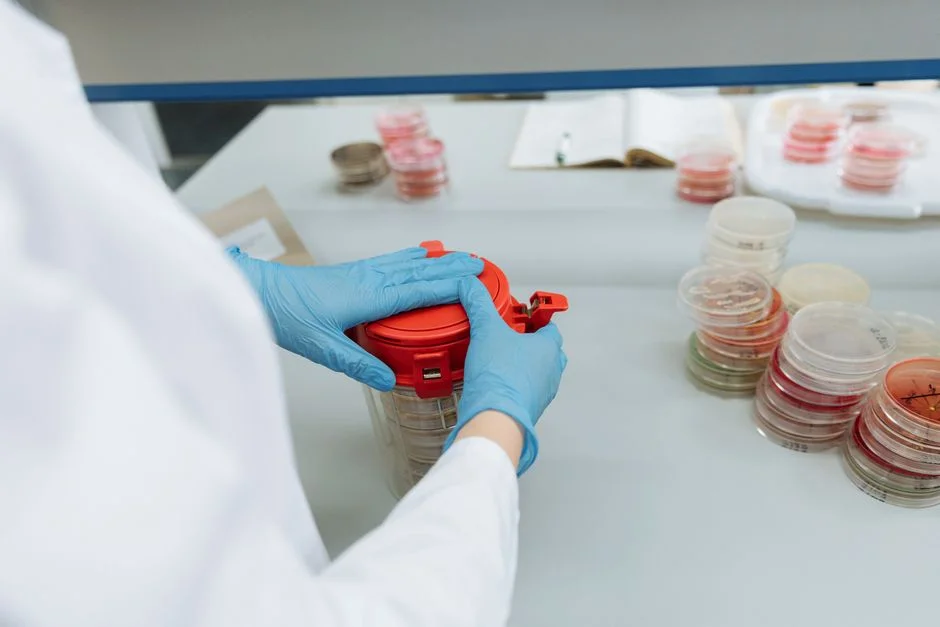
EPA identifies the point of connection to the POTW collection system as the location at which local limits are imposed (EPA, 2026). Install the compliance sampling point after the complete treatment train, not only at intermediate outlets. A sample taken before final solids removal, polishing, or flow-proportional mixing may not represent the regulated discharge.
The monitoring plan should combine permit-specified sampling types, analytical methods, frequencies, and reporting deadlines. HydropureWater’s 2026 chemical-plant reference identifies 24-hour composite samples for listed organic and toxic pollutants and grab samples for reactive parameters including pH, cyanide, phenols, sulfides, hexavalent chrome, and residual chlorine. The plant must confirm which parameters and methods its own Part 439 subpart and POTW permit require.
| Compliance obligation | Action required | Record needed for defensibility |
|---|---|---|
| End-of-pipe sampling | Sample the complete treated discharge at the POTW connection | Sample location, flow status, chain of custody, and field readings |
| Baseline Monitoring Report | Characterize regulated pollutants when first subject to a categorical standard | Production basis, analytical results, methods, and submission acknowledgement |
| Recurring self-monitoring | Follow the permit’s monitoring and reporting schedule | Laboratory reports, production-normalized mass calculations, and timely submissions |
| Control Authority inspection | Support annual inspection and any increased monitoring after noncompliance | Operating logs, equipment records, calibration files, and corrective actions |
| Whole-effluent toxicity testing | Follow any permit-specific testing and certification requirement | Sample preparation, chain of custody, lab certification, and report |
Plan the Baseline Monitoring Report when the industrial user first becomes subject to a categorical standard. The 2026 chemical-plant reference states a deadline of 180 days from the date the standard applies. Confirm the applicable deadline and content with the Control Authority before treating that reference as the filing rule for this facility.
Recurring reporting frequency depends on the permit. The same reference describes monthly or quarterly reporting for some parameters and semi-annual or annual deliverables, including at least annual SIU inspections under a POTW pretreatment program. Increased sampling and inspection frequency may follow noncompliance. Maintain calibration records, chain-of-custody documentation, laboratory reports, production-normalized mass calculations, corrective-action records, and Control Authority correspondence as one compliance file.
Use a permit-first equipment procurement checklist
A defensible equipment proposal begins with the permit and wastewater evidence, then maps treatment equipment to the required end-of-pipe result. Require each bidder to identify the Part 439 subpart, applicable POTW limits, compliance sampling point, and governing analytical methods. A proposal that starts with a standard equipment train and asks to fit the permit around it leaves the principal compliance risk unresolved.
Require a wastewater characterization report covering normal production, maximum production, cleaning cycles, and worst-case batch discharges. Compare treatment guarantees with the binding end-of-pipe limits—not generic removal percentages or a mid-process effluent target. Also require the proposal to address automatic controls, equalization performance, solids and FOG removal, biological capacity, polishing, flow measurement, monitoring provisions, and sludge handling where applicable.
Before accepting final design values, verify them against the current permit, influent testing, and the final equipment proposal, as HydropureWater advises in its 2026 chemical-plant reference. For a broader procurement framework, see the industrial ETP and DAF system procurement guide. A bidder should be able to show which permit requirement each major component satisfies and which measured result demonstrates that requirement at the sewer connection.
Frequently Asked Questions
Which Part 439 subpart applies to a tablet or ointment formulation plant near Byhalia?
Subpart E covers formulation, according to HydropureWater’s 2026 pharmaceutical effluent permit guide. If the facility also manufactures an API, classify that API operation separately by actual process: fermentation may point to Subpart A, extraction to Subpart B, or chemical synthesis to Subpart C. Obtain permit-level confirmation before using one subpart for the whole site.
What determines the final wastewater-equipment sizing basis?
The basis is the combined evaluation of approved Part 439 limits, POTW local limits, production-normalized requirements, and representative influent data. Request the current permit, local-limit calculations, production profile, and batch characterization before accepting a flow or contaminant-loading guarantee.
How can a plant reduce the risk of buying treatment equipment that fails at the sewer connection?
Require the vendor to design and guarantee performance against the approved end-of-pipe limits and sampling plan. The proposal should define the compliance point, sample type, analytical methods, worst-case batch conditions, and treatment response to pH or toxicity slugs.
What documents should be requested before finalizing a pharmaceutical pretreatment bid?
Obtain the pretreatment permit, sewer-use requirements, local limits, applicable Part 439 subpart, production profile, wastewater characterization, monitoring schedule, and sludge-disposal constraints. Also request the receiving POTW’s written confirmation of the Control Authority and compliance sampling point. These documents establish the scope against which pricing, capacity, and delivery commitments should be compared.