What treatment does a Santo Domingo Este data center actually need?
A data center in Santo Domingo Este needs two coordinated treatment trains: a sanitary wastewater plant sized by staff and building flows, and a separate cooling-tower blowdown train sized by cooling demand, cycles of concentration, source-water chemistry and the permitted residual-discharge route. Blowdown at four cycles typically contains 1,200–6,000 mg/L TDS and 10–50 mg/L suspended solids, so reuse requires solids removal, membrane treatment and scaling control. The final route—RO reuse, partial ZLD or permitted discharge—must be selected after sampling, permit review and confirmation of freshwater cost, brine disposal and backup-power requirements. The Santo Domingo configuration is an engineering reference, not a substitute for site data.
The complete design must account for cooling makeup, evaporation, blowdown, sanitary discharge, RO concentrate and any permitted or hauled residual stream. A sanitary package may have the smaller volumetric flow, but its organic load, disinfection requirements and reuse destination differ from industrial CTBD. Combining them would obscure both treatment performance and permit obligations.
The supplied HydropureWater Santo Domingo reference case describes a Tier IV-design, 2N-cooled facility with two 450 kW generators, seven days of diesel autonomy and intake temperatures of 25–30°C (HydropureWater, 2026). Those conditions belong in the electrical, cooling and resilience design—not in an assumed influent specification. See the city-specific cooling-blowdown treatment comparison for the broader decision context.
| Design stream | Sizing basis | Likely treatment train | Decision still required |
|---|---|---|---|
| Sanitary wastewater | Staff, domestic fixtures, cafeteria flows and peak discharge | Biological treatment, solids separation and disinfection; MBR where reuse quality or compactness warrants | Reuse destination and Dominican discharge conditions |
| Cooling-tower blowdown | Cooling-system flow, makeup chemistry, cycles of concentration and measured blowdown | Side-stream filtration, UF, controlled chemical dosing and RO | RO reuse, partial ZLD or permitted discharge |
| Concentrate and residual stream | RO recovery, concentrate chemistry and permitted route | MVC, controlled salt precipitation, approved discharge or managed haul-off | Free-zone and sewer conditions confirmed in writing |
Characterize each wastewater stream before selecting equipment
Equipment should not be selected until the two streams have separate design bases and flow meters. For CTBD, request conductivity, TDS, pH, suspended solids, hardness, calcium, magnesium, alkalinity, silica, sulfate, chloride, temperature and cycles of concentration. Also obtain the complete cooling-water chemical program, including biocide, corrosion inhibitor, dispersant, scale inhibitor and any historical chromate or high-phosphate use. These inputs determine membrane fouling, antiscalant demand, discharge compatibility and whether reuse is technically viable.
HydropureWater gives 1,200–6,000 mg/L TDS and 10–50 mg/L suspended solids at typical four cycles as a screening range, not as a site-specific guarantee (HydropureWater, 2026). The [automatic chemical-dosing system](/product/8-automatic-chemical-dosing-system.html) must therefore be selected against measured chemistry and the RO supplier’s dosing envelope, not against that range alone.
For sanitary wastewater, document headcount and operating schedule, office and cafeteria flows, floor drains, generator-maintenance discharges, visitor facilities and peak-hour conditions. Keep wastewater from generators, laboratories and cleaning operations under review because slug discharges can upset biological treatment.
Measurement is part of characterization. Genesis Water Technologies defines consumption as water permanently removed through evaporation or incorporation into products, while usage includes water withdrawn, used and returned after treatment. Its Stage 1 baseline calls for monitoring makeup, blowdown, evaporation and water quality; actual blowdown may exceed theoretical calculations by 15–30% because of unmeasured losses and emergency dumps (Genesis Water Technologies, 2026). Use that finding to justify metering, not to replace a site water balance.
| Parameter | CTBD | Sanitary wastewater |
|---|---|---|
| Primary drivers | Cooling-system hydraulics, cycles of concentration and makeup chemistry | Occupancy, fixtures, food-service flows and operating schedule |
| Minimum baseline | Flow plus conductivity, TDS, pH, suspended solids, hardness, silica, alkalinity, sulfate, chloride and temperature | Flow plus COD, BOD, suspended solids, ammonia, pH and disinfection requirements |
| Critical variable | Complete chemical program and scaling tendency | Peak and slug domestic discharges |
| Acceptable source | Representative site sampling and operating records | Occupancy-based design data and fixture schedules |
Choose the blowdown treatment train that matches the scaling risk
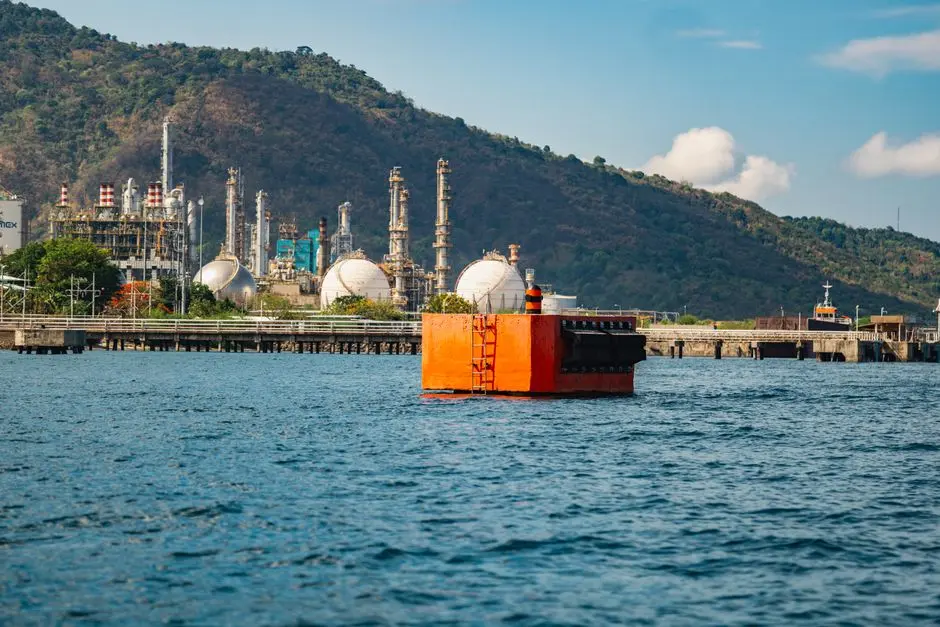
CTBD fails progressively: suspended solids and biofilm accumulate, pretreatment fouls, RO flux falls, scaling compounds approach saturation and recovery becomes unsustainable. The treatment sequence must remove solids before polishing the water and must control saturation before the membranes are exposed to the worst concentrate.
Start with self-cleaning side-stream filtration. The supplied research cites a 10–25 µm screening stage and installed cost of US$50,000–200,000 for typical data-center installations (HydropureWater, 2026). It removes suspended solids and biofilm fragments that can force unnecessary blowdown for clarity control. Its role should be justified by cooling-loop solids measurements, not treated as an automatic requirement for every site.
Next, use hollow-fiber ultrafiltration for cooling-tower blowdown pretreatment. HydropureWater lists 0.01–0.1 µm UF, 90–95% recovery and 10–30 psi for the Santo Domingo reference train; its catalog also lists hollow-fiber systems from 2,000–40,000 L/h with 0.03 µm PVDF membranes, automatic backwash and air scour (HydropureWater, 2026). The [hollow-fiber ultrafiltration for cooling-tower blowdown pretreatment](/product/17-ultrafiltration-uf-water-treatment-system.html) should therefore be selected from measured solids load, required flux and validated backwash performance.
Industrial RO is appropriate when permeate can return as cooling makeup or serve another approved process use. The cited CTBD operating band is 50–85% recovery with 10–50 mg/L permeate, while the industrial equipment specification permits recovery up to 95% (HydropureWater, 2026). The latter is not a design guarantee. IDE reports that conventional brackish-water RO commonly reaches only about 75–80% recovery before silica, calcium carbonate and calcium sulfate become limiting (IDE, 2026). Specify [industrial reverse osmosis for cooling makeup reuse](/product/6-reverse-osmosis-ro-water-purification.html) against feed-specific scaling calculations and warm-water conditions.
Antiscalant and pH adjustment are core controls. At Santo Domingo’s cited 25–30°C intake range, lower silica solubility can bring scaling forward. Require the vendor to state antiscalant type and dose, pH range, membrane flux, cleaning frequency and recovery definition. Include a [multi-media pretreatment filter](/product/7-multi-media-filter-ultrapure-water.html) only where its SDI-reduction role is justified by the selected UF and RO design.
| Stage | Cited technical basis | Go/no-go requirement |
|---|---|---|
| Side-stream filtration | 10–25 µm; US$50,000–200,000 installed for typical data-center installations (HydropureWater, 2026) | Proceed if measured solids or biofilm control justify the installation |
| Ultrafiltration | 0.01–0.1 µm; 90–95% recovery in the Santo Domingo reference train (HydropureWater, 2026) | Require feed-specific flux, backwash and normalized-energy guarantees |
| Reverse osmosis | 50–85% CTBD recovery; 10–50 mg/L permeate (HydropureWater, 2026) | Accept only with feed chemistry, saturation calculations and defined recovery boundary |
| Chemical control | Antiscalant plus pH adjustment; dosing linked to the cooling chemical program | No acceptance without guaranteed dose limits, alarms and dilution verification |
Decide between cooling makeup reuse, partial ZLD and permitted discharge
High-recovery RO reuse is the default only when suitable makeup water is available and the free-zone operator accepts the residual discharge route. HydropureWater cites 60–85% recovery for cooling makeup reuse in this case (HydropureWater, 2026). The decision should compare the value of avoided freshwater and discharge with membrane energy, antiscalant use, cleaning, concentrate disposal and loss of resilience when recovery falls.
Partial ZLD is appropriate when higher recovery and a smaller liquid-waste stream justify adding mechanical vapor compression to the RO concentrate. The cited configuration combines RO with approximately 95% MVC recovery on the concentrate and achieves 85–95% overall system recovery, leaving a small brine volume for periodic removal (HydropureWater, 2026). Do not select it until approved haul-off carriers, routes, customs arrangements and storm-water handling are confirmed.
Full ZLD is reserved for an absolute discharge restriction or severe water scarcity. The cited full-ZLD benchmark is US$3–8 million capital expenditure and US$5–15 per 1,000 gallons operating cost, with MVC at 95–98% recovery and 15–25 kWh per 1,000 gallons (HydropureWater, 2026). These figures require quotation validation against the selected configuration and site utilities.
Likewise, US$5–15 per 1,000 gallons as a discharge-fee example and TDS limits below 1,500 mg/L are benchmarks from other jurisdictions, not confirmed Santo Domingo limits (HydropureWater, 2026; Genesis Water Technologies, 2026). Obtain the free-zone operator’s and sewer authority’s requirements in writing before freezing the P&ID. Where conventional RO scaling limits cannot be managed, IDE’s controlled salt-precipitation route is a higher-recovery alternative because it removes problematic sparingly soluble salts as solids (IDE, 2026).
| Route | Use when | Do not select when |
|---|---|---|
| RO reuse | Makeup is available and the residual discharge route is permitted | Feed scaling cannot support the guaranteed recovery |
| Partial ZLD | Higher recovery and less liquid residual justify MVC | Brine removal, power resilience or local service is unproven |
| Full ZLD | Discharge is prohibited or water scarcity makes maximum recovery compulsory | Permitted reuse or partial ZLD meets the verified requirement at lower complexity |
| Permitted discharge | The written permit accepts the treated stream and downstream capacity | It is used only because external benchmark limits appear favorable |
Treat sanitary wastewater according to its reuse or discharge destination
The sanitary train should be sized by staff population, domestic fixtures, canteen flows and peak demand—not by megawatt IT load or cooling-water flow. It must also be designed around the quality required by the destination: toilet flushing, approved irrigation, sewer discharge or another reuse application. Each destination creates a different effluent and disinfection specification.
Use an MBR where near-reuse-quality effluent, a compact footprint or dependable solids separation is required. HydropureWater lists capacities from 10 to 2,000 m³/day and submerged PVDF membrane filtration below 1 µm. The [MBR integrated wastewater treatment system](/product/2-mbr-integrated-wastewater-treatment.html) should be evaluated against the measured sanitary flow and required reuse quality.
For smaller flows, use an underground A/O package where automated biological treatment and disinfection can operate below grade. HydropureWater lists a capacity range of 1–80 m³/h and unattended operation for the [underground integrated sewage treatment system](/product/1-wsz-underground-integrated-sewage-treatment.html). Confirm whether the duty/standby configuration and underground installation suit the site’s flood, groundwater and maintenance conditions.
Add UV or chlorine dioxide where the reuse destination or discharge permit requires additional microbial control. The [chlorine dioxide generator](/product/11-chlorine-dioxide-generator.html) is one option for polishing. Also complete a backflow and chemical-control review so cleaning, laboratory or generator-maintenance discharges cannot overload or inhibit the biological plant.
| Selection factor | MBR application | Underground A/O application |
|---|---|---|
| Primary driver | Near-reuse quality, compact footprint or reliable solids separation | Smaller flow and unattended below-grade operation |
| Cited basis | 10–2,000 m³/day; submerged PVDF filtration below 1 µm (HydropureWater, 2026) | 1–80 m³/h; unattended operation (HydropureWater, 2026) |
| Common control | Disinfection, biological process control, equalization and downstream reuse quality | Disinfection, biological process control, equalization and site-specific underground conditions |
Integrate controls, resilience and the site water balance
Two treatment trains should remain hydraulically separate but operationally visible in one SCADA system. Operators need a single view of makeup, evaporation, blowdown, sanitary flow, permeate reuse, concentrate, chemical inventory and alarms. A deviation in one train may reflect a cooling-control problem, a membrane-fouling trend or an unrecorded dump, so shared trending matters.
Specify redundant chemical-dosing pumps and PLC-controlled antiscalant and biocide dosing. Missed cycles can promote biological growth or expose membranes to uncontrolled scaling, while unnecessary chemical feed increases dissolved solids and operating cost. The [automatic chemical-dosing system](/product/8-automatic-chemical-dosing-system.html) should include tank-level, low-flow, high-flow, pH and conductivity interlocks rather than relying on an operator to verify every dose.
Treatment skids must operate through the facility’s multi-day generator-autonomy condition. The supplied Santo Domingo reference case specifies two 450 kW generators with seven days of diesel autonomy (HydropureWater, 2026). Require vendors to define generator ride-through for controls, chemical dosing, membrane skids and the selected concentration-management equipment, including load limits and restart sequences.
Warm-water biological growth is a separate design condition. The cited 25–30°C intake range differs materially from cooler-climate operation, so UF pretreatment, enclosure ventilation, instrumentation and biological-control assumptions require review. Maintain safe maintenance bypasses, membrane-cleaning access and a stocked spare strategy. Use [RO and UF membrane filter elements](/product/24-ro-uf-membranes-filter-elements.html) as a starting point for the spare-membrane specification, with critical quantities and replacement lead times confirmed in the bid.
Turn the treatment concept into a procurement-ready specification
Compare bids on engineering basis, installed cost and operating risk—not on headline recovery or treatment capacity. Require line-item pricing for equipment, freight, duties, installation, commissioning, spare parts and local service. The equipment price alone is not the landed project cost. A supplier should also state the assumed feed chemistry, recovery definition, operating pressure, antiscalant dose, pH range, membrane flux, cleaning frequency and concentrate volume across the 1,200–6,000 mg/L TDS screening range.
Ask for reference installations in the Caribbean or comparable tropical conditions involving brackish source water and scaling risk. A generic global reference does not establish performance under the cited 25–30°C intake range. Evaluate the local-service response plan, spare-parts logistics into the free zone, customs pathway, hurricane-rated enclosures where required and a documented ride-through plan for sustained generator operation.
Use the cited cost benchmarks consistently: a 50,000 GPD RO train at US$250,000–500,000 installed and US$1.50–3.00 per 1,000 gallons operating cost; an MVC addition at US$1–3 million for 10,000–30,000 GPD; and full ZLD at US$3–8 million (HydropureWater, 2026). These are screening benchmarks, not quotations for a Santo Domingo project. Require each bidder to state exclusions and the basis of its normalized energy and chemical-cost calculations.
Acceptance testing should demonstrate permeate quality, system recovery, normalized energy consumption, chemical consumption, noise, availability, alarm response and stable operation during a simulated utility interruption. Recovery must identify whether permeate, concentrate or total system flow forms the denominator. Include a feed-water laboratory program and enough operating history to distinguish membrane scaling, fouling or control instability.
| Bid package | Minimum vendor response |
|---|---|
| Commercial scope | Itemized equipment, freight, duties, installation, commissioning, spares and local service |
| Performance basis | Feed chemistry, recovery definition, flux, pressure, antiscalant dose, pH, cleaning and concentrate assumptions |
| Resilience | Generator ride-through, restart sequence, duty/standby strategy and utility-interruption test |
| Acceptance | Permeate quality, recovery, normalized energy and chemical use, alarms, noise and availability |
Frequently Asked Questions
What does wastewater and cooling blowdown treatment cost for a Santo Domingo Este data center?
No site-specific quotation can be made without measured flows, feed chemistry, selected recovery, treatment duty and the permitted residual route. HydropureWater’s 2026 benchmarks are US$250,000–500,000 installed for a cited 50,000 GPD RO train, US$1–3 million for MVC at 10,000–30,000 GPD, and US$3–8 million for a full-ZLD line. Request itemized local quotations for freight, duties, installation, commissioning and spares rather than treating these benchmarks as a budget.
How should suppliers be qualified for CTBD treatment?
Require guarantees tied to the measured CTBD feed chemistry, including the recovery definition, flux, pressure, antiscalant dose, pH range, cleaning frequency, concentrate volume and energy use. Also verify tropical reference sites, generator ride-through, local-service capability, spare-parts logistics and acceptance-test procedures. A generic recovery headline is not a performance guarantee.
Can cooling-tower blowdown and sanitary wastewater use one treatment plant?
They should remain separate streams even if a common SCADA system coordinates them. CTBD carries concentrated minerals, suspended solids and treatment chemicals and requires scaling control; sanitary wastewater requires biological treatment and disinfection. Combining them without separate characterization can increase membrane loading, obscure permit compliance and make reuse-quality control less reliable.
What discharge limits apply to a data center in Santo Domingo Este?
Do not assume a Santo Domingo discharge limit until the free-zone operator or sewer authority confirms it in writing. HydropureWater’s 2026 article presents fees above US$5–15 per 1,000 gallons and TDS limits below 1,500 mg/L as examples from other jurisdictions, not local requirements. Obtain applicable TDS, temperature, chemical, sewer-capacity and brine-removal conditions before selecting permitted discharge, partial ZLD or full ZLD.