Choose the treatment route from the wastewater profile
A factory in Sharjah usually needs a dissolved air flotation system when its wastewater contains FOG, oil, suspended solids or colloidal matter that must be removed before biological treatment. It needs a full industrial effluent treatment plant when the effluent also requires equalisation, biological treatment, clarification, polishing and compliance monitoring. The correct choice depends on representative wastewater tests, average and peak flow, contaminant loads, discharge route, reuse target and available footprint. Final sizing and compliance must follow the applicable Sharjah authority and permit conditions.
Dissolved air flotation is a clarification process: it separates floatable and suspended material from wastewater and can operate as a standalone treatment step or as pretreatment within a larger treatment train. An industrial ETP is a configured sequence for process wastewater; its stages may include screening, equalisation, primary clarification, biological treatment, tertiary polishing and sludge handling (GWT, Effluent Treatment Plant Supplier in UAE & GCC, current commercial webpage accessed 2026).
The GWT assessment framework calls for BOD, COD, TSS, pH, oil and grease and heavy metals, with sulphates and fluorides added when relevant to the manufacturing process (GWT, Effluent Treatment Plant Supplier in UAE & GCC, current commercial webpage accessed 2026). Before selecting a route, obtain the production process and source streams, average and peak flow, operating schedule, wastewater temperature, pH range, COD, BOD, TSS, FOG or oil and grease, relevant heavy metals, discharge destination, reuse target and available footprint.
Two factories with similar flow can need different plants because the contaminants and process conditions differ (GWT, Effluent Treatment Plant Supplier in UAE & GCC, current commercial webpage accessed 2026). If biodegradable organic load remains, DAF is not a substitute for biological treatment. Pretreatment can protect downstream equipment and remove substances that interfere with biology, but it does not by itself demonstrate final discharge compliance. Use the 2026 DAF selection and sizing framework to identify the data that must accompany a quotation request.
DAF or full ETP: match the system to the contaminant load
DAF addresses floatable material and suspended solids; a full ETP must also manage the sequence needed to remove organic load and produce a controlled final effluent. Spans identifies DAF as suitable for FOG removal in food-court drains, hotel kitchens, food-processing effluent and catering wastewater, with dosing for fats, oils, greases and suspended solids before sewer discharge or biological treatment (Spans, Industrial Wastewater Treatment UAE — ETP & STP Systems, current commercial webpage accessed 2026).
Food processing and FMCG plants are a significant warning against selecting from flow alone. Spans reports high and variable BOD of 500–8,000 mg/L, FOG from frying and dairy operations, and pH swings from CIP cleaning; it states that treatment must accommodate peak loads and include equalisation, DAF, biological treatment and tertiary polishing (Spans, Industrial Wastewater Treatment UAE — ETP & STP Systems, current commercial webpage accessed 2026). A DAF-only purchase may remove the floatable fraction but leave the biodegradable load to be addressed elsewhere.
Use DAF upstream when oils, FOG or solids could interfere with downstream biological equipment. Add biological treatment when the objective requires reducing biodegradable organic load before permitted discharge or reuse. If reuse is the objective, evaluate an MBR wastewater treatment system: Spans describes MBR permeate as suitable for cooling towers, boiler makeup, toilet flushing and landscaping, with permeate TSS typically below 1 mg/L (Spans, Industrial Wastewater Treatment UAE — ETP & STP Systems, current commercial webpage accessed 2026).
For a zero-liquid-discharge objective, Spans reports more than 95% water recovery when RO is integrated with MEE or MVR evaporation. That is a screening benchmark for pharmaceutical, chemical and speciality-food projects, not a guaranteed duty for an individual factory (Spans, Industrial Wastewater Treatment UAE — ETP & STP Systems, current commercial webpage accessed 2026).
Temperature must be included in biological design. Spans reports UAE ambient temperatures of 25–48°C and states that biological systems require careful aeration design, dissolved-oxygen management and membrane-fouling control at elevated temperatures (Spans, Industrial Wastewater Treatment UAE — ETP & STP Systems, current commercial webpage accessed 2026). The following comparison therefore identifies treatment functions rather than treating equipment names as equivalent.
| Decision condition | DAF-led route | Full ETP or combined route |
|---|---|---|
| Primary issue | FOG, oil, floatable solids or colloidal material | Organic load plus solids, pH variation or other regulated contaminants |
| Typical treatment scope | Equalisation, pH correction, coagulation/flocculation, DAF and sludge handling | DAF or clarification, biological treatment, polishing, disinfection where required and sludge handling |
| DAF-only suitability | Only where the stated effluent target is met by clarification and subsequent disposal | DAF should normally be upstream pretreatment rather than the whole plant |
| Reuse or ZLD | Requires a defined downstream polishing and disinfection route | Evaluate MBR for reuse or RO with MEE/MVR for a ZLD screening case |
For UAE application details, review UAE DAF system applications and design considerations. The decisive question is not “DAF or biological treatment?” in isolation; it is whether DAF alone removes the pollutants relevant to the specified discharge or reuse destination.
Map factory sectors to likely treatment objectives
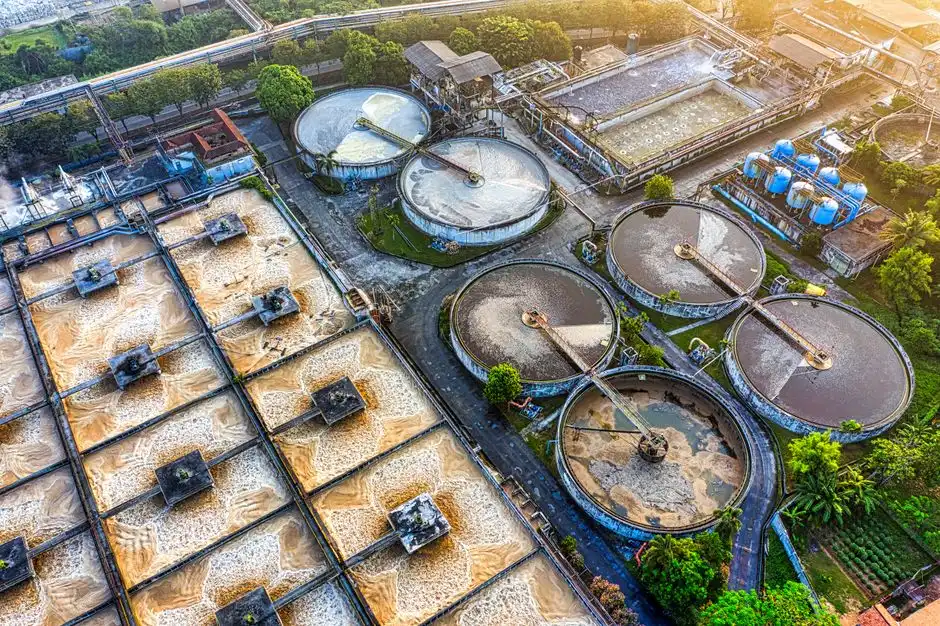
Food processing, dairy, frying and catering operations should first evaluate FOG and solids interception with DAF before biological treatment because these are the application sectors expressly identified by Spans (Spans, Industrial Wastewater Treatment UAE — ETP & STP Systems, current commercial webpage accessed 2026). This is a process-function recommendation, not a standard-model selection: dairy, frying and CIP streams can produce different loads and operating patterns.
For factories generating chemical cleaning streams, treat pH swings and variable organic loads as equalisation and dosing issues. GWT states that pre-treatment removes large solids and oils and equalises batch flow, while coagulants and flocculants address suspended material and acids or alkalis correct pH (GWT, Effluent Treatment Plant Supplier in UAE & GCC, current commercial webpage accessed 2026). A DAF unit that performs well at a steady pH cannot be assumed to perform identically during CIP dumping.
Metalworking, petrochemical and other industrial oily streams should be evaluated against DAF’s removal functions for oil and grease, suspended solids and colloidal matter. Alantech describes DAF as a standalone clarification unit or a component of a complete wastewater treatment system and says its engineering team evaluates wastewater characteristics before recommending a configuration (Alantech, Dissolved Air Flotation Systems Dubai, UAE, current commercial webpage accessed 2026).
Textile, pulp and paper, and other listed DAF applications require representative pollutant and solids-loading data before choosing equipment. Request flow-duration records, suspended-solids characteristics and the operating sequence. Do not transfer a model selected for food wastewater without checking the hydrodynamics and contaminant properties of the actual stream.
For irrigation, cooling or process reuse, establish the receiving and reuse requirements before selecting tertiary or membrane technology. Spans identifies irrigation, cooling-tower makeup and toilet flushing as reuse applications and links tertiary treatment with disinfection requirements for specified reuse standards (Spans, Industrial Wastewater Treatment UAE — ETP & STP Systems, current commercial webpage accessed 2026).
Pharmaceutical, chemical and speciality-food manufacturers with strict licence conditions or ZLD objectives can use the reported more-than-95% recovery benchmark for RO with MEE or MVR as an initial screening criterion, not as an assured project result (Spans, Industrial Wastewater Treatment UAE — ETP & STP Systems, current commercial webpage accessed 2026). The applicable 2026 DAF selection and sizing framework should be combined with that factory’s permit and reuse specification.
Size the DAF or packaged ETP from measured duty
Measured duty, not daily wastewater volume alone, should determine equipment capacity. Collect composite samples and time-varying data covering normal production, cleaning cycles, start-up, shutdown and the highest observed discharge event. The resulting brief should define average and peak flow, hydraulic loading, solids loading, FOG loading and batch characteristics. Hydraulic, contaminant and operational peaks may not occur together, so suppliers need the measured record rather than a single daily average.
For catalogue screening, HydropureWater’s standard DAF range is 4–300 m³/h across 13 models. Spans separately lists DAF systems at 5–500+ m³/hr (Spans, Industrial Wastewater Treatment UAE — ETP & STP Systems, current commercial webpage accessed 2026). These supplier ranges are not project guarantees; each quotation must identify the selected unit, design flow and response to peak conditions. The 2026 DAF system pricing guide can be used to structure a price request, but price comparison remains valid only when every bidder uses the same design basis.
For compact UAE projects, Spans lists containerised and skid-mounted ETPs in a 5–200 m³/day range, factory assembled and tested in India and shipped CIF to UAE ports (Spans, Industrial Wastewater Treatment UAE — ETP & STP Systems, current commercial webpage accessed 2026). Treat that as a screening reference, not a universal sizing rule.
Send suppliers the wastewater temperature, pH range, chemical demand, applicable pressure or saturation constraints, solids characteristics and required skimming arrangement. Also ask for the design basis, guaranteed duty point, peak-flow operating method, materials of construction, control philosophy, utilities demand and performance-test protocol. This converts an equipment enquiry into a vendor-ready technical comparison.
| Sizing input | Evidence required from the factory | Supplier response required |
|---|---|---|
| Hydraulic duty | Average flow, peak flow and batch discharge records | Selected flow rating and peak-flow operating method |
| Mass loading | TSS, FOG, COD and relevant contaminant data | Hydraulic and solids-loading basis for the selected unit |
| Process conditions | Temperature, pH range, operating schedule and chemical demand | Design limits, materials and required pretreatment |
| Performance | Applicable permit and reuse targets | Guaranteed duty point and performance-test protocol |
| Operations | Footprint, utilities and maintenance access | Controls, utilities demand, skimming and sludge-handling scope |
Plan discharge, reuse, footprint and operating requirements

The treatment destination must be fixed before final equipment selection: municipal sewer, surface water, an internal reuse point or ZLD. The applicable regulator and permit for the Sharjah site must be confirmed. A treatment concept that meets process chemistry but lacks space, utilities, sludge handling or monitoring cannot be commissioned as a compliant plant.
For the cited UAE.S 885 municipal-sewer context, Spans gives BOD below 30 mg/L, COD below 250 mg/L, TSS below 100 mg/L, oil and grease below 10 mg/L and pH from 6 to 9. The same source describes UAE.S 999 surface-water limits as more stringent than the cited UAE.S 885 context (Spans, Industrial Wastewater Treatment UAE — ETP & STP Systems, current commercial webpage accessed 2026). These values are cited benchmarks, not a substitute for the site’s current permit, which governs the final acceptance basis.
Choose the build format against permanence, capacity and available space. GWT identifies containerised ETPs as factory assembled and tested, packaged ETPs as modular units ready to connect, skid-mounted ETPs for installation within an existing building and civil-built ETPs for larger permanent installations (GWT, Effluent Treatment Plant Supplier in UAE & GCC, current commercial webpage accessed 2026).
UAE water scarcity makes reuse a material design driver. Spans identifies irrigation, cooling-tower makeup and toilet flushing as treated-water applications, while noting that specified reuse standards require tertiary treatment and disinfection such as UV or chlorination (Spans, Industrial Wastewater Treatment UAE — ETP & STP Systems, current commercial webpage accessed 2026). Confirm the exact reuse classification and receiving requirements before adding those stages.
Include sludge removal, chemical storage, odour control, power, operator access and maintenance space in the site plan. If the treatment train produces sludge for dewatering, define the plate-and-frame filter press duty and route. If chemical dosing forms part of the process, establish the automatic chemical dosing scope, storage requirements and control interlocks. The adjacent industrial ETP and DAF decision guide applies the same distinction between pretreatment and a complete treatment route.
Compare bids on performance, lifecycle risk and supplier capability
Comparable bids require the same wastewater characterization, flow basis, discharge target and reuse target. If bidders size from different data, the lowest equipment price may simply represent the least conservative duty assumption.
Compare the complete supplied scope: screening or pretreatment, equalisation, DAF or clarification, biological reactor, filtration or membrane stage, disinfection, sludge handling, controls, utilities, installation and commissioning. Confirm whether the quotation includes factory testing, site commissioning, operator training, performance verification, initial chemicals, spare parts and maintenance support. Spans states that containerised and skid-mounted ETPs are factory assembled and tested before shipment, reducing site construction requirements and commissioning risk (Spans, Industrial Wastewater Treatment UAE — ETP & STP Systems, current commercial webpage accessed 2026).
For biological systems, require the supplier to explain aeration, dissolved-oxygen and membrane-fouling control under the cited 25–48°C UAE ambient-temperature range (Spans, Industrial Wastewater Treatment UAE — ETP & STP Systems, current commercial webpage accessed 2026). For DAF, request the solids-loading basis, hydraulic capacity, recycle arrangement, skimming capacity, control response and materials suitable for the factory wastewater.
Lifecycle support, dosing chemicals and spare-parts availability belong in the commercial comparison. GWT warns that changing process conditions, fouling and changing effluent composition can cause an initially compliant plant to drift out of compliance without maintenance (GWT, Effluent Treatment Plant Supplier in UAE & GCC, current commercial webpage accessed 2026). For DAF consumables and service planning, see the DAF spare-parts and consumables cost guide; for emergency overload decisions, the DAF emergency overload guide illustrates why operating contingency belongs in the scope review.
| Bid comparison item | Acceptable supplier statement | Commercial or technical risk if omitted |
|---|---|---|
| Design basis | Named flow, contaminant and operating conditions used for sizing | Undersized equipment or non-comparable prices |
| Performance | Guaranteed duty point and test protocol tied to the permit | Disputed acceptance testing |
| Peak operation | Defined method for batch, cleaning and peak flows | Overflow or permit exceedance |
| Scope | Complete treatment, controls, sludge, utilities and commissioning scope | Change orders after installation |
| Lifecycle support | Chemicals, spares, training, maintenance and response arrangements | Compliance drift and extended downtime |
Frequently Asked Questions
What are the sewer discharge limits for a Sharjah factory ETP?
For the cited UAE.S 885 municipal-sewer context, Spans lists BOD below 30 mg/L, COD below 250 mg/L, TSS below 100 mg/L, oil and grease below 10 mg/L and pH from 6 to 9. It describes UAE.S 999 surface-water limits as more stringent than that UAE.S 885 context (Spans, Industrial Wastewater Treatment UAE — ETP & STP Systems, current commercial webpage accessed 2026). The buyer should request the current Sharjah permit and receiving-authority confirmation, then require bidders to guarantee the applicable site-specific limits—not merely the published benchmark.
What DAF flow rate or packaged ETP capacity does a factory need?
HydropureWater’s standard DAF catalogue spans 4–300 m³/h across 13 models, while the supplied packaged and skid-mounted ETP screening range is 5–200 m³/day. Neither range determines project size: the factory must provide measured average and peak flow, time-varying discharge records, TSS, FOG, COD, BOD, pH, temperature and relevant contaminants. Ask each bidder to map its offered unit to that measured duty and state the peak-flow operating method.
How much will an industrial ETP or DAF system cost?
A defensible quotation cannot be produced from equipment type or average daily flow alone. Request the same design package from each bidder: wastewater characterization, average and peak flow, required outlet or reuse quality, plot constraints, utilities, installation basis, commissioning requirements and sludge-handling scope. Then ask for itemised equipment, civil work, freight, installation, commissioning, chemicals, training, warranties and annual support costs. The 2026 DAF selection and sizing framework helps prevent price comparisons based on unmatched duty assumptions.
How should a Sharjah factory select and commission an ETP supplier?
Select on effluent-specific engineering, guaranteed performance, commissioning capability and lifecycle support rather than the equipment label. Require a defined design basis, treatment train, materials, controls, utilities, test protocol, training, spares and maintenance scope. Spans reports that containerised and skid-mounted ETPs are factory assembled and tested in India and shipped CIF to UAE ports, which can reduce site construction and commissioning risk (Spans, Industrial Wastewater Treatment UAE — ETP & STP Systems, current commercial webpage accessed 2026). At factory handover, verify that the supplier’s site test uses the agreed permit and reuse criteria.